
Wristwatches · Wristwatch
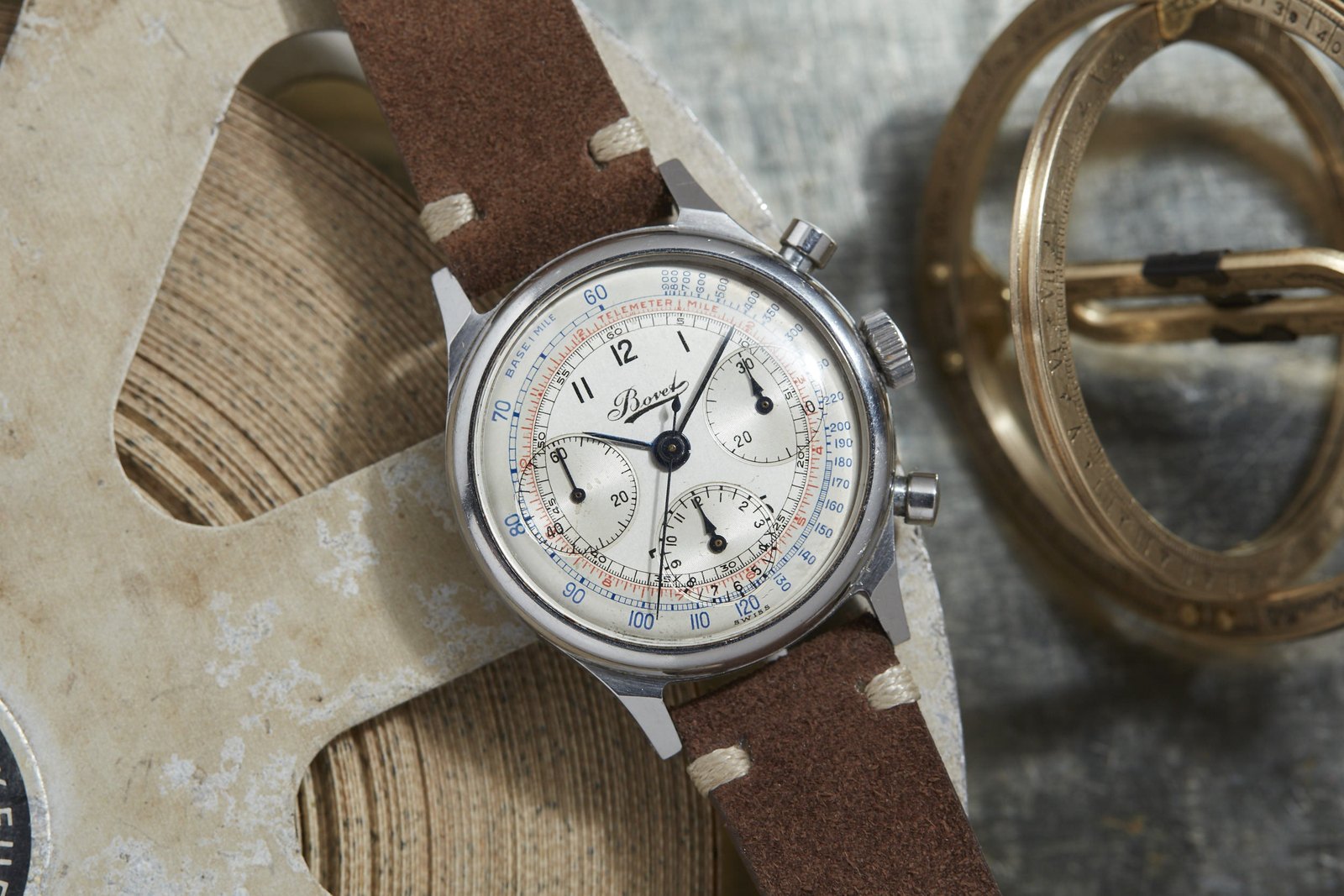
Bovet Triple Register Chronograph, late 1940s
- Maker / attribution
- Bovet (maker)
- Date
- late 1940s
- Historical period
- Golden Age of Mechanical Watchmaking (1900 – 1945)
- Country of origin
- Switzerland
- Object type
- Wristwatch
- Dimensions
- Case 38 mm
- Stock no.
- Product 9398094145
- Credit line
- Dealer listing, Analog/Shift (product 9398094145)
- Catalogue title (original)
- Bovet Triple Register Chronograph (English)
View the source record (dealer listing) ↗ (opens another website in a new tab)Suggest a correction
Record summary
Catalogued by Analog/Shift (dealer), New York (stock number Product 9398094145), this is a wristwatch by Bovet, made in Switzerland, dated late 1940s. The Atlas places it in the Golden Age of Mechanical Watchmaking period (1900 – 1945) of its Wristwatches collection. Recorded dimensions: Case 38 mm. The record is illustrated with 6 photographs.
Assembled from the source record's structured fields. Dates and attributions are given as the source states them; where a field is missing the Atlas leaves it blank rather than estimating.
Catalogue description
Dealer description — Analog/Shift
Ask any vintage watch collector what their favorite chronograph is. Chances are, they might mention the Omega Speedmaster , with its storied connection to NASA. Those who collect militaria might favor pilot's chronographs like the Heuer Bundeswehr ; the sportsman or sailor might spring for this yachting timer from Breitling. The rugged, purpose-built nature of these watches have set the standard in collector's minds for what a chronograph is supposed to be. Many collectors aspire to own one because of their association with individuals whom many people admire. Moreover, they were either produced or enjoyed their heyday in the 1960s, the era when chronographs metamorphosed from accessories carried by military personnel to a piece of kit for the average sportsman. But to limit oneself only to these sizable, sporty 60s chronographs is to overlook a huge portion of this complication's history. Though the Speedmaster may seem like the ultimate chronograph, the Swiss had been making chronographs in the Vallée de Joux for nearly a century before the Speedmaster was introduced. Through the war-torn 1910s and 1940s on to the sports-driven 1950s and 1960s, the chronograph has been marking time for over 150 years. The 1940s and early 1950s in particular were a pivotal period in chronograph design. Many chronographs produced during this time retained the clean lines of the watches worn by military personnel during the Second World War. Their cases, often sized under 38mm, notably smaller than their 60s successors, are steel and waterproof, but might have elegant touches like curved or faceted lugs. The 1910s saw Spillman blazing trails in a "new" (or, more truthfully, newly-popular) medium of watches: the wristwatch. Though the wristwatch had long been considered a ladies' accessory, the First World War saw it emerge on the wrists of soldiers and military personnel, who then carried the fashion into their civilian lives once the war had ended. Additionally, prior to the war, the wristwatch saw notoriety on the wrist of Louis Cartier's friend, Alberto Santos-Dumont, whose namesake is the famous Santos line of Cartier wristwatches. Savvy entrepreneurs in the watch industry began rolling out wristwatches--Spillman among them. To celebrate the Allies' victory in the First World War, Spillman triumphantly released a special wristwatch which was dubbed "the Watch of the Allies." This watch featured the wings of a Russian eagle (from that country's coat of arms) as well as the motto of the monarch of the United Kingdom, "Dieu et mon droit,"( God And My Right ) and was sold on a leather strap. But Spillman also manufactured cases for other numerous other watchmakers, including one who went from an unknown newcomer in the 1920s to the world's most reputable company today. In fact, it was C.R. Spillman S.A. who was instrumental in securing the patent for a screw-down crown (originally filed by Paul Perregaux and Georges Perret) for Hans Wilsdorf, founder of Rolex. This was instrumental in the development of Rolex's famed Oyster case, the bedrock of all Rolex watches, which Spillman also produced. In the world of chronographs, for Zenith Spillman produced the case of the A386 , known for Spillman's maker's mark "SP." For other manufactures Spillman made sturdy waterproof chronograph cases. These are notable for their elegant faceted lugs, like this one made for DOXA . This particular chronograph dates from the late 1940s/early 1950s and was produced by Bovet. Founded in London in 1822, Bovet is an old company whose contributions to chronographs are manifold. In the 1930s they registered a patent for a mono-rattrapante function, which became Bovet's speciality. A mono-rattrapante chronograph is a variant of a rattrapante or split-second chronograph, which allows the wearer to time two simultaneous events—for example, during a race where two cars (or horses) cross the finish line one after the other. To operate the rattrapante function, the wearer simply holds down the bottom pusher of the chronograph, stopping the second hand. The pusher is then released, which forces the second hand to jump forward. The distinctive style of Bovet's chronographs lent itself well to imitations. Notwithstanding, there are many replicas, frankens, and re-dials to be found on the market. So the existence of a genuine article like this one is a rare find, and infinitely desirable. We can't think of a more handsome example of a mid-century chronograph than this one. The twin scales along the rim of the dial (tachymeter in blue and telemeter in bright red) and the way they overlap with the chronograph registers give the dial a militaristic look (similar to that found on this regulator by Gallet ). But there's something undeniably attractive about it that begs for a closer look, lulling you into quiescence as you mediate on those beautiful blued steel hands.
Historical context
Golden Age of Mechanical Watchmaking (1900 – 1945)
The wristwatch displaces the pocket watch; waterproof cases, self-winding and grand complications.
The wristwatch overtook the pocket watch. Military use in the First World War, aviation, water-resistant cases (1926), automatic winding (1923–31), rectangular Art Deco designs and early chronographs and calendars defined the period.
Read the period in the timelineMore wristwatches from this periodEarlier: Industrial Revolution
Atlas type guide
Chronographs and split-seconds watches
A chronograph is a watch with an additional seconds hand that can be started, stopped and returned to zero independently of the timekeeping. Louis Moinet built an early example in 1816 and Nicolas Rieussec a recording 'chronographe' in 1821; Adolphe Nicole's heart-shaped reset cam (patented 1862) made the modern return-to-zero possible. Split-seconds (rattrapante) chronographs add a second hand that can be stopped for intermediate times; flyback chronographs restart instantly.
Chronographs were essential tools for doctors (pulsometer scales), artillery (telemeter), engineers and sport. In wristwatches, Valjoux, Venus, Lemania and later the automatic chronographs of 1969 (Zenith El Primero, the Chronomatic Calibre 11 group and Seiko 6139) are milestones.
What to look for
- Push-pieces on the case band or a single button in the crown (monopusher).
- Subsidiary registers for minutes and hours; tachymeter, telemeter or pulsometer scales.
- Column wheel versus cam control visible in the movement.
- Calibre markings of specialist makers (Valjoux, Lemania, Venus, Landeron).
Dating clues
- Pocket chronographs with heart cam reset: after 1862.
- Wrist chronographs: from c. 1910; two-button designs from the 1930s.
- Automatic chronographs: from 1969.
General guidance written by the Atlas editors about this kind of object. It is not a statement about this particular piece; for that, rely on the source record above and on physical examination.
Read next:Flyback chronographChronograph
Related records
Pocket Watches · c. 1875
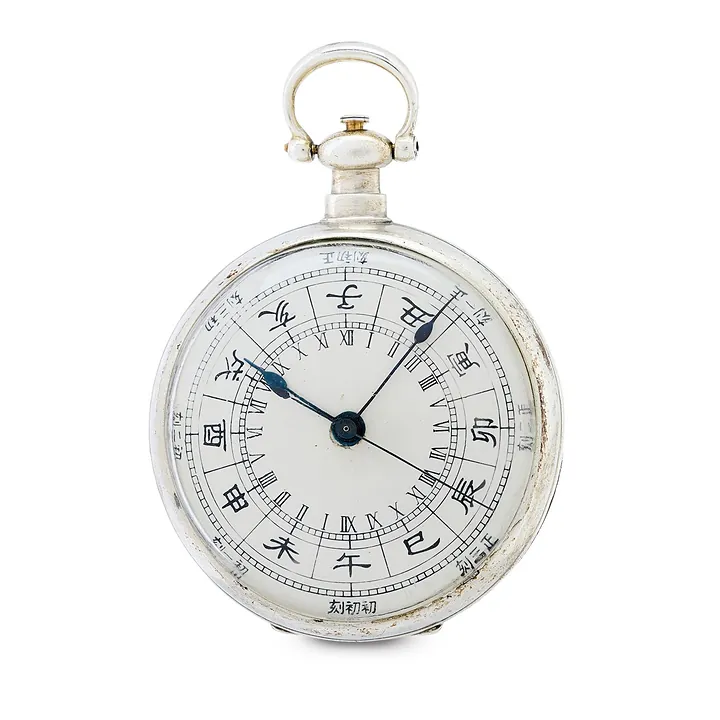
Bovet pocket watch, c. 1875
Antiquorum auction archive, Geneva
Wristwatches · c. 1940s
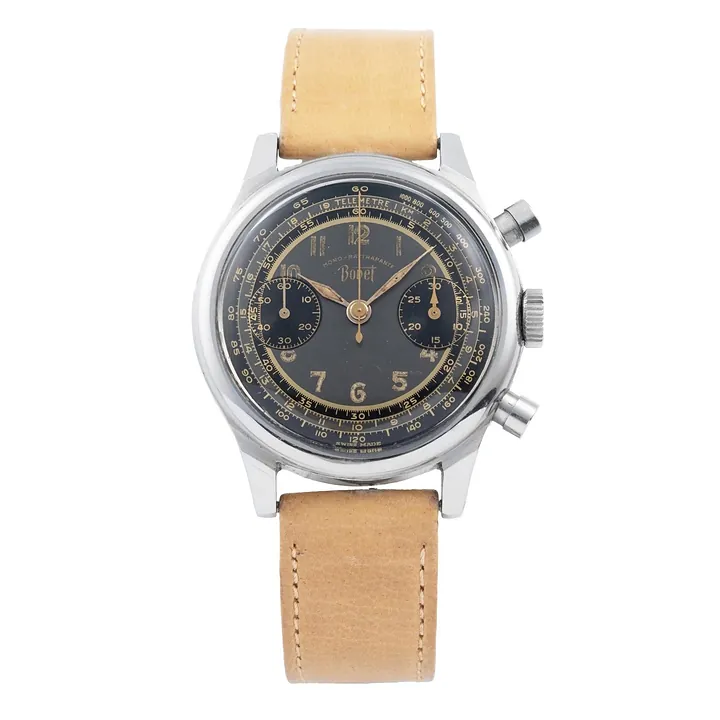
Bovet Mono-Rattrapante, ref. 5347, c. 1940s (Antiquorum Lot 390-81)
Antiquorum auction archive, Geneva
Wristwatches · c. 1940s
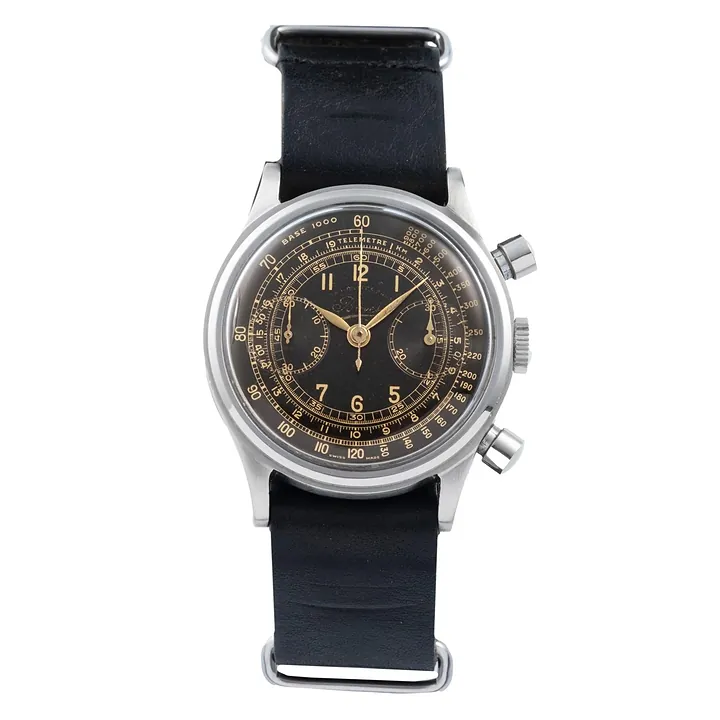
Bovet Mono-Rattrapante, ref. 5347, c. 1940s (Antiquorum Lot 390-82)
Antiquorum auction archive, Geneva
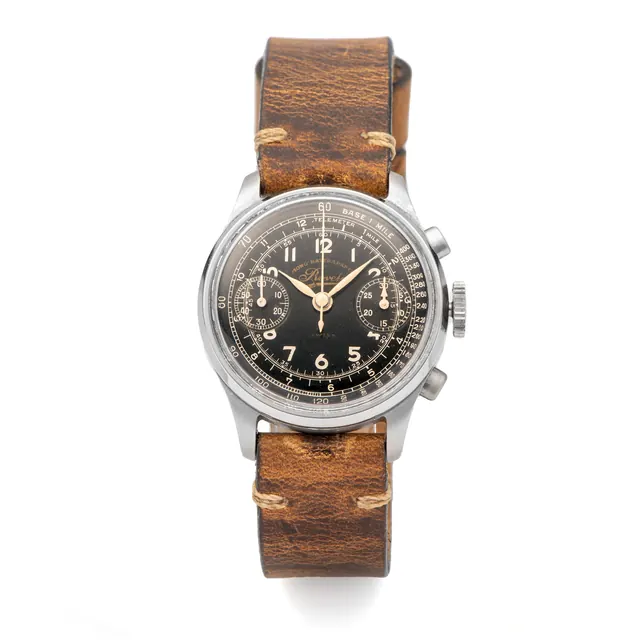
Wristwatches · c. 1950s
Bovet wristwatch, Mono Rattrapante Black Dial, circa 1950's
Antiquorum auction archive, Geneva

Wristwatches · 1931
Rolex 'Oyster Perpetual' rotor self-winding wrist-watch, lever escapement, in steel case with glass in back, Montres Rolex SA, Geneva, Switzerland, 1931
Science Museum Group, London

Wristwatches · 1900–1999
Wristwatch by Certina, Switzerland, 1900–1999
Nordic Museum Foundation
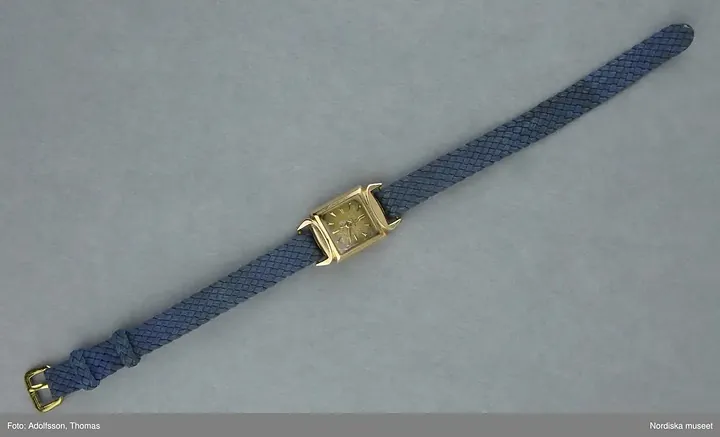
Wristwatches · 1900–1999
Wristwatch by Omega, Västerås, 1900–1999
Nordic Museum Foundation
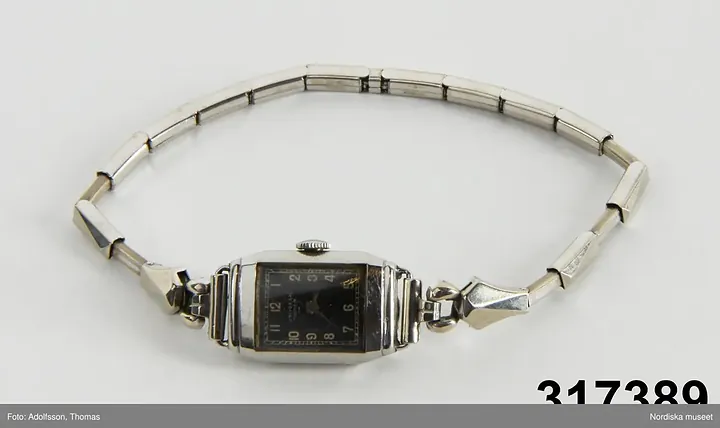
Wristwatches · 1900–1999
Wristwatch by Universal, Switzerland, 1900–1999
Nordic Museum Foundation