
Wristwatches · Wristwatch
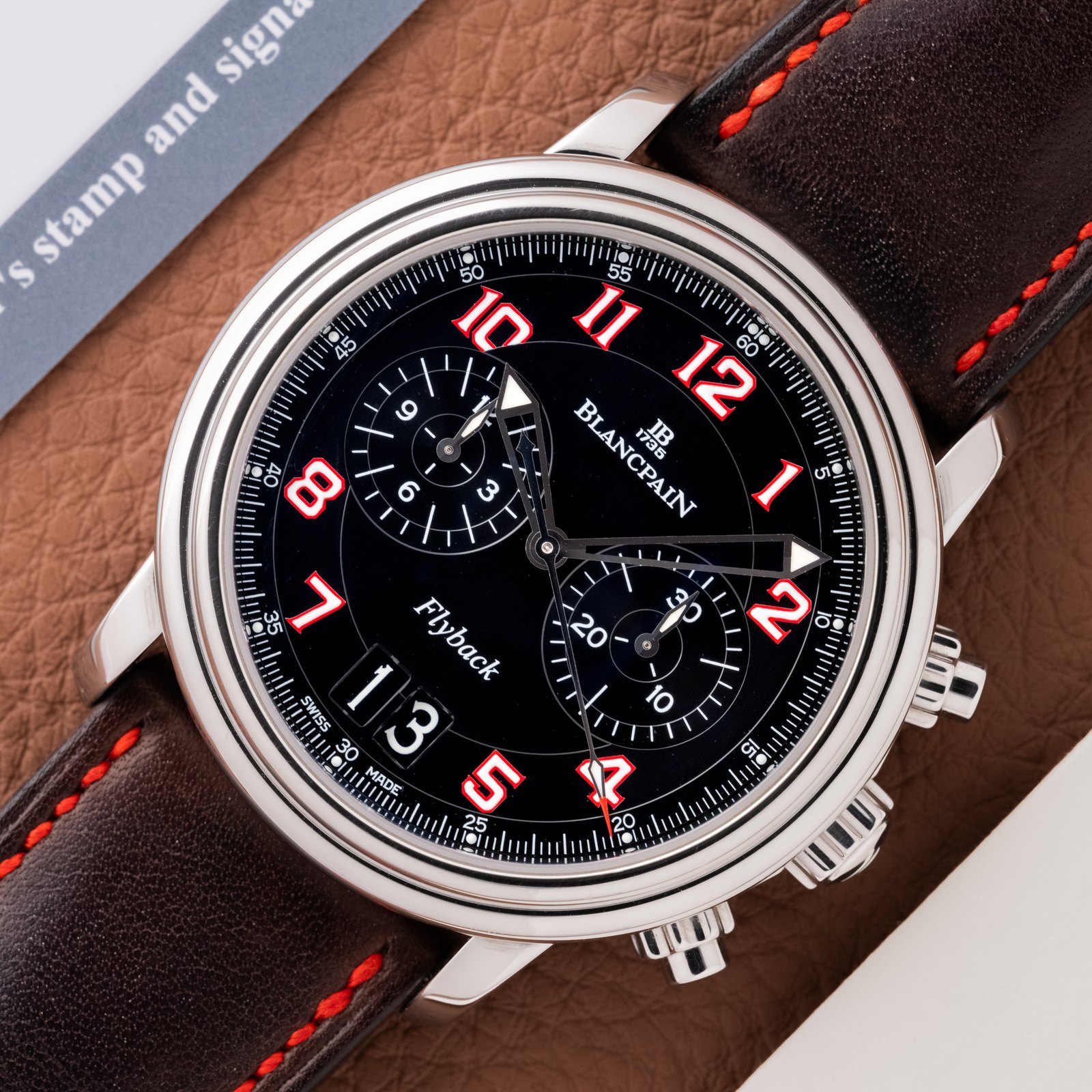
Blancpain Léman Flyback Peking to Paris (Ref. 2885FB-1130-63B, 2008
- Maker / attribution
- Blancpain (maker)
- Date
- 2008
- Historical period
- Mechanical Renaissance (1990 – 2010)
- Country of origin
- France
- Object type
- Wristwatch
- Dimensions
- Case 40 mm
- Stock no.
- Product 8806115705015
- Credit line
- Dealer listing, Huntington Company (product 8806115705015)
- Catalogue title (original)
- 2008 Blancpain Léman Flyback Peking to Paris - Box and Papers (Ref. 2885FB-1130-63B (English)
View the source record (dealer listing) ↗ (opens another website in a new tab)Suggest a correction
Record summary
Catalogued by Huntington Company (dealer) (stock number Product 8806115705015), this is a wristwatch by Blancpain, made in France, dated 2008. The Atlas places it in the Mechanical Renaissance period (1990 – 2010) of its Wristwatches collection. Recorded dimensions: Case 40 mm. The record is illustrated with 6 photographs.
Assembled from the source record's structured fields. Dates and attributions are given as the source states them; where a field is missing the Atlas leaves it blank rather than estimating.
Catalogue description
Dealer description — Huntington Company
History and Significance The Léman Flyback was one of Blancpain's most convincing modern sports watches, pairing a serious automatic chronograph with the relatively restrained design language that defined the manufacture during this period. The Peking to Paris edition takes that familiar platform and gives it a much more specific identity. Created in connection with the historic Peking to Paris motor challenge, the watch ties the flyback chronograph to an event where elapsed time, endurance, and mechanical reliability all feel particularly appropriate. Limited to just 134 pieces, it represents one of the more unusual executions of the Léman Flyback. The flyback function is central to the watch rather than simply another complication on the dial. A conventional chronograph must be stopped, reset, and restarted in separate steps, while a flyback allows the running chronograph to be reset and immediately restarted with a single action. The complication has deep roots in timing applications where consecutive intervals need to be measured quickly. Blancpain made the flyback one of the signatures of the Léman family, giving these watches a technical identity that went well beyond their appearance. What makes the Peking to Paris edition particularly fun is how thoroughly the theme was carried through the watch. The exhibition caseback reveals a specially decorated rotor bearing the Peking to Paris motif, turning a detail normally associated with movement finishing into part of the limited-edition story. Even the presentation box carries the corresponding Peking branding. Those touches make the edition feel purposefully conceived rather than like a standard Léman with a commemorative line of text added to the dial. The 40mm Léman case also represents a very different interpretation of the Blancpain Flyback from the smaller 34mm reference 1185F. Here the chronograph has a more overtly sporting presence, with the bezel, pushers, and dial architecture giving the watch the purposeful character expected of a modern flyback. Yet it still avoids the exaggerated proportions that would become common among complicated sports watches during the following years. The balance between refinement and functionality is a major reason the Léman line has aged so well. Perhaps most interesting is how overlooked these limited Léman references remain within Blancpain collecting. The Fifty Fathoms understandably dominates conversations about the manufacture's sports watches, while much of the Léman family exists quietly in the background. The reference 2885FB-1130-63B combines a genuinely interesting complication, a specific historical theme, and a production run of only 134 pieces. It is the sort of Blancpain that becomes much harder to dismiss once the details are understood. Writer's Thoughts The Peking to Paris is exactly the kind of limited edition that works. The connection between a flyback chronograph and a long-distance motoring event makes sense, and Blancpain carried the theme far enough to give the watch its own identity without turning it into a novelty. The decorated rotor might be the best part, especially because it is something discovered only after turning the watch over. Even the matching presentation box feels like part of the story rather than an afterthought. There is also a lot to like about this generation of the Léman. The reference 2885FB-1130-63B feels substantial without becoming oversized, complicated without becoming difficult to read, and special without advertising its rarity across the dial. Only 134 examples were made, yet the watch remains remarkably under the radar. That combination makes it exactly the sort of forgotten Blancpain that is fun to find. Our Promise Every watch is thoroughly vetted, carefully described with complete transparency, and guaranteed authentic. Each piece is offered in honest condition, ensuring collectors receive a timepiece that reflects both originality and integrity. Specifications Brand: Blancpain Model: Léman Flyback Chronograph Peking to Paris Limited Edition Reference: 2885FB-1130-63B Year: 2008 Case Material: Stainless steel Case Size: 40mm Dial: Black chronograph dial Movement: Automatic flyback chronograph with Peking to Paris decorated rotor Strap/Buckle: Original Blancpain leather strap Buckle/Clasp: Original Blancpain deployant clasp Contents: Complete set with original box, papers, and booklets Condition Case: Stainless steel case presents well with light signs of wear consistent with careful use. Dial: Black dial presents beautifully with clean printing and well-defined chronograph registers. Hands: Hands remain clean and well preserved. Crystal: Crystal presents well overall with no significant imperfections visible. Strap/Buckle: Original Blancpain leather strap remains with the watch and shows signs of careful use. Buckle/Clasp: Original Blancpain deployant clasp presents well with light signs of wear.
Historical context
Mechanical Renaissance (1990 – 2010)
Mechanical watches return as cultural objects; independent watchmaking flourishes.
Mechanical watches returned as cultural and luxury objects. Complications, tourbillons and new materials proliferated; independent watchmakers such as George Daniels, F.P. Journe and Philippe Dufour revived artisanal watchmaking; collecting vintage watches became a major field.
Read the period in the timelineMore wristwatches from this periodEarlier: Quartz Revolution
Atlas type guide
Chronographs and split-seconds watches
A chronograph is a watch with an additional seconds hand that can be started, stopped and returned to zero independently of the timekeeping. Louis Moinet built an early example in 1816 and Nicolas Rieussec a recording 'chronographe' in 1821; Adolphe Nicole's heart-shaped reset cam (patented 1862) made the modern return-to-zero possible. Split-seconds (rattrapante) chronographs add a second hand that can be stopped for intermediate times; flyback chronographs restart instantly.
Chronographs were essential tools for doctors (pulsometer scales), artillery (telemeter), engineers and sport. In wristwatches, Valjoux, Venus, Lemania and later the automatic chronographs of 1969 (Zenith El Primero, the Chronomatic Calibre 11 group and Seiko 6139) are milestones.
What to look for
- Push-pieces on the case band or a single button in the crown (monopusher).
- Subsidiary registers for minutes and hours; tachymeter, telemeter or pulsometer scales.
- Column wheel versus cam control visible in the movement.
- Calibre markings of specialist makers (Valjoux, Lemania, Venus, Landeron).
Dating clues
- Pocket chronographs with heart cam reset: after 1862.
- Wrist chronographs: from c. 1910; two-button designs from the 1930s.
- Automatic chronographs: from 1969.
General guidance written by the Atlas editors about this kind of object. It is not a statement about this particular piece; for that, rely on the source record above and on physical examination.
Read next:Chronograph
Related records
Clocks · c. 2010
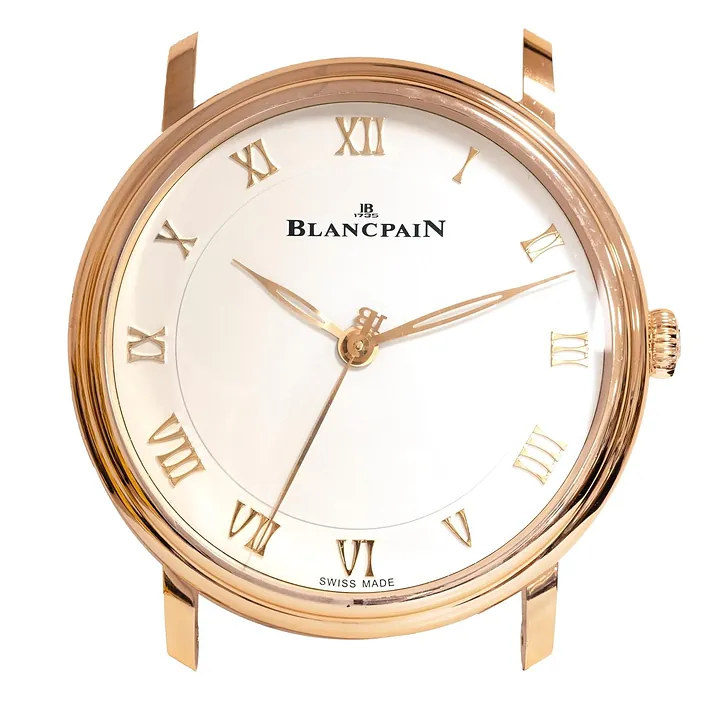
Blancpain clock, c. 2010
Antiquorum auction archive, Geneva
Wristwatches · c. 1930
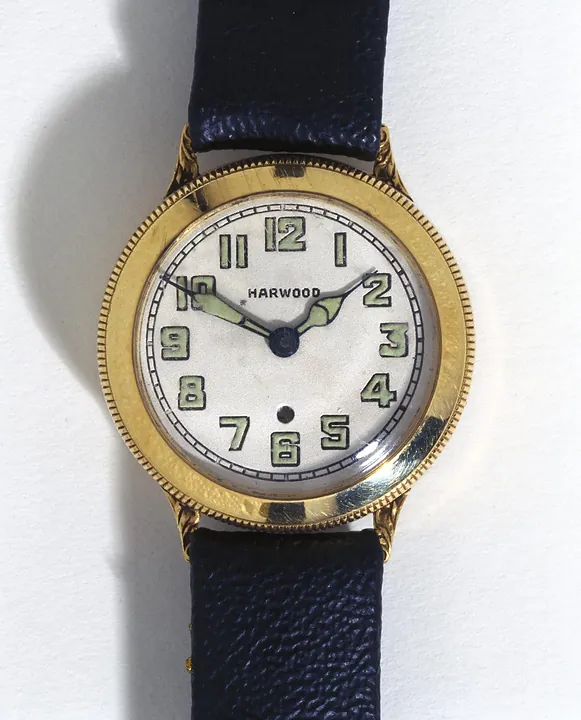
Wristwatch by J. Harwood and Son and Blancpain, Switzerland, c. 1930
Science Museum Group, London
Wristwatches · c. 1930
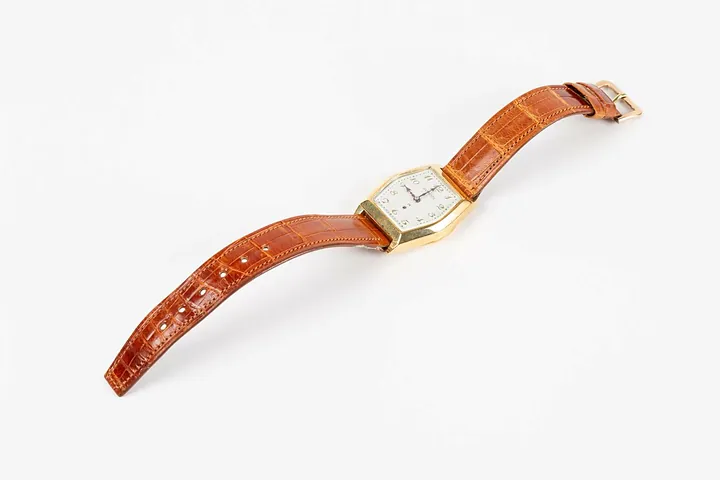
Wristwatch by Harwood (Société Centrale de la Montre Sans Remontoir), Switzerland, c. 1930 (no. 58042)
German Clock Museum
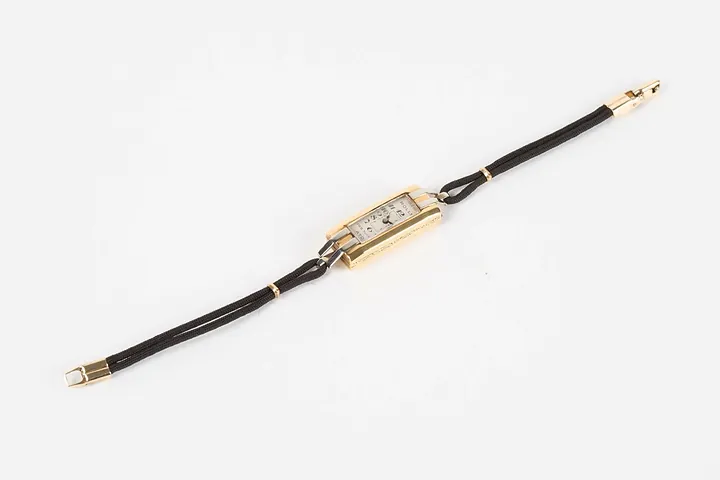
Wristwatches · c. 1932
Wristwatch by Blancpain, Switzerland, c. 1932
German Clock Museum
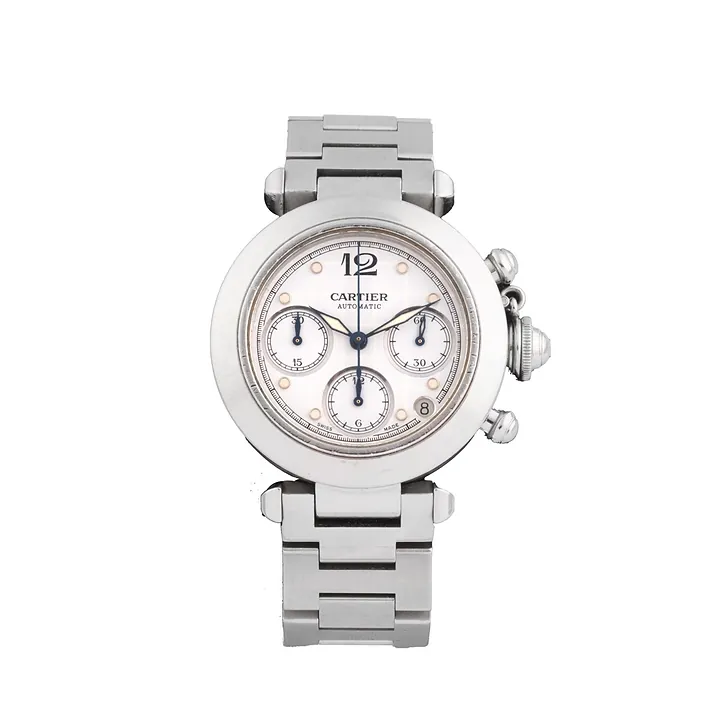
Wristwatches · c. 1990
Cartier Pasha, ref. 2412, c. 1990
Antiquorum auction archive, Geneva
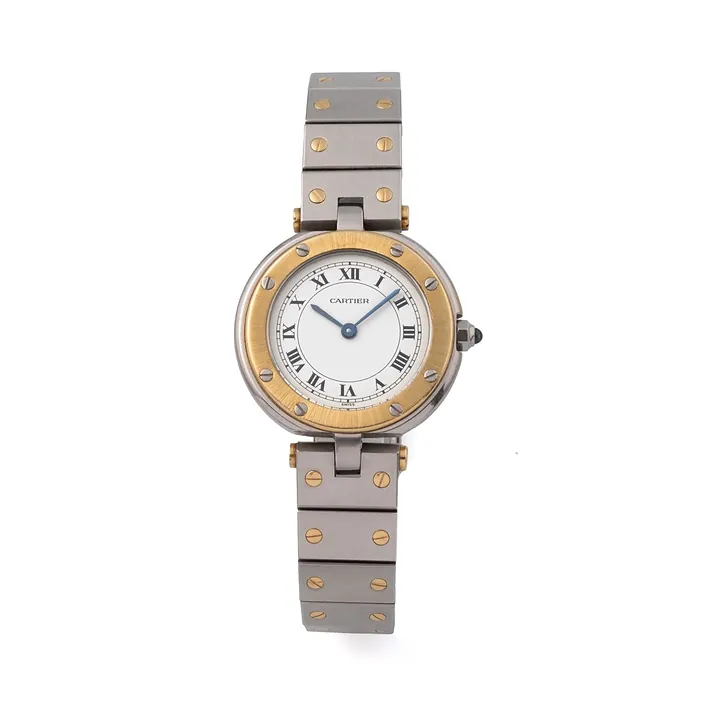
Wristwatches · c. 1990
Cartier Santos Ronde Vendome, c. 1990
Antiquorum auction archive, Geneva
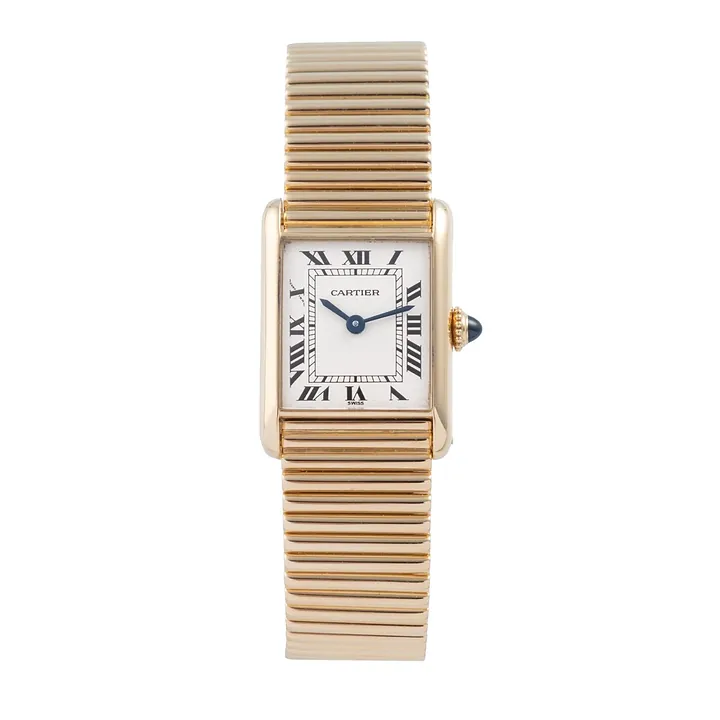
Wristwatches · c. 1990s
Cartier Tank Louis Cartier, ref. 6711, c. 1990s
Antiquorum auction archive, Geneva
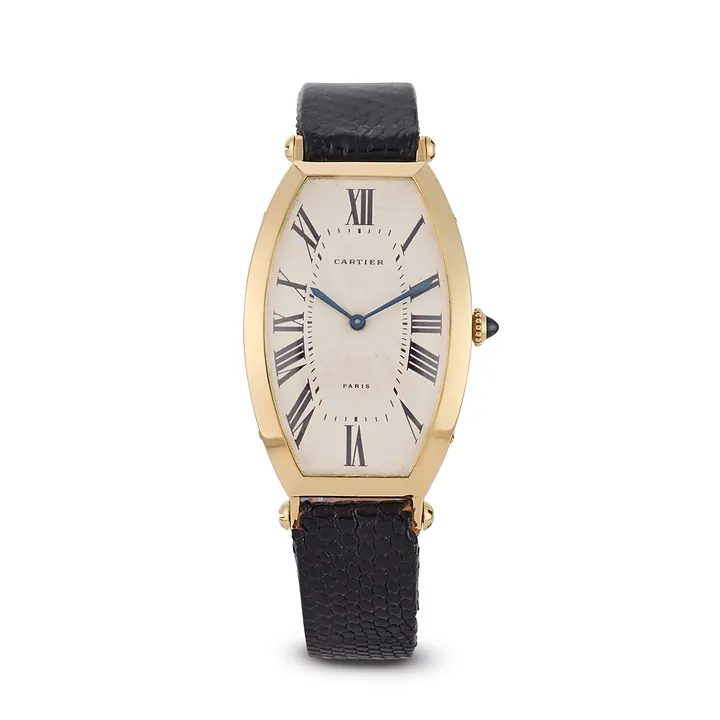
Wristwatches · c. 1991
Cartier Tonneau Paris 1991, c. 1991
Antiquorum auction archive, Geneva