
Wristwatches · Wristwatch
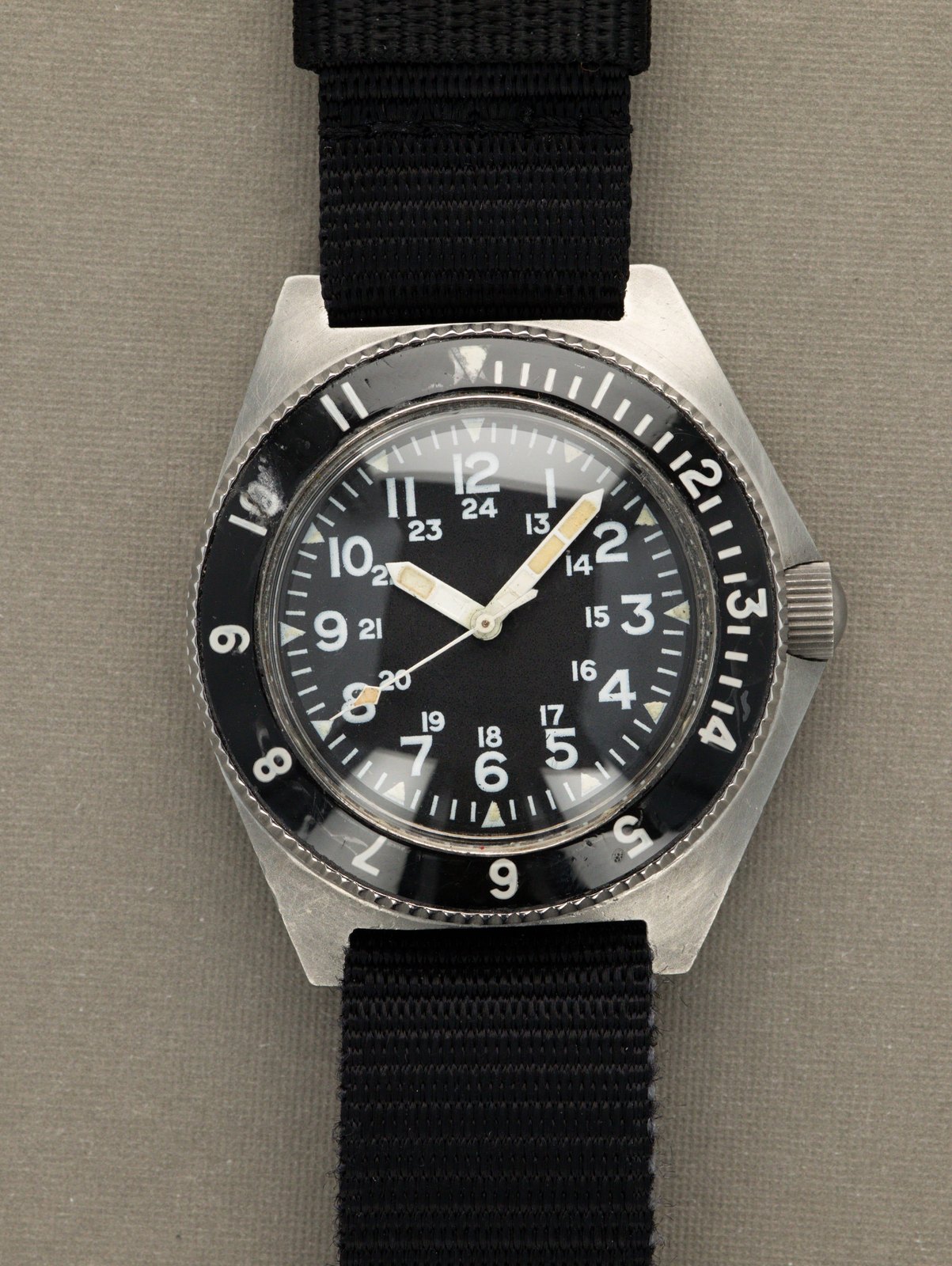
Benrus Type II Class A, 'Sterile' Dial Military Issued
- Maker / attribution
- Benrus (maker)
- Date
- c. 1973
- Historical period
- Quartz Revolution (1969 – 1990)
- Country of origin
- United States
- Object type
- Wristwatch
- Dimensions
- Case 42.5 mm
- Stock no.
- OC2829
- Credit line
- Dealer listing, Oliver & Clarke (OC2829)
- Catalogue title (original)
- Benrus Type II Class A - 'Sterile' Dial Military Issued (English)
View the source record (dealer listing) ↗ (opens another website in a new tab)Suggest a correction
Record summary
Catalogued by Oliver & Clarke (dealer), United Kingdom (stock number OC2829), this is a wristwatch by Benrus, made in United States, dated c. 1973. The Atlas places it in the Quartz Revolution period (1969 – 1990) of its Wristwatches collection. Recorded dimensions: Case 42.5 mm. The record is illustrated with 6 photographs.
Assembled from the source record's structured fields. Dates and attributions are given as the source states them; where a field is missing the Atlas leaves it blank rather than estimating.
Catalogue description
Dealer description — Oliver & Clarke
Watches still played a critical role in military service in the 1970s. As a result of the need for a more robust dive watch tailored to the military's needs, the United States Department of Defense issued the MIL-W-50717 standard, which put forth a more robust list of required specifications, more so than any prior contract. There were many options for lower level officers and platoons when it came to timepieces, but for the best of the best including the renowned Navy Seals, the Benrus Type I and Type II were the best option. Benrus made these pieces exclusively for the military between 1972 to 1980, with this particular example dating to circa 1973 ( May of 1973 to be exact ). The 42.5mm asymmetrical case remains unpolished and retains its original 'sandblasted' finishing and shows normal signs of wear. Flip it over, and the engravings on the caseback denoting it's military provenance and year of manufacture are crisp and clear. The screw-down crown and bi-directional rotating bezel also features the characteristic ' sandblasted' matte finishing that matches that of the case. The black acrylic 12-hr insert within the assembly showing wear consistent with the rest of the piece. Inside, the matte black 'sterile' dial with white printed indices is nicely preserved and exhibits and even patina across the Tritium plots, with a perfectly matching and correct white-painted handset. Due to their limited production, active use during military trials, decommissioning, and flat out loss, not all that many of these pieces survive today — particularly in this kind of condition. We are pleased to offer this Type II up for its next tour of duty, and invite you to strap a real piece of history to your wrist.
Historical context
Quartz Revolution (1969 – 1990)
Seiko's Astron begins mass quartz timekeeping; traditional industries contract sharply.
Quartz and digital watches transformed the market after 1969. Swiss employment collapsed, Japanese and Hong Kong production soared, and the Swatch (1983) helped the Swiss industry recover; mechanical watches survived as luxury goods.
Read the period in the timelineMore wristwatches from this periodEarlier: Modern Mechanical Horology
Atlas type guide
Military, pilot and travel watches
The wristwatch owes much of its adoption by men to warfare and aviation. Wristlets — small pocket watches soldered with lugs and worn on a strap — were used in colonial campaigns and became standard equipment in the First World War, with protective grilles over the crystal ('shrapnel guards'). Louis Cartier's Santos (1904), designed for the aviator Alberto Santos-Dumont, is often cited as an early purpose-made pilot's watch.
In the Second World War governments specified watches in detail: the German B-Uhr observation watches, the American A-11, and the British 'W.W.W.' (the 'Dirty Dozen' set of 1945). After the war, jet travel brought GMT and world-time watches, which show two or more time zones at once — Louis Cottier's world-time mechanism and the Rolex GMT-Master (1955) are examples.
What to look for
- Military markings on the case back: broad arrow, issue numbers, 'W.W.W.', 'A.T.P.'
- High-legibility black dials with luminous Arabic numerals; oversized crowns for gloved hands.
- 24-hour hands and rotating 24-hour bezels or city rings on GMT/world-time watches.
- Wire lugs on early wristlets converted from pocket watches.
Dating clues
- Wire-lug wristlets: c. 1900–1925.
- Military specifications of the Second World War: 1939–1945.
- GMT and world-time wristwatches: mainly after 1950.
General guidance written by the Atlas editors about this kind of object. It is not a statement about this particular piece; for that, rely on the source record above and on physical examination.
Related records
Wristwatches · c. 1960
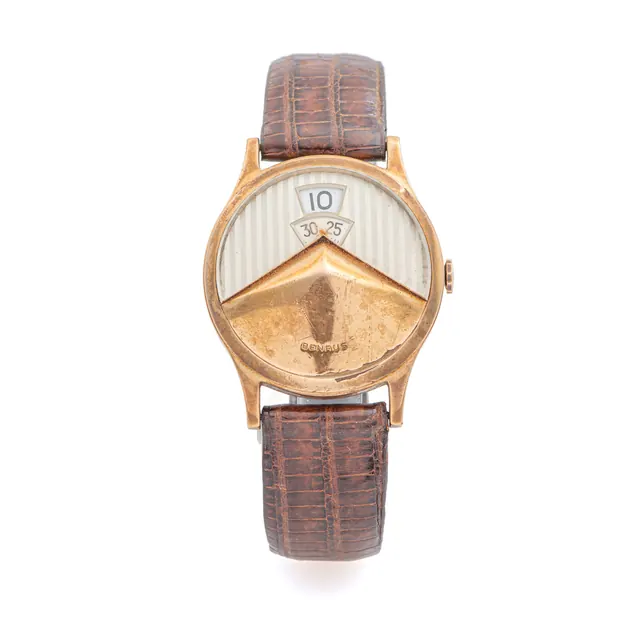
Benrus wristwatch, Dial-O-Rama Digital Jump Hour, circa 1960
Antiquorum auction archive, Geneva
Wristwatches · 1970s
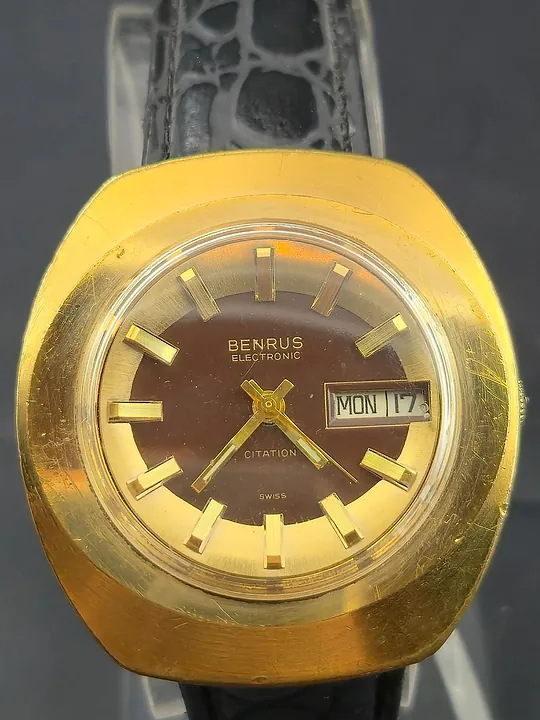
1970s Benrus Citation Electronic HS19 7J Day-Date Wristwatch, Gold-Tone Case, New Battery, Running
LiveAuctioneers auction archive
Wristwatches · 1950s
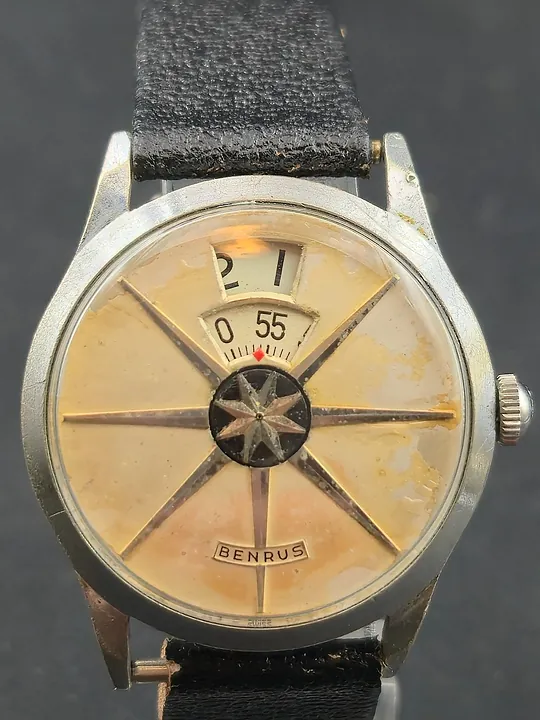
1950s Benrus “Dial-O-Rama” Jump Hour 17J Manual Wind Watch, 33 mm – Runs
LiveAuctioneers auction archive
Wristwatches · 1940s
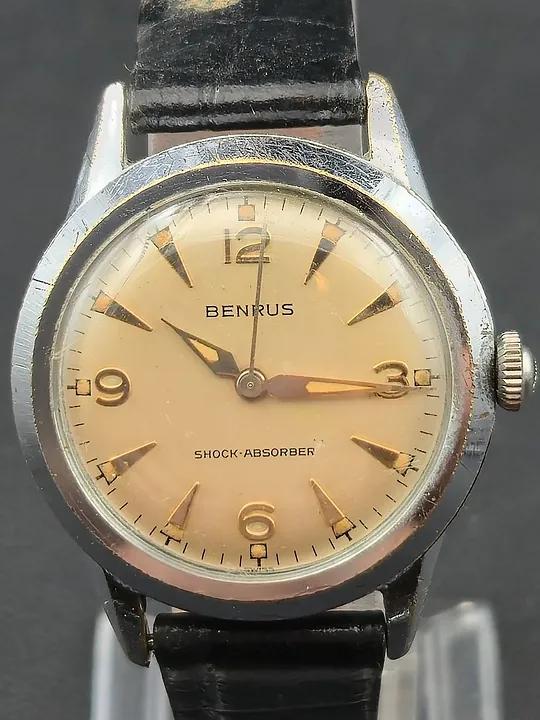
1940s Benrus Shock Absorber 17J U.S. Zone Germany 32mm Runs
LiveAuctioneers auction archive
Wristwatches · 1949–1992
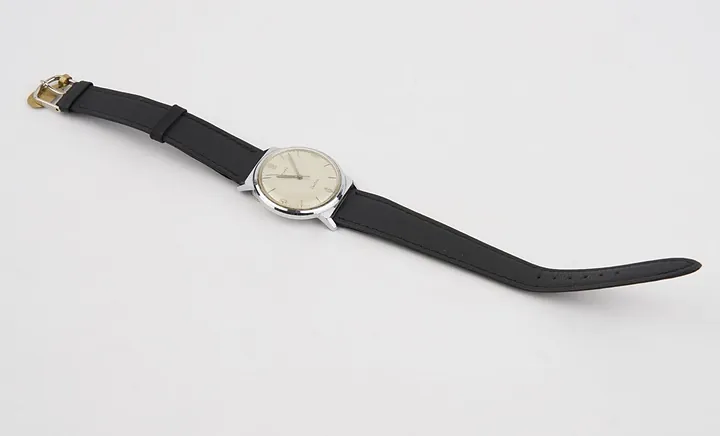
Timex `Electric' wristwatch, with electrically operated balance wheel mechanism, United States, 1949–1992
Science Museum Group, London
Wristwatches · 1972
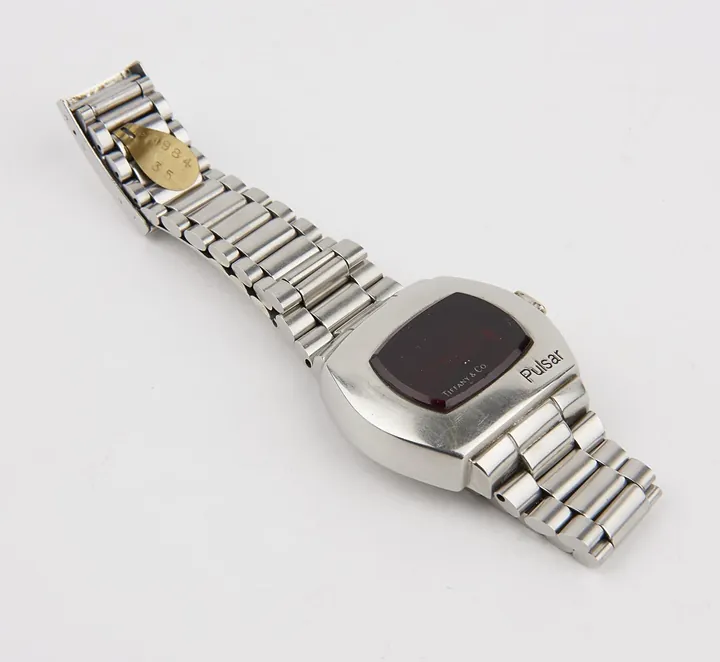
Wristwatch by Hamilton Watch Company and Electro-Data Inc, United States, 1972
Science Museum Group, London
Wristwatches · 1973–1974
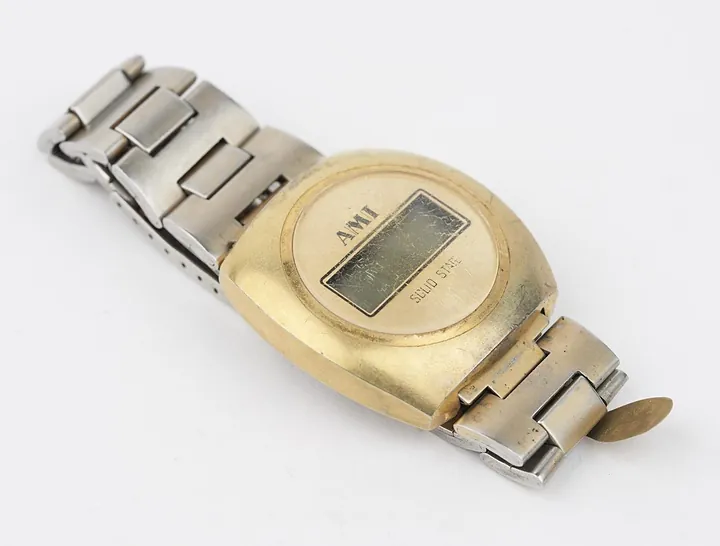
Quartz watch with liquid crystal digital display, made by American Microsystems Inc. (AMI) . 1973/74
Science Museum Group, London
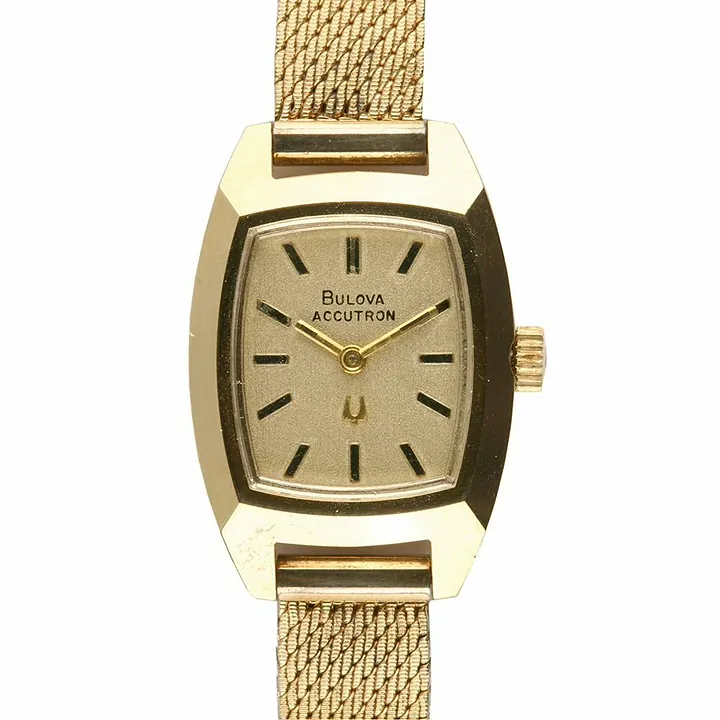
Wristwatches · c. 1973
Wristwatch by Josef Bulova, United States, c. 1973
German Clock Museum