
Wristwatches · Wristwatch
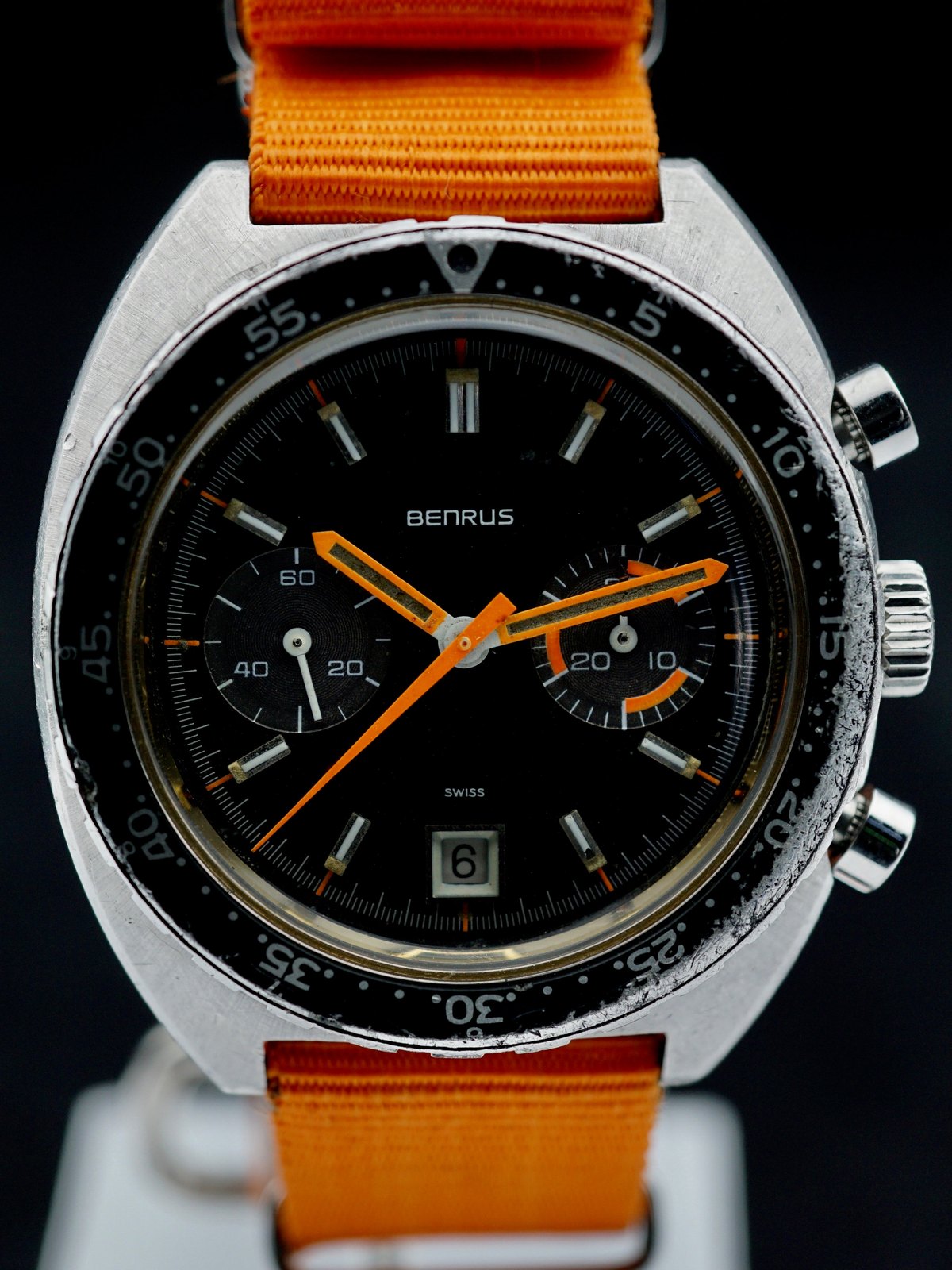
Benrus Dato Ref. 73463, 1974
- Maker / attribution
- Benrus (maker)
- Date
- 1974
- Historical period
- Quartz Revolution (1969 – 1990)
- Country of origin
- United States
- Object type
- Wristwatch
- Dimensions
- Case 40 mm
- Stock no.
- BENDATO
- Credit line
- Dealer listing, Craft & Tailored (BENDATO)
- Catalogue title (original)
- 1974 Benrus Dato Ref. 73463 (English)
View the source record (dealer listing) ↗ (opens another website in a new tab)Suggest a correction
Record summary
Catalogued by Craft & Tailored (dealer), Los Angeles (stock number BENDATO), this is a wristwatch by Benrus, made in United States, dated 1974. The Atlas places it in the Quartz Revolution period (1969 – 1990) of its Wristwatches collection. Recorded dimensions: Case 40 mm. The record is illustrated with 6 photographs.
Assembled from the source record's structured fields. Dates and attributions are given as the source states them; where a field is missing the Atlas leaves it blank rather than estimating.
Catalogue description
Dealer description — Craft & Tailored
The Benrus Dato Ref. 73463 is sometimes referred to as the "Poor Mans Autavia" as it features the same case used in the ever popular Heuer Autavia and the same design and features found in the Heuer Autavia including the same 73463 case reference # as the Heuer Autavia, the manual wind Valjoux 7734 movement, and with original black dial with orange accents as the similar Heuer model. The striking high visibility orange hands paired with the stunning dial make this an eye catching piece. The white sundials jump off the watch and provide a functional yet stunning look when worn on the wrist! This would make an interesting addition to any collection and provides the vintage look and feel from the golden era of watches that we love so much here at Craft & Tailored! SPECS Stock # BENDATO Brand Bernus Style Chronograph Model Dato Serial 26XXXX Size Men's Material SS Dial Glossy Black Millimeters 40mm Bracelet Premium NATO "Orange" CASE & BRACELET The case is in wonderful condition showing the original factory starburst brushed finishing and sharp case lines. The bezel does show some wear but is original to the watch. The watch will be supplied on a premium NATO strap shown on high visibility orange. DIAL & HANDS The dial is in remarkable condition showing very minimal patina. The tritium lume dots at the end of each hour marker and the tritium filed hands remain fully intact and have achieved a stunning golden patina. The hands match the lume plots perfectly and and show no visible lume degradation when viewed under U.V. light ACCESSORIES None. The watch is running at spec and is in perfect working condition.
Historical context
Quartz Revolution (1969 – 1990)
Seiko's Astron begins mass quartz timekeeping; traditional industries contract sharply.
Quartz and digital watches transformed the market after 1969. Swiss employment collapsed, Japanese and Hong Kong production soared, and the Swatch (1983) helped the Swiss industry recover; mechanical watches survived as luxury goods.
Read the period in the timelineMore wristwatches from this periodEarlier: Modern Mechanical Horology
Atlas type guide
Wristwatches
Bracelet watches were worn by women from the early nineteenth century — Breguet made one for Caroline Murat, Queen of Naples, in 1810–12 — but the wristwatch only became a man's instrument with military use and aviation in the early twentieth century. Between the World Wars it overtook the pocket watch; the 1920s and 1930s brought rectangular Art Deco cases, water-resistant cases and the first automatic winding systems.
After 1945 the wristwatch became a carrier of identity — dress watches, sports and dive watches, chronographs, calendars — produced by Swiss, American, Japanese, German, Soviet and Chinese industries. The quartz revolution after 1969 and the mechanical renaissance since the 1990s, including the rise of independent watchmakers, complete the story.
What to look for
- The reference number (between the lugs or inside the case back) and serial number, the starting point for dating.
- The calibre: its maker and number are often stamped under the dial or on the bridge.
- Originality of dial, hands and crown — refinished ('redial') dials are common.
- Case material marks: 18K/750, 14K/585, stainless steel, gold-filled, plated.
Dating clues
- Wire-lug cases: before c. 1925.
- Water-resistant screw-down cases: from 1926.
- Quartz movements: from 1969; sapphire crystals widespread after c. 1980.
General guidance written by the Atlas editors about this kind of object. It is not a statement about this particular piece; for that, rely on the source record above and on physical examination.
Related records
Wristwatches · c. 1960
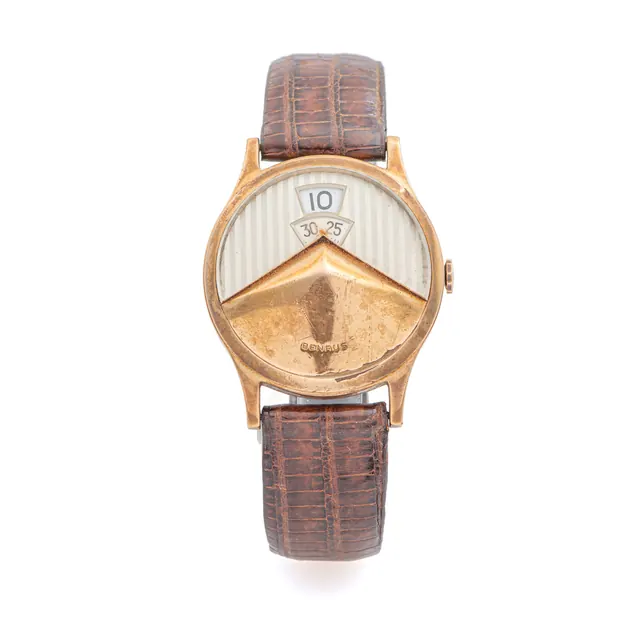
Benrus wristwatch, Dial-O-Rama Digital Jump Hour, circa 1960
Antiquorum auction archive, Geneva
Wristwatches · 1970s
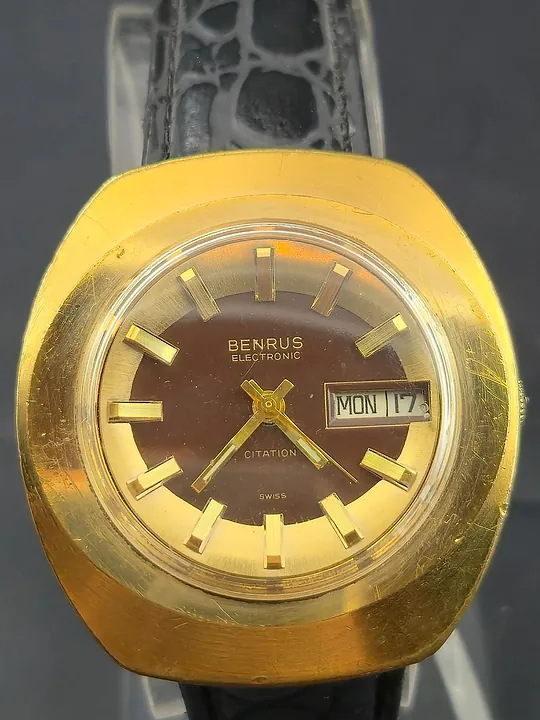
1970s Benrus Citation Electronic HS19 7J Day-Date Wristwatch, Gold-Tone Case, New Battery, Running
LiveAuctioneers auction archive
Wristwatches · 1950s
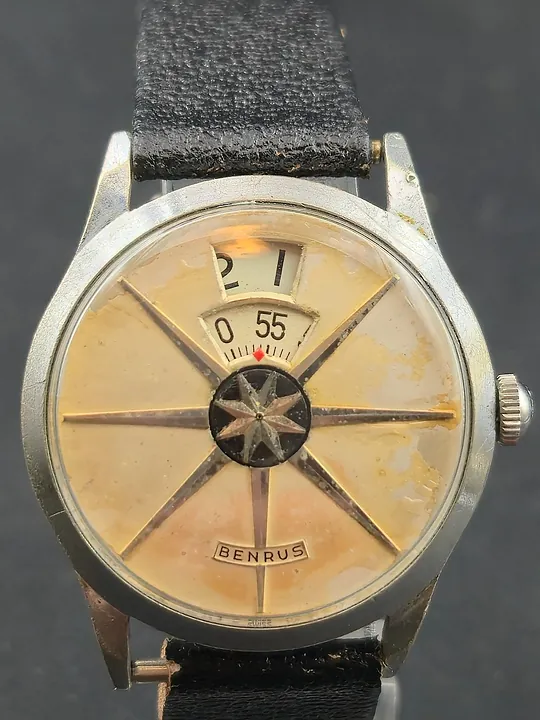
1950s Benrus “Dial-O-Rama” Jump Hour 17J Manual Wind Watch, 33 mm – Runs
LiveAuctioneers auction archive
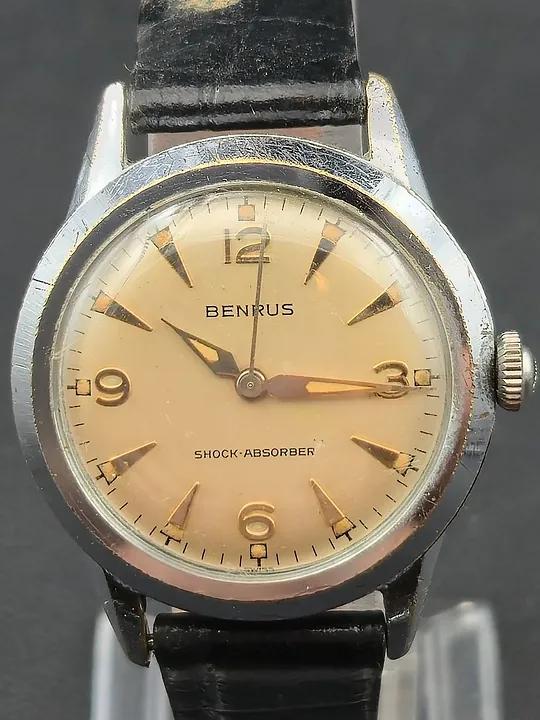
Wristwatches · 1940s
1940s Benrus Shock Absorber 17J U.S. Zone Germany 32mm Runs
LiveAuctioneers auction archive
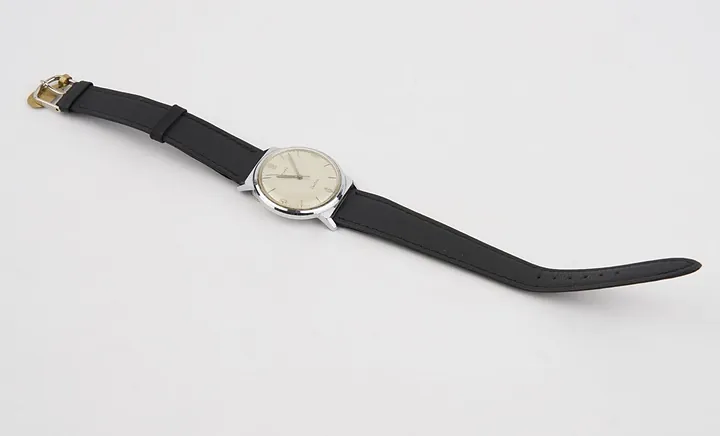
Wristwatches · 1949–1992
Timex `Electric' wristwatch, with electrically operated balance wheel mechanism, United States, 1949–1992
Science Museum Group, London
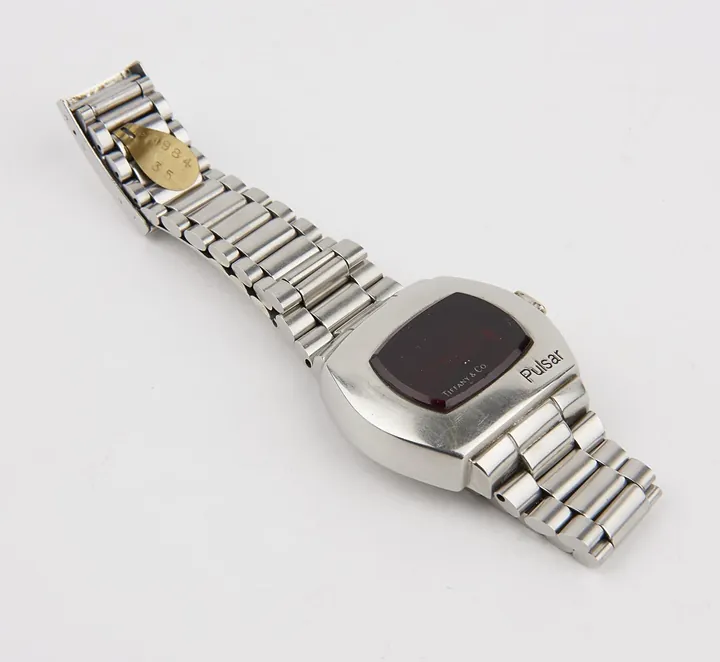
Wristwatches · 1972
Wristwatch by Hamilton Watch Company and Electro-Data Inc, United States, 1972
Science Museum Group, London
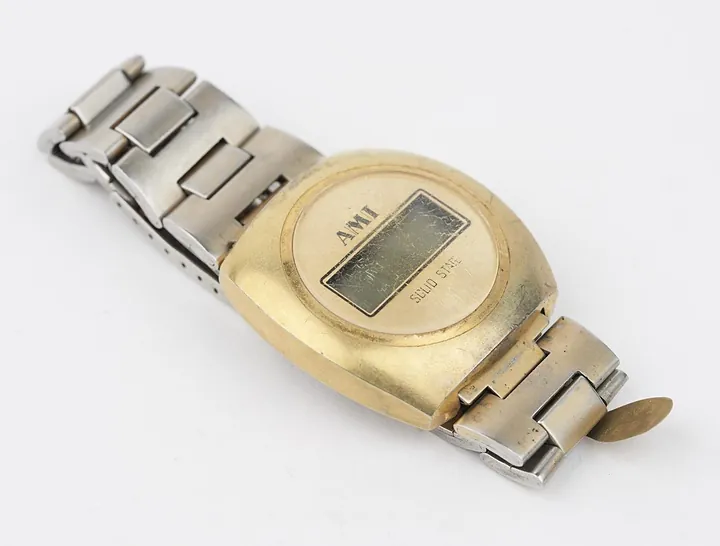
Wristwatches · 1973–1974
Quartz watch with liquid crystal digital display, made by American Microsystems Inc. (AMI) . 1973/74
Science Museum Group, London
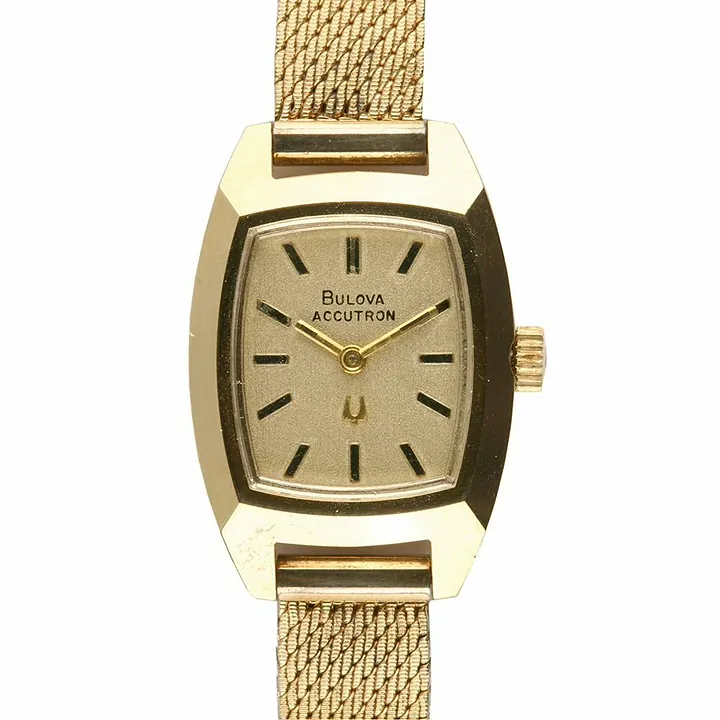
Wristwatches · c. 1973
Wristwatch by Josef Bulova, United States, c. 1973
German Clock Museum