
Wristwatches · Wristwatch
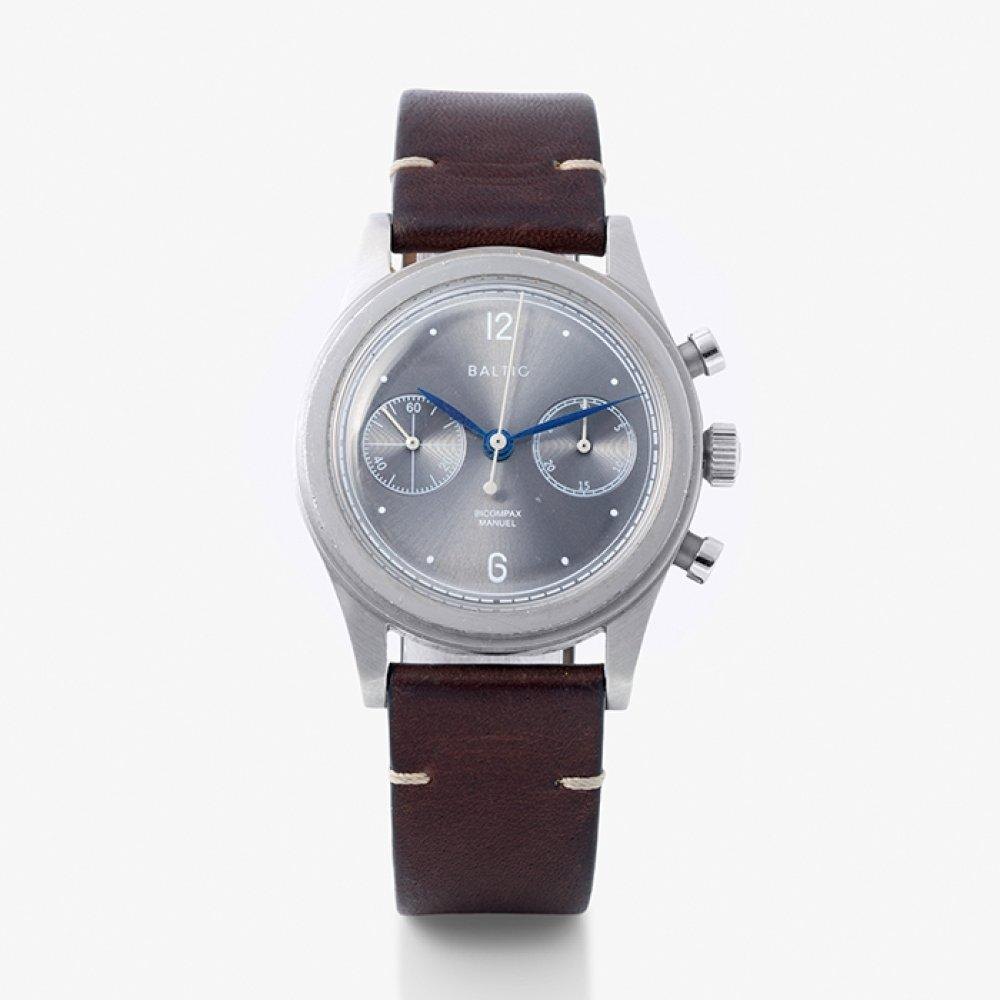
Baltic Bicompax 001 Watch, Ref. BCX0001, Year 2017
- Maker / attribution
- Unrecorded in source
- Date
- 2017
- Historical period
- Contemporary Horology (2010 – Present)
- Country of origin
- Unrecorded in source
- Object type
- Wristwatch
- Materials / technique
- silver, steel
- Auction house
- Invaluable auction listings
- Lot
- Lot 6E1396A100
- Credit line
- Auction lot record: lot 53, 30th November - Fine Watches & Fountain Pens, Setdart Auction House (2026), via Invaluable
- Catalogue title (original)
- BALTIC Bicompax 001 Watch, Ref. BCX0001, Year 2017. Made of stainless steel. (English)
View the source record (auction lot) ↗ (opens another website in a new tab)Suggest a correction
Record summary
Catalogued by Invaluable auction listings (lot Lot 6E1396A100), this is a wristwatch, dated 2017. The Atlas places it in the Contemporary Horology period (2010 – Present) of its Wristwatches collection. Materials and techniques recorded by the source: silver, steel. The record is illustrated with 3 photographs.
Assembled from the source record's structured fields. Dates and attributions are given as the source states them; where a field is missing the Atlas leaves it blank rather than estimating.
Catalogue description
Lot description — Setdart Auction House
BALTIC Bicompax 001 Watch, Ref. BCX0001, Year 2017. Round stainless steel case with brushed and mirror-polished finishes. Flat, stepped bezel with a mirror-polished finish. Anthracite gray dial signed “Baltic/Bicompax Manuel” with small Bicompax seconds sub-dials at 9 o’clock and a minute totalizer at 3 o’clock with a radial finish. Hour markers with white dots and white Arabic numerals at 12 o’clock and 6 o’clock, with a white peripheral minute track. No date window. Blue-tinted hands with an enameled leaf-style effect and a white central small seconds hand. Silver-plated fluted crown with the Baltic logo. Domed Hexalite acrylic crystal. Screw-down case back, rounded at the edges with a mirror-polished finish and a central area with a radial brushed finish. Original brown leather strap with white stitching and a silver buckle clasp with a brushed finish bearing the Baltic logo. Seagull ST1901 base manual-winding chronograph movement. It works, with all functions operating properly. Measurements: 46 x 38 mm (excluding the crown). In the watch descriptions, when it states “it works,” it means the watch is functioning. Since collector’s watches typically have delicate and complex mechanisms, the buyer is responsible for any general servicing, inspection, battery replacement, adjustment, or repair that may be necessary.
Historical context
Contemporary Horology (2010 – Present)
Silicon components, connected watches, optical-lattice research clocks and a thriving independent scene.
Smartwatches became the world's best-selling watches, while mechanical watchmaking focuses on craft, innovation (silicon components, new escapements) and independent makers.
Read the period in the timelineMore wristwatches from this periodEarlier: Mechanical Renaissance
Atlas type guide
Wristwatches
Bracelet watches were worn by women from the early nineteenth century — Breguet made one for Caroline Murat, Queen of Naples, in 1810–12 — but the wristwatch only became a man's instrument with military use and aviation in the early twentieth century. Between the World Wars it overtook the pocket watch; the 1920s and 1930s brought rectangular Art Deco cases, water-resistant cases and the first automatic winding systems.
After 1945 the wristwatch became a carrier of identity — dress watches, sports and dive watches, chronographs, calendars — produced by Swiss, American, Japanese, German, Soviet and Chinese industries. The quartz revolution after 1969 and the mechanical renaissance since the 1990s, including the rise of independent watchmakers, complete the story.
What to look for
- The reference number (between the lugs or inside the case back) and serial number, the starting point for dating.
- The calibre: its maker and number are often stamped under the dial or on the bridge.
- Originality of dial, hands and crown — refinished ('redial') dials are common.
- Case material marks: 18K/750, 14K/585, stainless steel, gold-filled, plated.
Dating clues
- Wire-lug cases: before c. 1925.
- Water-resistant screw-down cases: from 1926.
- Quartz movements: from 1969; sapphire crystals widespread after c. 1980.
General guidance written by the Atlas editors about this kind of object. It is not a statement about this particular piece; for that, rely on the source record above and on physical examination.
Related records
Wristwatches · 2010
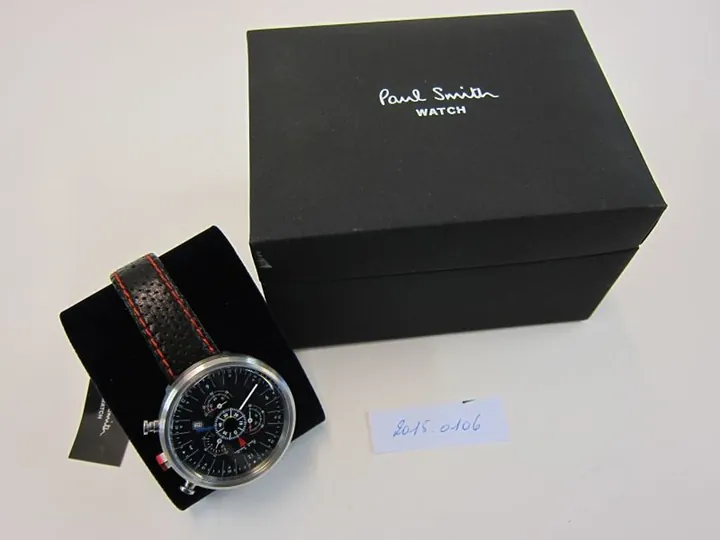
Wristwatch, 2010
Modemuseum Hasselt
Wristwatches · 2018 (Series 4 released in September 2018; '1977' in the source is the model number A1977)
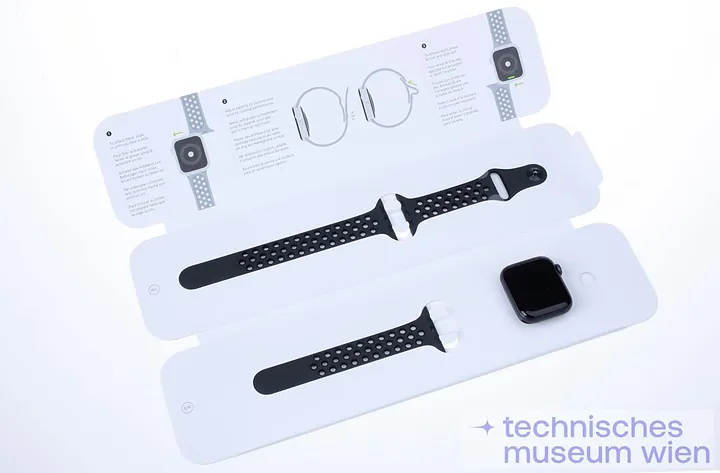
Apple Watch Series 4 (GPS, 40 mm, model A1977), 2018
Vienna Museum of Science and Technology
Wristwatches · c. 2010s
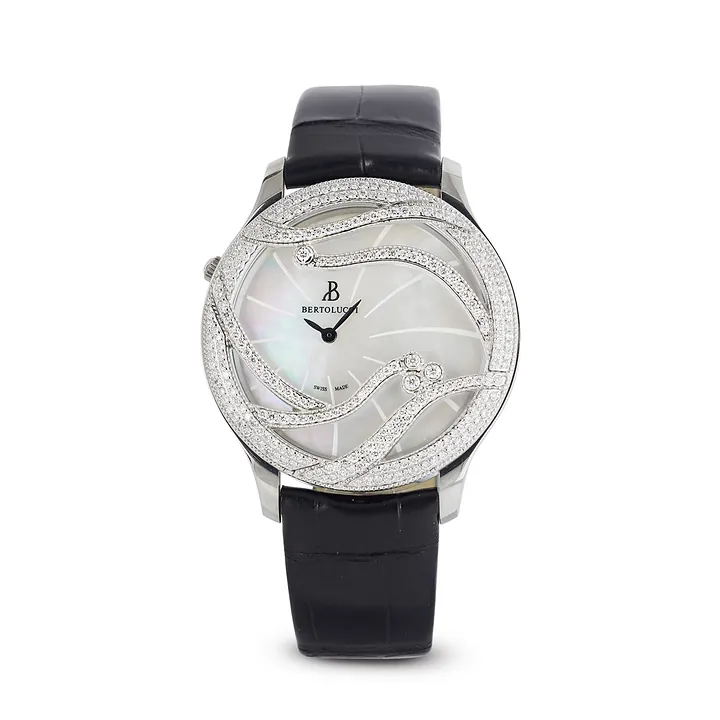
Bertolucci Stria III, ref. 11513.50.45.B88.6C1.501, c. 2010s
Antiquorum auction archive, Geneva
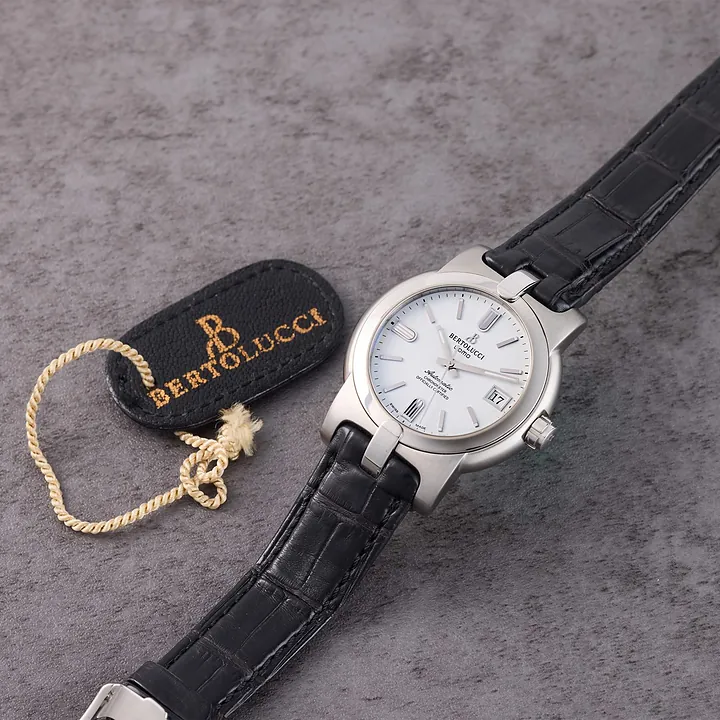
Wristwatches · c. 2010s
Bertolucci Uoma, ref. 824.51.41.10B, c. 2010s
Antiquorum auction archive, Geneva

Wristwatches · c. 2010s
Breguet Type XXI, ref. 3810, c. 2010s (Antiquorum Lot 381-24)
Antiquorum auction archive, Geneva

Wristwatches · c. 2010s
Breguet Type XXI, ref. 3810, c. 2010s (Antiquorum Lot 386-229)
Antiquorum auction archive, Geneva

Wristwatches · Sold in September 2010
Breitling Cosmonaute, ref. A 22322, Sold in September 2010
Antiquorum auction archive, Geneva
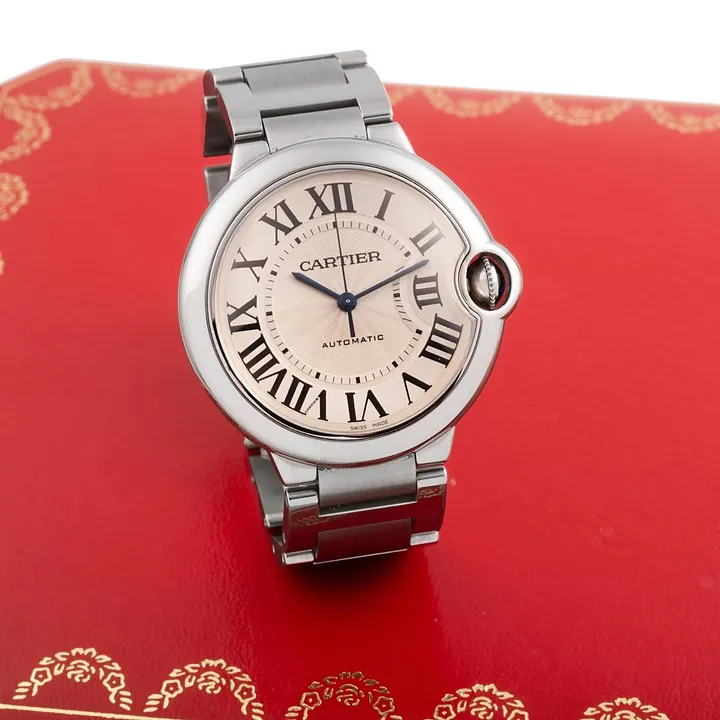
Wristwatches · c. 2010s
Cartier Ballon Bleu, ref. 3284, c. 2010s
Antiquorum auction archive, Geneva