
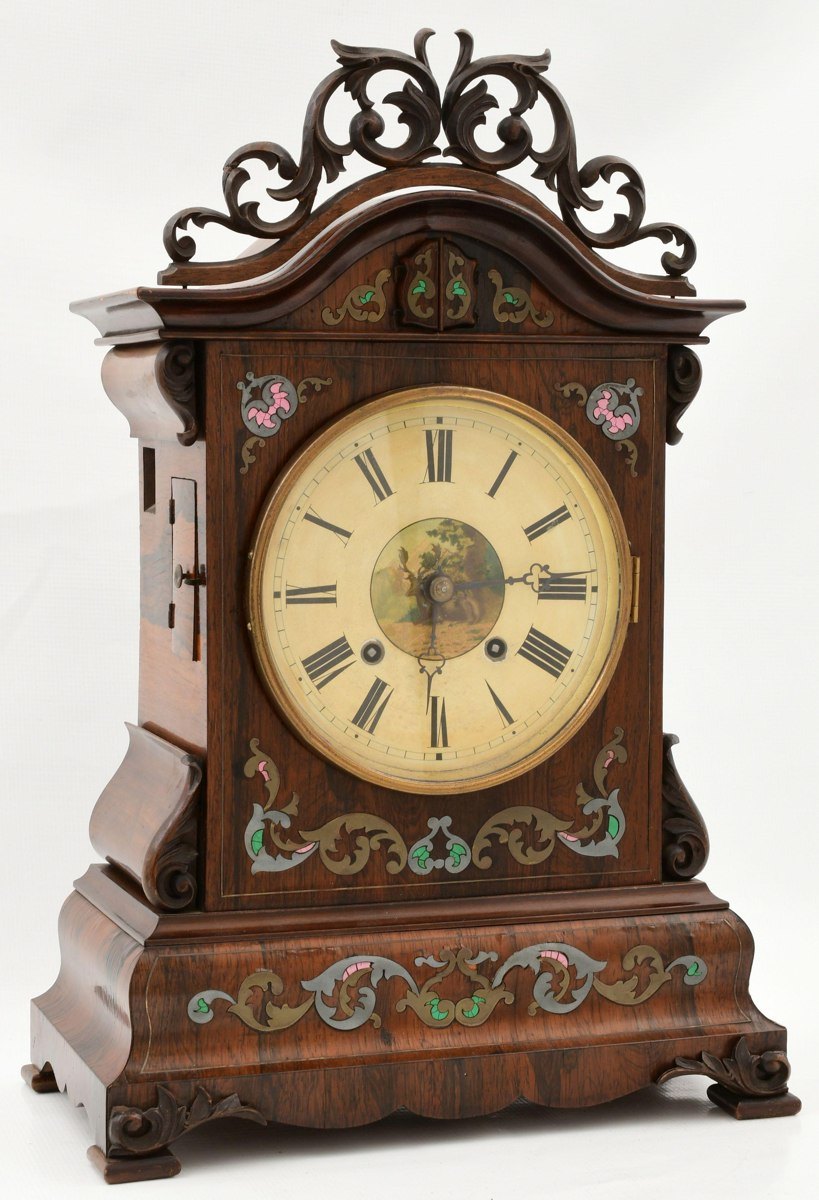
Clocks · Shelf cuckoo clock
Johann Baptist Beha Black Forest Fusee Shelf Cuckoo Clock
- Maker / attribution
- Johann Baptist Beha (attributed)
- Date
- late 19th century
- Historical period
- Industrial Revolution (1850 – 1900)
- Country of origin
- Germany
- Object type
- Shelf cuckoo clock
- Dimensions
- 22 1/2 x 15 x 8 inches
- Auction house
- Fontaine's Auction Gallery
- Lot
- 68
- Credit line
- Fontaine's Auction Gallery
- Catalogue title (original)
- Lot - Attributed to Johann Baptist Beha (German, 1815-1898), Black Forest Fusee Shelf Cuckoo Clock (English)
View the source record (auction lot) ↗ (opens another website in a new tab)Suggest a correction
Record summary
Catalogued by Fontaine's Auction Gallery (lot 68), this is a shelf cuckoo clock attributed to Johann Baptist Beha, made in Germany, dated late 19th century. The Atlas places it in the Industrial Revolution period (1850 – 1900) of its Clocks collection. Recorded dimensions: 22 1/2 x 15 x 8 inches. The record is illustrated with 1 photograph.
Assembled from the source record's structured fields. Dates and attributions are given as the source states them; where a field is missing the Atlas leaves it blank rather than estimating.
Catalogue description
Original object description
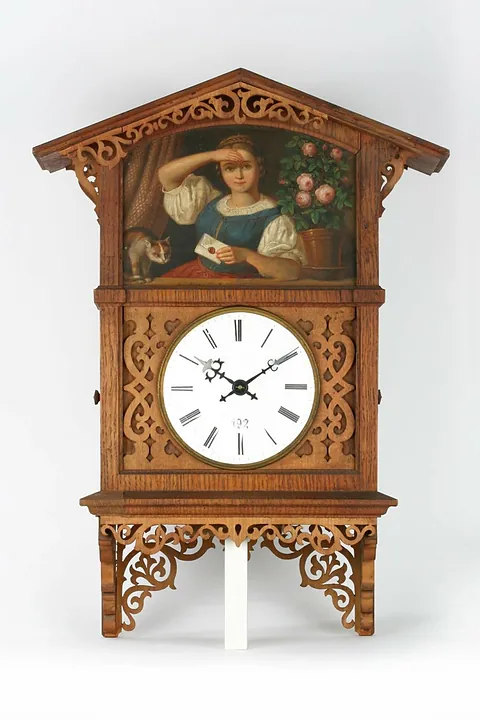
Attributed by Fontaine's Auction Gallery to Johann Baptist Beha (German, 1815–1898) and placed in the late nineteenth century, this Black Forest shelf cuckoo clock stands 22 1/2 inches tall, 15 inches wide, and 8 inches deep. The architectural rosewood-veneered case rests on a shaped base with carved feet and terminates in an arched cornice crowned with a pierced scroll crest, accented by brass and multicolored tinted foliate inlays across the plinth and dial surround. Set into the case side is a latched rectangular inspection door. The front displays a recessed circular painted dial featuring Roman hours, two winding arbors, openwork metal hands, and a central painted landscape vignette, of which specific artist and subject details are unrecorded. Power is provided by an unsigned eight-day fusee mechanism incorporating wooden plates and a cuckoo apparatus. Condition notes state that the case retains its original finish and dial paint alongside minor veneer lifting; the mechanism is currently not running, with the cuckoo remaining extended and the doors held open. Because interior images are absent, physical verification of the bellows, wooden plates, and fusees cannot be confirmed from exterior views alone.
Historical context
Industrial Revolution (1850 – 1900)
American interchangeable-parts manufacture; railroad time standards; Swiss and German factory systems.
Factory production transformed the clock into an everyday object. American makers (Seth Thomas, Ansonia, Waterbury) and German factories (Junghans, Gustav Becker, Lenzkirch) sold millions of shelf, wall and alarm clocks worldwide; France produced standardised Paris movements and carriage clocks; electric time distribution began.
Read the period in the timelineMore clocks from this periodEarlier: Precision & Scientific Horology
Atlas type guide
Black Forest and cuckoo clocks
Clockmaking spread through the Black Forest in south-west Germany in the late seventeenth century as a winter occupation for farming families. Early clocks had wooden plates and wheels and a foliot ('Waaguhr') or short pendulum, with a painted wooden shield dial; pedlars (Uhrenträger) carried them across Europe. The cuckoo clock, which imitates the bird's call with two small bellows-driven pipes, appeared in the mid-eighteenth century.
The industry was organised around Furtwangen, Triberg, Schwenningen and Lenzkirch. The Furtwangen clockmaking school (1850) introduced the railway-house cuckoo clock design, and from the late nineteenth century factories such as Junghans, Kienzle and Hamburg-Amerikanische Uhrenfabrik produced clocks by the million. The German Clock Museum in Furtwangen preserves the region's history.
What to look for
- Wooden plates and wheels (earlier) versus brass movements (later).
- Painted shield dials (Lackschilduhr) with floral or figurative decoration.
- Cuckoo bellows and pipes, the carved 'railway house' or hunting-scene case.
- Trademarks and movement stamps of Black Forest factories.
Dating clues
- Wooden-wheeled foliot clocks: c. 1680–1750.
- Painted shield clocks: c. 1780–1880.
- Railway-house cuckoo clocks: after 1850; carved hunting-style cases after c. 1860.
General guidance written by the Atlas editors about this kind of object. It is not a statement about this particular piece; for that, rely on the source record above and on physical examination.
Read next:FoliotAnchor (recoil) escapement
Related records
Clocks · late 19th century
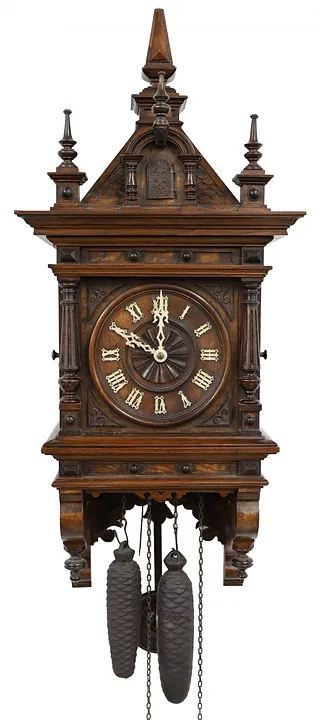
German late 19th century Black Forest 400 Echo cuckoo wall clock by Johann Baptist Beha
Gardiner Houlgate (auction house), Corsham
Clocks · c. 1850
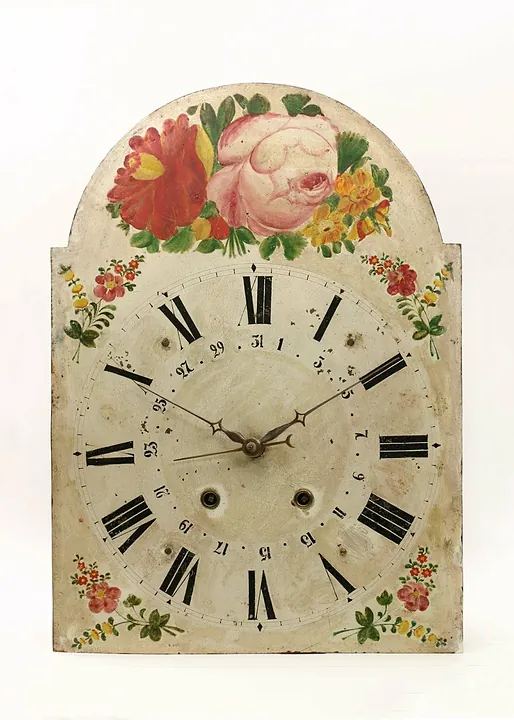
Cuckoo / black forest clock, Germany, c. 1850
German Clock Museum
Clocks · 1850
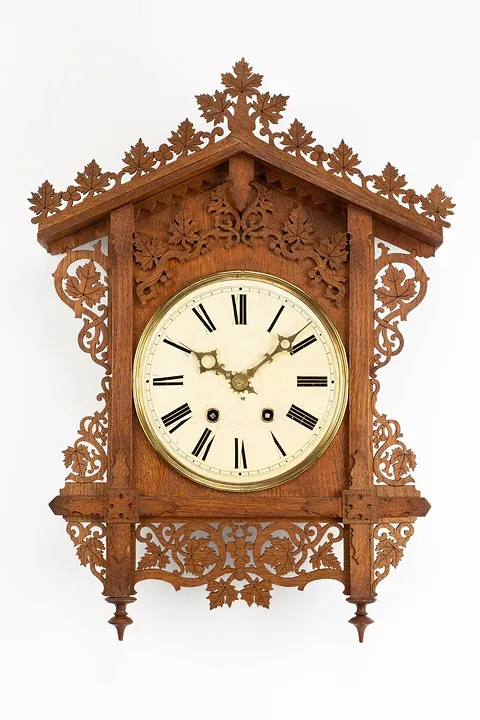
Wall clock by Glatz und Co. Kreuzer, Germany, 1850
German Clock Museum
Clocks · 1858
Clock by Jacob Bäuerle, Germany, 1858
German Clock Museum
Clocks · 1860
Clock by August Tritschler, Germany, 1860
German Clock Museum
Clocks · 1860
Clock by Großherzoglich Badische Uhrmacherschule, Germany, 1860
German Clock Museum
Clocks · c. 1860
Clock by Heinrich Frank, Germany, c. 1860
German Clock Museum
Clocks · c. 1860
Clock by M. Schuhmacher, Germany, c. 1860
German Clock Museum