
Clocks · Clock
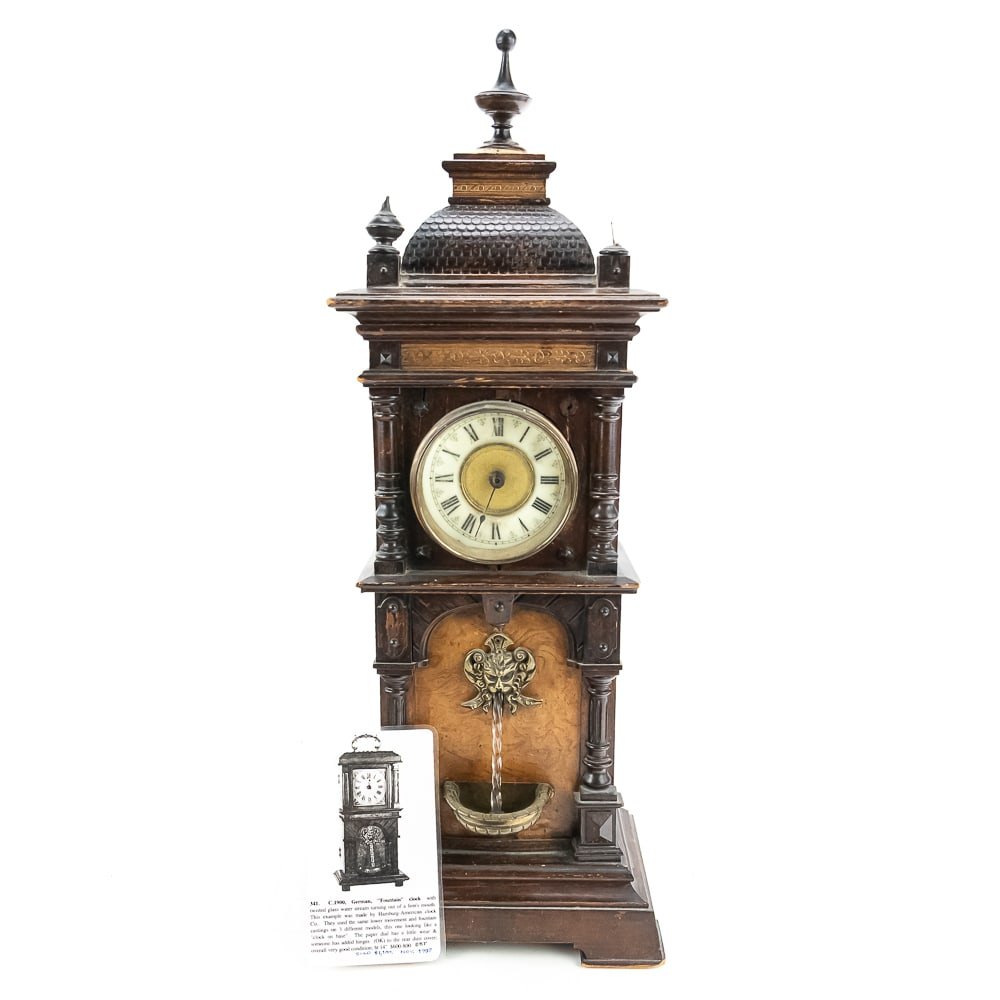
Antique German Automaton Fountain Clock, c. 1900
- Maker / attribution
- Unrecorded in source
- Date
- c. 1900
- Historical period
- Golden Age of Mechanical Watchmaking (1900 – 1945)
- Country of origin
- Germany
- Object type
- Clock
- Materials / technique
- wood
- Auction house
- LiveAuctioneers auction archive
- Lot
- Item 216855441
- Credit line
- Auction lot record: lot 1235, Day 1: Fall Classic: Coin-Op & Advertising, Donley Auctions (2025), via LiveAuctioneers
- Catalogue title (original)
- Antique German Automaton Fountain Clock (English)
View the source record (auction lot) ↗ (opens another website in a new tab)Suggest a correction
Record summary
Catalogued by LiveAuctioneers auction archive (lot Item 216855441), this is a clock, made in Germany, dated c. 1900. The Atlas places it in the Golden Age of Mechanical Watchmaking period (1900 – 1945) of its Clocks collection. Materials and techniques recorded by the source: wood. The record is illustrated with 4 photographs.
Assembled from the source record's structured fields. Dates and attributions are given as the source states them; where a field is missing the Atlas leaves it blank rather than estimating.
Catalogue description
Lot description — Donley Auctions
A rare and fascinating antique automaton mantel clock, circa 1900, by the Hamburg American Clock Co. . Housed in an architectural dark wood case, this novelty clock's main attraction is the "mystery" fountain. A twisted glass rod rotates to create a continuous and convincing illusion of flowing water, pouring from a metal grotesque mask into a basin below. The wood case shows significant age-appropriate cosmetic wear, scuffs, and scratches. The fountain element and glass rod are present. The water fountain mech winds (no key provided) but does not run and needs servicing. The clock winds and runs with attached key but the hour hand is missing. also the top right turned wood finial is missing. This is an exceptional decorative piece or a prime candidate for a restoration project. H 22", W 10", D 7". Note: Pickup/ Transport required. Contacts available post auction.
Historical context
Golden Age of Mechanical Watchmaking (1900 – 1945)
The wristwatch displaces the pocket watch; waterproof cases, self-winding and grand complications.
Between 1900 and 1945 clocks were electrified: master-clock systems ran factories and offices, synchronous mains clocks entered homes, and the Shortt free-pendulum clock set new standards of accuracy before the first quartz clocks (1927). Art Deco design reshaped mantel and table clocks.
Read the period in the timelineMore clocks from this periodEarlier: Industrial Revolution
Atlas type guide
Astronomical, musical and automaton clocks
Astronomical clocks display more than the hour: the positions of the sun and moon in the zodiac, the phase of the moon, the calendar, sometimes the planets and eclipses. From Richard of Wallingford's and Giovanni de' Dondi's fourteenth-century clocks to the Prague Orloj and the Strasbourg cathedral clocks, they demonstrated the order of the cosmos. Renaissance makers in Augsburg and Nuremberg built celestial globe clocks and monstrance clocks as princely treasures.
Automaton and musical clocks entertained as well as informed: figures move, birds sing, organs and carillons play tunes from pinned cylinders. The eighteenth-century trade with China ('sing-songs') and Ottoman Turkey created a market for elaborate English, Swiss and French automata.
What to look for
- Subsidiary dials for moon phase, calendar, zodiac and planetary positions.
- Celestial globes or armillary spheres turned by the movement.
- Pinned cylinders, bellows and pipes or bells for music.
- Figures on cams and levers; separate trains for automaton work.
Dating clues
- Renaissance astronomical table and globe clocks: c. 1550–1650.
- English and Swiss automaton clocks for the Chinese market: c. 1760–1820.
- Picture clocks (clockwork pictures) are mostly nineteenth century.
General guidance written by the Atlas editors about this kind of object. It is not a statement about this particular piece; for that, rely on the source record above and on physical examination.
Read next:Verge escapementFusee
Related records
Clocks · c. 1900
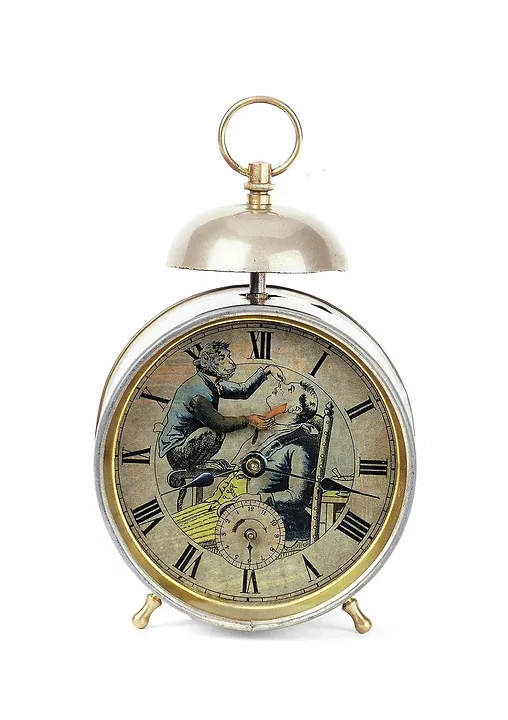
Alarm clock by Union Clock Company, Germany, c. 1900
German Clock Museum
Clocks · 1900
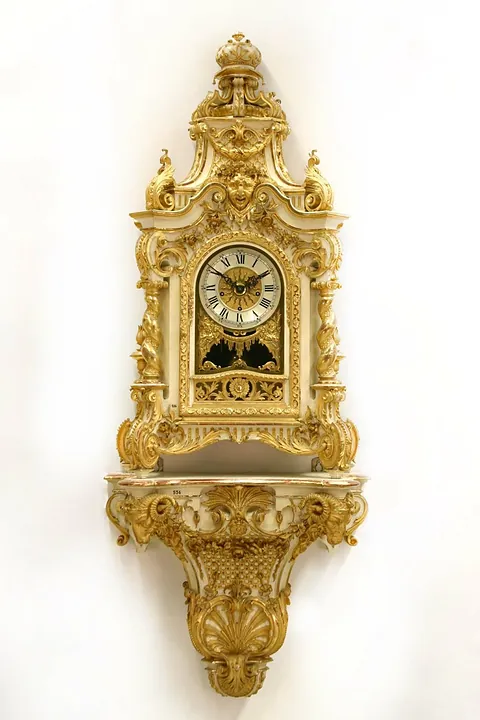
Clock by Josef Münzer, Germany, 1900
German Clock Museum
Clocks · c. 1900
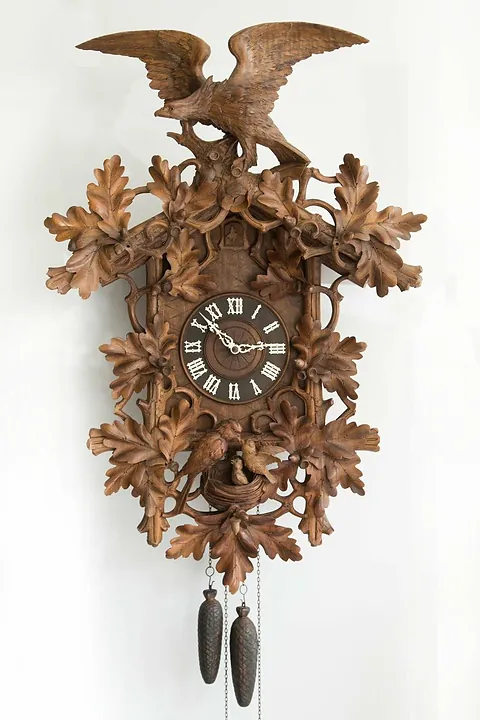
Cuckoo / black forest clock by Gebr. Lehnis, Germany, c. 1900
German Clock Museum
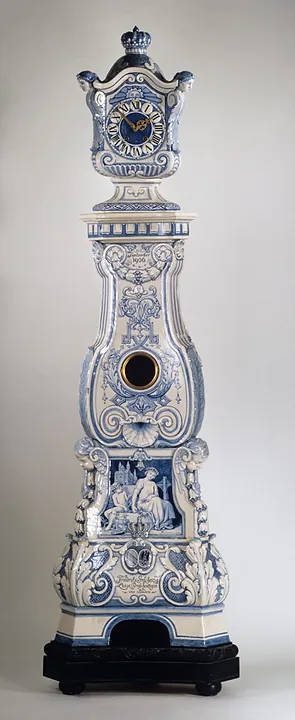
Clocks · 1900–1999
Longcase clock by Staatliche Majolika-Manufaktur Karlsruhe, Germany, 1900–1999
Badisches Landesmuseum Karlsruhe
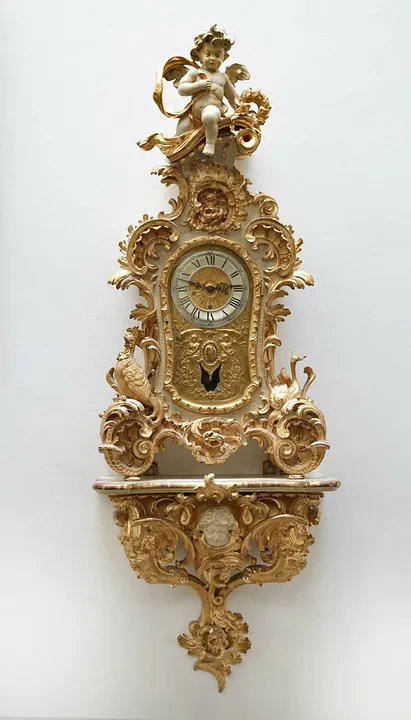
Clocks · c. 1900
Mantel clock by A. G. für Uhrenfabrikation Lenzkirch, Germany, c. 1900
German Clock Museum
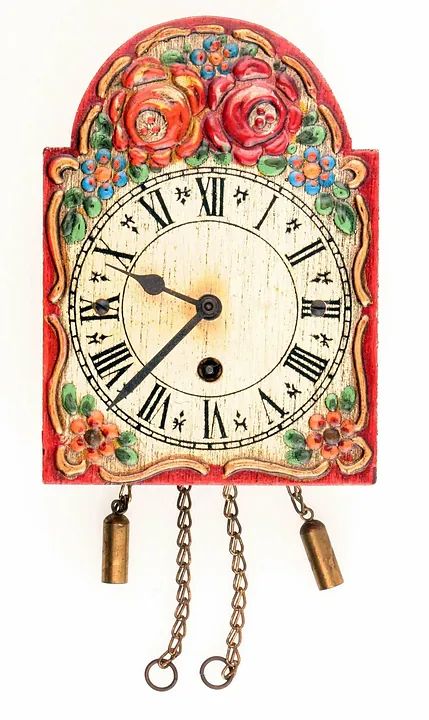
Clocks · 1900–1999
Mantel clock by Wintermantel & Co., Germany, 1900–1999 (no. 56059)
German Clock Museum
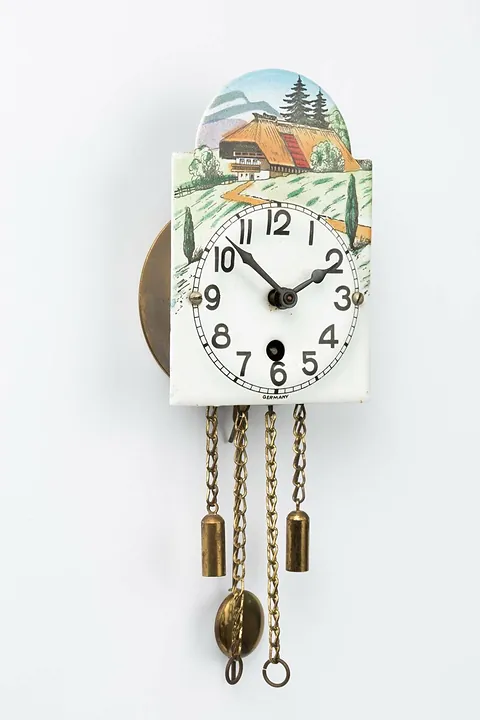
Clocks · 1900–1999
Mantel clock by Wintermantel & Co., Germany, 1900–1999 (no. 56060)
German Clock Museum
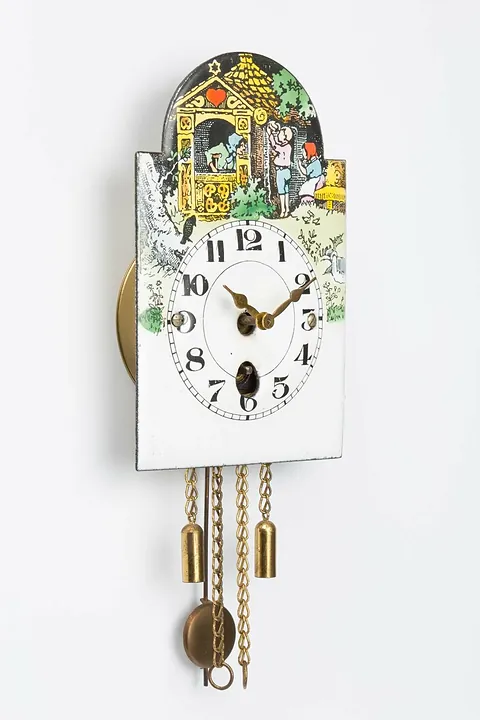
Clocks · 1900–1999
Mantel clock by Wintermantel & Co., Germany, 1900–1999 (no. 56061)
German Clock Museum