
Wristwatches · Wristwatch
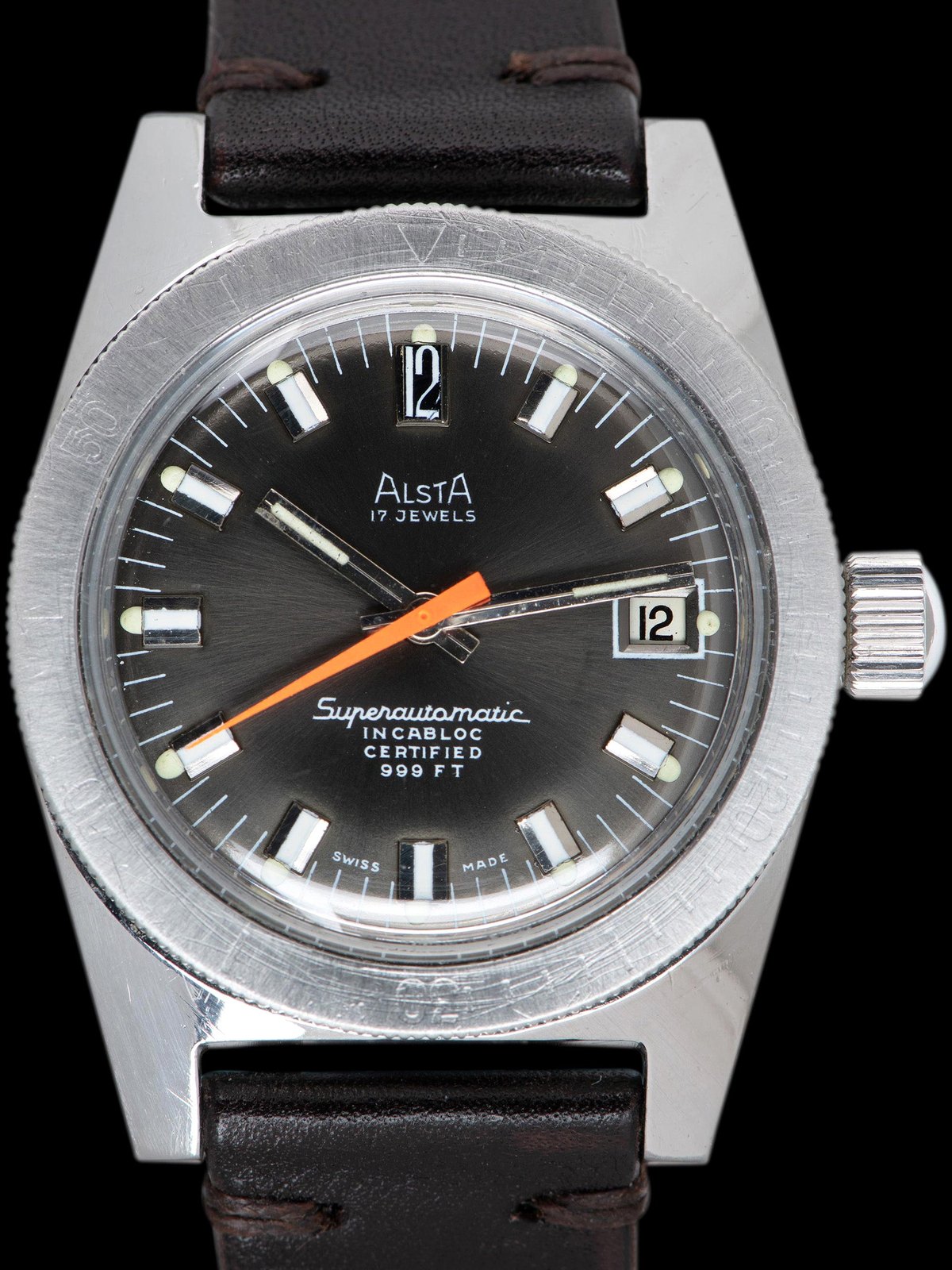
Alsta Nautoscaph Superautomatic, 1970s
- Maker / attribution
- Alsta (maker)
- Date
- 1970s
- Historical period
- Quartz Revolution (1969 – 1990)
- Country of origin
- Unrecorded in source
- Object type
- Wristwatch
- Stock no.
- ALSNTSA-2
- Credit line
- Dealer listing, Craft & Tailored (ALSNTSA-2)
- Catalogue title (original)
- 1970s Alsta Nautoscaph Superautomatic (English)
View the source record (dealer listing) ↗ (opens another website in a new tab)Suggest a correction
Record summary
Catalogued by Craft & Tailored (dealer), Los Angeles (stock number ALSNTSA-2), this is a wristwatch by Alsta, dated 1970s. The Atlas places it in the Quartz Revolution period (1969 – 1990) of its Wristwatches collection. The record is illustrated with 6 photographs.
Assembled from the source record's structured fields. Dates and attributions are given as the source states them; where a field is missing the Atlas leaves it blank rather than estimating.
Catalogue description
Dealer description — Craft & Tailored
Alstater aka Alsta was a New York-based company founded in 1946. Alsta started off importing and casing watch movements for other brands in addition to their own brands making for some unique variants of different watches under various brand names. However, the movements were all signed Alstater. This is quite common for other watches including the famous ALSTA Nautoscaph aka “JAWS” diver. Stock # ALSNTSA-2 Brand Alsta Style Nautoscaph Superautomatic Model N/A Serial 80XXX Size Men's Material Stainless Steel Dial Grey Sunburst Millimeters 37 Bracelet 2pc Handmade Leather Strap CASE & BRACELET The strong case exhibits signs of light polishing and retains symmetrical and full lugs that show light signs of honest use. The case back retains all of the original factory markings though they are light from wear. The watch will come supplied on a 2pc handmade leather strap. DIAL & HANDS The grey sunburst dial has a lovely vintage aesthetic, showing sheen and depth that belies its age. The lume has aged to a light grey/green coloration and exhibits no degradation. The original luminous hands match the dial perfectly, and the bright orange sweep seconds hand adds a welcome pop of color. ACCESSORIES None. The watch is functioning and keeping time, previous service history is unknown.
Historical context
Quartz Revolution (1969 – 1990)
Seiko's Astron begins mass quartz timekeeping; traditional industries contract sharply.
Quartz and digital watches transformed the market after 1969. Swiss employment collapsed, Japanese and Hong Kong production soared, and the Swatch (1983) helped the Swiss industry recover; mechanical watches survived as luxury goods.
Read the period in the timelineMore wristwatches from this periodEarlier: Modern Mechanical Horology
Atlas type guide
Automatic (self-winding) watches
Self-winding watches use the wearer's motion to wind the mainspring. Abraham-Louis Perrelet and Breguet made 'perpétuelle' pocket watches with oscillating weights in the late eighteenth century, but the principle only became practical in the wristwatch. John Harwood patented a bumper automatic in 1923; Rolex's Perpetual rotor (1931) winding in one direction, and later bidirectional rotors (Eterna, Felsa Bidynator), established the modern form. Micro-rotors (Universal Genève, Buren) and peripheral rotors made automatic watches thinner.
What to look for
- A semicircular rotor turning 360° over the movement, or a 'bumper' weight that rebounds between springs.
- 'Automatic', 'Perpetual' or 'Self-winding' on the dial.
- A sealed screw-back case, since automatic watches are wound less often by the crown.
Dating clues
- Bumper automatics: 1923–c. 1955.
- Full rotors: from 1931 (Rolex); widespread after c. 1950.
- Micro-rotors: from 1954–1958.
General guidance written by the Atlas editors about this kind of object. It is not a statement about this particular piece; for that, rely on the source record above and on physical examination.
Related records

Wristwatches · 1970
Wristwatch by Heno, Switzerland, 1970
Museum Rotterdam
Wristwatches · 1970s
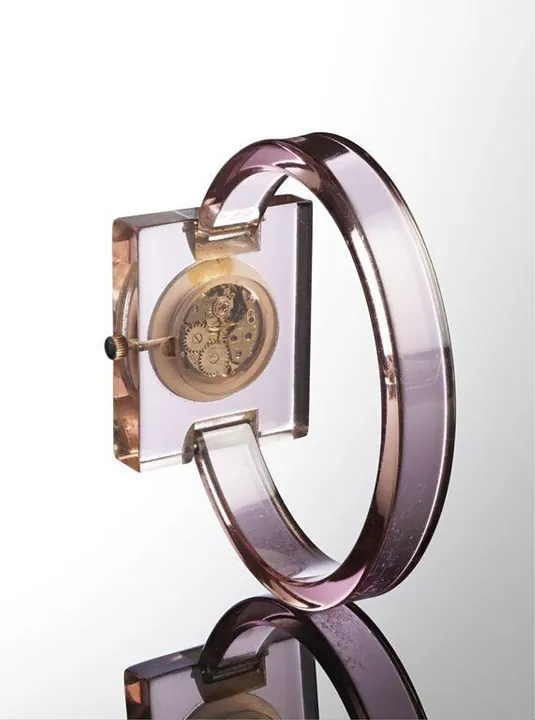
Wristwatch, plastic, by Gucci; Italy, 1970s.
Victoria and Albert Museum, London
Wristwatches · 1978
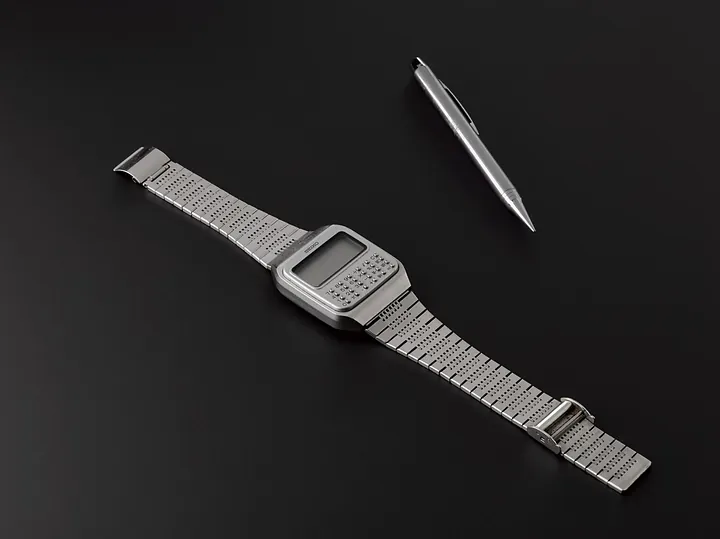
Calculator wristwatch by Suwa Seikosha Co. Limited, Japan, 1978
Science Museum Group, London
Wristwatches · 1980
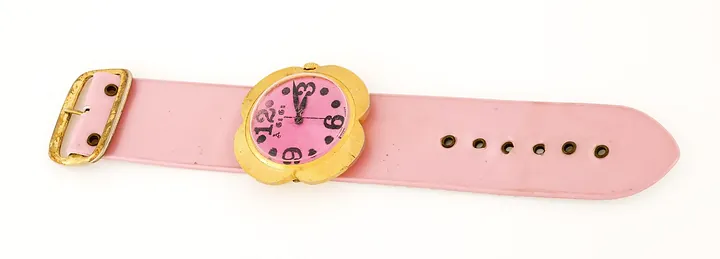
Wristwatch, 1980 (no. 71413)
Museum Rotterdam
Wristwatches · 1980
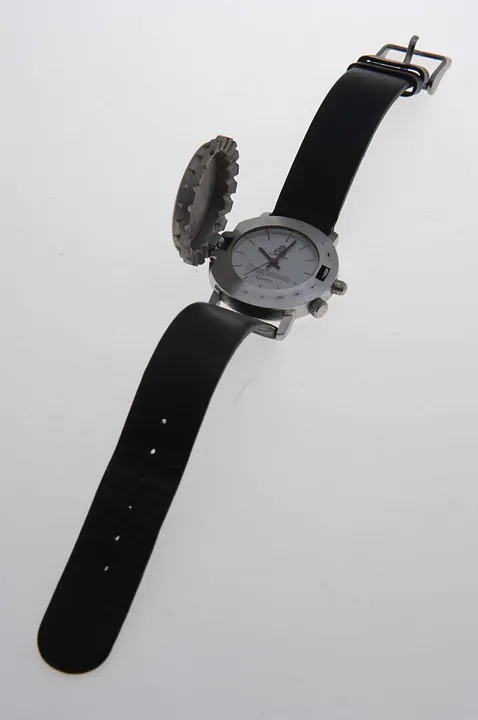
Wristwatch, 1980 (no. 91477)
Museum Rotterdam
Wristwatches · 1980–1982
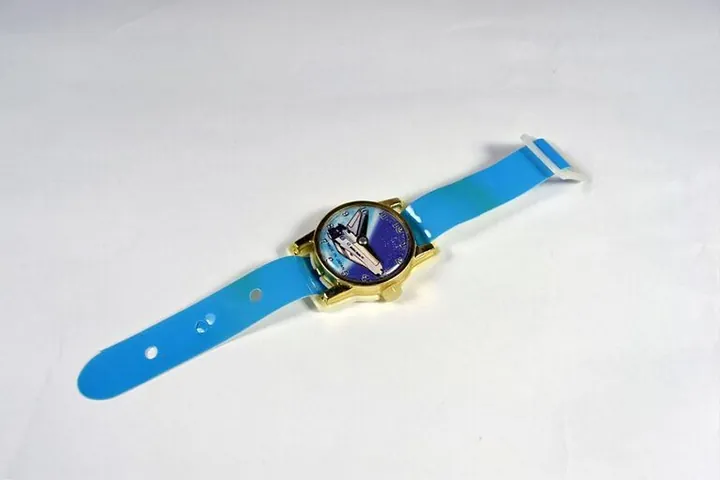
Wristwatch, Space Shuttle; plastic, Japan, 1970-1979?
Victoria and Albert Museum, London
Wristwatches · 1949–1992
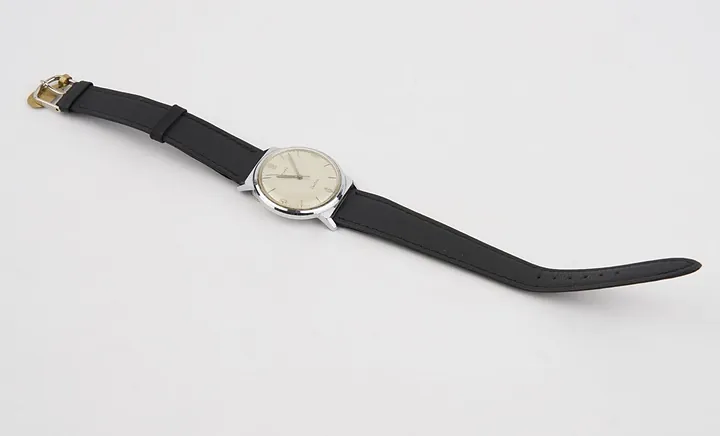
Timex `Electric' wristwatch, with electrically operated balance wheel mechanism, United States, 1949–1992
Science Museum Group, London

Wristwatches · 1960–1986
'Tri-Compax' calendar chronograph wristwatch in gold case, by Universal, Geneva, Switzerland, 1960–1986.
Science Museum Group, London