
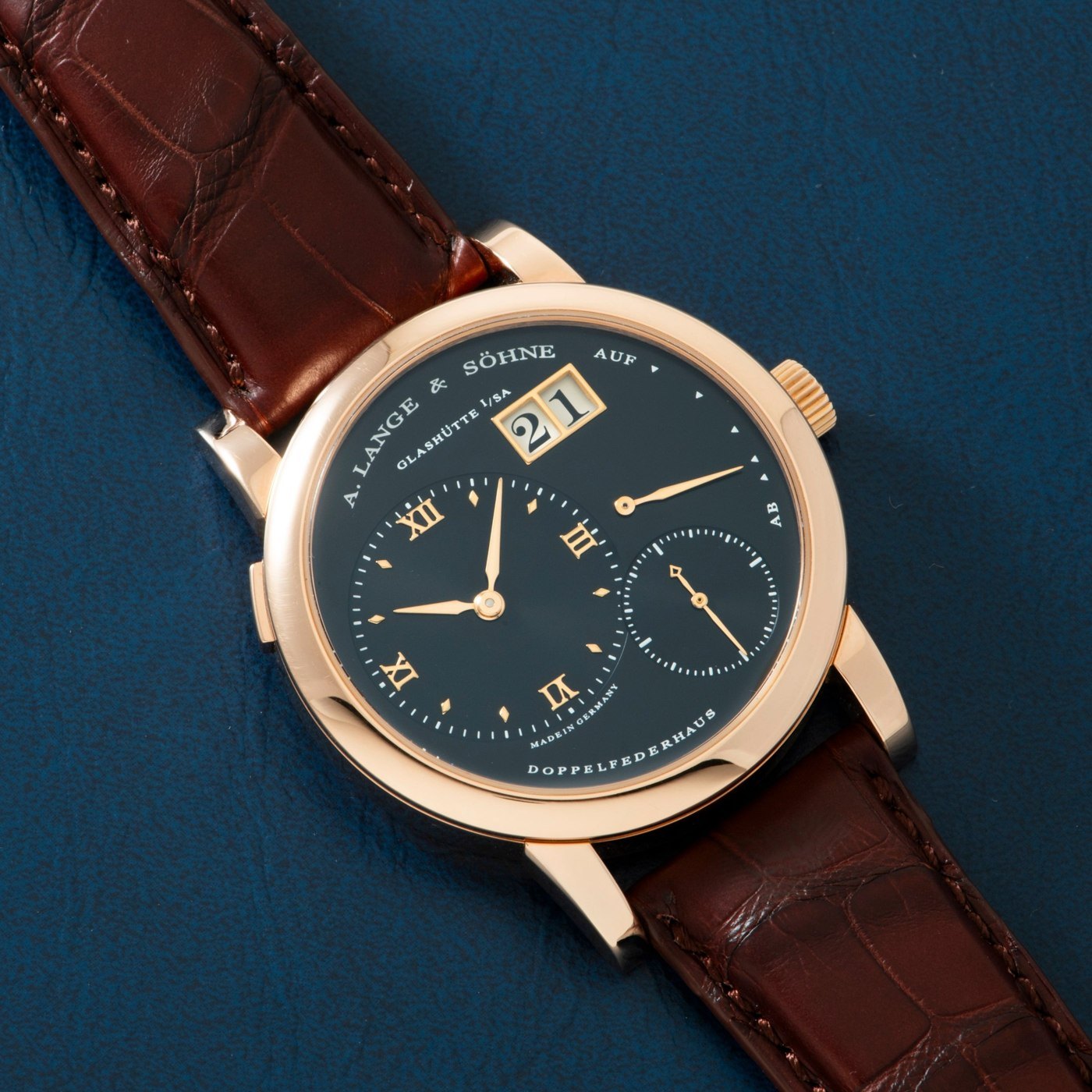
Wristwatches · Manual-winding wristwatch
A. Lange & Söhne Lange 1 Reference 101.031
- Maker / attribution
- A. Lange & Söhne (source attribution)
- Date
- c. 2000s
- Historical period
- Mechanical Renaissance (1990 – 2010)
- Country of origin
- Germany
- Object type
- Manual-winding wristwatch
- Materials / technique
- 18k rose gold
- Dimensions
- 38.5mm
- Holding institution
- Zamanito
- Accession / object no.
- a-lange-sohne-lange-1-reference-101-031-98f7f17a00
- Credit line
- Zamanito
- Catalogue title (original)
- ساعت A. Lange & Söhne Lange 1 رفرنس 101.031 (English)
View the source record ↗ (opens another website in a new tab)Suggest a correction
Record summary
Held and catalogued by Zamanito (object number a-lange-sohne-lange-1-reference-101-031-98f7f17a00), this is a manual-winding wristwatch attributed to A. Lange & Söhne, made in Germany, dated c. 2000s. The Atlas places it in the Mechanical Renaissance period (1990 – 2010) of its Wristwatches collection. Materials and techniques recorded by the source: 18k rose gold. Recorded dimensions: 38.5mm. The record is illustrated with 1 photograph.
Assembled from the source record's structured fields. Dates and attributions are given as the source states them; where a field is missing the Atlas leaves it blank rather than estimating.
Catalogue description
Original object description
Manufactured in Glashütte during the 2000s, this 18k rose gold A. Lange & Söhne Lange 1 (reference 101.031) spans 38.5 mm across and retains the non-symmetrical dial geometry introduced by the firm in the 1990s. Set against a black dial background, the displays feature rose-gold-toned registers, markers, and hands, arranging the main civil time at 9 o'clock, an instantaneous outsize date display near 2 o'clock, and an analog power reserve track flanking the right side. The watch is worn on a brown alligator leather strap fitted with a signed 18k rose gold pin buckle. Visible through the display back is the manually wound Calibre L901.1, crafted with German silver bridges and plates, black-polished steel components, gold chatons, and hand-executed engraving.
Historical context
Mechanical Renaissance (1990 – 2010)
Mechanical watches return as cultural objects; independent watchmaking flourishes.
Mechanical watches returned as cultural and luxury objects. Complications, tourbillons and new materials proliferated; independent watchmakers such as George Daniels, F.P. Journe and Philippe Dufour revived artisanal watchmaking; collecting vintage watches became a major field.
Read the period in the timelineMore wristwatches from this periodEarlier: Quartz Revolution
Atlas type guide
Wristwatches
Bracelet watches were worn by women from the early nineteenth century — Breguet made one for Caroline Murat, Queen of Naples, in 1810–12 — but the wristwatch only became a man's instrument with military use and aviation in the early twentieth century. Between the World Wars it overtook the pocket watch; the 1920s and 1930s brought rectangular Art Deco cases, water-resistant cases and the first automatic winding systems.
After 1945 the wristwatch became a carrier of identity — dress watches, sports and dive watches, chronographs, calendars — produced by Swiss, American, Japanese, German, Soviet and Chinese industries. The quartz revolution after 1969 and the mechanical renaissance since the 1990s, including the rise of independent watchmakers, complete the story.
What to look for
- The reference number (between the lugs or inside the case back) and serial number, the starting point for dating.
- The calibre: its maker and number are often stamped under the dial or on the bridge.
- Originality of dial, hands and crown — refinished ('redial') dials are common.
- Case material marks: 18K/750, 14K/585, stainless steel, gold-filled, plated.
Dating clues
- Wire-lug cases: before c. 1925.
- Water-resistant screw-down cases: from 1926.
- Quartz movements: from 1969; sapphire crystals widespread after c. 1980.
General guidance written by the Atlas editors about this kind of object. It is not a statement about this particular piece; for that, rely on the source record above and on physical examination.
Related records
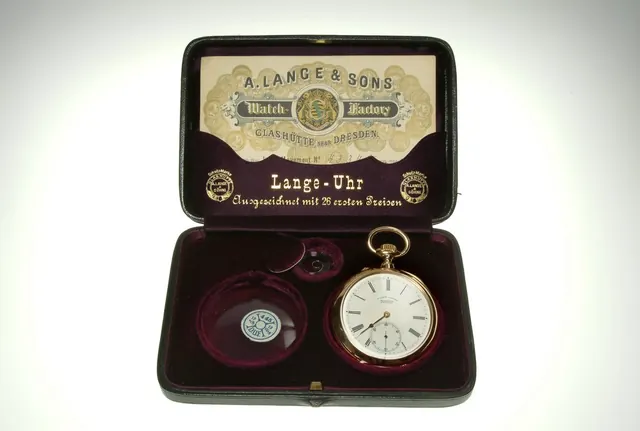
Movements & Components · 1900
Pocket watch by A. Lange & Söhne, Germany, 1900
Kulturstiftung Sachsen-Anhalt - Museum Schloss Neuenburg
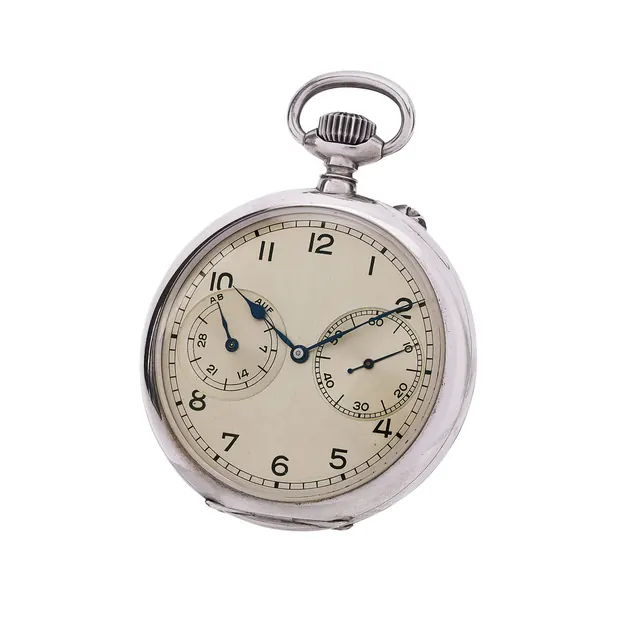
Pocket Watches · c. 1941
A. Lange & Söhne pocket watch, Observation Pocket Watch, circa 1941
Antiquorum auction archive, Geneva
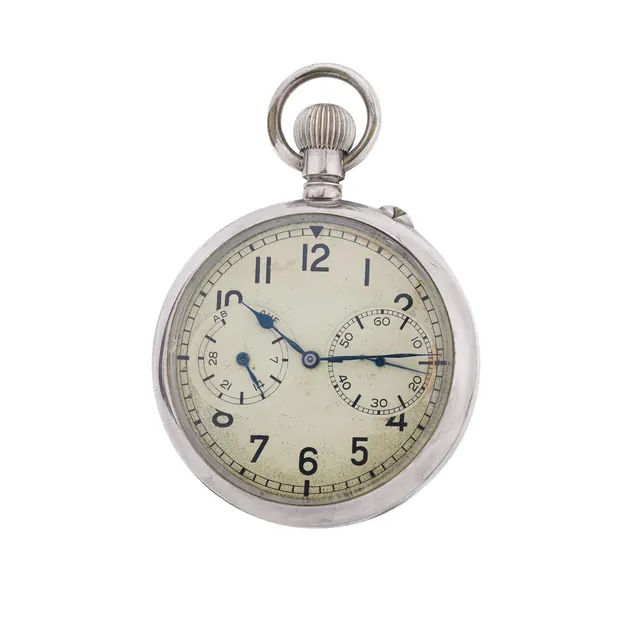
Pocket Watches · c. 1946
A. Lange & Söhne pocket watch, Military Observation Pocket Watch, circa 1946
Antiquorum auction archive, Geneva
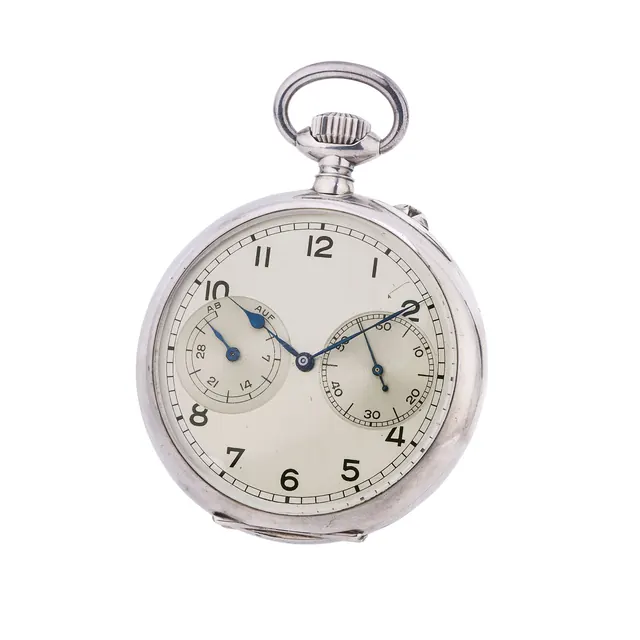
Pocket Watches · c. 1942
A. Lange & Söhne pocket watch, Military Observation Pocket Watch, circa 1942
Antiquorum auction archive, Geneva
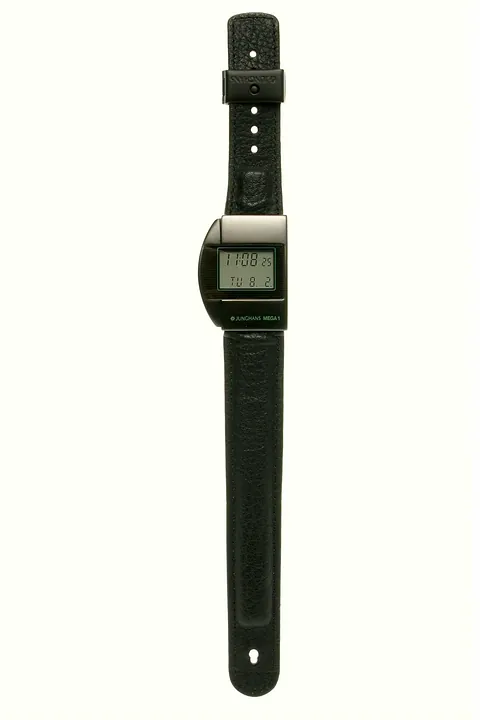
Wristwatches · c. 1990
Wristwatch, Germany, c. 1990 (no. 29875)
German Clock Museum
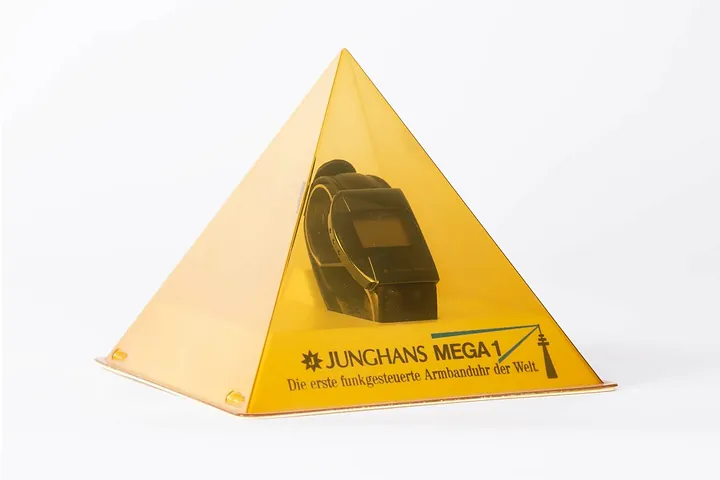
Wristwatches · 1990
Wristwatch, Germany, 1990 (no. 59620)
German Clock Museum
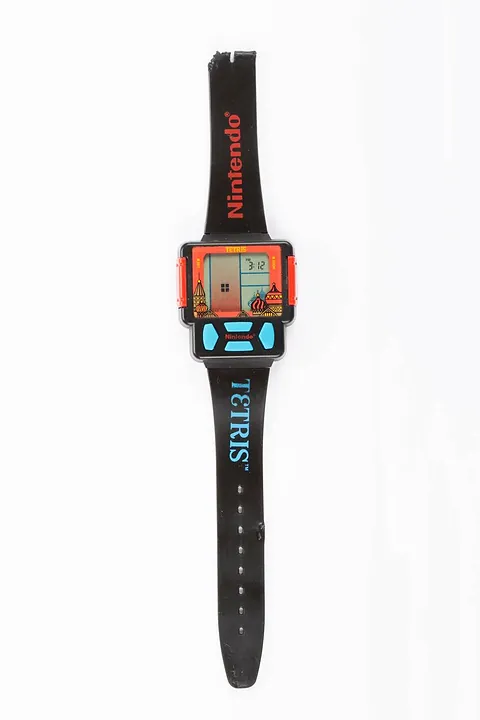
Wristwatches · c. 1991
Wristwatch by EM-Entertainment München, Merchandising, Film und Fernseh GmbH, Germany, c. 1991
German Clock Museum
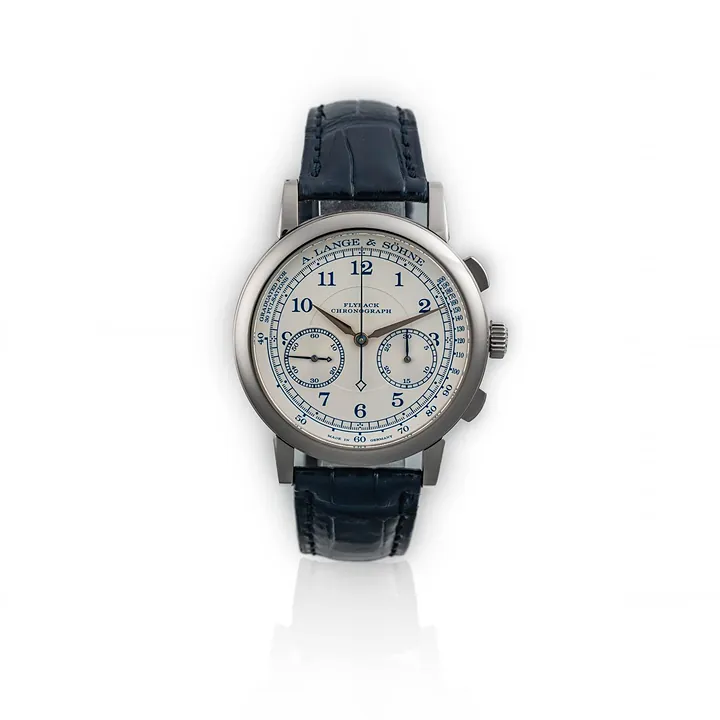
Wristwatches · c. 2000
A.Lange & Söhne 1815 Chronograph, ref. 414.026, c. 2000
Antiquorum auction archive, Geneva