
Wristwatches · Wristwatch
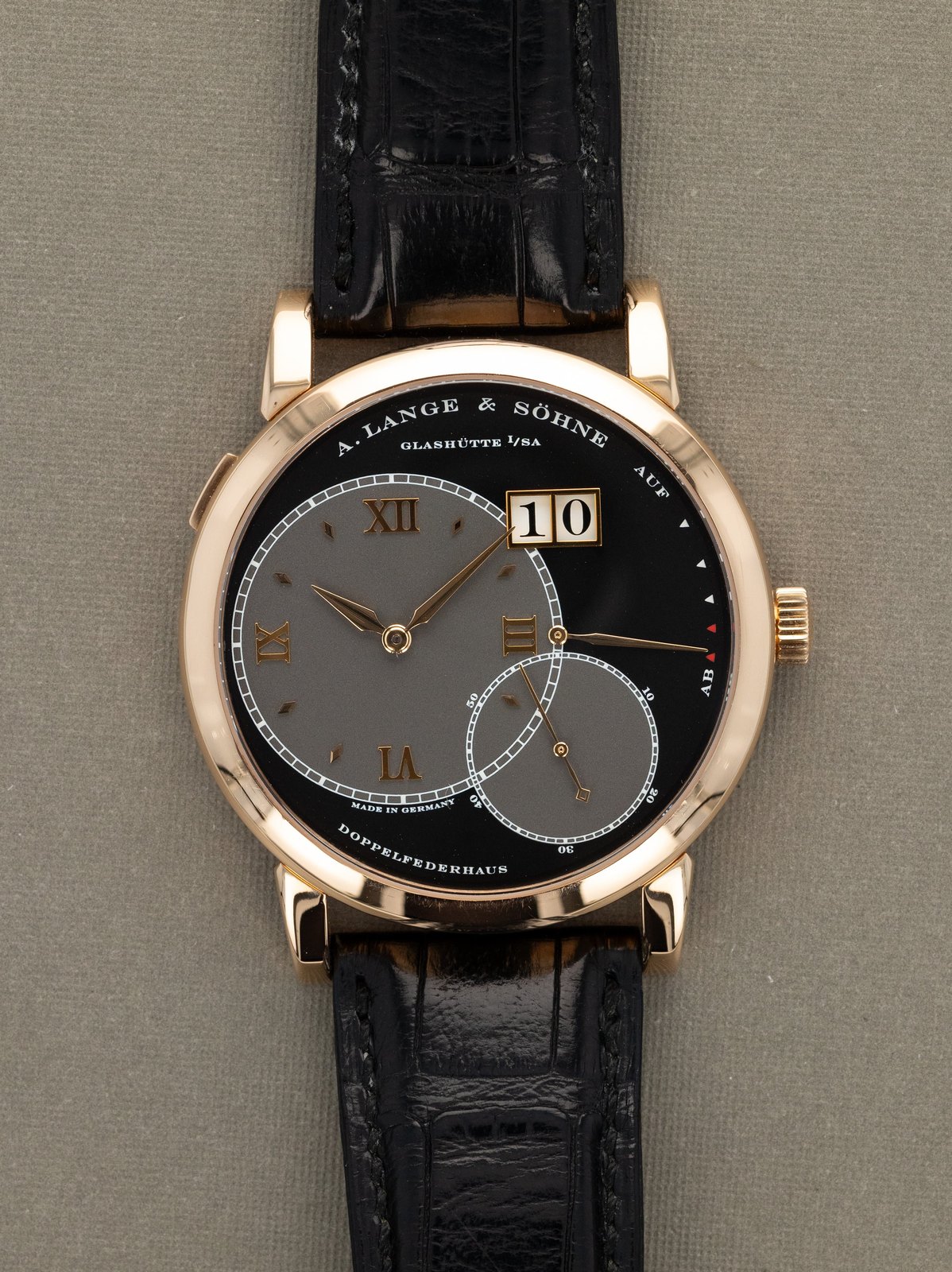
A. Lange & Söhne Grande Lange 1 ref. 115.031, Multi-Tone Grey & Black Dial
- Maker / attribution
- A. Lange & Söhne (maker)
- Date
- 2000s
- Historical period
- Mechanical Renaissance (1990 – 2010)
- Country of origin
- Germany
- Object type
- Wristwatch
- Dimensions
- Case 42 mm
- Stock no.
- OC3093
- Credit line
- Dealer listing, Oliver & Clarke (OC3093)
- Catalogue title (original)
- A. Lange & Söhne Grande Lange 1 Ref. 115.031 - Multi-Tone Grey & Black Dial (English)
View the source record (dealer listing) ↗ (opens another website in a new tab)Suggest a correction
Record summary
Catalogued by Oliver & Clarke (dealer), United Kingdom (stock number OC3093), this is a wristwatch by A. Lange & Söhne, made in Germany, dated 2000s. The Atlas places it in the Mechanical Renaissance period (1990 – 2010) of its Wristwatches collection. Recorded dimensions: Case 42 mm. The record is illustrated with 6 photographs.
Assembled from the source record's structured fields. Dates and attributions are given as the source states them; where a field is missing the Atlas leaves it blank rather than estimating.
Catalogue description
Dealer description — Oliver & Clarke
A. Lange & Söhne can trace it's roots back to Glashütte, where it was founded in 1845. Over the course of the manufactures fist 100-year, it was their pocket watches that they made a name for themselves — widely used on the German railroad system. In the wake of the Second World War, just after the brands centennial anniversary, their doors were shut. It was not until 1990 when the great grandson of the founder, Walter Lange, announced that he would resurrect the name with intent to not only restore the brand in name, but move it forward in both technical innovation and unique design language as the 21st century approached. In 1994, the revived brand officially debuted not just one, or two — but four entirely new watches. There was great diversity across the four models — most of which are still in production today — but one model stood out amongst the others: the Lange 1. Over the last 30 years, the Lange 1 has without a doubt become the brands flagship model, and has been produced in a bevy of different sizes, metals, dials variants, and with numerous complications. They all, however, share the same basic formula that allowed the model to stand out back in 1994. Virtually all Lange 1 models feature a segregated dial-layout, where the time, subsidiary seconds, power reserve and date are meticulously positioned in different areas on the dial, resulting in a beautifully balanced and legible layout. It must also be said that the Lange 1 also possesses what is both a technical and visual feature that the brand has become synonymous for: the archetypal 'digital' date window. Like so many successful watch models since the very first (Cartier Santos), the Lange 1 was and still is offered in a wide range of metals, with different movement, different dials, etc. The piece that we have here is a 'Grande Lange 1' — an upsized variant of the standard Lange 1, coming in at 42mm in diameter. Dating to the 2000s, it features a solid rose gold case with those characteristic wide lugs and a 'domed' smooth bezel. There is a pusher at the 10 o'clock position for operation of the quickset 'digital' date, a signed crown at the 3 o'clock position to operate the manual-winding movement, which is prominently on display via the sapphire caseback. While the original Lange 1 from the mid-1990s lacked this feature, the absolutely gorgeous movements with hand-hinished balance cocks have become yet another staple found on nearly all Lange models. Last but not least, the multi-tone grey and black dial is graced with appleid rose gold indices, a rose gold frame around the date window, and a matching rose gold 'lance' handset. It also comes fitted with a Lange-signed black alligator leather strap mated to Lange's fantastic buckle in matching rose gold. There is truly nothing like a Lange. There is a weight and presence that is second to none, all while remaining subtle and tasteful in its appearance and, we think, a huge value play. The Lange 1 changed the game. If you haven't tried one, it might be time.
Historical context
Mechanical Renaissance (1990 – 2010)
Mechanical watches return as cultural objects; independent watchmaking flourishes.
Mechanical watches returned as cultural and luxury objects. Complications, tourbillons and new materials proliferated; independent watchmakers such as George Daniels, F.P. Journe and Philippe Dufour revived artisanal watchmaking; collecting vintage watches became a major field.
Read the period in the timelineMore wristwatches from this periodEarlier: Quartz Revolution
Atlas type guide
Wristwatches
Bracelet watches were worn by women from the early nineteenth century — Breguet made one for Caroline Murat, Queen of Naples, in 1810–12 — but the wristwatch only became a man's instrument with military use and aviation in the early twentieth century. Between the World Wars it overtook the pocket watch; the 1920s and 1930s brought rectangular Art Deco cases, water-resistant cases and the first automatic winding systems.
After 1945 the wristwatch became a carrier of identity — dress watches, sports and dive watches, chronographs, calendars — produced by Swiss, American, Japanese, German, Soviet and Chinese industries. The quartz revolution after 1969 and the mechanical renaissance since the 1990s, including the rise of independent watchmakers, complete the story.
What to look for
- The reference number (between the lugs or inside the case back) and serial number, the starting point for dating.
- The calibre: its maker and number are often stamped under the dial or on the bridge.
- Originality of dial, hands and crown — refinished ('redial') dials are common.
- Case material marks: 18K/750, 14K/585, stainless steel, gold-filled, plated.
Dating clues
- Wire-lug cases: before c. 1925.
- Water-resistant screw-down cases: from 1926.
- Quartz movements: from 1969; sapphire crystals widespread after c. 1980.
General guidance written by the Atlas editors about this kind of object. It is not a statement about this particular piece; for that, rely on the source record above and on physical examination.
Related records
Movements & Components · 1900
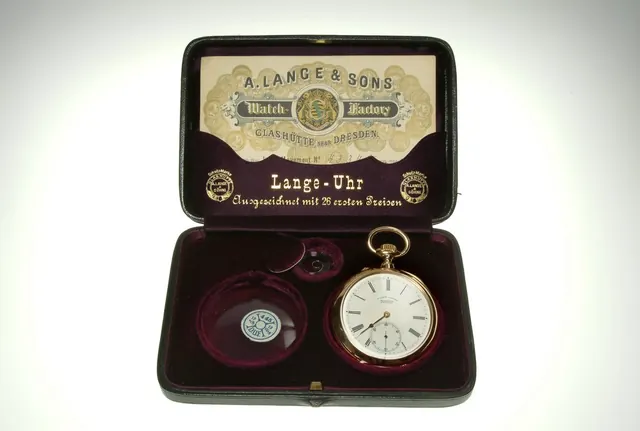
Pocket watch by A. Lange & Söhne, Germany, 1900
Kulturstiftung Sachsen-Anhalt - Museum Schloss Neuenburg
Pocket Watches · c. 1941
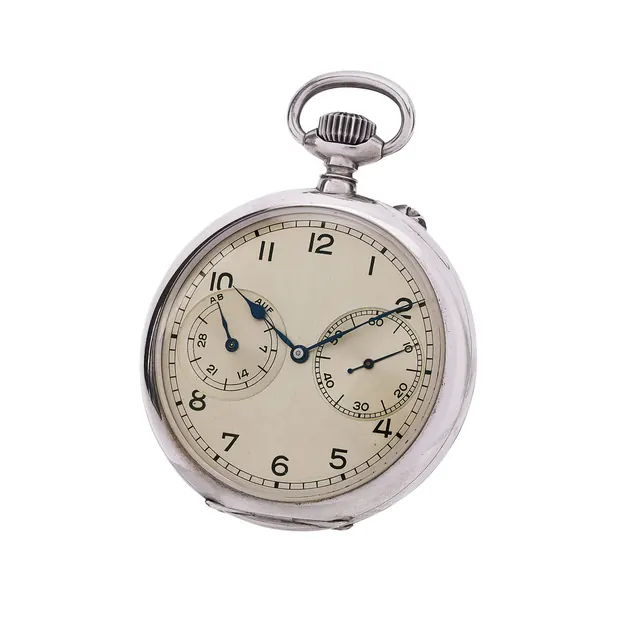
A. Lange & Söhne pocket watch, Observation Pocket Watch, circa 1941
Antiquorum auction archive, Geneva
Pocket Watches · c. 1946
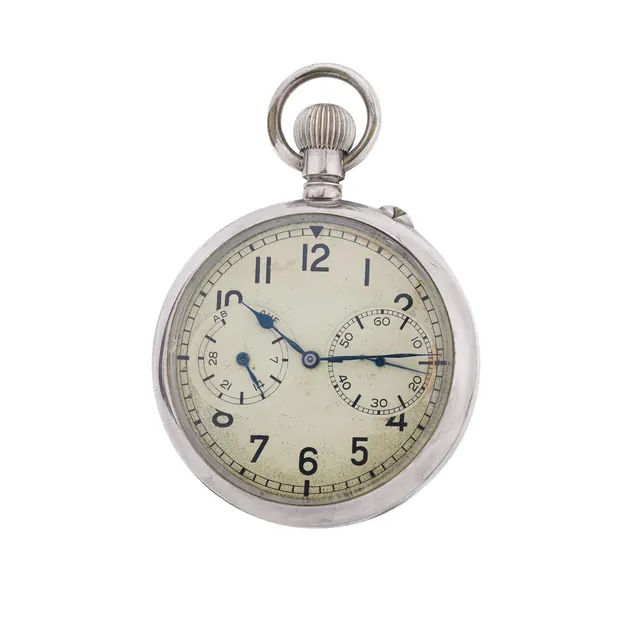
A. Lange & Söhne pocket watch, Military Observation Pocket Watch, circa 1946
Antiquorum auction archive, Geneva
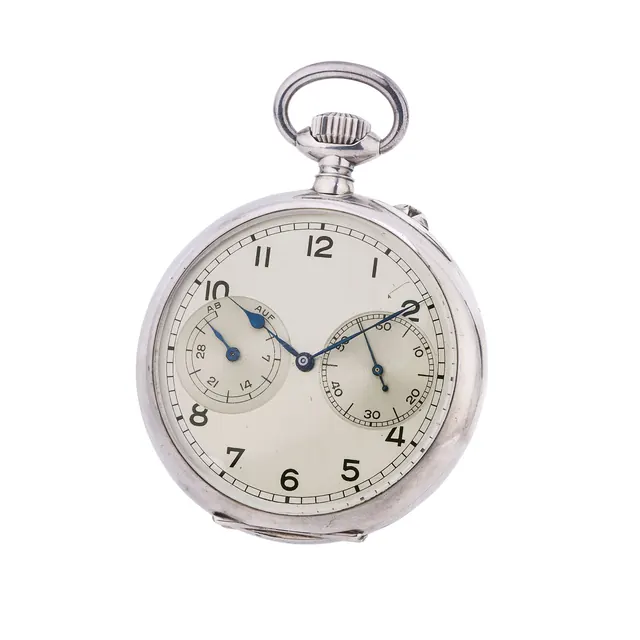
Pocket Watches · c. 1942
A. Lange & Söhne pocket watch, Military Observation Pocket Watch, circa 1942
Antiquorum auction archive, Geneva
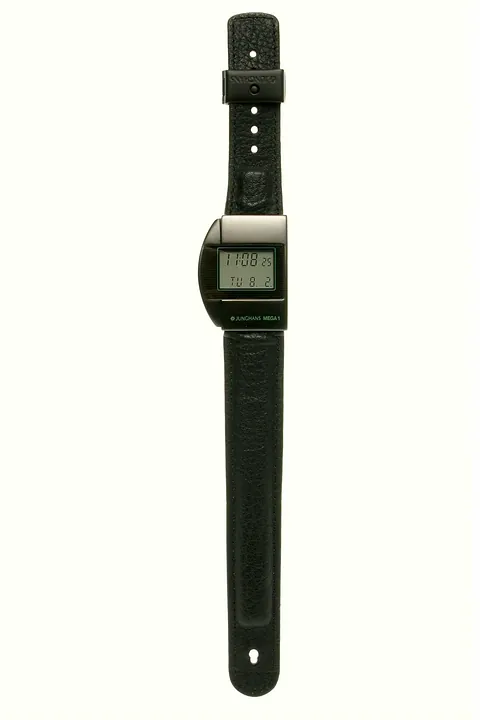
Wristwatches · c. 1990
Wristwatch, Germany, c. 1990 (no. 29875)
German Clock Museum
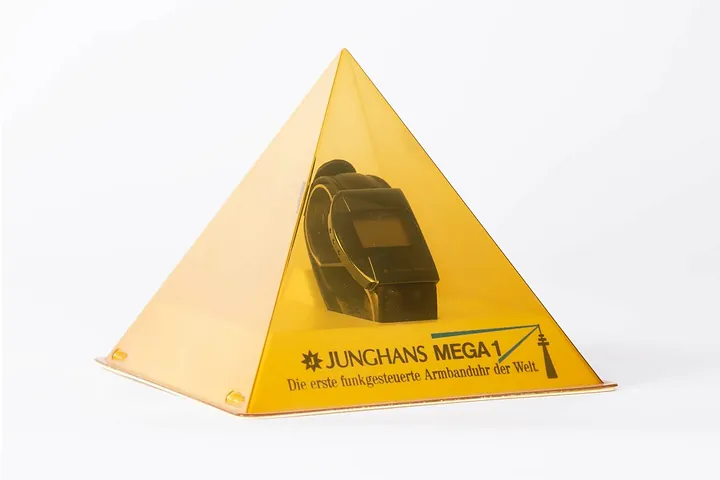
Wristwatches · 1990
Wristwatch, Germany, 1990 (no. 59620)
German Clock Museum
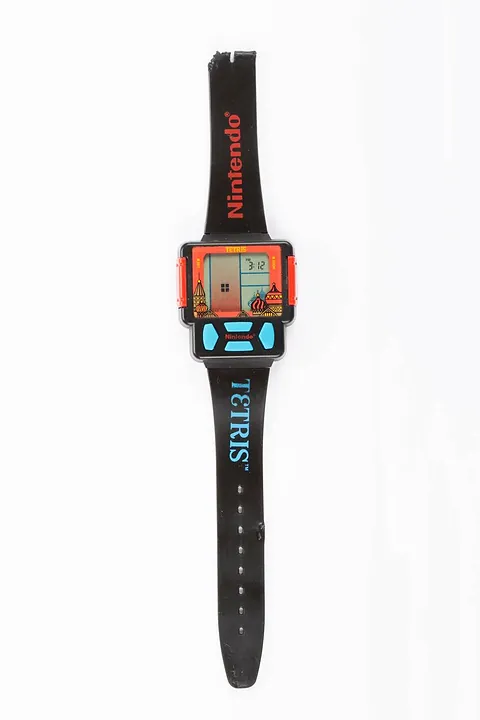
Wristwatches · c. 1991
Wristwatch by EM-Entertainment München, Merchandising, Film und Fernseh GmbH, Germany, c. 1991
German Clock Museum
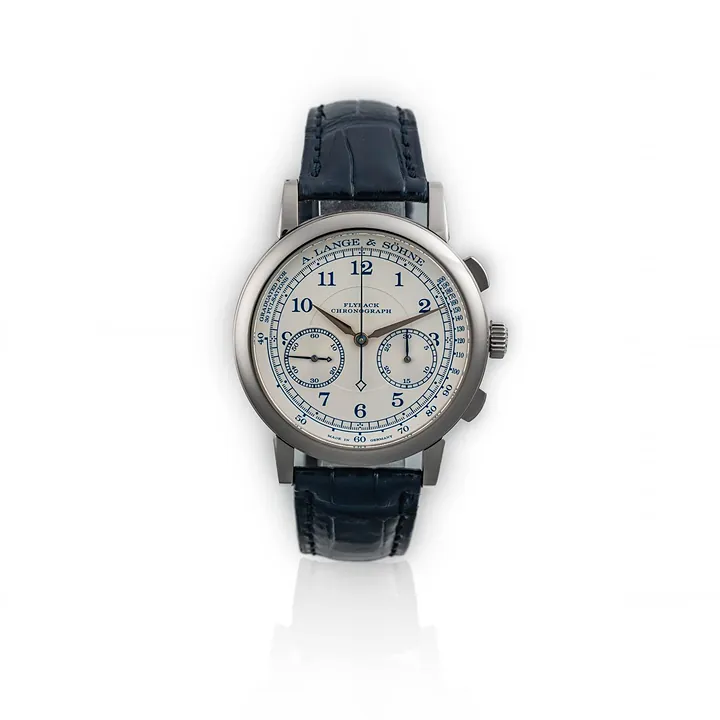
Wristwatches · c. 2000
A.Lange & Söhne 1815 Chronograph, ref. 414.026, c. 2000
Antiquorum auction archive, Geneva