
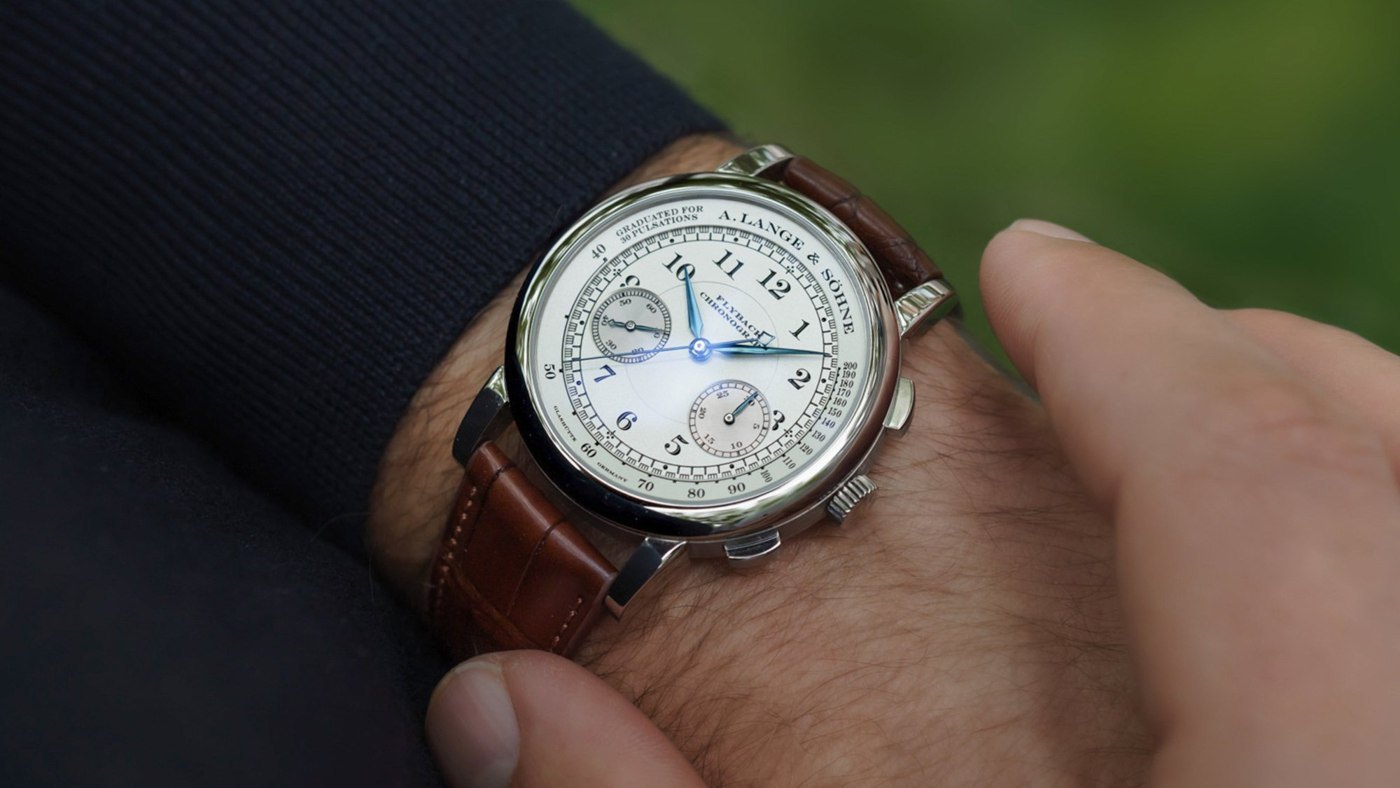
Wristwatches · Chronograph wristwatch
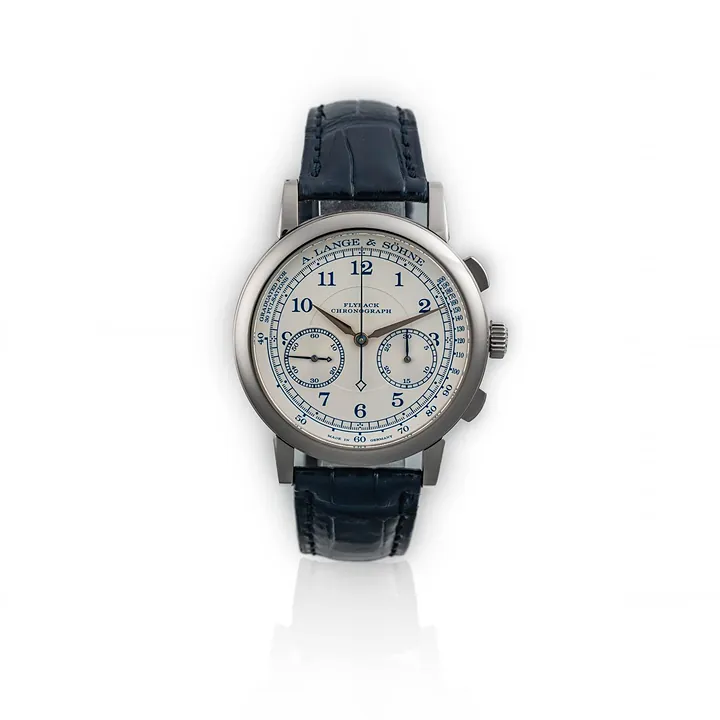
A. Lange & Söhne 1815 Chronograph Reference 401.026
- Maker / attribution
- A. Lange & Söhne (source attribution)
- Date
- 2004
- Historical period
- Mechanical Renaissance (1990 – 2010)
- Country of origin
- Germany
- Object type
- Chronograph wristwatch
- Materials / technique
- White gold
- Holding institution
- Zamanito
- Accession / object no.
- a-lange-sohne-1815-chronograph-reference-401-026-2032149972
- Credit line
- Zamanito
- Catalogue title (original)
- ساعت مچی کرنوگراف A. Lange & Söhne 1815 Chronograph رفرنس 401.026 (English)
View the source record ↗ (opens another website in a new tab)Suggest a correction
Record summary
Held and catalogued by Zamanito (object number a-lange-sohne-1815-chronograph-reference-401-026-2032149972), this is a chronograph wristwatch attributed to A. Lange & Söhne, made in Germany, dated 2004. The Atlas places it in the Mechanical Renaissance period (1990 – 2010) of its Wristwatches collection. Materials and techniques recorded by the source: White gold. The record is illustrated with 1 photograph.
Assembled from the source record's structured fields. Dates and attributions are given as the source states them; where a field is missing the Atlas leaves it blank rather than estimating.
Catalogue description
Original object description
Classified as a chronograph wristwatch originating from Germany, this A. Lange & Söhne 1815 Chronograph (reference 401.026) was first launched in 2004 as an inaugural-generation example. Encased in white gold, the watch adapts the mechanical architecture of the Datograph, achieving a slimmer profile and conventional balance through the deliberate exclusion of the signature oversized date. The dial is organized across four distinct levels, incorporating printed numerals, hands formed from blued steel, sunken silver subdials, and a peripheral pulsometer scale. Providing its power is the hand-wound caliber L951.0, a movement characterized by German silver bridges left untreated, heat-blued screws, countersunk gold chatons held by screws, bevelled and polished steel levers, and a balance cock embellished with manual engraving. These technical particulars are cited from documentation by Hairspring. The entry lacks records of accompanying accessories or previous maintenance, and the cataloguer has not carried out direct physical examination or definitive authentication.
Historical context
Mechanical Renaissance (1990 – 2010)
Mechanical watches return as cultural objects; independent watchmaking flourishes.
Mechanical watches returned as cultural and luxury objects. Complications, tourbillons and new materials proliferated; independent watchmakers such as George Daniels, F.P. Journe and Philippe Dufour revived artisanal watchmaking; collecting vintage watches became a major field.
Read the period in the timelineMore wristwatches from this periodEarlier: Quartz Revolution
Atlas type guide
Chronographs and split-seconds watches
A chronograph is a watch with an additional seconds hand that can be started, stopped and returned to zero independently of the timekeeping. Louis Moinet built an early example in 1816 and Nicolas Rieussec a recording 'chronographe' in 1821; Adolphe Nicole's heart-shaped reset cam (patented 1862) made the modern return-to-zero possible. Split-seconds (rattrapante) chronographs add a second hand that can be stopped for intermediate times; flyback chronographs restart instantly.
Chronographs were essential tools for doctors (pulsometer scales), artillery (telemeter), engineers and sport. In wristwatches, Valjoux, Venus, Lemania and later the automatic chronographs of 1969 (Zenith El Primero, the Chronomatic Calibre 11 group and Seiko 6139) are milestones.
What to look for
- Push-pieces on the case band or a single button in the crown (monopusher).
- Subsidiary registers for minutes and hours; tachymeter, telemeter or pulsometer scales.
- Column wheel versus cam control visible in the movement.
- Calibre markings of specialist makers (Valjoux, Lemania, Venus, Landeron).
Dating clues
- Pocket chronographs with heart cam reset: after 1862.
- Wrist chronographs: from c. 1910; two-button designs from the 1930s.
- Automatic chronographs: from 1969.
General guidance written by the Atlas editors about this kind of object. It is not a statement about this particular piece; for that, rely on the source record above and on physical examination.
Read next:Flyback chronographChronograph
Related records
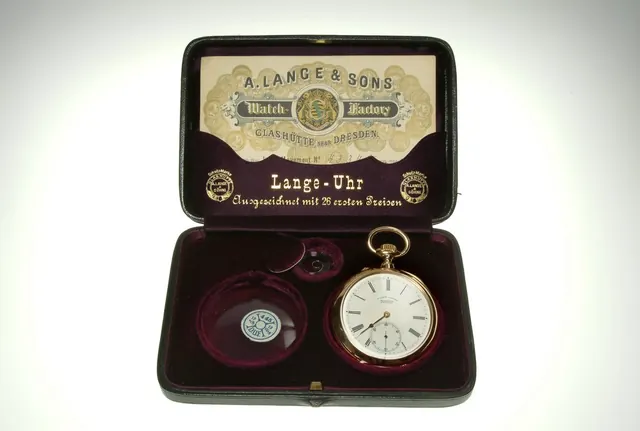
Movements & Components · 1900
Pocket watch by A. Lange & Söhne, Germany, 1900
Kulturstiftung Sachsen-Anhalt - Museum Schloss Neuenburg
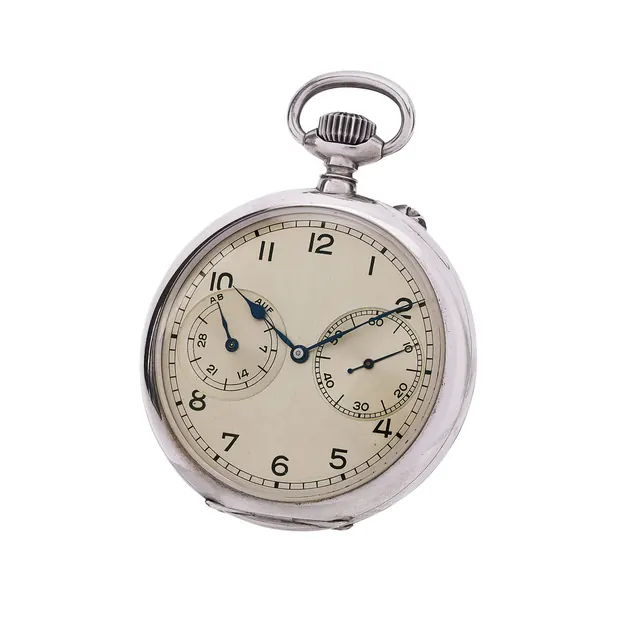
Pocket Watches · c. 1941
A. Lange & Söhne pocket watch, Observation Pocket Watch, circa 1941
Antiquorum auction archive, Geneva
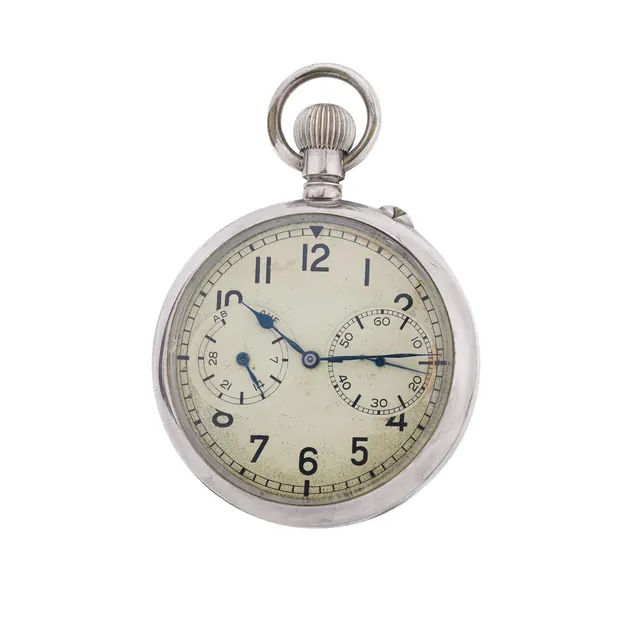
Pocket Watches · c. 1946
A. Lange & Söhne pocket watch, Military Observation Pocket Watch, circa 1946
Antiquorum auction archive, Geneva
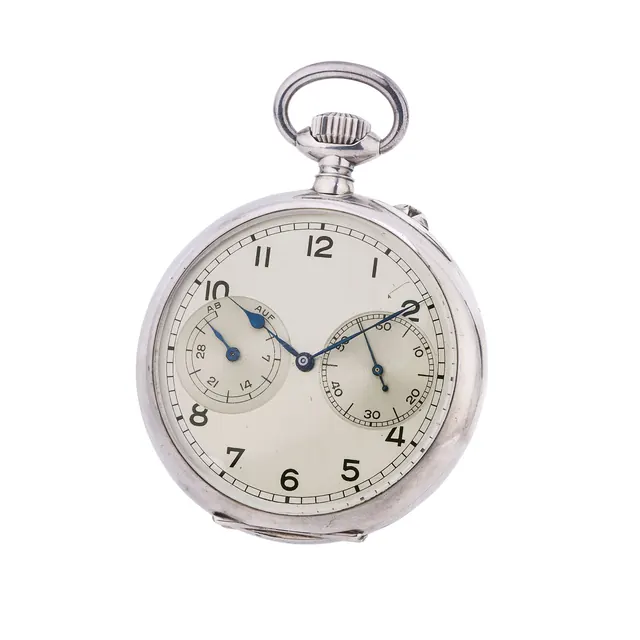
Pocket Watches · c. 1942
A. Lange & Söhne pocket watch, Military Observation Pocket Watch, circa 1942
Antiquorum auction archive, Geneva
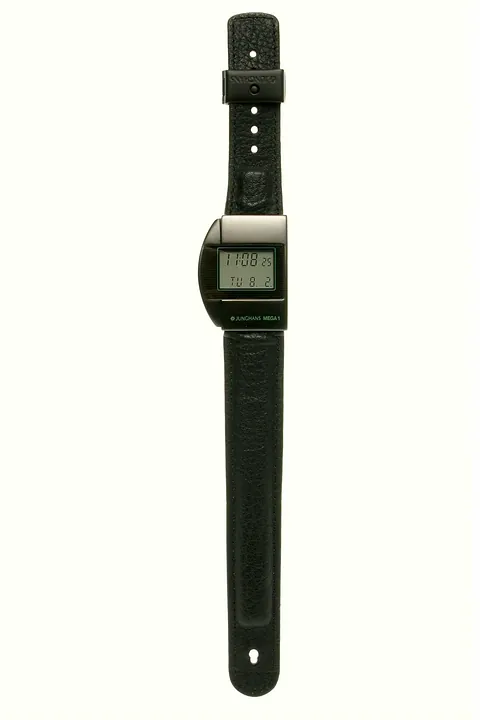
Wristwatches · c. 1990
Wristwatch, Germany, c. 1990 (no. 29875)
German Clock Museum
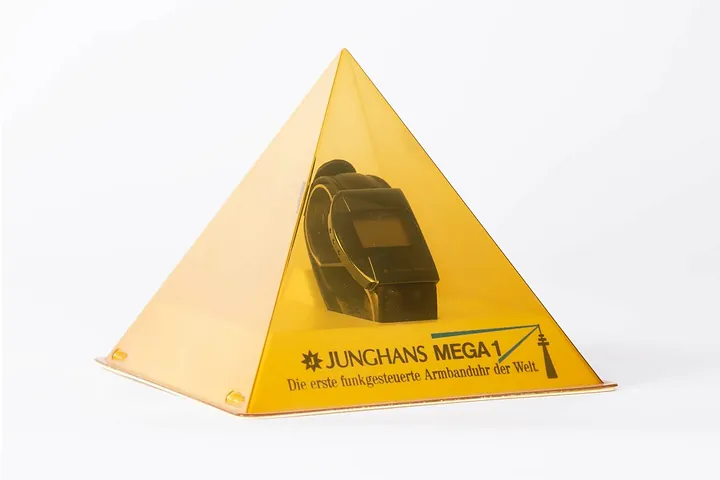
Wristwatches · 1990
Wristwatch, Germany, 1990 (no. 59620)
German Clock Museum
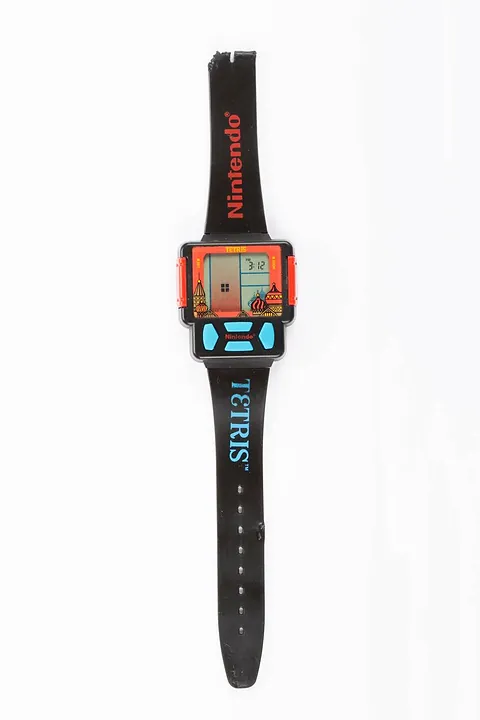
Wristwatches · c. 1991
Wristwatch by EM-Entertainment München, Merchandising, Film und Fernseh GmbH, Germany, c. 1991
German Clock Museum
Wristwatches · c. 2000
A.Lange & Söhne 1815 Chronograph, ref. 414.026, c. 2000
Antiquorum auction archive, Geneva