Museum
Museu do Relógio Professor Dimas de Melo Pimenta
São Paulo, Brazil
A DIMEP-supported collection of clocks and watches, including unusual alarm, speaking and ball clocks, connecting domestic timekeeping with Brazil's industrial time-recording heritage.
Dimas de Melo Pimenta began collecting timepieces in 1950. Brazil's national museum register records the museum's opening in 1975, while other accounts use the earlier collection date. It is housed at DIMEP in Vila Leopoldina; the firm developed from mechanical time recorders into electronic attendance and access-control systems.
- Type
- Museum
- Location
- São Paulo, Brazil
- Founded
- 1975 (museum); collection from 1950
- Specialities
- Domestic clocks and watches · Novelty timekeepers · Industrial time recording
Opening hours, admission and accessibility change; please check the official website before visiting.
Why it matters for horology
This São Paulo museum adds a Brazilian industrial perspective to a subject often presented only through European luxury workshops. DIMEP's history is connected with clocks that recorded attendance and organised working time, while the museum ranges more widely across domestic and technical timekeepers. Its unusual clocks invite examination of what a mechanism actually does: an alarm, a spoken indication or a moving ball display is a separate function from maintaining an accurate time base. Accounts differ over the institution's founding because the collection began in the 1950s and the national museum register gives 1975 as the museum's opening. These dates describe different stages and should not be collapsed into a single unsupported claim. Visits and special retrospective exhibitions are announced by DIMEP, so arrangements should be checked directly rather than inferred from older travel listings.
Specialities
- Domestic clocks and watches
- Novelty timekeepers
- Industrial time recording
What to look for
- Novelty mechanisms
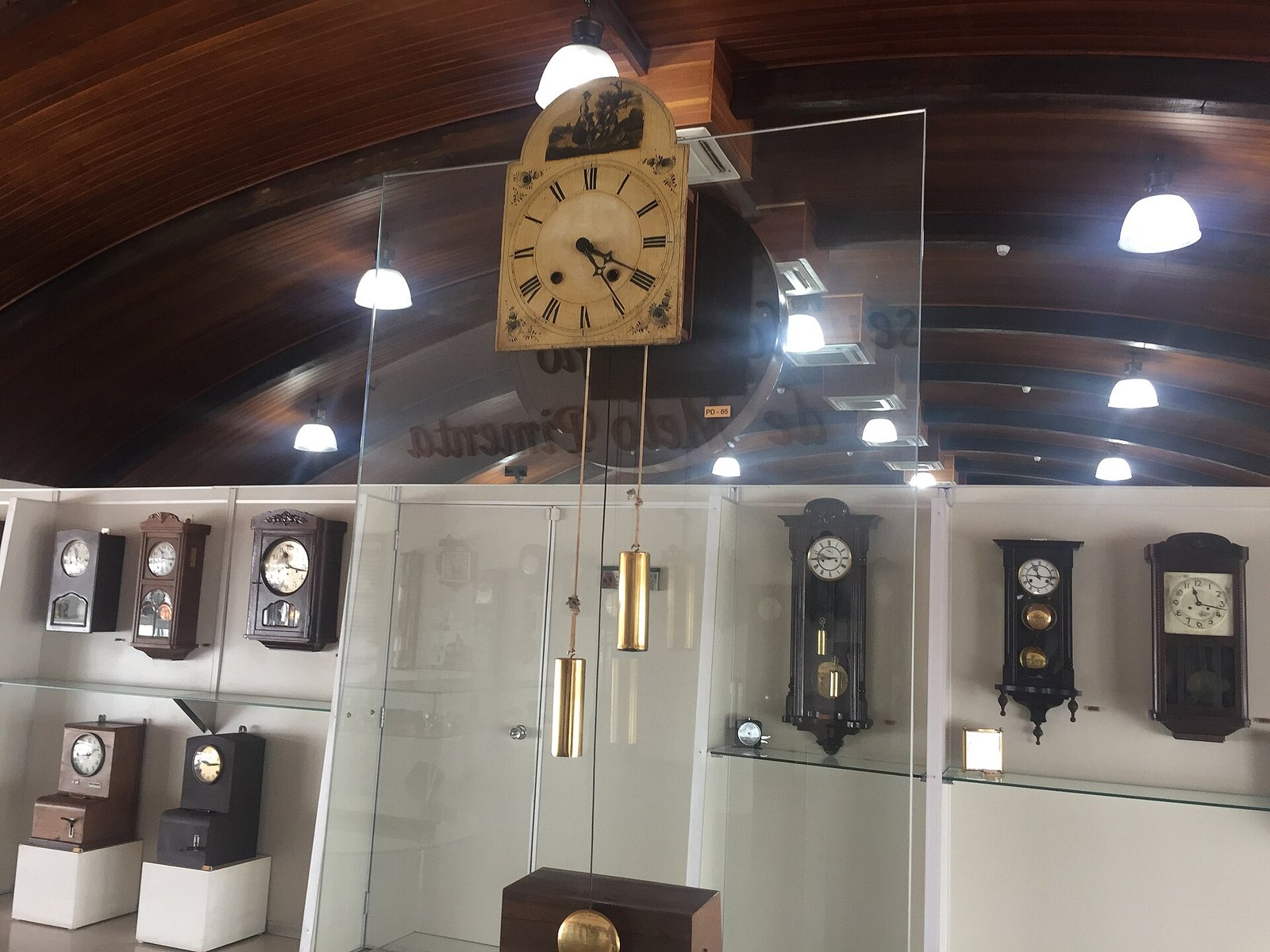
- The museum describes an alarm with a coffee-making attachment and a German speaking clock. Examine how an extra action is triggered without assuming that novelty makes the basic timekeeper more accurate.
- Technical timekeeping
- The collection includes electronic and atomic equipment as well as mechanical clocks. Labels and technical descriptions are needed to distinguish a frequency standard from an ordinary display clock.
- Domestic clocks
- Wall, table and cuckoo clocks show the relationship between everyday use, decoration and mechanical design. Compare the case with the mechanism rather than attributing a maker from ornament alone.