Museum
Clockarium — Museum of the Art Deco Ceramic Clock
Brussels, Belgium
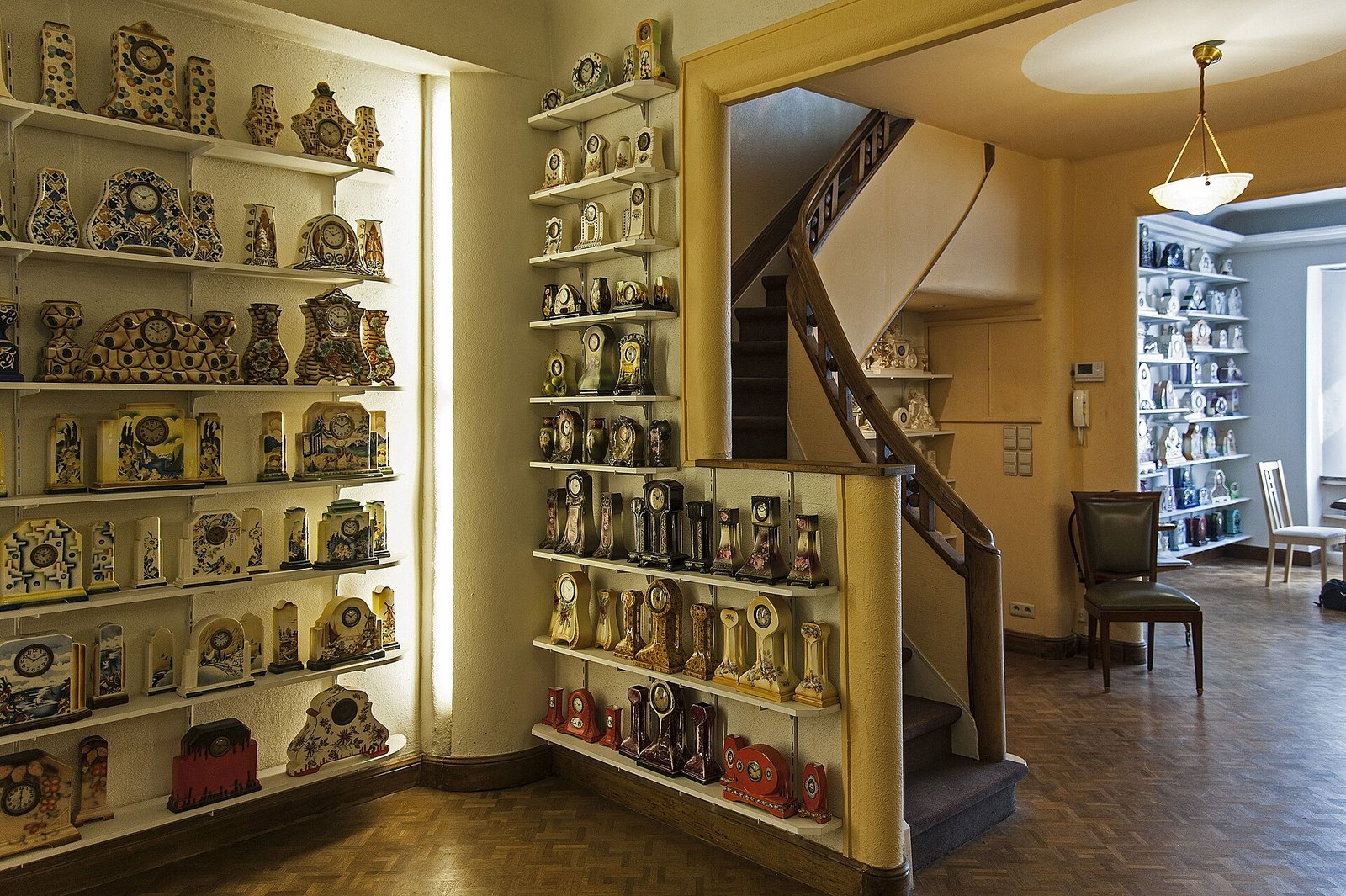
Art Deco faience mantel clocks from Belgium, France, Germany and Czechoslovakia, displayed in a 1935 Art Deco house.
The Clockarium specialises in the ceramic clock that became a familiar domestic object in Belgium and northern France during the 1920s and 1930s. Its collection occupies a house designed by Gustave Bossuyt, bringing the clocks into an architectural setting of their own period. Its particular strength is popular ceramic design rather than luxury watchmaking.
- Type
- Museum
- Location
- Brussels, Belgium
- Founded
- Undocumented here
- Specialities
- Art Deco ceramic clocks · Faience and domestic design · Interwar timekeeping
- Official website
- www.clockarium.org/ (opens another website in a new tab)
Opening hours, admission and accessibility change; please check the official website before visiting.
Why it matters for horology
The Clockarium treats the affordable mantel clock as a significant design object, rather than limiting horology to rare complications. Its faience cases show the diversity of interwar ceramic production, with shapes and decorative treatments intended for ordinary Belgian and northern French homes. The museum also includes work from Germany and Czechoslovakia, encouraging comparison across factories and national design traditions. A ceramic case's maker and the producer of its movement need not be the same firm. The museum's Art Deco house, built in 1935 to Gustave Bossuyt's design, provides a period architectural setting without making every clock inside a product of that exact year. Guided visiting arrangements are limited, so the museum's own calendar is more reliable than assuming daily public opening.
Specialities
- Art Deco ceramic clocks
- Faience and domestic design
- Interwar timekeeping
What to look for
- Faience case design
- Compare moulded forms, glaze colours and painted decoration. Ceramic factory marks can help identify the case, but they do not necessarily identify the movement or retailer.
- Interwar domestic taste
- Study how clocks were designed to sit on a mantelpiece as part of a furnished room. Similar cases may contain different movements or have been marketed by different sellers.
- The Art Deco house
- The entrance and interiors place the collection in an architectural environment of its period. Distinguish original building decoration from the later installation of museum shelves and displays.