
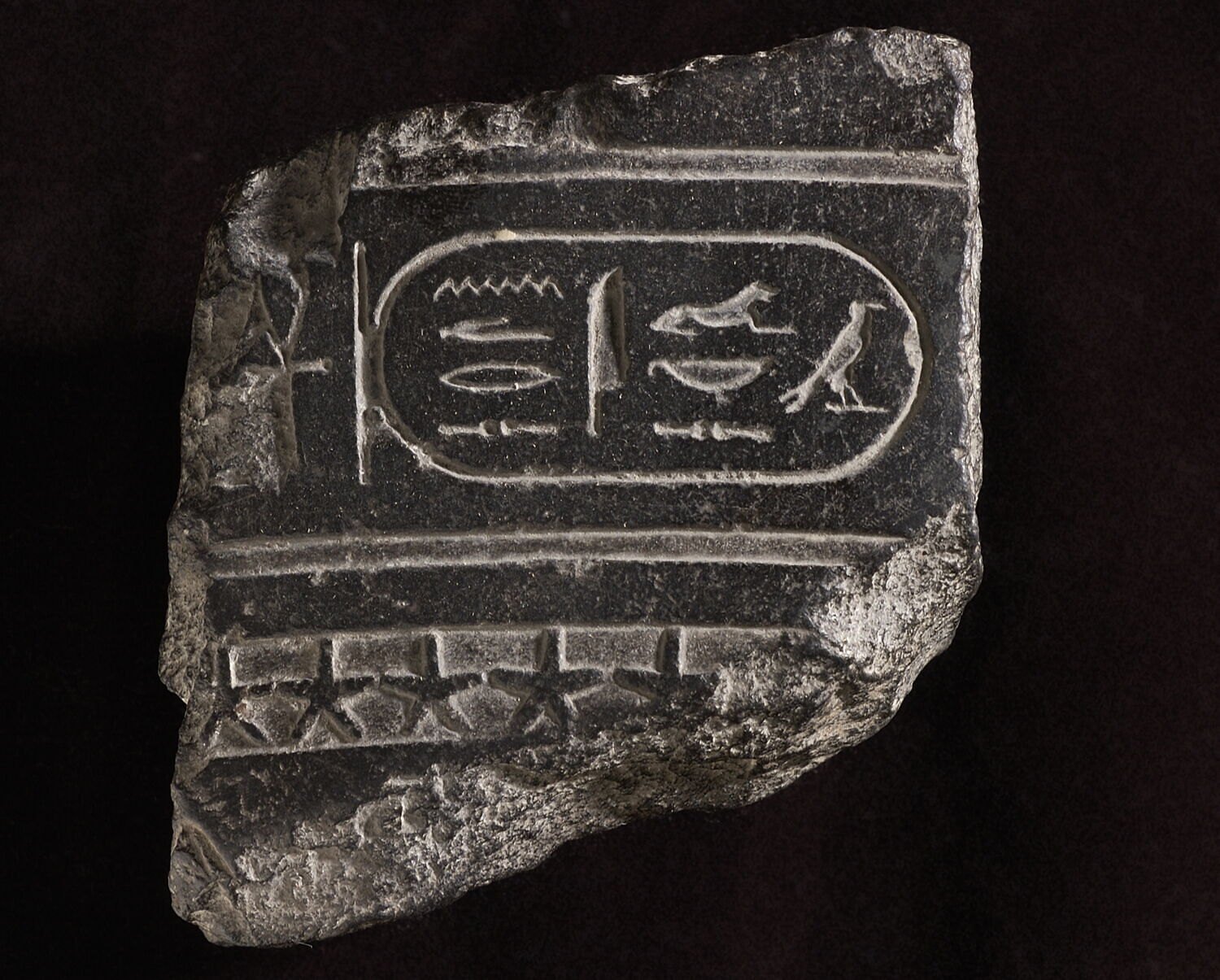
Instruments · Water clock
Water clock, Egypt, 332 BCE – 323 BCE
- Maker / attribution
- Unrecorded in source
- Date
- 332 BCE – 323 BCE
- Historical period
- Classical Antiquity (500 BCE – 500 CE)
- Country of origin
- Egypt
- Object type
- Water clock
- Materials / technique
- basalt
- Dimensions
- width 5 cm; length 9 cm; thickness 5 cm
- Holding institution
- Musée du Louvre, Paris
- Accession / object no.
- E 30890
- Credit line
- Musée du Louvre, Département des Antiquités égyptiennes
- Catalogue title (original)
- horloge à eau (French)
View the source record ↗ (opens another website in a new tab)Suggest a correction
Record summary
Held and catalogued by Musée du Louvre, Paris (object number E 30890), this is a water clock, made in Egypt, dated 332 BCE – 323 BCE. The Atlas places it in the Classical Antiquity period (500 BCE – 500 CE) of its Instruments collection. Materials and techniques recorded by the source: basalt. Recorded dimensions: width 5 cm; length 9 cm; thickness 5 cm. The record is illustrated with 1 photograph.
Assembled from the source record's structured fields. Dates and attributions are given as the source states them; where a field is missing the Atlas leaves it blank rather than estimating.
Catalogue description
Dating and period as catalogued (French)
Date de création/fabrication : Alexandre le Grand (mention de règne) (-332 - -323)
Shown in the original language of the source catalogue. An editor-reviewed English translation has not yet been published; we do not publish machine translations as authoritative text.
Materials and techniques as catalogued (French)
Matériau : basalte · Technique : bas-relief creux = sculpture en creux
Shown in the original language of the source catalogue. An editor-reviewed English translation has not yet been published; we do not publish machine translations as authoritative text.
Inscriptions & marks
Écriture : ; hiéroglyphique ; Nature du texte : ; nom de naissance
Provenance
Achetée par E. Guimet entre février et juillet 1895. Autres fragments au British Museum (EA 933, découvert en 1887 à Tell el-Yahoudieh), à Berlin (ÄM 30508) et dans une collection privée.
Historical context
Classical Antiquity (500 BCE – 500 CE)
Greek and Roman engineers refine the clepsydra; Ctesibius adds float regulation; the Antikythera mechanism models the heavens.
Greek astronomy produced the theory behind sundials and the astrolabe; the Antikythera mechanism (second or first century BCE) shows the sophistication of Hellenistic geared astronomical models.
Read the period in the timelineMore instruments from this periodEarlier: Ancient Civilizations
Atlas type guide
Water, fire and incense clocks
Before the mechanical clock, intervals and hours were measured by flow and combustion. Outflow and inflow water clocks were used in Egypt, Mesopotamia, Greece, China and the Islamic world; Chinese and Japanese incense clocks burned powdered incense along a maze-like path; oil-lamp clocks with graduated glass reservoirs were popular in German-speaking Europe in the seventeenth and eighteenth centuries.
These timekeepers needed constant correction and could not keep the hour automatically for long periods, but they underpinned temple ritual, legal procedure, astronomy and the earliest monumental astronomical clocks such as Su Song's clock tower (1090s) and al-Jazari's designs (1206).
What to look for
- Graduated vessels or glass reservoirs with hour scales.
- Incense trays with stencils for laying the powder trail.
- Pewter oil-lamp clocks with a glass reservoir marked in Roman numerals.
Dating clues
- Oil-lamp clocks are mostly eighteenth century and often reproduced later.
- Incense clocks were made in China and Japan into the twentieth century.
General guidance written by the Atlas editors about this kind of object. It is not a statement about this particular piece; for that, rely on the source record above and on physical examination.
Read next:Su Song's astronomical clock tower
Related records
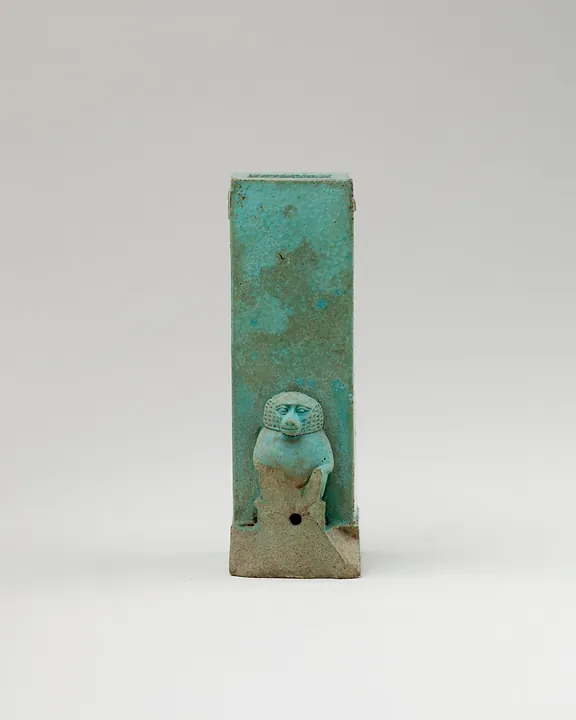
Instruments · 4th century BCE
Clepsydra, water clock model, baboon, Egypt, 4th century BCE
The Metropolitan Museum of Art, New York
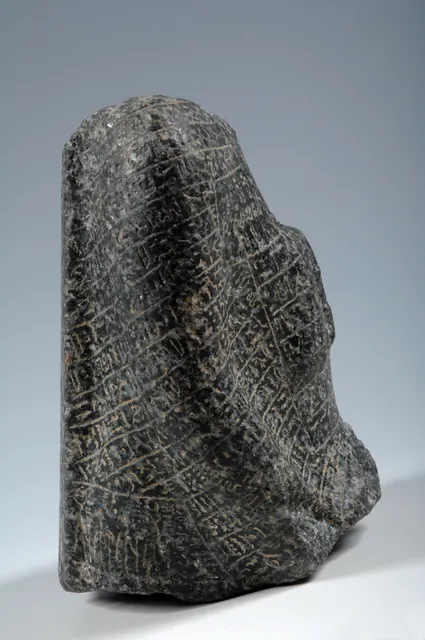
Instruments · 379 BCE–342 BCE
Fragment of a water clock decorated with the figures of the ithyphallic god Min and an unidentified Pharaoh
Museo Egizio, Turin
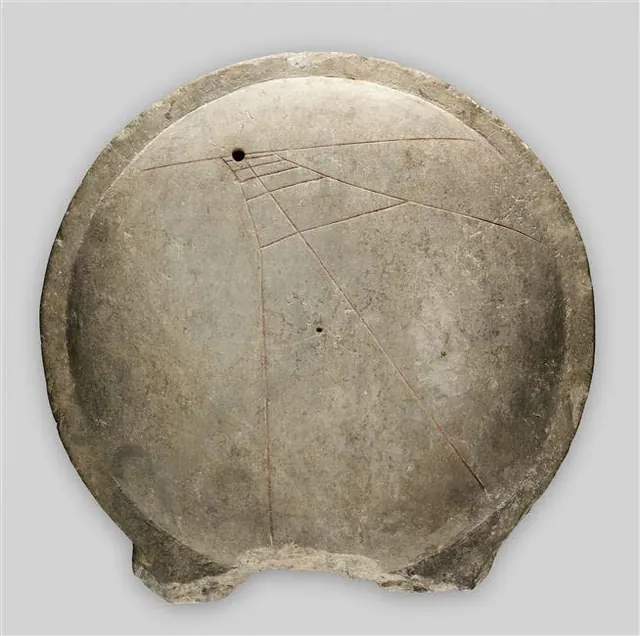
Instruments · 150 BCE – 75 BCE
Sundial, Egypt, 150 BCE – 75 BCE
Musée du Louvre, Paris
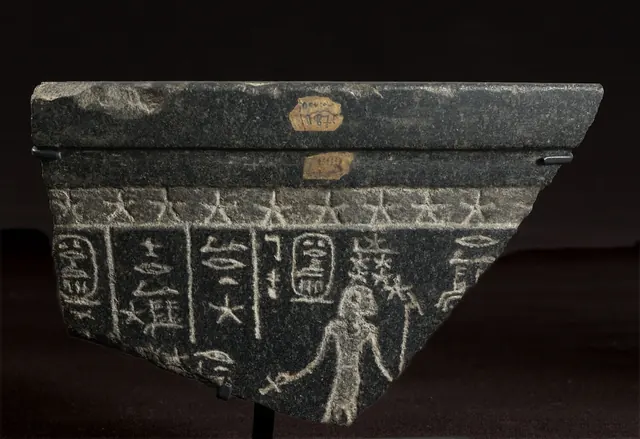
Instruments · 332 BCE – 30 BCE
Water clock, Egypt, 332 BCE – 30 BCE
Musée du Louvre, Paris
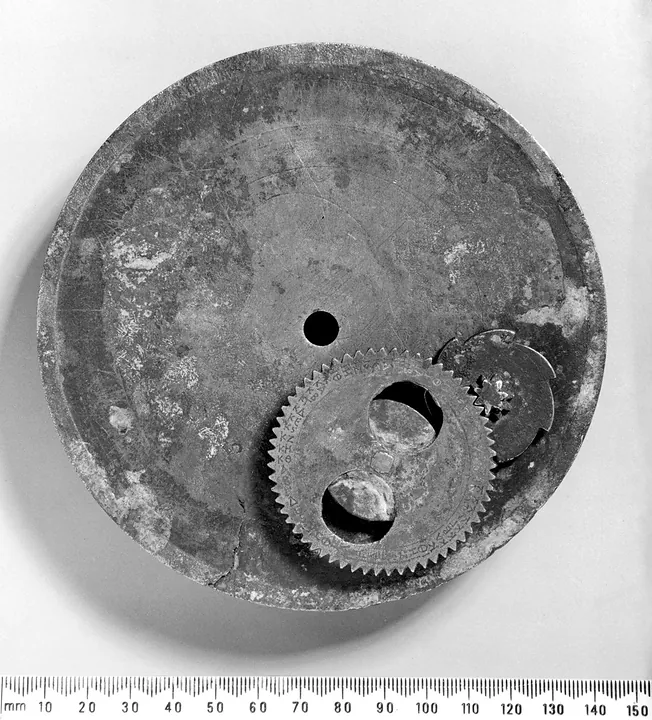
Instruments · 400–600
Sundial, Greece, 400–600
Science Museum Group, London
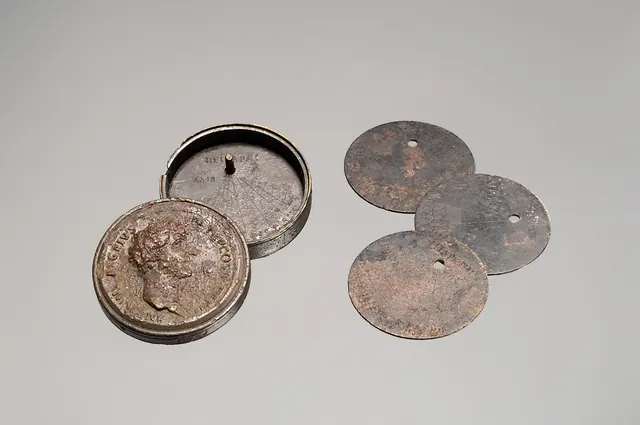
Instruments · second half of the 2nd century AD
Roman sundial, second half of the 2nd century AD
Fine Arts Museum Vienna
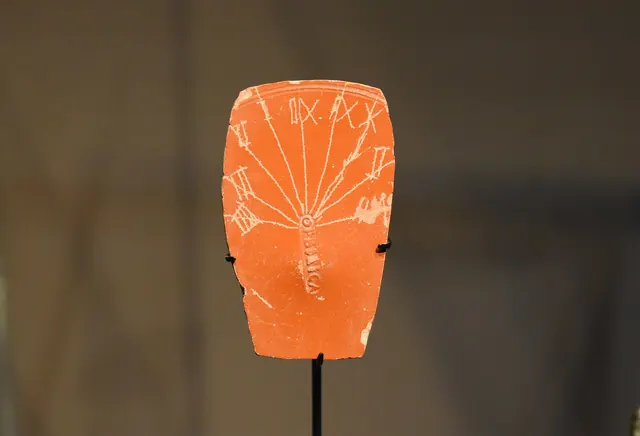
Instruments · c. 50
Portable sundial
Ensérune museum
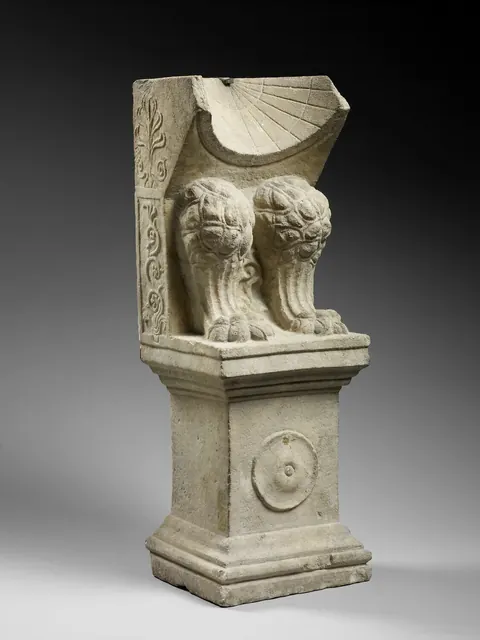
Instruments · 100 CE – 200 CE
Sundial, Anatolia (Asia Minor), 100 CE – 200 CE
Musée du Louvre, Paris