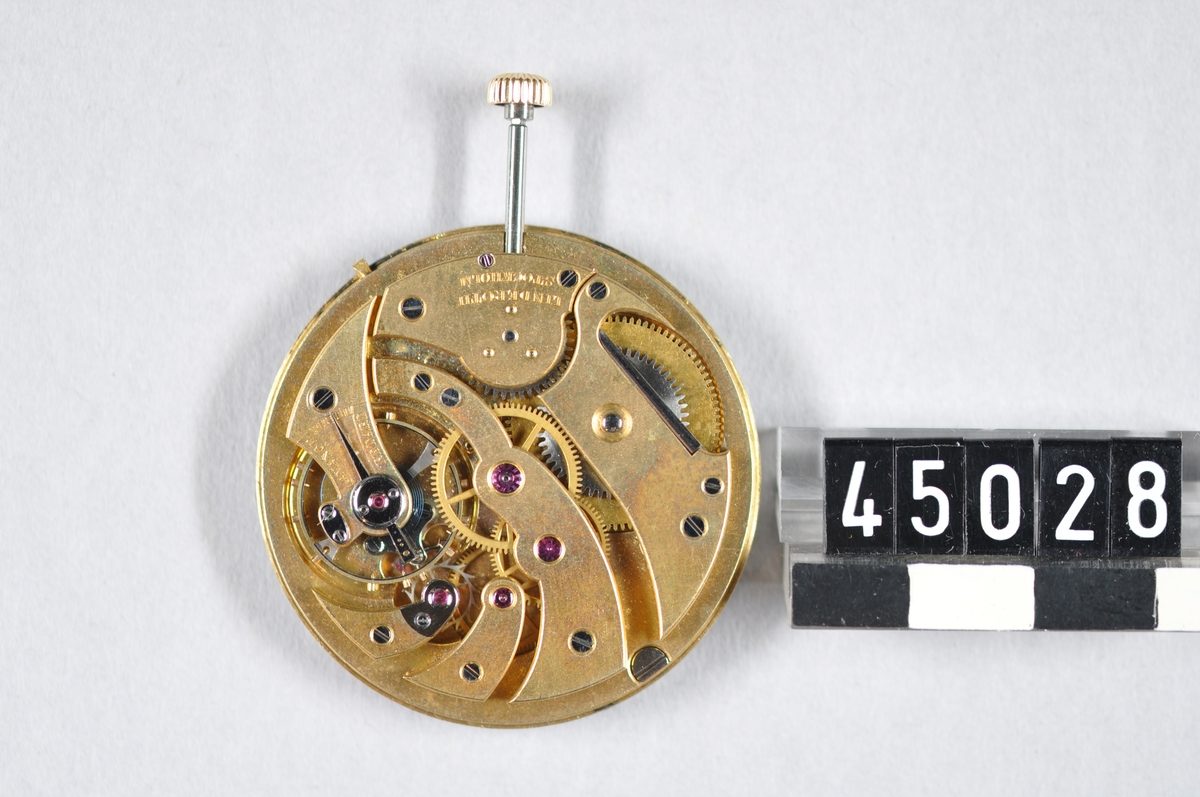
Movements & Components · Watch movement
Watch movement by G.W. Linderoths Urfabrik, Sweden, 1800–1899
- Maker / attribution
- G.W. Linderoths Urfabrik (creator)
- Date
- 1800–1899
- Historical period
- Precision & Scientific Horology (1750 – 1850)
- Country of origin
- Sweden
- Object type
- Watch movement
- Holding institution
- Swedish National Museum of Science and Technology
- Accession / object no.
- S_TEK_object_TEKS0048463
- Catalogue title (original)
- Urverk
Record summary
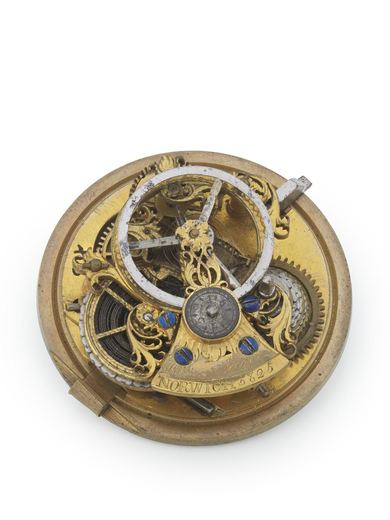
Held and catalogued by Swedish National Museum of Science and Technology (object number S_TEK_object_TEKS0048463), this is a watch movement by G.W. Linderoths Urfabrik, made in Sweden, dated 1800–1899. The Atlas places it in the Precision & Scientific Horology period (1750 – 1850) of its Movements & Components collection. The record is illustrated with 1 photograph.
Assembled from the source record's structured fields. Dates and attributions are given as the source states them; where a field is missing the Atlas leaves it blank rather than estimating.
Catalogue description
Catalogue description from Swedish National Museum of Science and Technology (Swedish)
Carl Frithiof Mattsson samlade på gamla ur och udda klockor under sin verksamma tid från 1915 till sin död 1949 G.W. Linderoth föddes i Umeå 1816 23/11, död 25/4 1871. 28/5 1844 övertog han Malmströms butik på Drottninggatan 28, Stockholm. Började tillverka fickur men även pendyler o väggur. 1860 beställde SJ det första stationsuret det blev början av en lång och framgångsrik tillverkning av tornur, stationsur mm. Betty Linderoth fortsatte att driva företaget efter sin mans bortgång 1871. Även hon var en skicklig urmakare, upplärd av sin far J.T. Cedergren. Betty dog 10/12 1900 Sonen Johan G. Linderoth övertog driften av företaget 1872. Företaget upphörde 1963.
Shown in the original language of the source catalogue. An editor-reviewed English translation has not yet been published; we do not publish machine translations as authoritative text.
Historical context
Precision & Scientific Horology (1750 – 1850)
Harrison solves longitude; Mudge invents the lever; Breguet's Paris workshop defines the modern watch.
The age of escapement invention: cylinder, duplex, lever, detent and many experimental escapements; compensation balances and fine finishing.
Read the period in the timelineMore movements & components from this periodEarlier: Early Modern Horology
Atlas type guide
Clock and watch movements
The movement is the mechanism of a clock or watch, without its case and dial. It consists of the power source (weight or mainspring in its barrel, sometimes with a fusee), the going train of wheels and pinions, the escapement and oscillator, the motion work that drives the hands, and in many cases additional trains for striking or complications.
From the eighteenth century watch movements were increasingly produced in stages: Swiss and French ébauche makers supplied rough movements that finishers, repasseurs and retailers completed and signed. Calibre numbers — first used systematically by American and Swiss factories in the nineteenth century — make it possible to identify movements, find spare parts and date watches.
What to look for
- Plate and bridge layout: full plate, three-quarter plate, Lépine bar calibre, bridges and cocks.
- Jewel count and whether jewels are set in chatons or rubbed in.
- Signatures, calibre and serial numbers on the plate or under the dial.
- Finishing: Geneva stripes (Côtes de Genève), perlage, bevelled edges, blued screws.
- Fusee and chain, going barrel, or electrical components.
Dating clues
- Full-plate English movements dominate before c. 1850; three-quarter plate and Lépine calibres after.
- Jewelled movements spread after Facio and Debaufre's patent of 1704, mainly in English work until c. 1800.
- Calibre numbers and factory serials allow close dating for industrial production after c. 1850.
General guidance written by the Atlas editors about this kind of object. It is not a statement about this particular piece; for that, rely on the source record above and on physical examination.
Related records
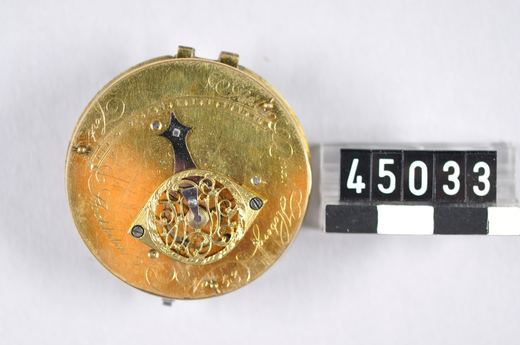
Movements & Components · 1800–1899
Watch movement by Anders Hoberg, Sweden, 1800–1899
Swedish National Museum of Science and Technology
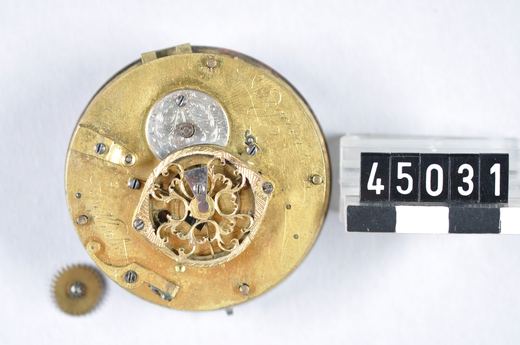
Movements & Components · 1800–1899
Watch movement by Lindgréen, Sweden, 1800–1899
Swedish National Museum of Science and Technology
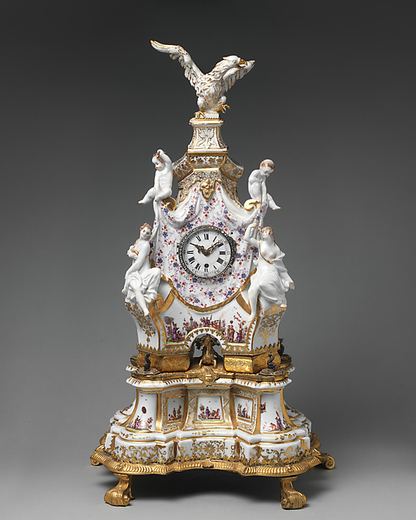
Movements & Components · case ca. 1728–30, movement ca. 1830–50
Clock case by Meissen Manufactory, Germany, case ca. 1728–30, movement ca. 1830–50
The Metropolitan Museum of Art, New York
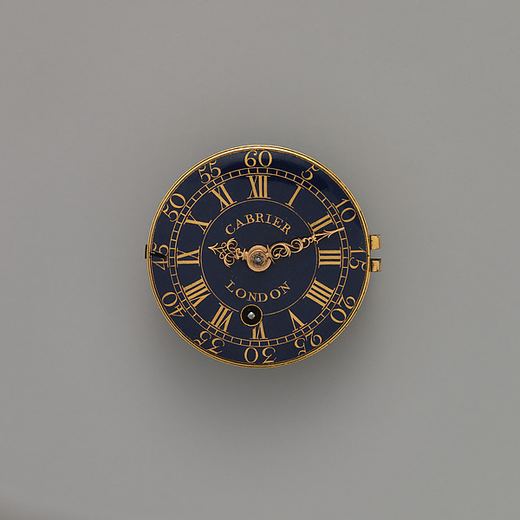
Movements & Components · ca. 1740–60
Watch movement by Charles Cabrier II, United Kingdom, ca. 1740–60
The Metropolitan Museum of Art, New York
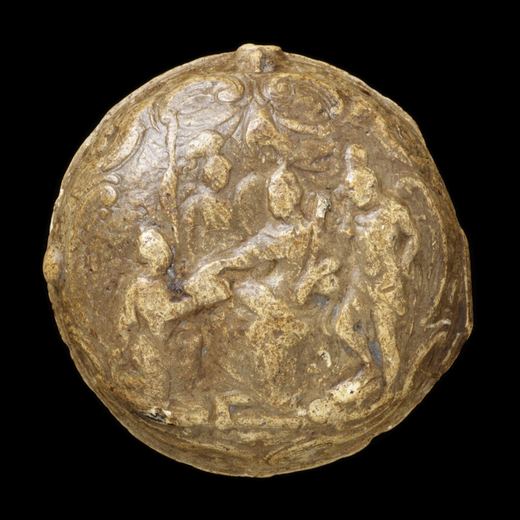
Movements & Components · 1740-70
Plaster cast of a watch case, made in England in 1740-70
Victoria and Albert Museum, London
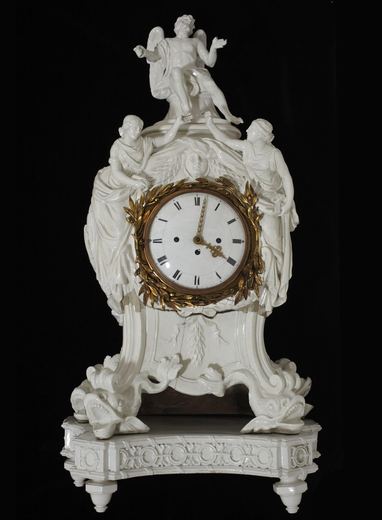
Movements & Components · late 18th century - 1810
Clock case and pedestal of porcelain, Doccia porcelain factory, Florence, late 18th-early 19th century
Victoria and Albert Museum, London
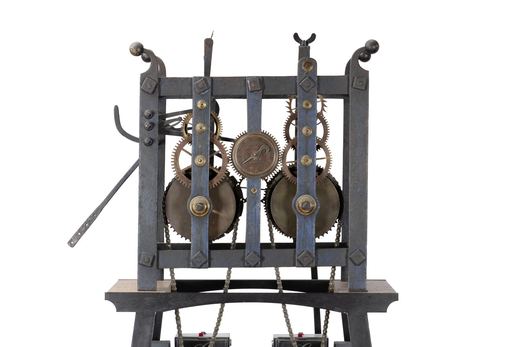
Movements & Components · 1750
Clock movement by Smith, William, England, 1750
Science Museum Group, London
Movements & Components · 1750-1775
Watch movement by Amyot, Peter, England, 1750-1775
Science Museum Group, London