
Wristwatches · Wristwatch
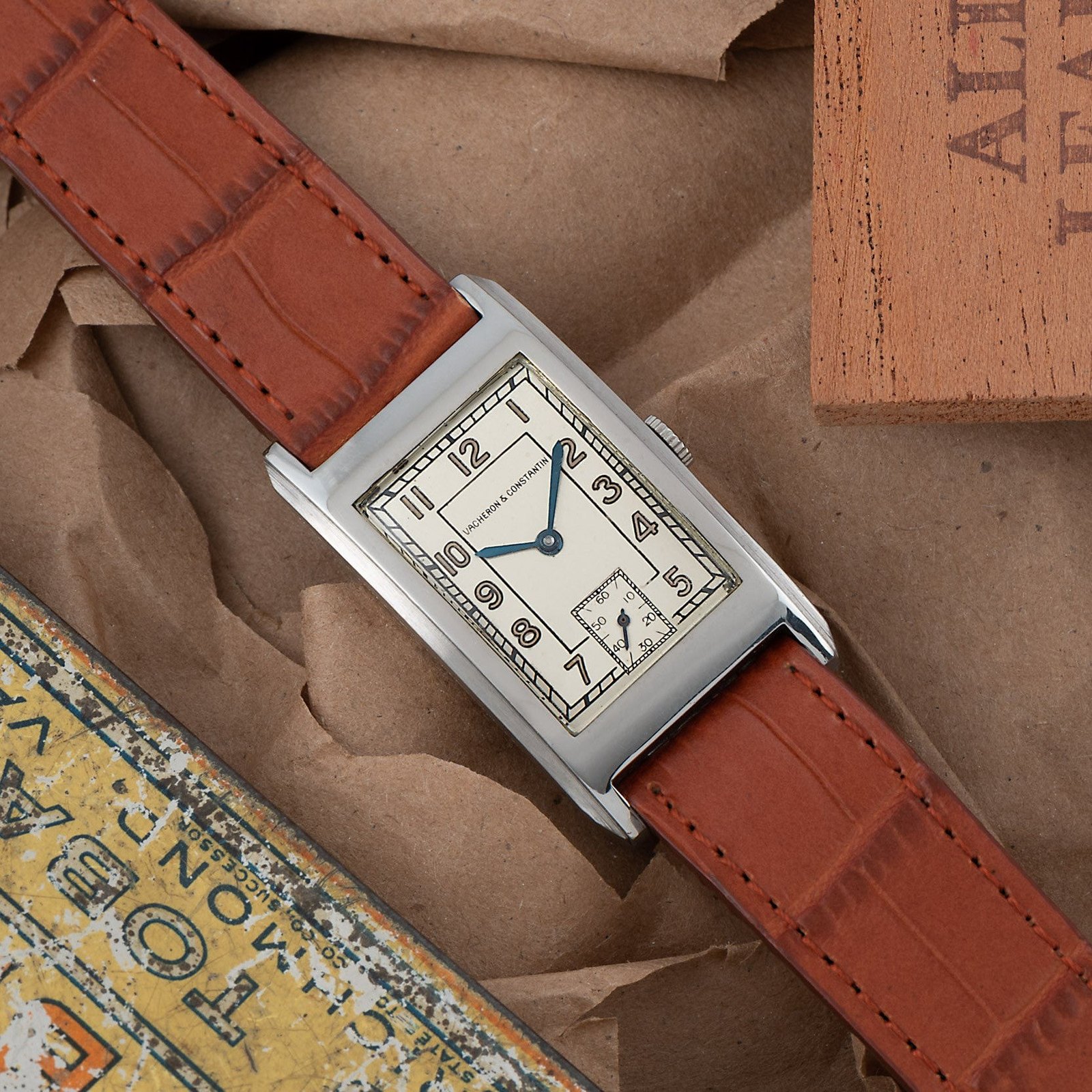
Vacheron Constantin Rectangular Steel Dress Watch, c. 1930s–1940s
- Maker / attribution
- Vacheron Constantin (maker)
- Date
- c. 1930s–1940s
- Historical period
- Golden Age of Mechanical Watchmaking (1900 – 1945)
- Country of origin
- Switzerland
- Object type
- Wristwatch
- Materials / technique
- steel
- Dimensions
- Case 23 mm
- Stock no.
- 40991296
- Credit line
- Dealer listing, Analog/Shift (40991296)
- Catalogue title (original)
- Vacheron Constantin Rectangular Steel Dress Watch (English)
View the source record (dealer listing) ↗ (opens another website in a new tab)Suggest a correction
Record summary
Catalogued by Analog/Shift (dealer), New York (stock number 40991296), this is a wristwatch by Vacheron Constantin, made in Switzerland, dated c. 1930s–1940s. The Atlas places it in the Golden Age of Mechanical Watchmaking period (1900 – 1945) of its Wristwatches collection. Materials and techniques recorded by the source: steel. Recorded dimensions: Case 23 mm. The record is illustrated with 6 photographs.
Assembled from the source record's structured fields. Dates and attributions are given as the source states them; where a field is missing the Atlas leaves it blank rather than estimating.
Catalogue description
Dealer description — Analog/Shift
Simple doesn’t have to mean boring—and this watch by Vacheron Constantin proves it. As a member of the Holy Trinity of watch brands, Vacheron Constantin is generally less understood than either of its respected compatriots. VC has a legacy of producing some of the very finest high horology complications in history - and some of the loveliest. Sports watches came later to VC, as pressure from the new ‘luxury sports watch’ category introduced in the early 1970s forced the storied brand to evolve — but historically, classically styled dress pieces is where Vacheron cut their teeth. This particular piece, a dress watch dating to circa the 1930s-1940s, features a gorgeous 23mm rectangular case with gorgeous beveled lugs and an acrylic crystal, and a satin silver dial with gold-foil ‘Arabic’ indices, a matching blued-steel ‘sword’ handset, an outer ‘railroad’ minute track, and a sub-seconds display above 6 o’clock. Powered by Vacheron Constnatin's Calibre 435/3C hand-cranking movement, this fabulously cool timepiece comes fitted to one of our Analog:Shift brown alligator-pattern leather straps with a steel pin buckle. You'd be forgiven for mistaking this piece for a Jaeger-Lecoultre Reverso at first glance, which is no insult, but this fantastically cool watch hails from one of the most stories houses in watchmaking and offers its own take on the rectangular watch shape, particularly popular at this point in time. With timelessly appealing looks, pedigree to rival the very best, and a versatile size — wear it today with everything from a suit or other formalwear to a t-shirt and jeans; it's all fair game, and there is no saying when another will surface again.
Historical context
Golden Age of Mechanical Watchmaking (1900 – 1945)
The wristwatch displaces the pocket watch; waterproof cases, self-winding and grand complications.
The wristwatch overtook the pocket watch. Military use in the First World War, aviation, water-resistant cases (1926), automatic winding (1923–31), rectangular Art Deco designs and early chronographs and calendars defined the period.
Read the period in the timelineMore wristwatches from this periodEarlier: Industrial Revolution
Atlas type guide
Wristwatches
Bracelet watches were worn by women from the early nineteenth century — Breguet made one for Caroline Murat, Queen of Naples, in 1810–12 — but the wristwatch only became a man's instrument with military use and aviation in the early twentieth century. Between the World Wars it overtook the pocket watch; the 1920s and 1930s brought rectangular Art Deco cases, water-resistant cases and the first automatic winding systems.
After 1945 the wristwatch became a carrier of identity — dress watches, sports and dive watches, chronographs, calendars — produced by Swiss, American, Japanese, German, Soviet and Chinese industries. The quartz revolution after 1969 and the mechanical renaissance since the 1990s, including the rise of independent watchmakers, complete the story.
What to look for
- The reference number (between the lugs or inside the case back) and serial number, the starting point for dating.
- The calibre: its maker and number are often stamped under the dial or on the bridge.
- Originality of dial, hands and crown — refinished ('redial') dials are common.
- Case material marks: 18K/750, 14K/585, stainless steel, gold-filled, plated.
Dating clues
- Wire-lug cases: before c. 1925.
- Water-resistant screw-down cases: from 1926.
- Quartz movements: from 1969; sapphire crystals widespread after c. 1980.
General guidance written by the Atlas editors about this kind of object. It is not a statement about this particular piece; for that, rely on the source record above and on physical examination.
Related records
Pocket Watches · c. 1896
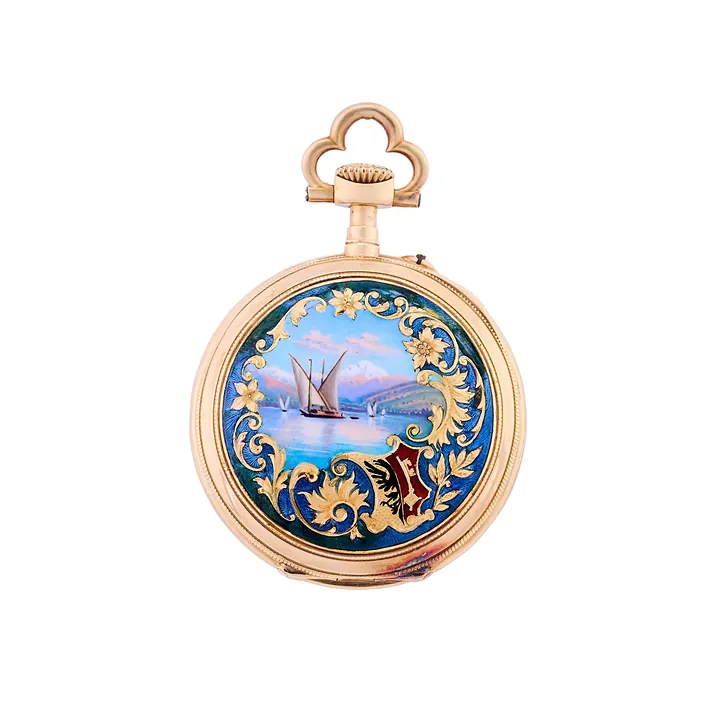
Vacheron Constantin “grand TIR de L’exposition Nationale, Genève 1896, c. 1896
Antiquorum auction archive, Geneva
Pocket Watches · c. 1940
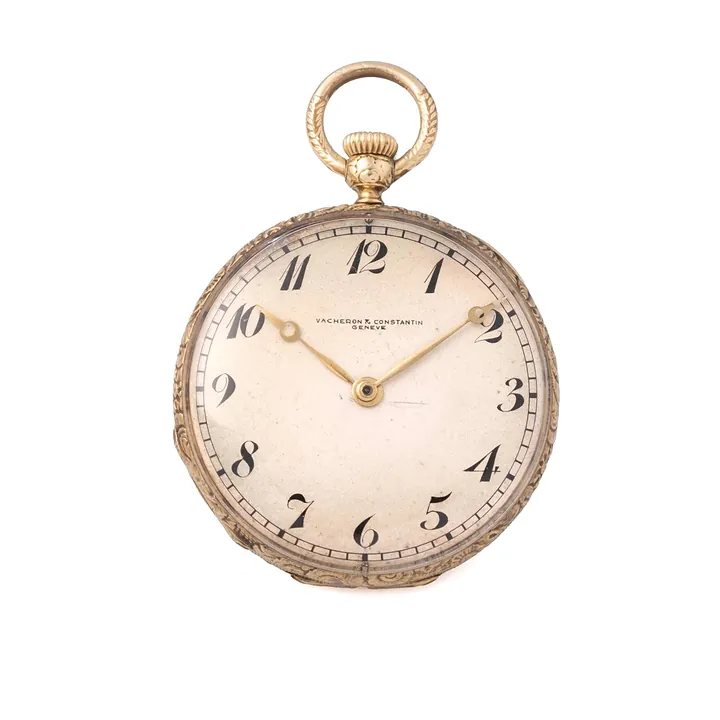
Vacheron Constantin pocket watch, ref. 345, c. 1940
Antiquorum auction archive, Geneva
Pocket Watches · c. 1945
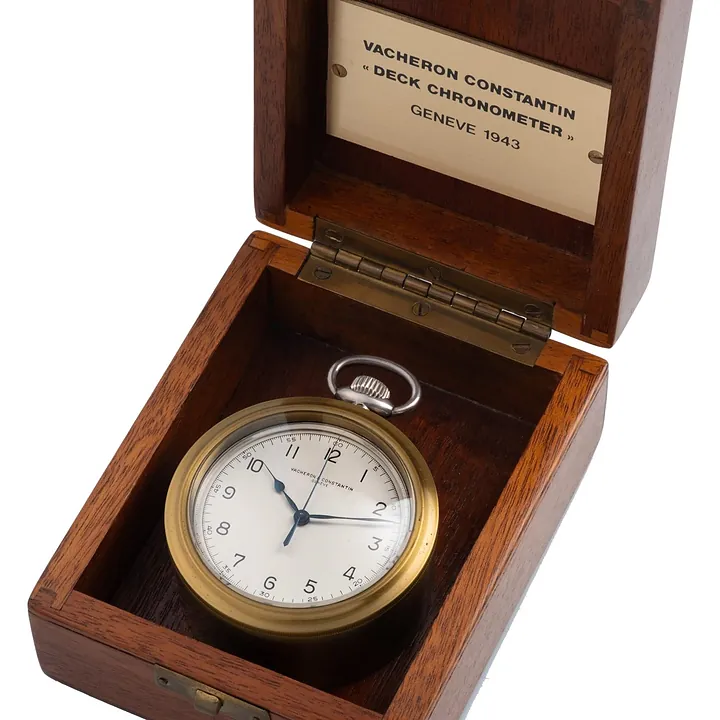
Vacheron Constantin pocket chronometer, c. 1945
Antiquorum auction archive, Geneva
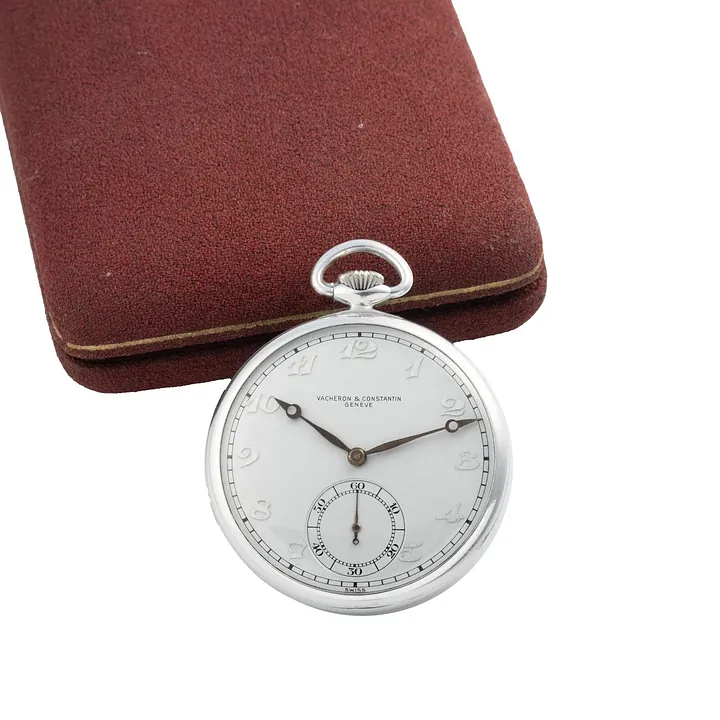
Pocket Watches · c. 1945
Vacheron Constantin watch, c. 1945
Antiquorum auction archive, Geneva

Wristwatches · 1931
Rolex 'Oyster Perpetual' rotor self-winding wrist-watch, lever escapement, in steel case with glass in back, Montres Rolex SA, Geneva, Switzerland, 1931
Science Museum Group, London

Wristwatches · 1900–1999
Wristwatch by Certina, Switzerland, 1900–1999
Nordic Museum Foundation
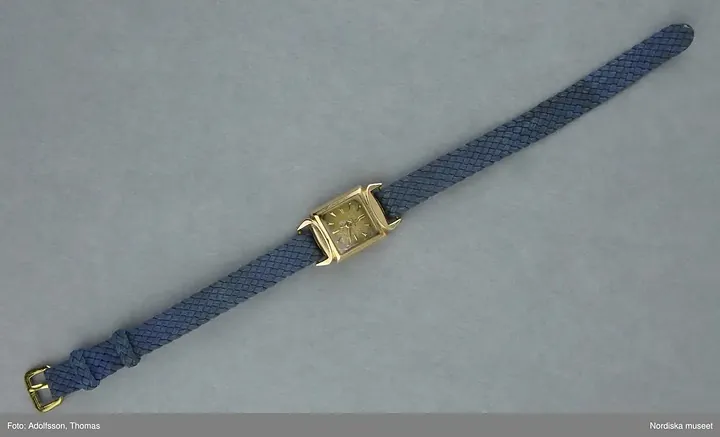
Wristwatches · 1900–1999
Wristwatch by Omega, Västerås, 1900–1999
Nordic Museum Foundation
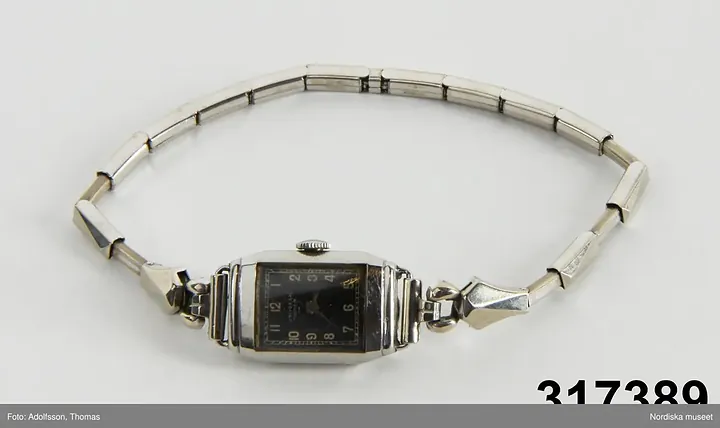
Wristwatches · 1900–1999
Wristwatch by Universal, Switzerland, 1900–1999
Nordic Museum Foundation