
Wristwatches · Wristwatch
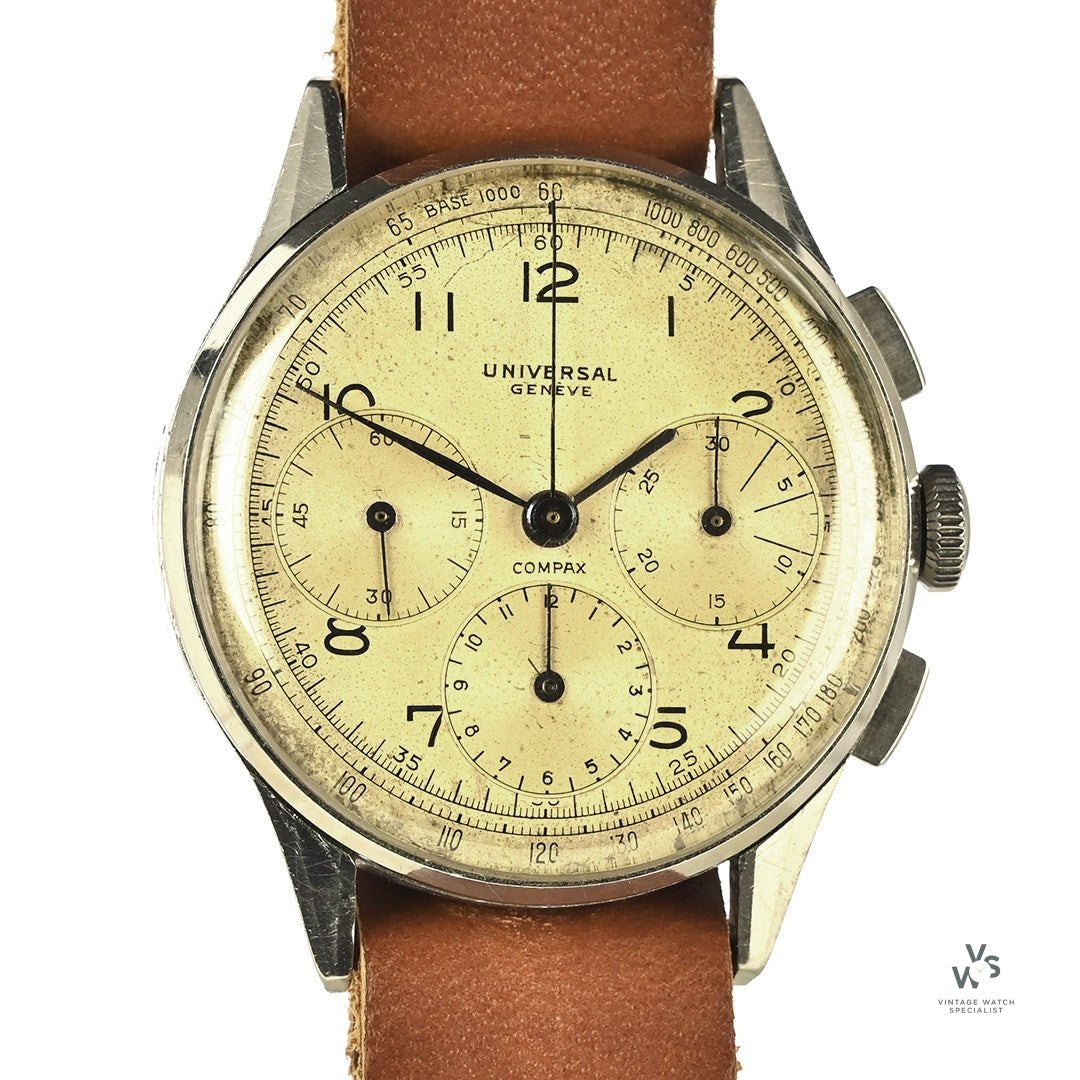
Universal Geneve, Compax, Triple-Register Chronograph, ref. 22427, circa 1940s
- Maker / attribution
- Universal Genève (maker)
- Date
- c. 1940s
- Historical period
- Golden Age of Mechanical Watchmaking (1900 – 1945)
- Country of origin
- Switzerland
- Object type
- Wristwatch
- Dimensions
- Case 37 mm
- Stock no.
- vws0700
- Credit line
- Dealer listing, Vintage Watch Specialist (vws0700)
- Catalogue title (original)
- Universal Geneve - Compax - Triple-Register Chronograph - Reference 22427 - c.1940s (English)
View the source record (dealer listing) ↗ (opens another website in a new tab)Suggest a correction
Record summary
Catalogued by Vintage Watch Specialist (dealer), United Kingdom (stock number vws0700), this is a wristwatch by Universal Genève, made in Switzerland, dated c. 1940s. The Atlas places it in the Golden Age of Mechanical Watchmaking period (1900 – 1945) of its Wristwatches collection. Recorded dimensions: Case 37 mm. The record is illustrated with 6 photographs.
Assembled from the source record's structured fields. Dates and attributions are given as the source states them; where a field is missing the Atlas leaves it blank rather than estimating.
Catalogue description
Dealer description — Vintage Watch Specialist
A Stunning 1940s Universal Geneve Triple-Register Chronograph - Compax - Ref. 22427 with Caliber 287 Universal Geneve, historically, sat firmly in competition with Swiss watchmaking companies Audemars-Piguet, Girard-Perregaux, Rolex, and Patek Philippe for most of the 20th century. The company is known for its expertise and craftsmanship, producing watches in their entirety, including in-house movements. Most famously, Universal Geneve was the first to ever make a chronograph watch in 1917. Though they may stand in Rolex's shadow today, feats such as this, and designs such as this chronograph here, attest to the deservedly solid reputation surrounding the Universal Geneve name. At 37mm in diameter, the case is larger than most watches that still survive having been made in the 1940s. Thanks to a domed glass and case back, the watch also sits proudly on the wrist, making this a fine wear, when many smaller counterparts have been confined to the past by their slimmer, smaller fit by modern standards. The chronograph, which features sub-registers at 3:00, 6:00 and 9:00, is operated by two pushers at 2:00 and 4:00, which straddle the crown at 3:00. This is clearly the product of fine craftsmanship: its case edges and bezel slip seamlessly into the lugs, which feature a beautiful bevelling effect across their top. The quality of its production is clearly demonstrated in the watch's condition - made in the 1940s, it still looks like a sturdy watch. Were it not for the beautiful golden, creamy patina across the dial, it'd be hard to know that the watch is 80 years old! The design too sits comfortably among modern companions: a thin bezel makes the dial appear much larger and more visible, making for an elegant watch that doesn't look at all clunky to the eye. What's on offer This 1940s Universal Geneve Chronograph has been excellently preserved. The dial exhibits a golden, tobacco tone which contrasts nicely with the bright blue tempered steel hands. There is a light speckling, which is only visible on a microscopic level, but adds a wonderful vintage character from a distance. The watch has received a service, cleaning, and timing to the movement by our watchmaker. The glass, having been lightly polished, is mint. The joints between the case edge, lugs, and case back do show light scratching in places, but this is mostly only seen on the 9:00-side case edge and is only very minor elsewhere. Considering the year of production (circa 1940s), this watch is in fabulous condition. In our eyes, the minor signs of wear and the beautiful colouration add to this watch's appearance if anything. The photos do not do this watch justice, on the wrist it looks great!
Historical context
Golden Age of Mechanical Watchmaking (1900 – 1945)
The wristwatch displaces the pocket watch; waterproof cases, self-winding and grand complications.
The wristwatch overtook the pocket watch. Military use in the First World War, aviation, water-resistant cases (1926), automatic winding (1923–31), rectangular Art Deco designs and early chronographs and calendars defined the period.
Read the period in the timelineMore wristwatches from this periodEarlier: Industrial Revolution
Atlas type guide
Chronographs and split-seconds watches
A chronograph is a watch with an additional seconds hand that can be started, stopped and returned to zero independently of the timekeeping. Louis Moinet built an early example in 1816 and Nicolas Rieussec a recording 'chronographe' in 1821; Adolphe Nicole's heart-shaped reset cam (patented 1862) made the modern return-to-zero possible. Split-seconds (rattrapante) chronographs add a second hand that can be stopped for intermediate times; flyback chronographs restart instantly.
Chronographs were essential tools for doctors (pulsometer scales), artillery (telemeter), engineers and sport. In wristwatches, Valjoux, Venus, Lemania and later the automatic chronographs of 1969 (Zenith El Primero, the Chronomatic Calibre 11 group and Seiko 6139) are milestones.
What to look for
- Push-pieces on the case band or a single button in the crown (monopusher).
- Subsidiary registers for minutes and hours; tachymeter, telemeter or pulsometer scales.
- Column wheel versus cam control visible in the movement.
- Calibre markings of specialist makers (Valjoux, Lemania, Venus, Landeron).
Dating clues
- Pocket chronographs with heart cam reset: after 1862.
- Wrist chronographs: from c. 1910; two-button designs from the 1930s.
- Automatic chronographs: from 1969.
General guidance written by the Atlas editors about this kind of object. It is not a statement about this particular piece; for that, rely on the source record above and on physical examination.
Read next:Flyback chronographChronograph
Related records
Clocks · c. 1960-1970s
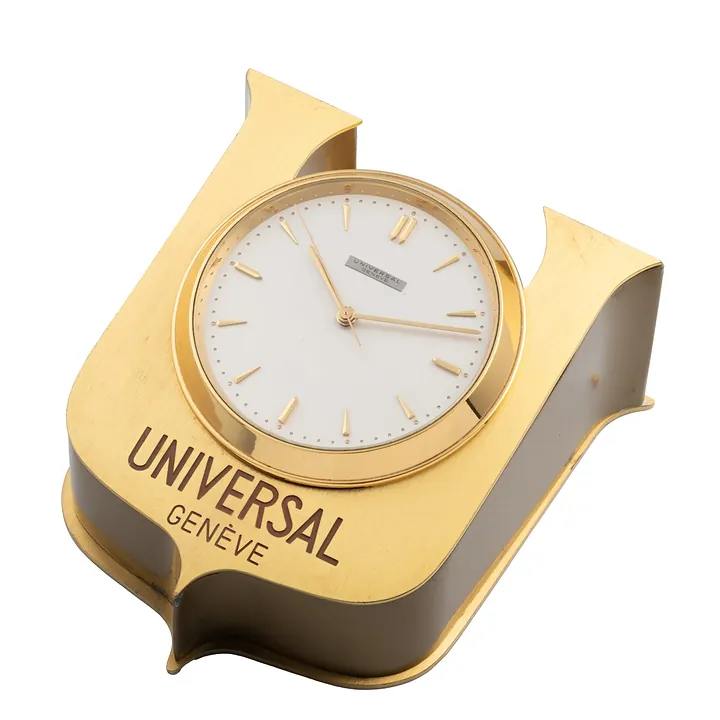
Universal Genève clock, ref. 999.116.01, c. 1960-1970s
Antiquorum auction archive, Geneva
Pocket Watches · c. 1950s
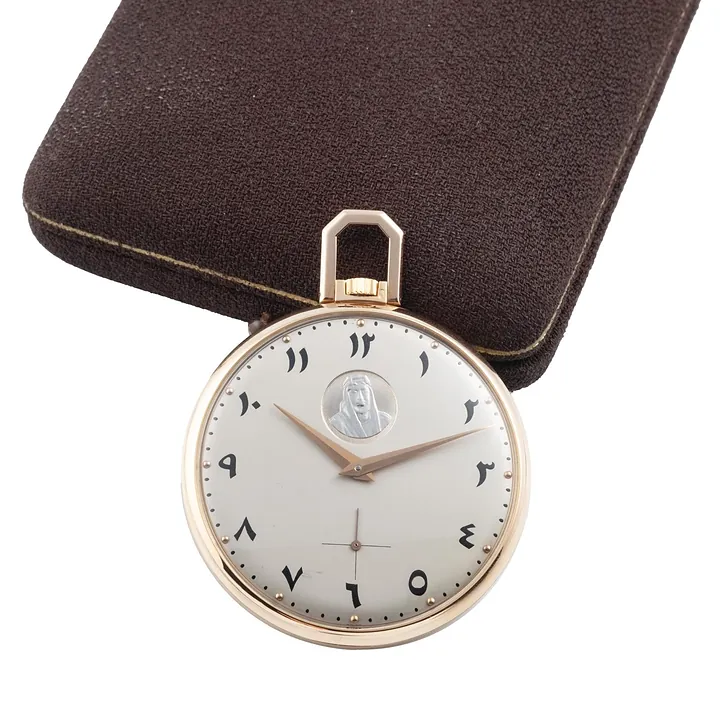
Universal Genève pocket watch, ref. 11746 3/ 11746 1, c. 1950s
Antiquorum auction archive, Geneva
Wristwatches · c. 1941
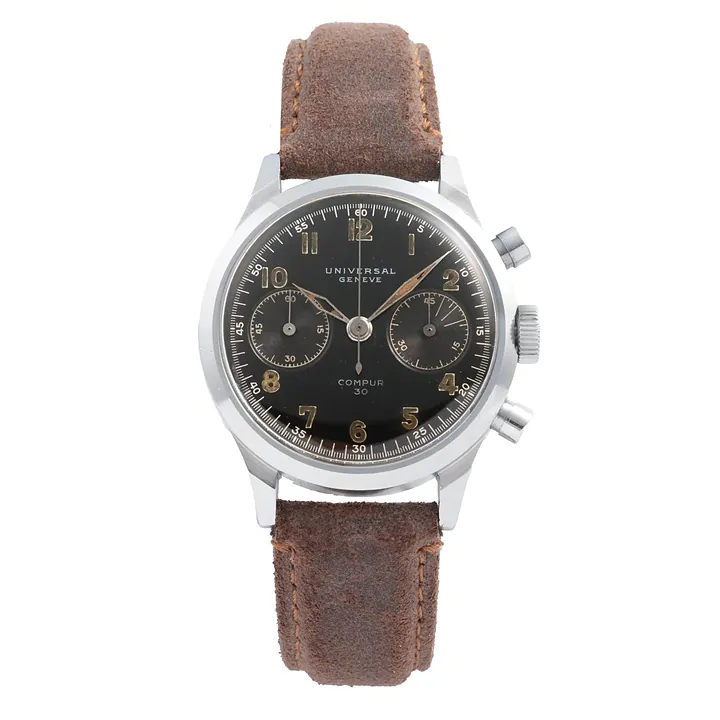
Universal Genève Compur 30, ref. 22409, c. 1941
Antiquorum auction archive, Geneva

Wristwatches · c. 1945
Universal Genève Uni-Compax, ref. 22492, c. 1945
Antiquorum auction archive, Geneva

Wristwatches · 1931
Rolex 'Oyster Perpetual' rotor self-winding wrist-watch, lever escapement, in steel case with glass in back, Montres Rolex SA, Geneva, Switzerland, 1931
Science Museum Group, London

Wristwatches · 1900–1999
Wristwatch by Certina, Switzerland, 1900–1999
Nordic Museum Foundation
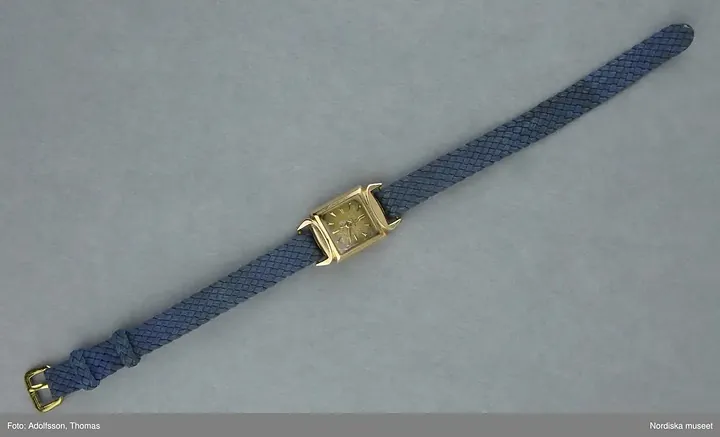
Wristwatches · 1900–1999
Wristwatch by Omega, Västerås, 1900–1999
Nordic Museum Foundation
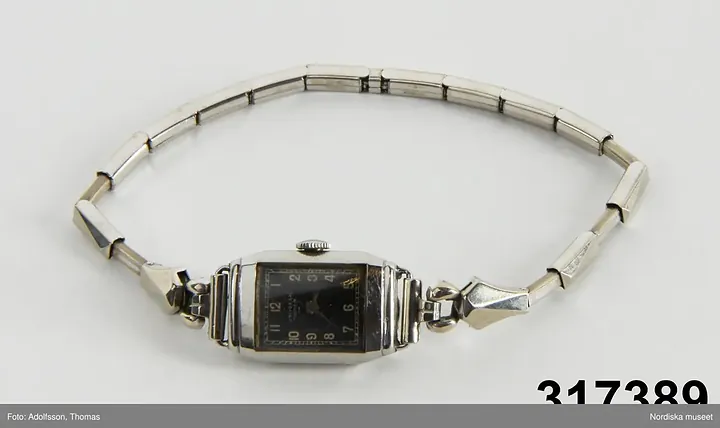
Wristwatches · 1900–1999
Wristwatch by Universal, Switzerland, 1900–1999
Nordic Museum Foundation