
Wristwatches · Wristwatch
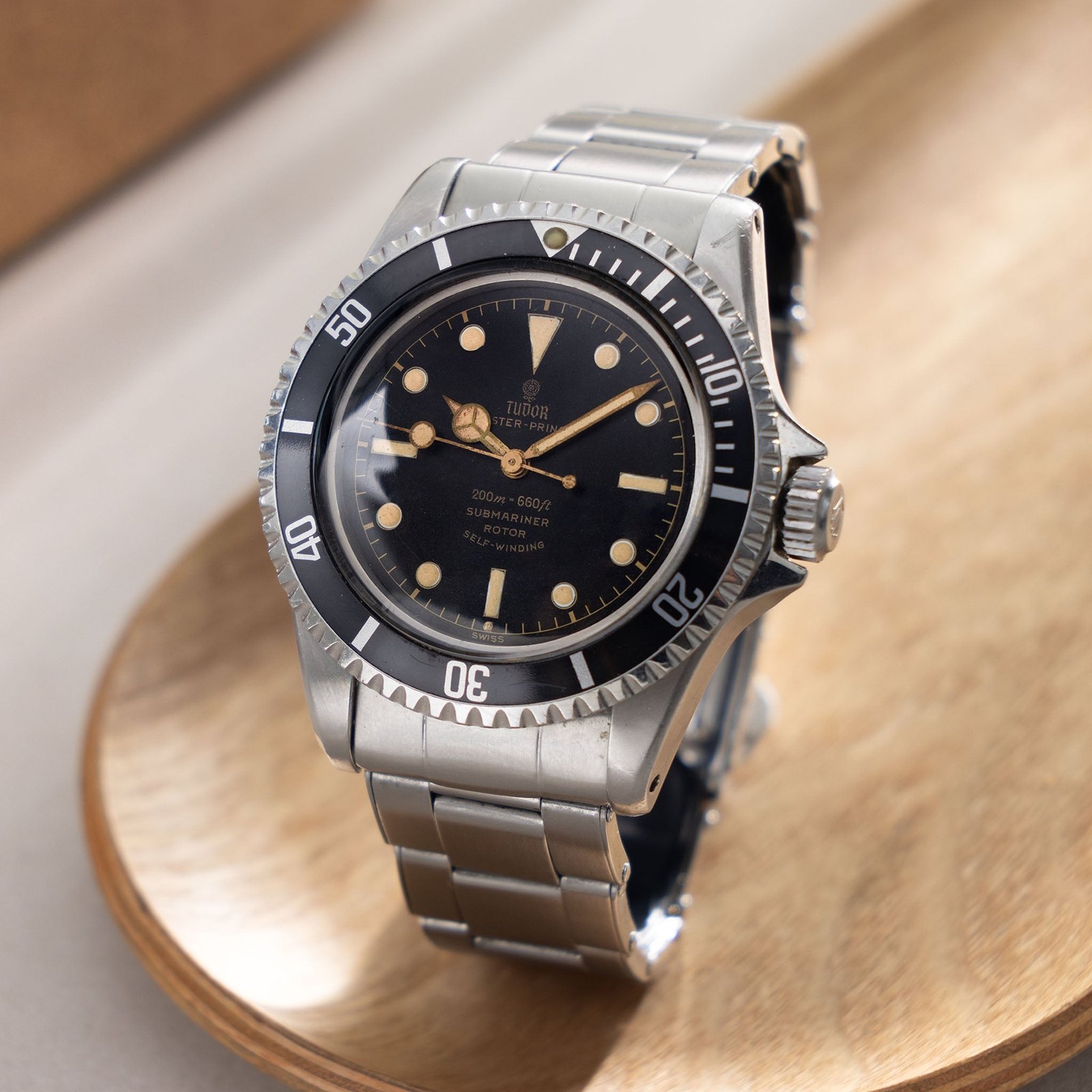
Tudor Submariner Chapter Ring Exclamation Dial Ref. 7928 Pointed Crown Case, 1962
- Maker / attribution
- Tudor (maker)
- Date
- 1962
- Historical period
- Modern Mechanical Horology (1945 – 1969)
- Country of origin
- Switzerland
- Object type
- Wristwatch
- Dimensions
- Case 40 mm
- Stock no.
- w-3094
- Credit line
- Dealer listing, Bulang & Sons (w-3094)
- Catalogue title (original)
- Tudor Submariner Chapter Ring Exclamation Dial Ref. 7928 Pointed Crown Case (English)
View the source record (dealer listing) ↗ (opens another website in a new tab)Suggest a correction
Record summary
Catalogued by Bulang & Sons (dealer), Copenhagen (stock number w-3094), this is a wristwatch by Tudor, made in Switzerland, dated 1962. The Atlas places it in the Modern Mechanical Horology period (1945 – 1969) of its Wristwatches collection. Recorded dimensions: Case 40 mm. The record is illustrated with 6 photographs.
Assembled from the source record's structured fields. Dates and attributions are given as the source states them; where a field is missing the Atlas leaves it blank rather than estimating.
Catalogue description
Dealer description — Bulang & Sons
As you might know, at Bulang and Sons, we love the no-date Submariner—and this is the perfect fit for our No Date Sub Club! Want to join? This might be your entry ticket… This is a great example of an early dial version, highlighted by the distinctive gilt minute track around the dial’s outer edge and the gilt-printed text. The lume has gracefully aged to a soft yellow hue on the hour markers, perfectly complementing the gilt hands, featuring the rarer “Lollipop” second hand, where the round part is larger than in later versions. A notable feature is the “exclamation point” at 6 o’clock, which is typical of this serial and believed by collectors to indicate the transition from radium lume to a tritium mix. The fat-font, slightly faded inlay is in great condition, with a pearl that has been refilled. The case is in excellent condition, especially for a 60-year-old diving watch, with the signature pointed crown guards still in great shape! The watch is fitted with a Rivet Rolex Oyster bracelet, Ref. 7206, with end links marked 80 and a clasp stamped 1/70. This Ref. 7928 Tudor embodies all the key traits of a coveted vintage Submariner: stunning patina, a gorgeous gilt dial, pointed crown guards, and gilt hands that have aged to a rich, even yellow tone. In short, it's everything a collector could ask for. The watch has been checked and regulated by our watchmaker. Get in touch if you want to learn more about this original grandfather of the Tudor Black Bay! Specifications: - Tudor Submariner Reference 7928 - 40mm steel case with "pointed crown guards" - Serial: 364xxx, dating to 1962 - Chapter ring dial with exclamation point, gilt hands & "Lollipop" second hand - Faded fat-font bezel insert - Rolex Oyster Ref. 7206 with end links 80, spring-loaded - Fully serviced by our watchmaker
Historical context
Modern Mechanical Horology (1945 – 1969)
Tool watches for divers, pilots and astronauts; electric watches anticipate the electronic age.
The classic era of the mechanical wristwatch: dive watches, chronographs for motor racing and space flight, GMT watches for jet travel, slim dress watches, automatic calendars, and the rise of Japanese manufacturers alongside Swiss, American, German and Soviet industries.
Read the period in the timelineMore wristwatches from this periodEarlier: Golden Age of Mechanical Watchmaking
Atlas type guide
Dive and water-resistant watches
Keeping water and dust out of a wristwatch was a long-standing challenge. Rolex's screw-down Oyster case (1926) and Omega's Marine (1932) were landmarks; in the early 1950s Blancpain's Fifty Fathoms and Rolex's Submariner defined the professional dive watch with rotating bezels for timing dives, luminous dials and high water resistance. The ISO 6425 standard (1982) later codified what a 'diver's watch' must do.
Dive watches became icons of post-war design and exploration, and their evolution — helium escape valves, ceramic bezels, saturation-diving depth ratings — records the history of underwater work.
What to look for
- Unidirectional or bidirectional rotating bezel with minute markings.
- Screw-down crown and case back; depth rating printed on the dial.
- Luminous hands and markers (radium before c. 1960, tritium c. 1960–1998, then Super-LumiNova).
- Reference numbers on the case between the lugs or inside the back.
Dating clues
- Screw-down Oyster cases: from 1926.
- Professional dive watches: from 1953.
- Tritium 'T' marks on dials: c. 1960–1998.
General guidance written by the Atlas editors about this kind of object. It is not a statement about this particular piece; for that, rely on the source record above and on physical examination.
Related records
Wristwatches · c. 1973
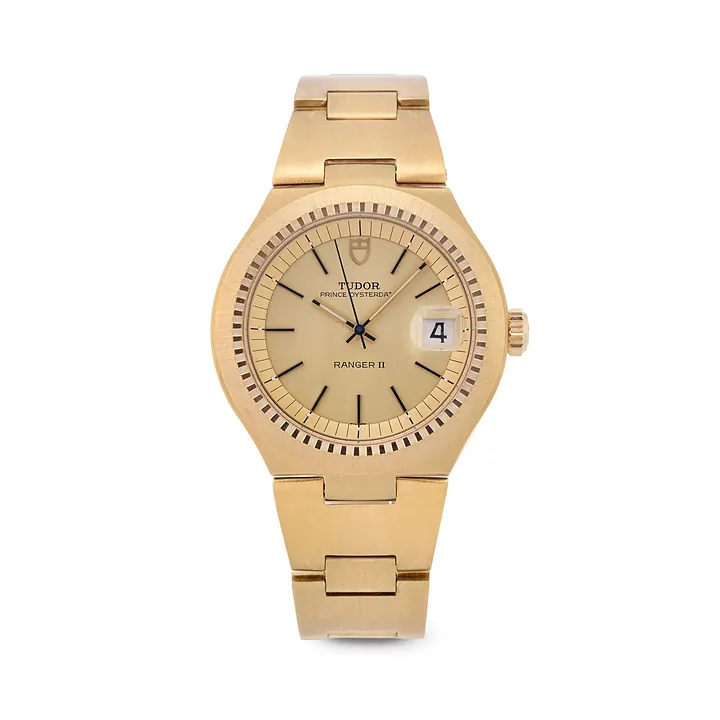
Tudor Prince Oysterdate Ranger II, ref. 9101/1, c. 1973
Antiquorum auction archive, Geneva
Wristwatches · c. 1973
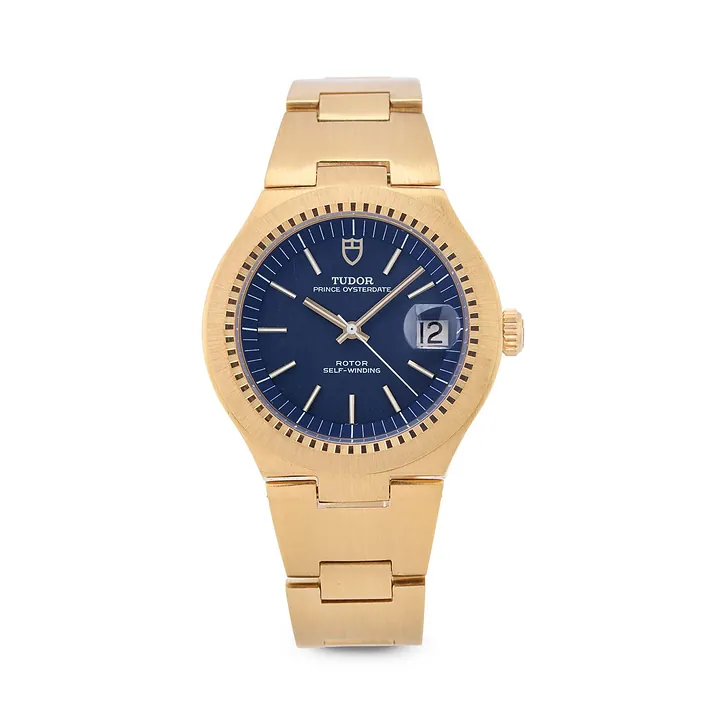
Tudor Prince Oysterdate, ref. 9101/1, c. 1973 (Antiquorum Lot 389-114)
Antiquorum auction archive, Geneva
Wristwatches · c. 1973
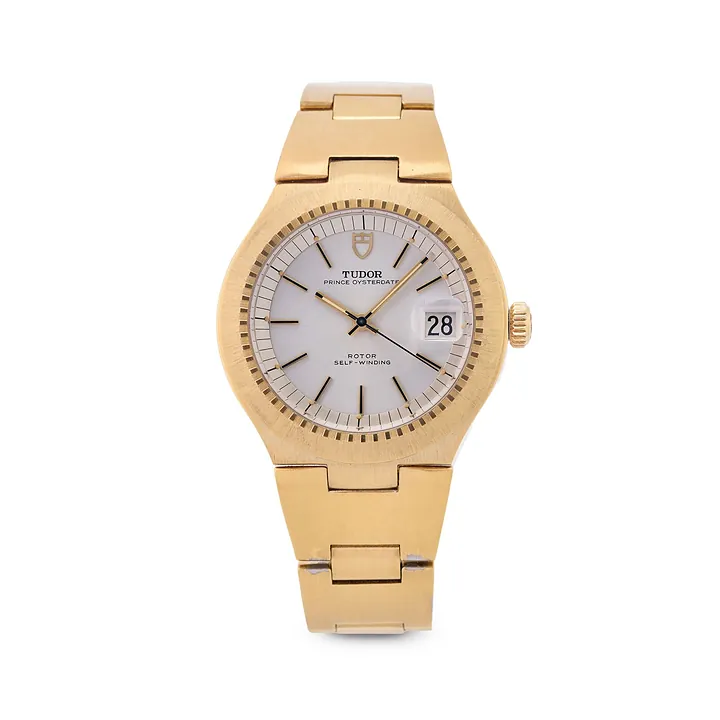
Tudor Prince Oysterdate, ref. 9101/1, c. 1973 (Antiquorum Lot 389-115)
Antiquorum auction archive, Geneva
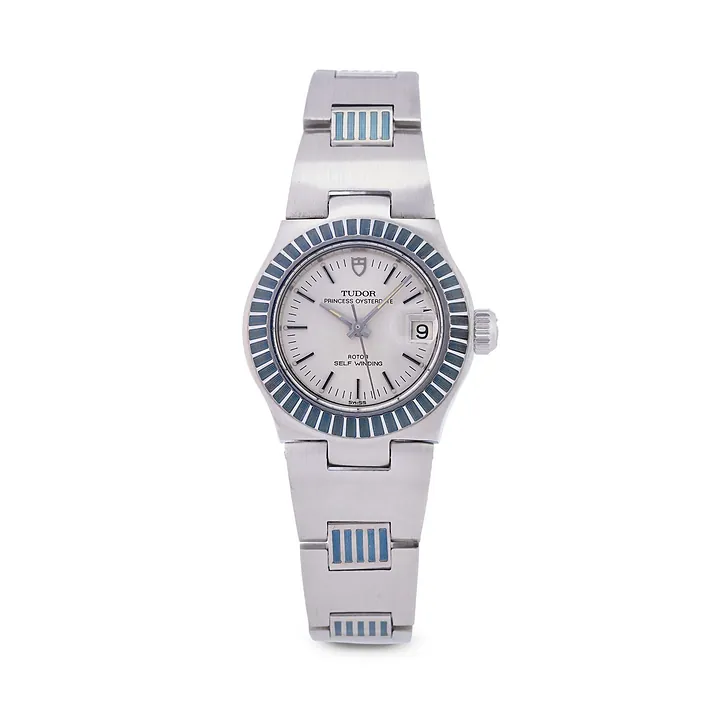
Wristwatches · c. 1974
Tudor Princess Oysterdate, ref. 9311/0, c. 1974
Antiquorum auction archive, Geneva

Wristwatches · 1945
Wristwatch by Eterna, 1945
Museum Rotterdam

Wristwatches · c. 1945
Breitling Premier, ref. 790, c. 1945
Antiquorum auction archive, Geneva

Wristwatches · c. 1945
Universal Genève Uni-Compax, ref. 22492, c. 1945
Antiquorum auction archive, Geneva

Wristwatches · c. 1950s
Baume & Mercier wristwatch, c. 1950s
Antiquorum auction archive, Geneva