
Wristwatches · Wristwatch
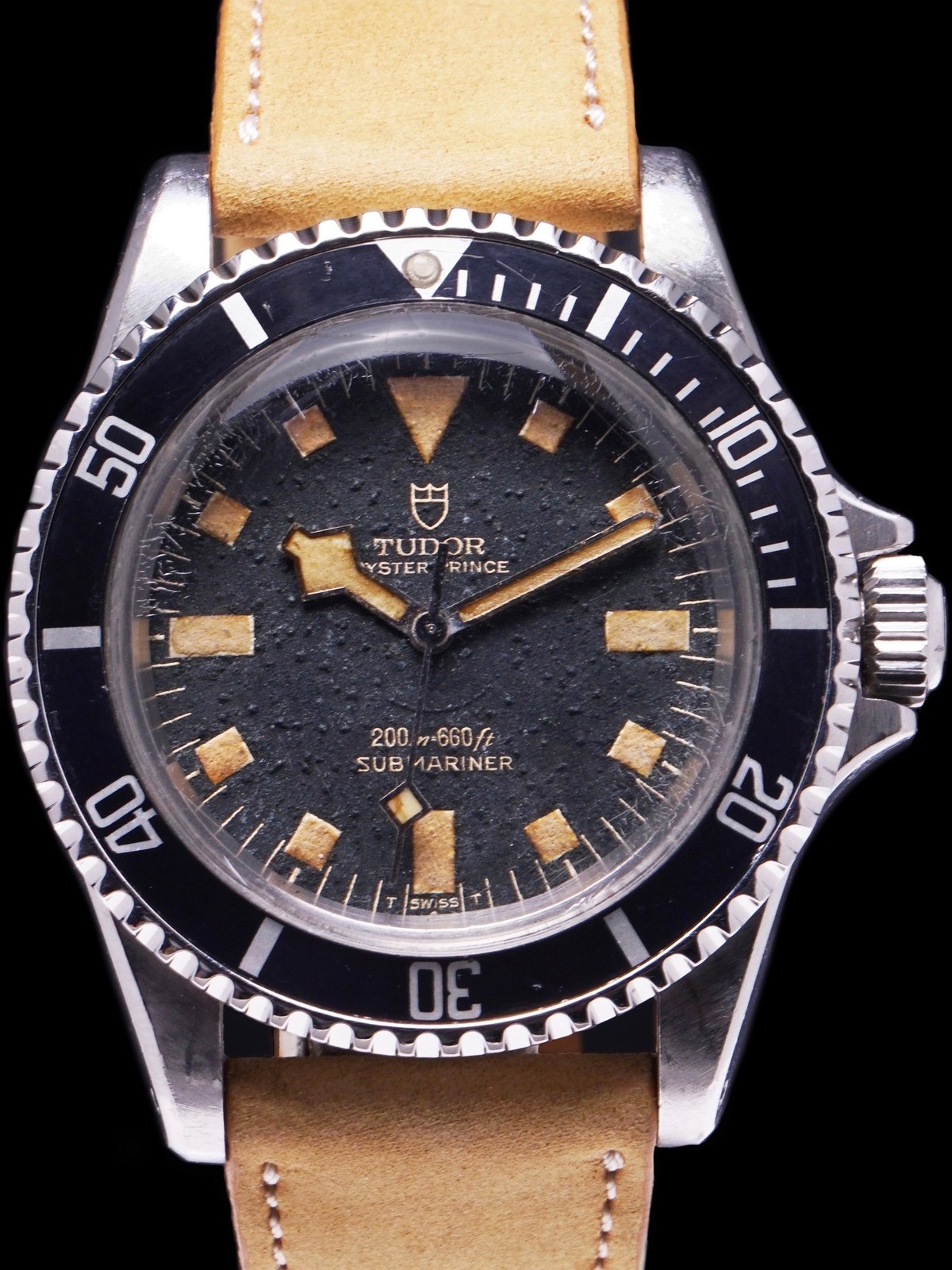
Tudor "Snowflake" Submariner (Ref. 7016/0) Semi-PCG Case, 1968
- Maker / attribution
- Tudor (maker)
- Date
- 1968
- Historical period
- Modern Mechanical Horology (1945 – 1969)
- Country of origin
- Switzerland
- Object type
- Wristwatch
- Stock no.
- TDRSUB687016
- Credit line
- Dealer listing, Craft & Tailored (TDRSUB687016)
- Catalogue title (original)
- 1968 Tudor "Snowflake" Submariner (Ref. 7016/0) Semi-PCG Case (English)
View the source record (dealer listing) ↗ (opens another website in a new tab)Suggest a correction
Record summary
Catalogued by Craft & Tailored (dealer), Los Angeles (stock number TDRSUB687016), this is a wristwatch by Tudor, made in Switzerland, dated 1968. The Atlas places it in the Modern Mechanical Horology period (1945 – 1969) of its Wristwatches collection. The record is illustrated with 6 photographs.
Assembled from the source record's structured fields. Dates and attributions are given as the source states them; where a field is missing the Atlas leaves it blank rather than estimating.
Catalogue description
Dealer description — Craft & Tailored
The Tudor “Snowflake” is the nickname given to the Tudor Submariners with reference numbers 7016/0, 7021/0, 9104/0, and 9411/0 which was in production from 1969 to 1975. Dial variants are commonly found in black and or blue and the watch can feature at date complication. The nickname snowflake comes as a result of the unique features of the reference range such as the square hour markers and a unique snowflake hands that were introduced by Rolex/Tudor to increase visibility in low light conditions. However, there is more to the Tudor’s Snowflake Submariner line than its unique and different visual features. The Tudor Snowflake Submariners, much like the other Submariners produced by Rolex and Tudor, have a long standing history and were supplied to military forces including the U.S. Navy and the Marine Nationale (French Navy) Marine Nationale Diver Wearing Turdor Submariner "Snowflake"7016/0 The second-generation Tudor Submariners also marked the watchmaker’s transition from caliber 390 movements produced by Parmigiani Fleurier SA (Fleurier) to movements produced by Swiss watchmaker ETA which made the Tudor Snowflake Submariners the first Tudor watches to use these modified ETA movements. The Tudor Submariner Reference 7016/0 was introduced in 1968 with quite a few changes compared to its predecessor reference 7928. Not only did the 7016/0 bring us the famous "Snowflake" dial and hands configuration, and the movement was upgraded to an ETA 2483, but the case was changed as well. The early 7016/0 Tudor subs feature was is known among collectors as a Semi-PCG or semi point crown guard case, this is in reference to the very different crown guard shape produced for the 7016/0 in the early half of 1968, the crown guards are not necessarily "pointed" like early PCG cases for both Rolex and Tudor, however they do have a much more slender appearance to the more modern style seen after and are sloped up to a smaller rounded point, hence the Semi-PCG name. These cases are only produced in a short range of serial numbers as the Semi-PCG case production was short-lived are were replaced at the end of 1968. Stock # TDRSUB687016 Brand Tudor Style Submariner Model 7016/0 Serial 62XXXX Size Men's Material SS Dial Black Millimeters 40 Bracelet 2pc Handmade Leather Strap CASE & BRACELET The case is believed to remain unpolished with thick even lugs showing strong factory chamfers and honest wear from use. The semi-pointed crown guards remain sharp and even with no signs of being previously polished. The watch retains it's original "no dot-no line" Rolex signed twin-lock crown. The bezel insert retains its tritium pearl has taken on a very dark grey hue showing very light wear from use. The original superdome acrylic crystal exhibits some crazing, which is normal for crystals of this era and age. The case back engravings are clear and untouched and the watch will come supplied on a 2pc leather strap. DIAL & HANDS The early "Snowflake" dial has taken on an interesting and unique patina, sometimes referred to as an "acne" dial due to the strong raised texture consistent throughout the dial. The original tritium lume plots have taken on an excellent dark beige patina and exhibit no degradation under U.V. light inspection. The original hands have been professionally restored with tritium to match the dial. ACCESSORIES None. The watch is keeping time at spec, previous service history is unknown.
Historical context
Modern Mechanical Horology (1945 – 1969)
Tool watches for divers, pilots and astronauts; electric watches anticipate the electronic age.
The classic era of the mechanical wristwatch: dive watches, chronographs for motor racing and space flight, GMT watches for jet travel, slim dress watches, automatic calendars, and the rise of Japanese manufacturers alongside Swiss, American, German and Soviet industries.
Read the period in the timelineMore wristwatches from this periodEarlier: Golden Age of Mechanical Watchmaking
Atlas type guide
Dive and water-resistant watches
Keeping water and dust out of a wristwatch was a long-standing challenge. Rolex's screw-down Oyster case (1926) and Omega's Marine (1932) were landmarks; in the early 1950s Blancpain's Fifty Fathoms and Rolex's Submariner defined the professional dive watch with rotating bezels for timing dives, luminous dials and high water resistance. The ISO 6425 standard (1982) later codified what a 'diver's watch' must do.
Dive watches became icons of post-war design and exploration, and their evolution — helium escape valves, ceramic bezels, saturation-diving depth ratings — records the history of underwater work.
What to look for
- Unidirectional or bidirectional rotating bezel with minute markings.
- Screw-down crown and case back; depth rating printed on the dial.
- Luminous hands and markers (radium before c. 1960, tritium c. 1960–1998, then Super-LumiNova).
- Reference numbers on the case between the lugs or inside the back.
Dating clues
- Screw-down Oyster cases: from 1926.
- Professional dive watches: from 1953.
- Tritium 'T' marks on dials: c. 1960–1998.
General guidance written by the Atlas editors about this kind of object. It is not a statement about this particular piece; for that, rely on the source record above and on physical examination.
Related records
Wristwatches · c. 1973
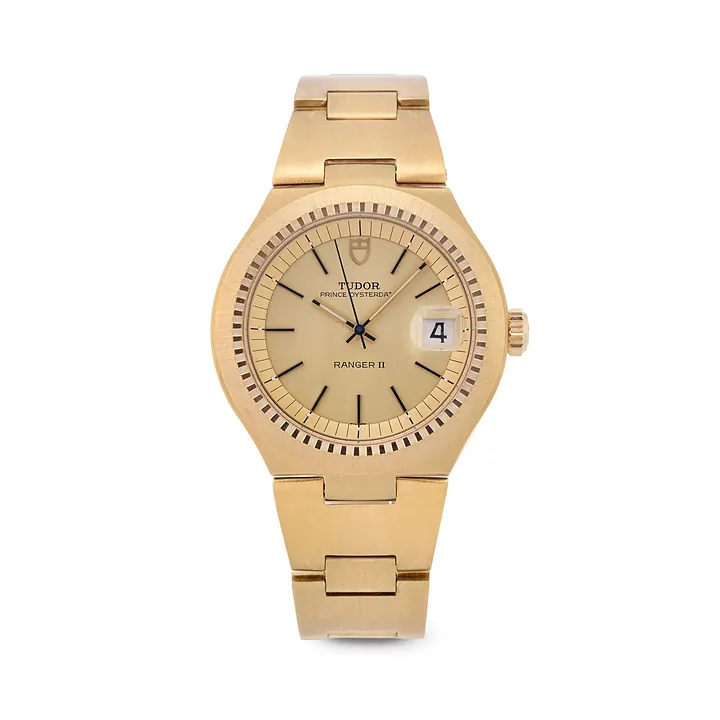
Tudor Prince Oysterdate Ranger II, ref. 9101/1, c. 1973
Antiquorum auction archive, Geneva
Wristwatches · c. 1973
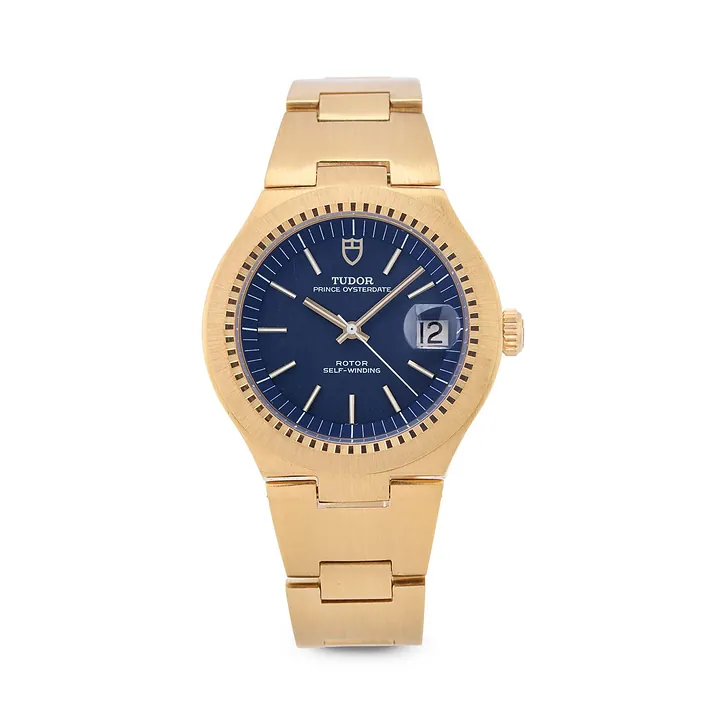
Tudor Prince Oysterdate, ref. 9101/1, c. 1973 (Antiquorum Lot 389-114)
Antiquorum auction archive, Geneva
Wristwatches · c. 1973
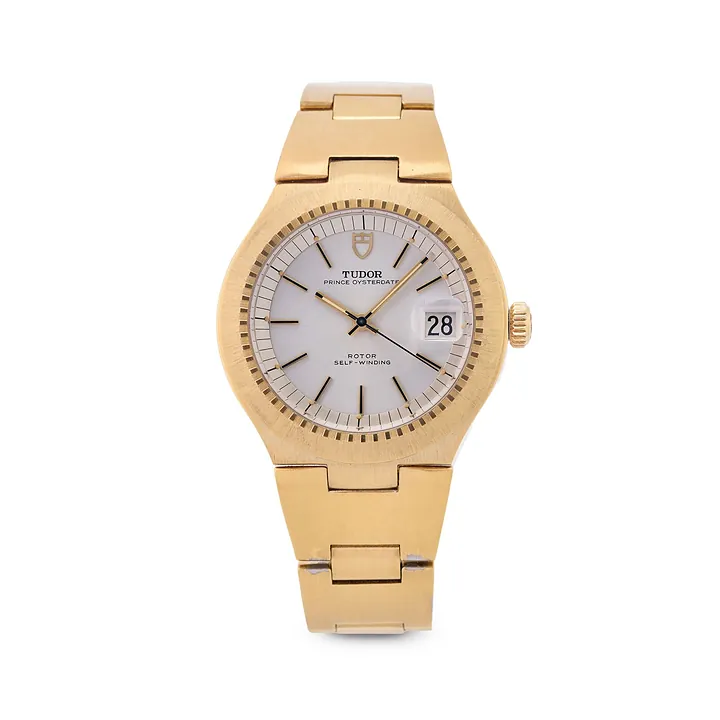
Tudor Prince Oysterdate, ref. 9101/1, c. 1973 (Antiquorum Lot 389-115)
Antiquorum auction archive, Geneva
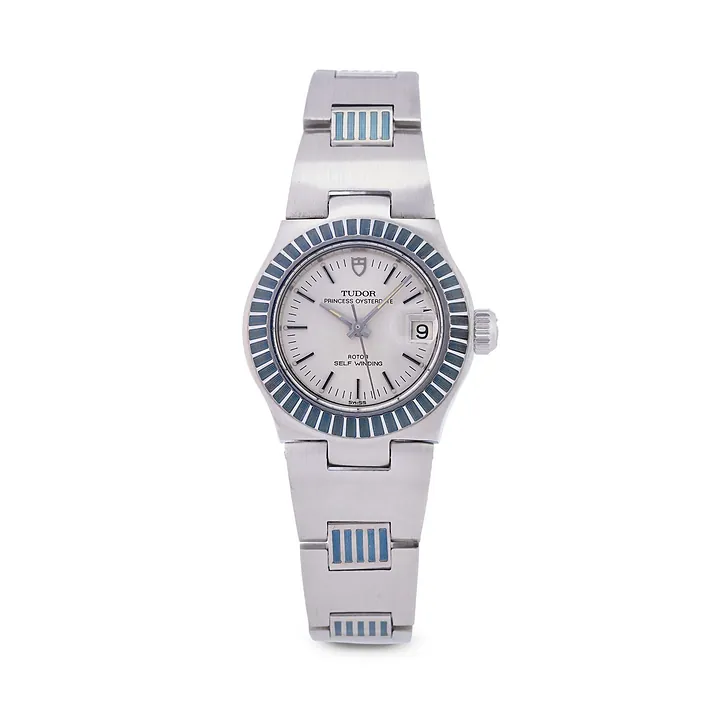
Wristwatches · c. 1974
Tudor Princess Oysterdate, ref. 9311/0, c. 1974
Antiquorum auction archive, Geneva

Wristwatches · 1945
Wristwatch by Eterna, 1945
Museum Rotterdam

Wristwatches · c. 1945
Breitling Premier, ref. 790, c. 1945
Antiquorum auction archive, Geneva

Wristwatches · c. 1945
Universal Genève Uni-Compax, ref. 22492, c. 1945
Antiquorum auction archive, Geneva

Wristwatches · c. 1950s
Baume & Mercier wristwatch, c. 1950s
Antiquorum auction archive, Geneva