
Wristwatches · Wristwatch
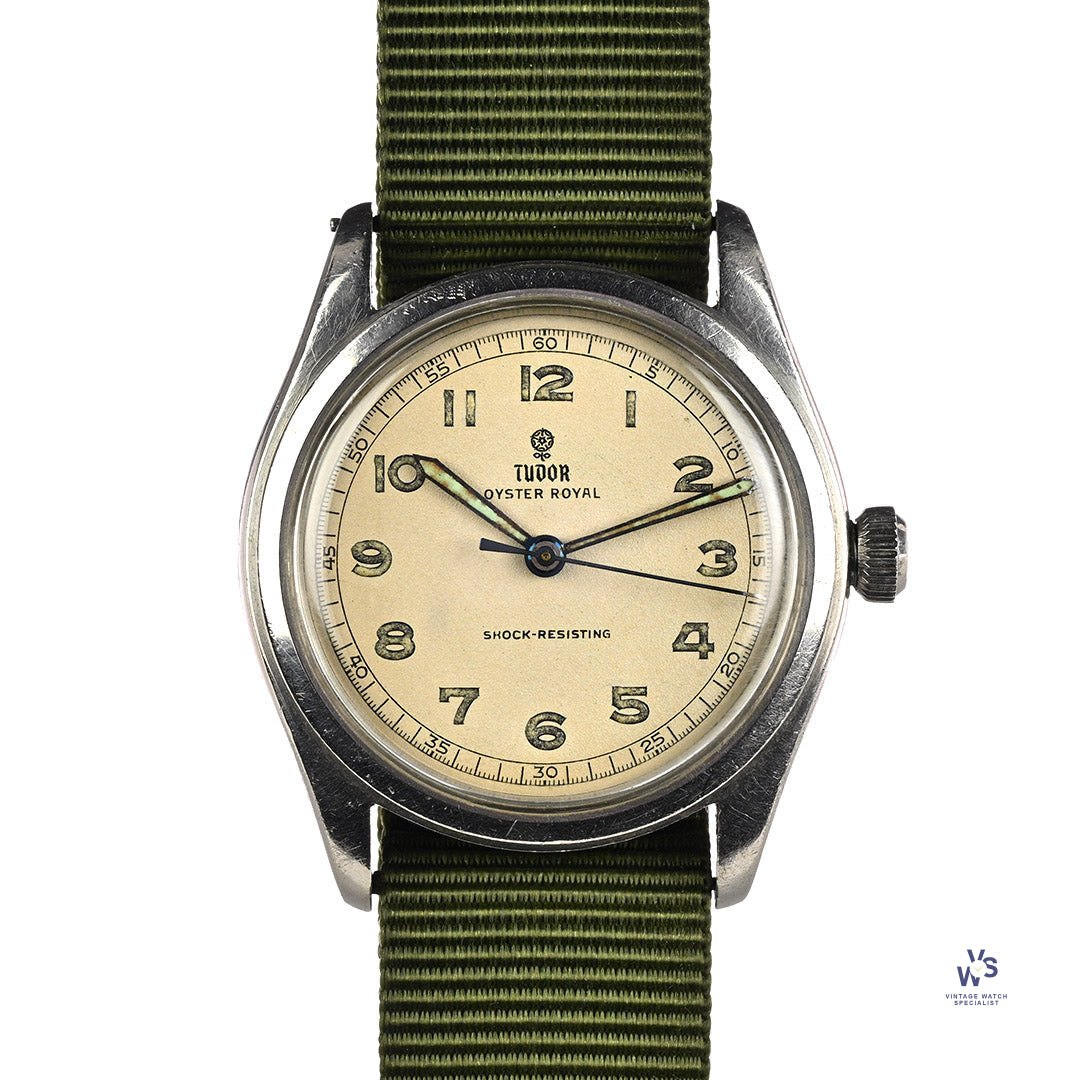
Tudor Oyster Royal, Arabic Dial, ref. 7804, circa 1940s
- Maker / attribution
- Tudor (maker)
- Date
- c. 1940s
- Historical period
- Golden Age of Mechanical Watchmaking (1900 – 1945)
- Country of origin
- Islamic world
- Object type
- Wristwatch
- Stock no.
- vws3591cs
- Credit line
- Dealer listing, Vintage Watch Specialist (vws3591cs)
- Catalogue title (original)
- Tudor Oyster Royal - Arabic Dial - Model Ref: 7804 - c.1940s (English)
View the source record (dealer listing) ↗ (opens another website in a new tab)Suggest a correction
Record summary
Catalogued by Vintage Watch Specialist (dealer), United Kingdom (stock number vws3591cs), this is a wristwatch by Tudor, made in Islamic world, dated c. 1940s. The Atlas places it in the Golden Age of Mechanical Watchmaking period (1900 – 1945) of its Wristwatches collection. The record is illustrated with 6 photographs.
Assembled from the source record's structured fields. Dates and attributions are given as the source states them; where a field is missing the Atlas leaves it blank rather than estimating.
Catalogue description
Dealer description — Vintage Watch Specialist
A Very Beautiful and Rather Rare Tudor Oyster Royal (Model Ref: 7804) with a Stunning Ecru Dial and Military Style Arabic Numerals, c.1940s Launched in the 1940s, the 7804 featured a robust stainless steel case, adhering to the renowned Oyster case design which had set a new standard for water resistance in wristwatches. The watch was powered by a hand-wound movement, showcasing Tudor's commitment to precision. Its dial was understated yet sophisticated, often adorned with indices and slim hands, highlighting mid-century minimalist design principles. The Tudor Oyster Royal 7804 remained popular among discerning watch enthusiasts who appreciated quality and design without flamboyance. Today, the 7804 is coveted by collectors, symbolizing Tudor's enduring legacy in the luxury watch market. What's on Offer This is a beautiful vintage Tudor, very military in style and in wonderful condition given its age! The dial is an attractive ecru colour lending some nice warmth and the Arabic numerals are still crisp and boast some of their original lume. The slim sward hands also have their original luminous inserts and there is a blued steel central seconds hand. The dial is completed by the Tudor rose signature and encapsulated underneath a shatterproof Plexiglas crystal which is encased in robust stainless steel. The case and lugs have remained in nice shape and the crown is signed with the Oyster Patent. This is a beautiful piece and although it was not an issued watch, it will almost certainly pique the interest of military and vintage enthusiasts alike. Very wearable to this day and perfectly appropriate for all occasions, we have paired the watch with a military style strap but you could always choose something a little more formal - a leather strap in tan would look fabulous!
Historical context
Golden Age of Mechanical Watchmaking (1900 – 1945)
The wristwatch displaces the pocket watch; waterproof cases, self-winding and grand complications.
The wristwatch overtook the pocket watch. Military use in the First World War, aviation, water-resistant cases (1926), automatic winding (1923–31), rectangular Art Deco designs and early chronographs and calendars defined the period.
Read the period in the timelineMore wristwatches from this periodEarlier: Industrial Revolution
Atlas type guide
Dive and water-resistant watches
Keeping water and dust out of a wristwatch was a long-standing challenge. Rolex's screw-down Oyster case (1926) and Omega's Marine (1932) were landmarks; in the early 1950s Blancpain's Fifty Fathoms and Rolex's Submariner defined the professional dive watch with rotating bezels for timing dives, luminous dials and high water resistance. The ISO 6425 standard (1982) later codified what a 'diver's watch' must do.
Dive watches became icons of post-war design and exploration, and their evolution — helium escape valves, ceramic bezels, saturation-diving depth ratings — records the history of underwater work.
What to look for
- Unidirectional or bidirectional rotating bezel with minute markings.
- Screw-down crown and case back; depth rating printed on the dial.
- Luminous hands and markers (radium before c. 1960, tritium c. 1960–1998, then Super-LumiNova).
- Reference numbers on the case between the lugs or inside the back.
Dating clues
- Screw-down Oyster cases: from 1926.
- Professional dive watches: from 1953.
- Tritium 'T' marks on dials: c. 1960–1998.
General guidance written by the Atlas editors about this kind of object. It is not a statement about this particular piece; for that, rely on the source record above and on physical examination.
Related records
Wristwatches · c. 1973
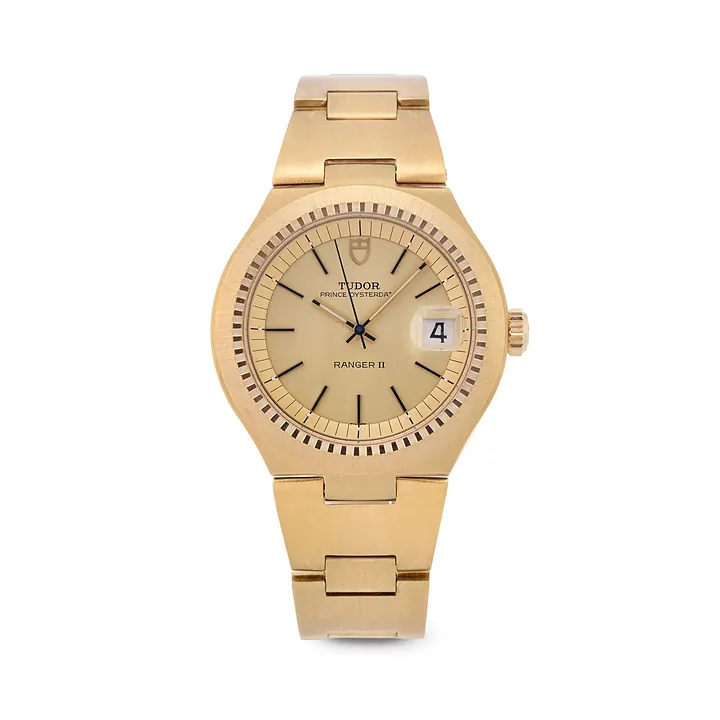
Tudor Prince Oysterdate Ranger II, ref. 9101/1, c. 1973
Antiquorum auction archive, Geneva
Wristwatches · c. 1973
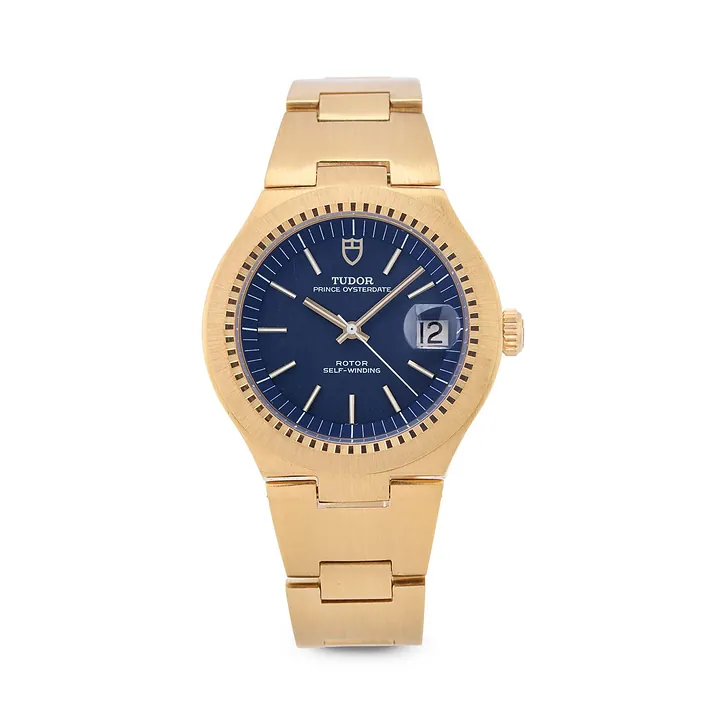
Tudor Prince Oysterdate, ref. 9101/1, c. 1973 (Antiquorum Lot 389-114)
Antiquorum auction archive, Geneva
Wristwatches · c. 1973
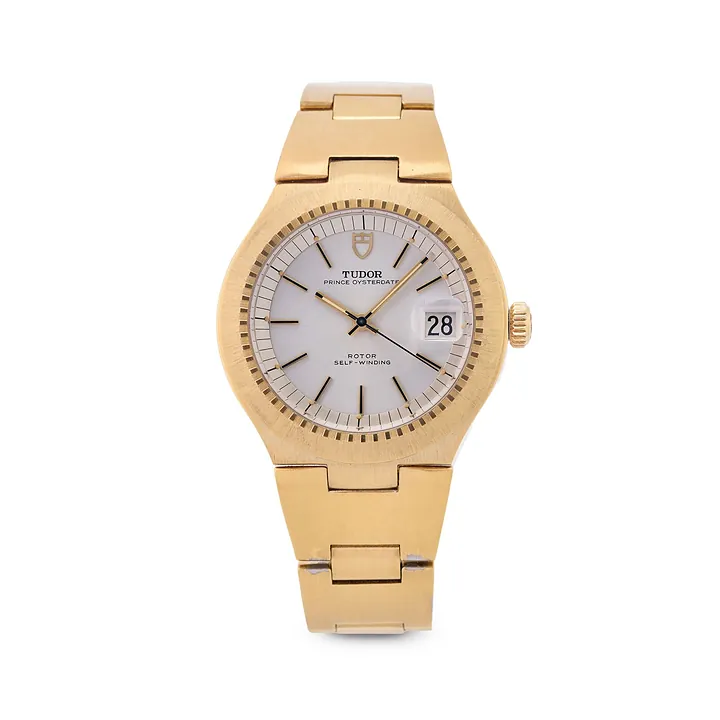
Tudor Prince Oysterdate, ref. 9101/1, c. 1973 (Antiquorum Lot 389-115)
Antiquorum auction archive, Geneva
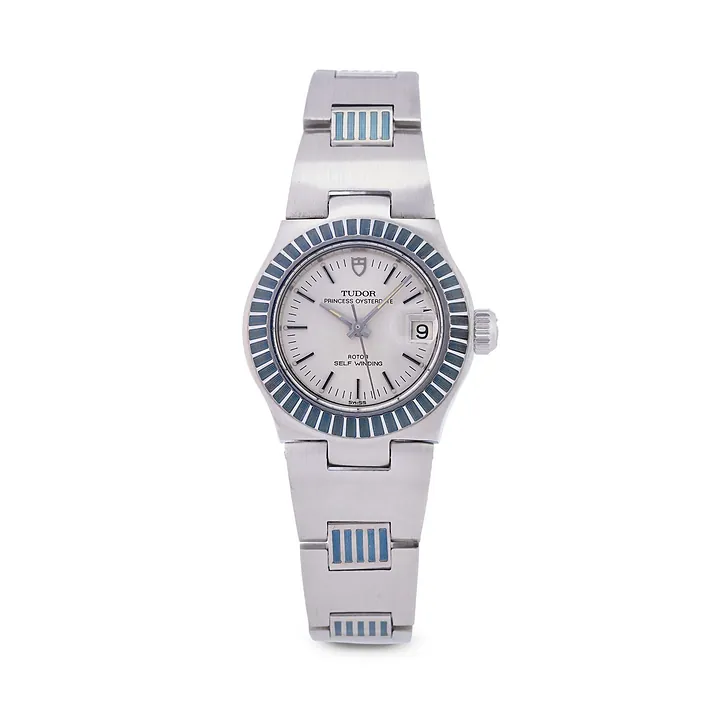
Wristwatches · c. 1974
Tudor Princess Oysterdate, ref. 9311/0, c. 1974
Antiquorum auction archive, Geneva
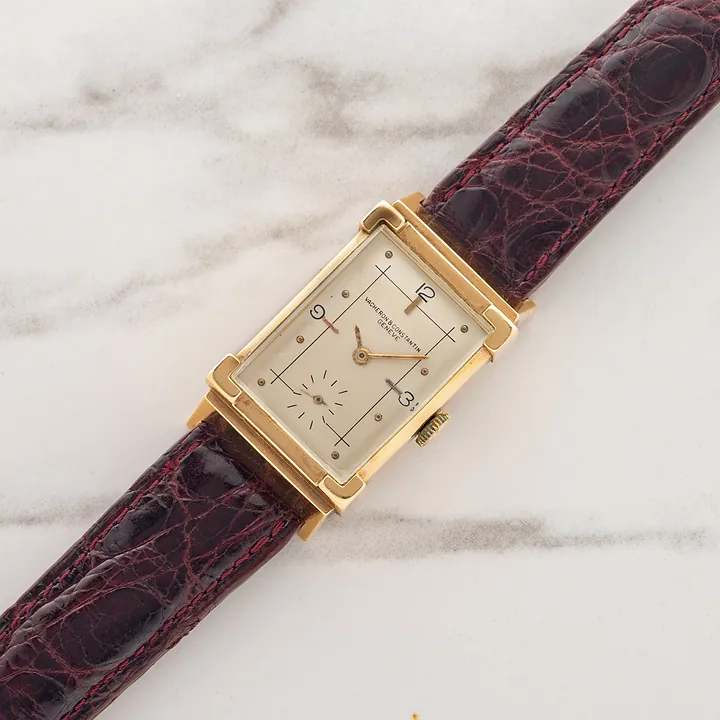
Wristwatches · c. 1940s
Vacheron Constantin Art Deco "Tank" with Arabic Sector Dial
Collectors Corner NY (dealer), New York
Wristwatches · 1900–1999
Wristwatch by Mercury, 1900–1999
Modemuseum Hasselt
Wristwatches · 1900–1999
Wristwatch by Nutrix, 1900–1999
Modemuseum Hasselt

Wristwatches · 1920
Wristwatch, 1920
Modemuseum Hasselt