
Wristwatches · Wristwatch
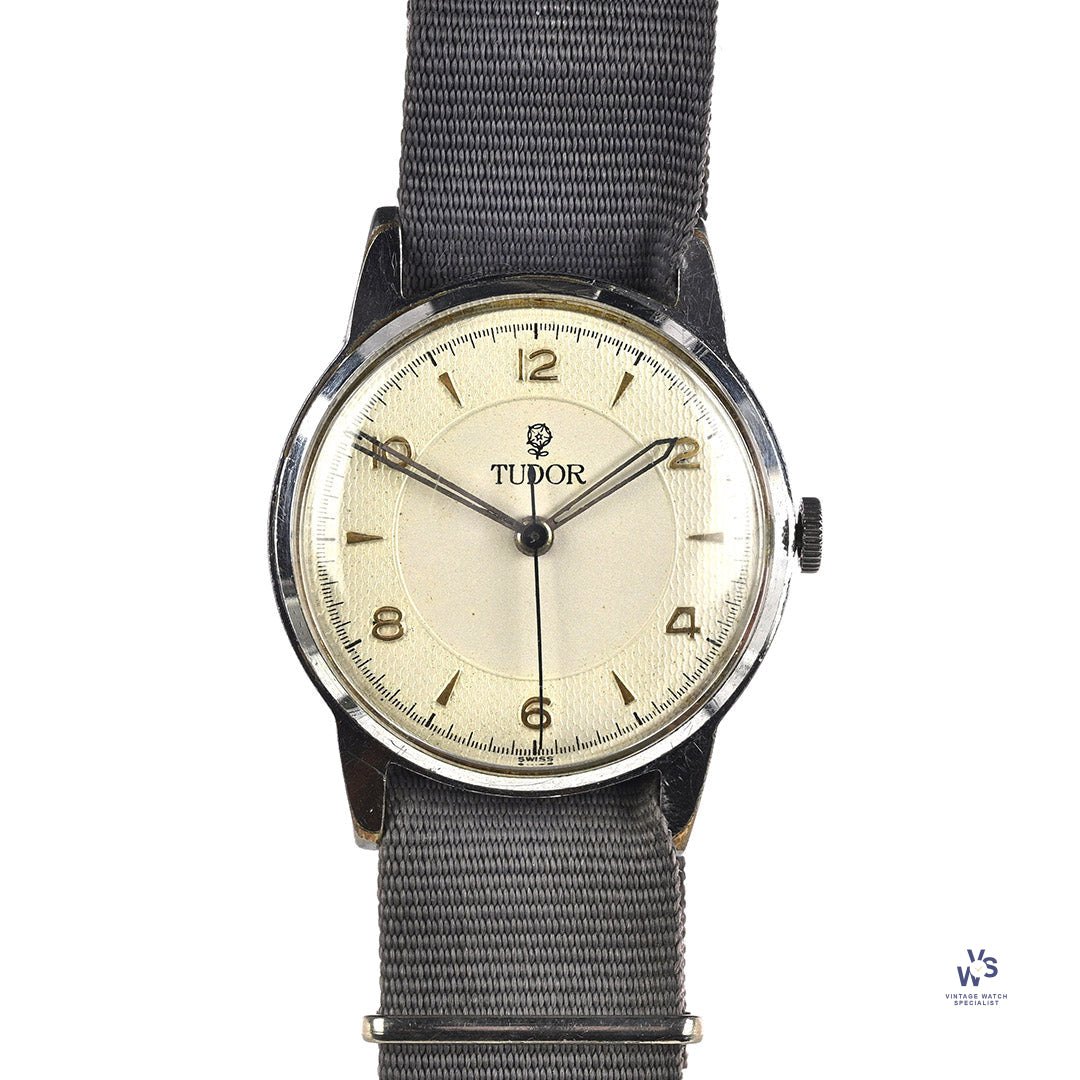
Tudor Dress Watch, Dennison Case, ref. 3622, circa 1950s
- Maker / attribution
- Tudor (maker)
- Date
- c. 1950s
- Historical period
- Modern Mechanical Horology (1945 – 1969)
- Country of origin
- Switzerland
- Object type
- Wristwatch
- Stock no.
- vws3597cs
- Credit line
- Dealer listing, Vintage Watch Specialist (vws3597cs)
- Catalogue title (original)
- Tudor Dress Watch - Dennison Case - Model Reference 3622 - c.1950s (English)
View the source record (dealer listing) ↗ (opens another website in a new tab)Suggest a correction
Record summary
Catalogued by Vintage Watch Specialist (dealer), United Kingdom (stock number vws3597cs), this is a wristwatch by Tudor, made in Switzerland, dated c. 1950s. The Atlas places it in the Modern Mechanical Horology period (1945 – 1969) of its Wristwatches collection. The record is illustrated with 6 photographs.
Assembled from the source record's structured fields. Dates and attributions are given as the source states them; where a field is missing the Atlas leaves it blank rather than estimating.
Catalogue description
Dealer description — Vintage Watch Specialist
A Charming Vintage Tudor Dress Watch with a Beautiful Textured Dial and Elegant Applied Gilt Furniture, c.1950s Tudor, a Swiss watch brand, was established in 1926 by Hans Wilsdorf, the visionary founder of Rolex. Conceived as a more affordable alternative to Rolex, Tudor watches combined reliable craftsmanship with a classic design. In 1946, Tudor began to carve its own niche, focusing on robustness and precision. The Tudor Oyster, introduced in 1947, echoed the waterproof technology of Rolex, ensuring durability and practicality. In the 1950s, the brand gained prominence with the Tudor Oyster Prince, merging elegance and resilience. The 1960s saw the launch of the Tudor Submariner, which quickly became a favourite among military divers, featuring models used by the French and U.S. Navies. Tudor's reputation for toughness continued into the 1970s with the Iconic Tudor Chronographs. What's on Offer Just look at the beautiful two texture dial on this vintage Tudor, furnished with beautiful gilt Arabic numerals and arrowhead hour markers and sword hands, the dial has a honeycomb texture to the outer dial and a smooth centre displaying the Tudor 'rose' signature. The dial is encapsulated underneath a shatterproof acrylic crystal and is encased in stainless steel. The case is signed Dennison, a famous casemaker of the era, they produced cases for many of the greatest Swiss watch brands in history including, but certainly not limited to, Rolex, Omega and Jaeger-LeCoultre. There are signs of previous wear but they are minimal and nothing of any concern on a watch of this age. It wears beautifully on the wrist, we have paired it with a NATO style strap however, it would also look stunning with a leather strap. This watchhas bags of character, it is elegant and chic and will carry the wearer from everyday wear to more formal occasions. A fantastic addition to any collection and a joy to vintage and Tudor enthusiasts alike.
Historical context
Modern Mechanical Horology (1945 – 1969)
Tool watches for divers, pilots and astronauts; electric watches anticipate the electronic age.
The classic era of the mechanical wristwatch: dive watches, chronographs for motor racing and space flight, GMT watches for jet travel, slim dress watches, automatic calendars, and the rise of Japanese manufacturers alongside Swiss, American, German and Soviet industries.
Read the period in the timelineMore wristwatches from this periodEarlier: Golden Age of Mechanical Watchmaking
Atlas type guide
Wristwatches
Bracelet watches were worn by women from the early nineteenth century — Breguet made one for Caroline Murat, Queen of Naples, in 1810–12 — but the wristwatch only became a man's instrument with military use and aviation in the early twentieth century. Between the World Wars it overtook the pocket watch; the 1920s and 1930s brought rectangular Art Deco cases, water-resistant cases and the first automatic winding systems.
After 1945 the wristwatch became a carrier of identity — dress watches, sports and dive watches, chronographs, calendars — produced by Swiss, American, Japanese, German, Soviet and Chinese industries. The quartz revolution after 1969 and the mechanical renaissance since the 1990s, including the rise of independent watchmakers, complete the story.
What to look for
- The reference number (between the lugs or inside the case back) and serial number, the starting point for dating.
- The calibre: its maker and number are often stamped under the dial or on the bridge.
- Originality of dial, hands and crown — refinished ('redial') dials are common.
- Case material marks: 18K/750, 14K/585, stainless steel, gold-filled, plated.
Dating clues
- Wire-lug cases: before c. 1925.
- Water-resistant screw-down cases: from 1926.
- Quartz movements: from 1969; sapphire crystals widespread after c. 1980.
General guidance written by the Atlas editors about this kind of object. It is not a statement about this particular piece; for that, rely on the source record above and on physical examination.
Related records
Wristwatches · c. 1973
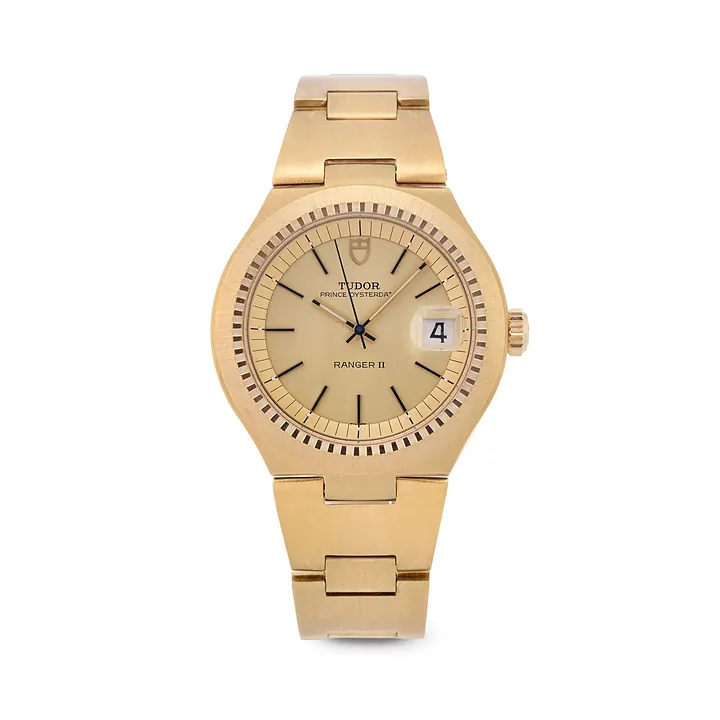
Tudor Prince Oysterdate Ranger II, ref. 9101/1, c. 1973
Antiquorum auction archive, Geneva
Wristwatches · c. 1973
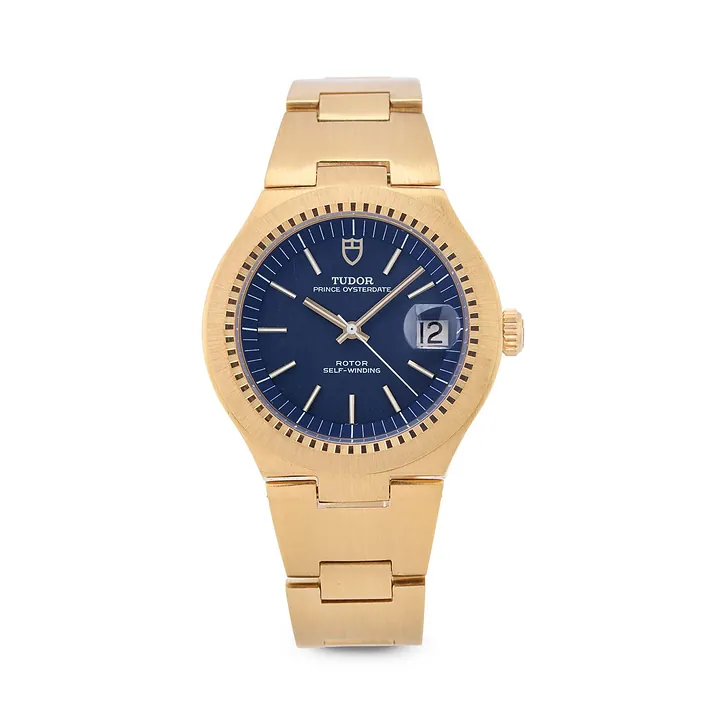
Tudor Prince Oysterdate, ref. 9101/1, c. 1973 (Antiquorum Lot 389-114)
Antiquorum auction archive, Geneva
Wristwatches · c. 1973
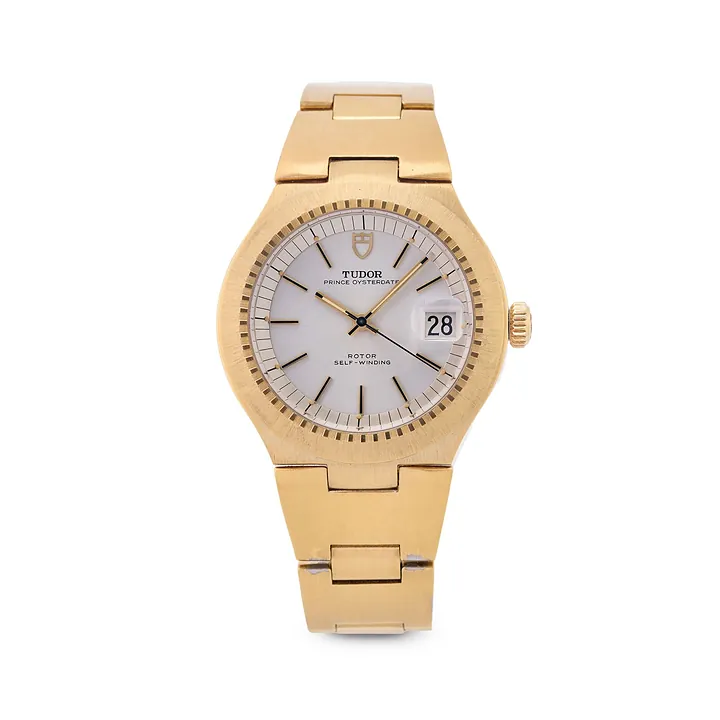
Tudor Prince Oysterdate, ref. 9101/1, c. 1973 (Antiquorum Lot 389-115)
Antiquorum auction archive, Geneva
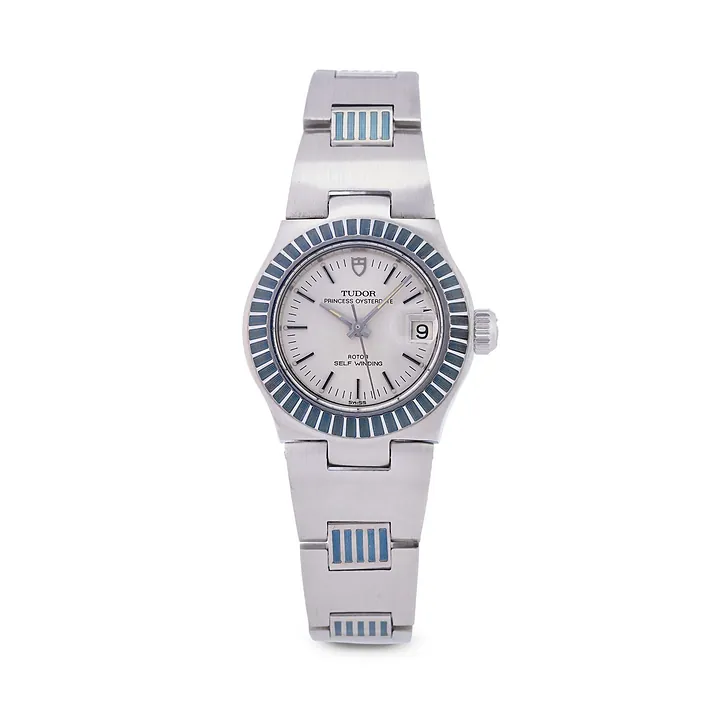
Wristwatches · c. 1974
Tudor Princess Oysterdate, ref. 9311/0, c. 1974
Antiquorum auction archive, Geneva

Wristwatches · 1945
Wristwatch by Eterna, 1945
Museum Rotterdam

Wristwatches · c. 1945
Breitling Premier, ref. 790, c. 1945
Antiquorum auction archive, Geneva

Wristwatches · c. 1945
Universal Genève Uni-Compax, ref. 22492, c. 1945
Antiquorum auction archive, Geneva

Wristwatches · c. 1950s
Baume & Mercier wristwatch, c. 1950s
Antiquorum auction archive, Geneva