
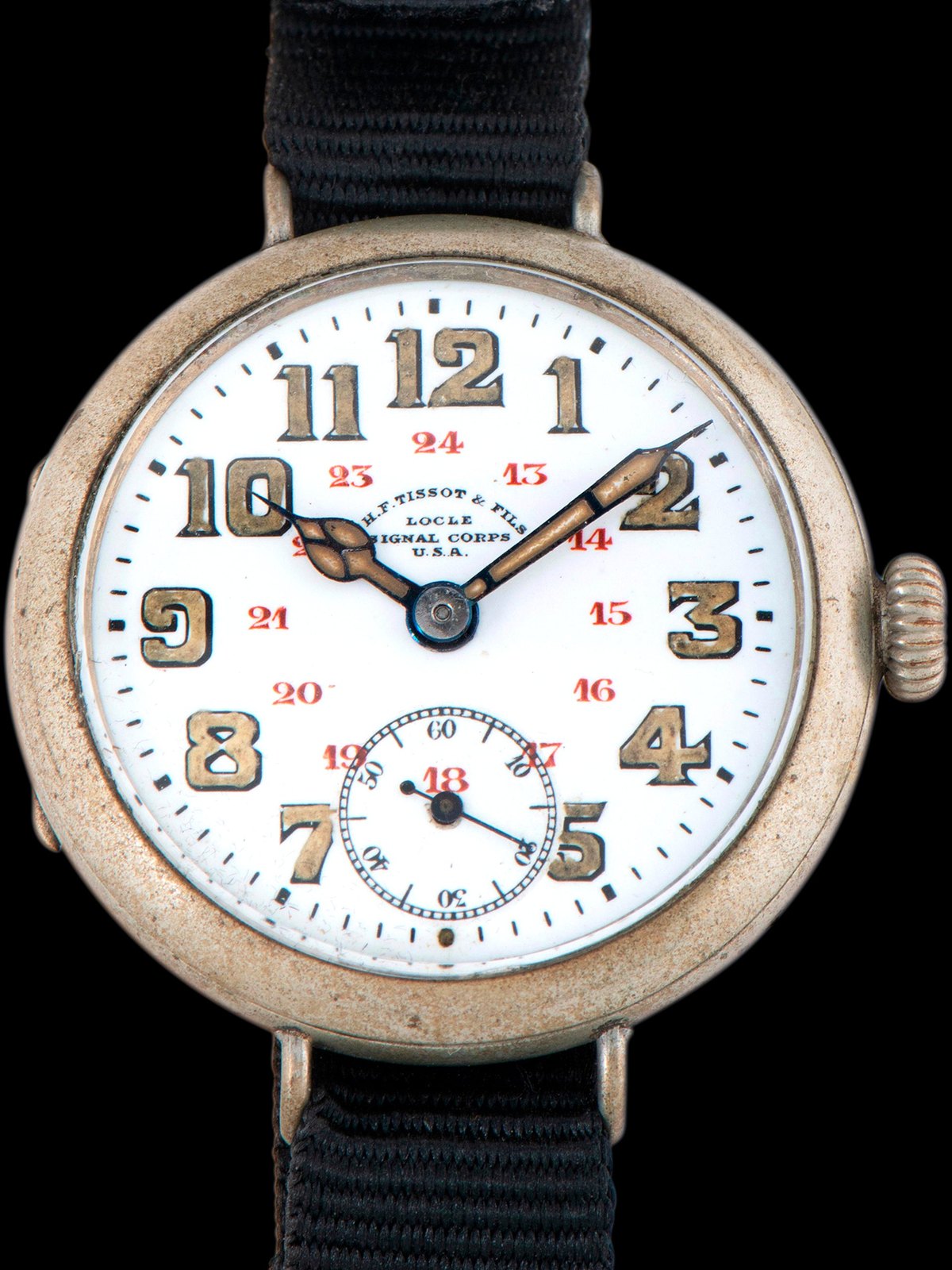
Wristwatches · Wristwatch
Tissot "Signal Corps. USA" Military Trench Watch, 1916
- Maker / attribution
- Tissot (maker)
- Date
- 1916
- Historical period
- Golden Age of Mechanical Watchmaking (1900 – 1945)
- Country of origin
- United States
- Object type
- Wristwatch
- Stock no.
- TSSGCUSA
- Credit line
- Dealer listing, Craft & Tailored (TSSGCUSA)
- Catalogue title (original)
- 1916 Tissot "Signal Corps. USA" Military Trench Watch (English)
View the source record (dealer listing) ↗ (opens another website in a new tab)Suggest a correction
Record summary
Catalogued by Craft & Tailored (dealer), Los Angeles (stock number TSSGCUSA), this is a wristwatch by Tissot, made in United States, dated 1916. The Atlas places it in the Golden Age of Mechanical Watchmaking period (1900 – 1945) of its Wristwatches collection. The record is illustrated with 6 photographs.
Assembled from the source record's structured fields. Dates and attributions are given as the source states them; where a field is missing the Atlas leaves it blank rather than estimating.
Catalogue description
Dealer description — Craft & Tailored
Before World War I, most watches came in the form of the pocket variety, with wristwatches being far less popular due to them widely being considered to be exclusively for women. But during the War, when the soldiers in the trenches needed a timepiece that could be read quickly and easily, especially while running or holding a rifle, those pocket watches got modified into wristwatches—or wristlets, as they were often referred to back then—to make them much more usable. Fittingly, those watches came to be known as trench watches. This Tissot trench watch from 1916 is especially interesting, not only because of the aforementioned history but also because of a few extra words on the dial—"Signal Corps USA." The Signal Corps was a specialized military group whose primary charge was to handle communications, which included operating switchboards, taking photographs, managing aviation, and even training the Army's first combat pilots. At the time, the US Army's Chief Signal Officer put out the call for a wristwatch designed specifically for the Signal Corps. Among the specs was that the "workmanship and material throughout shall be first class", that it should have a white enamel dial with white or blue Arabic numerals, and that there should be a wristlet included. Seven Swiss brands answered the CSO's call, including Omega, Zenith, Cyma, Ulysse Nardin, Rode, Moser, and of course, Tissot. For obvious reasons, not many of these watches exist today, which makes the incredible condition of this nearly 100-year-old piece even more remarkable. While the originally-white numerals have aged to a dusty yellow color, the enamel dial is still stark white and the to-spec oxidized nickel case is strong and clean. This is an amazing piece with a really unique, interesting military provenance, and the perfect addition to any enthusiast's collection. SPECS Stock # TSSGCUSA Brand Tissot Style Signal Corps. USA Model Military Trench Watch Serial 32XXXX Size Men's Material Oxidized Nickel Dial White Enamel Millimeters 35 Strap Black NATO Strap CASE & BRACELET The original oxidized nickel case with fixed strap bars is in exceptional condition, especially considering its age, with very few signs of age and honest wear throughout. The onion-style crown appears to be original to the watch. The watch comes supplied on a black nylon NATO strap. DIAL & HANDS The gorgeous "Signal Corps USA" enamel dial is in remarkable condition, remaining bright white and clean of any cracks or marks of note. The large, lumed Arabic-numeral hour markers have aged to a dusty yellow coloration and are in excellent condition. The blued cathedral hands are also in amazing condition and have aged to match the dial perfectly, though there is some minor lume loss present when inspected under UV light. The lume on the dial and hands was likely restored at some point in the past, as this was common practice by military watchmakers to maintain the functionality of the watch. ACCESSORIES None. The watch is running, but the service history is unknown.
Historical context
Golden Age of Mechanical Watchmaking (1900 – 1945)
The wristwatch displaces the pocket watch; waterproof cases, self-winding and grand complications.
The wristwatch overtook the pocket watch. Military use in the First World War, aviation, water-resistant cases (1926), automatic winding (1923–31), rectangular Art Deco designs and early chronographs and calendars defined the period.
Read the period in the timelineMore wristwatches from this periodEarlier: Industrial Revolution
Atlas type guide
Military, pilot and travel watches
The wristwatch owes much of its adoption by men to warfare and aviation. Wristlets — small pocket watches soldered with lugs and worn on a strap — were used in colonial campaigns and became standard equipment in the First World War, with protective grilles over the crystal ('shrapnel guards'). Louis Cartier's Santos (1904), designed for the aviator Alberto Santos-Dumont, is often cited as an early purpose-made pilot's watch.
In the Second World War governments specified watches in detail: the German B-Uhr observation watches, the American A-11, and the British 'W.W.W.' (the 'Dirty Dozen' set of 1945). After the war, jet travel brought GMT and world-time watches, which show two or more time zones at once — Louis Cottier's world-time mechanism and the Rolex GMT-Master (1955) are examples.
What to look for
- Military markings on the case back: broad arrow, issue numbers, 'W.W.W.', 'A.T.P.'
- High-legibility black dials with luminous Arabic numerals; oversized crowns for gloved hands.
- 24-hour hands and rotating 24-hour bezels or city rings on GMT/world-time watches.
- Wire lugs on early wristlets converted from pocket watches.
Dating clues
- Wire-lug wristlets: c. 1900–1925.
- Military specifications of the Second World War: 1939–1945.
- GMT and world-time wristwatches: mainly after 1950.
General guidance written by the Atlas editors about this kind of object. It is not a statement about this particular piece; for that, rely on the source record above and on physical examination.
Related records
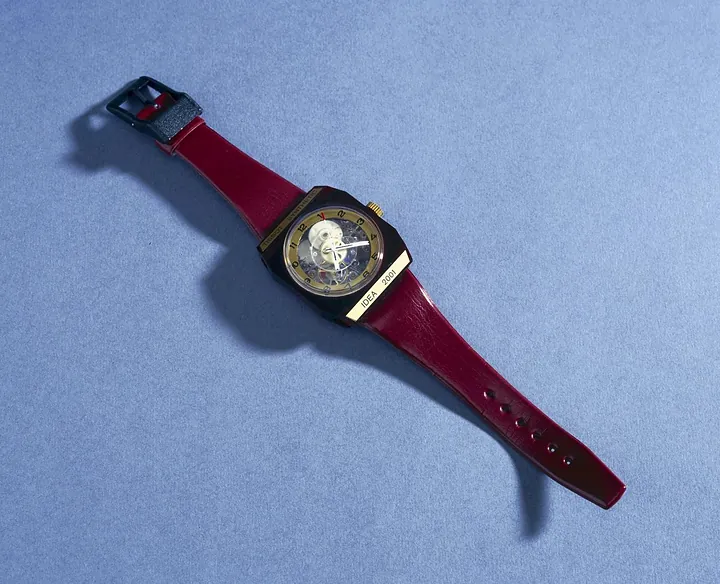
Pocket Watches · 1971–2001
"Tissot synthetic idea 2001" the first plastic watch, introduced in 1971
Science Museum Group, London
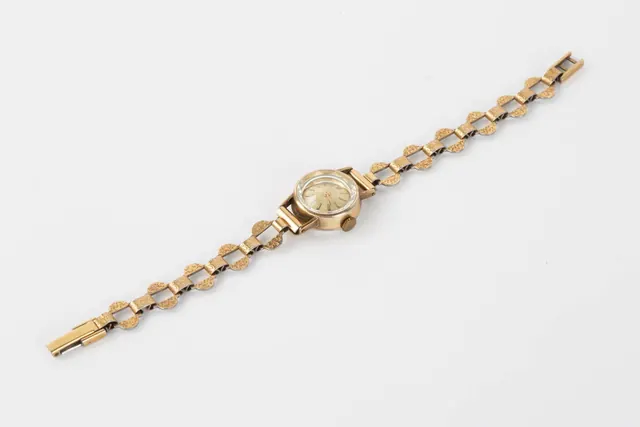
Wristwatches · c. 1960
Wristwatch by Tissot, Switzerland, c. 1960
German Clock Museum
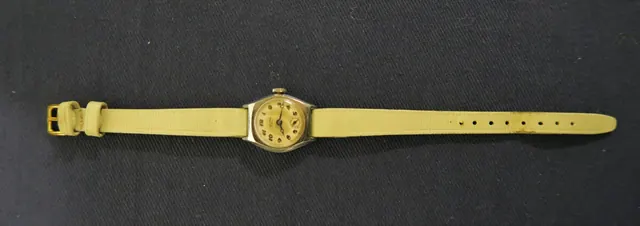
Wristwatches · 1930s
Wristwatch by Tissot, Switzerland, 1930s
HKM / Kulttuurihistoriallinen
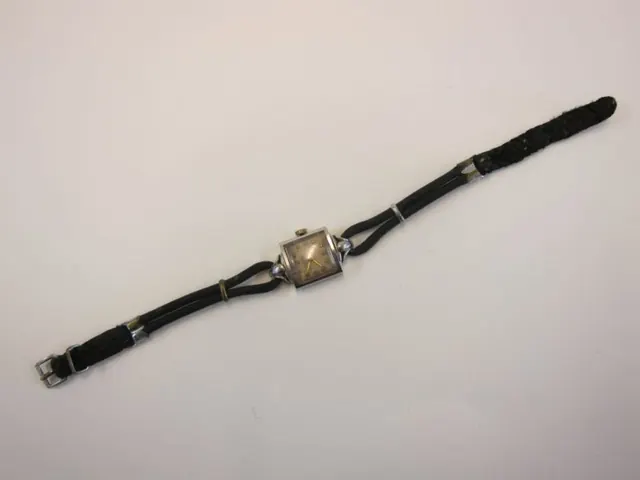
Wristwatches · 1950–1960
Wristwatch by Tissot, 1950–1960
Modemuseum Hasselt
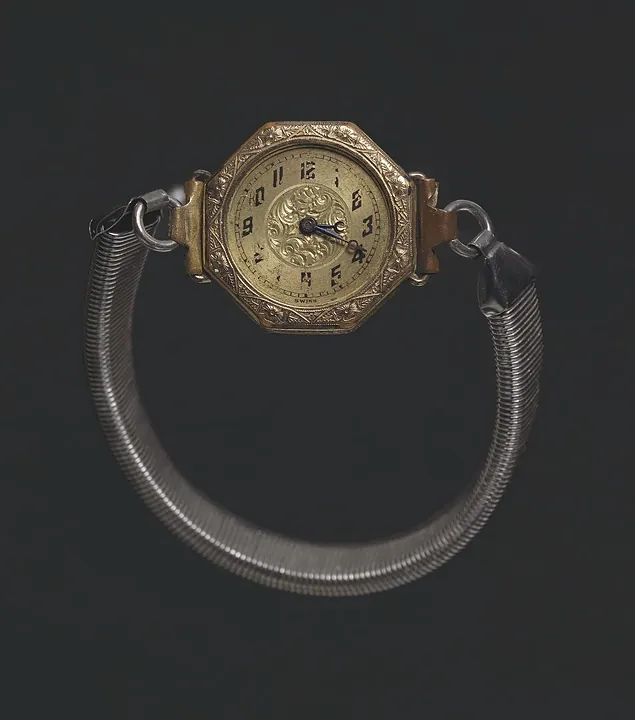
Wristwatches · early to mid 20th century
Woman's wristwatch worn by Harriette Vyda Simms Moore, early to mid 20th century
National Museum of African American History and Culture, Smithsonian Institution, Washington DC
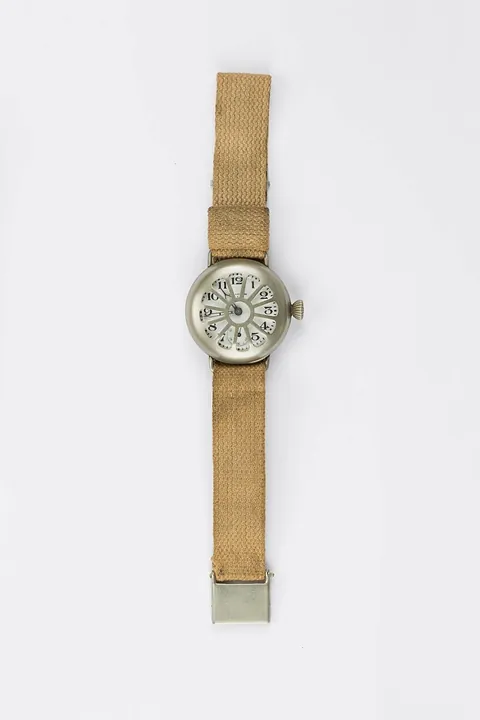
Wristwatches · 1921
Wristwatch by Waltham A. W. W. Co., United States, 1921
German Clock Museum
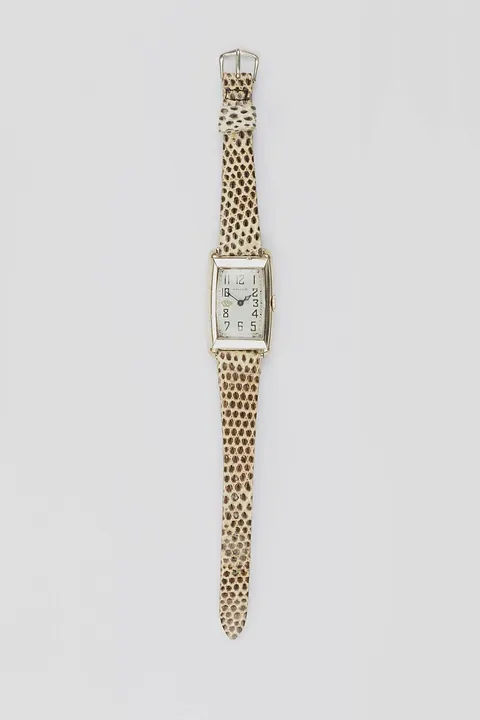
Wristwatches · 1929
Wristwatch by Waltham A. W. W. Co., United States, 1929
German Clock Museum
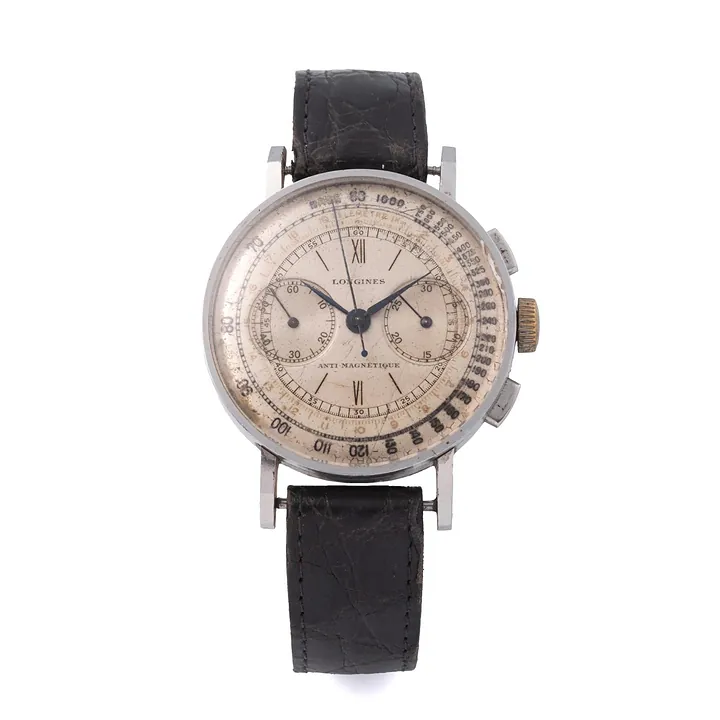
Wristwatches · 1930–1940
Longines Chronograph, ref. 22185, circa 1930/1940
Antiquorum auction archive, Geneva