
Wristwatches · Wristwatch
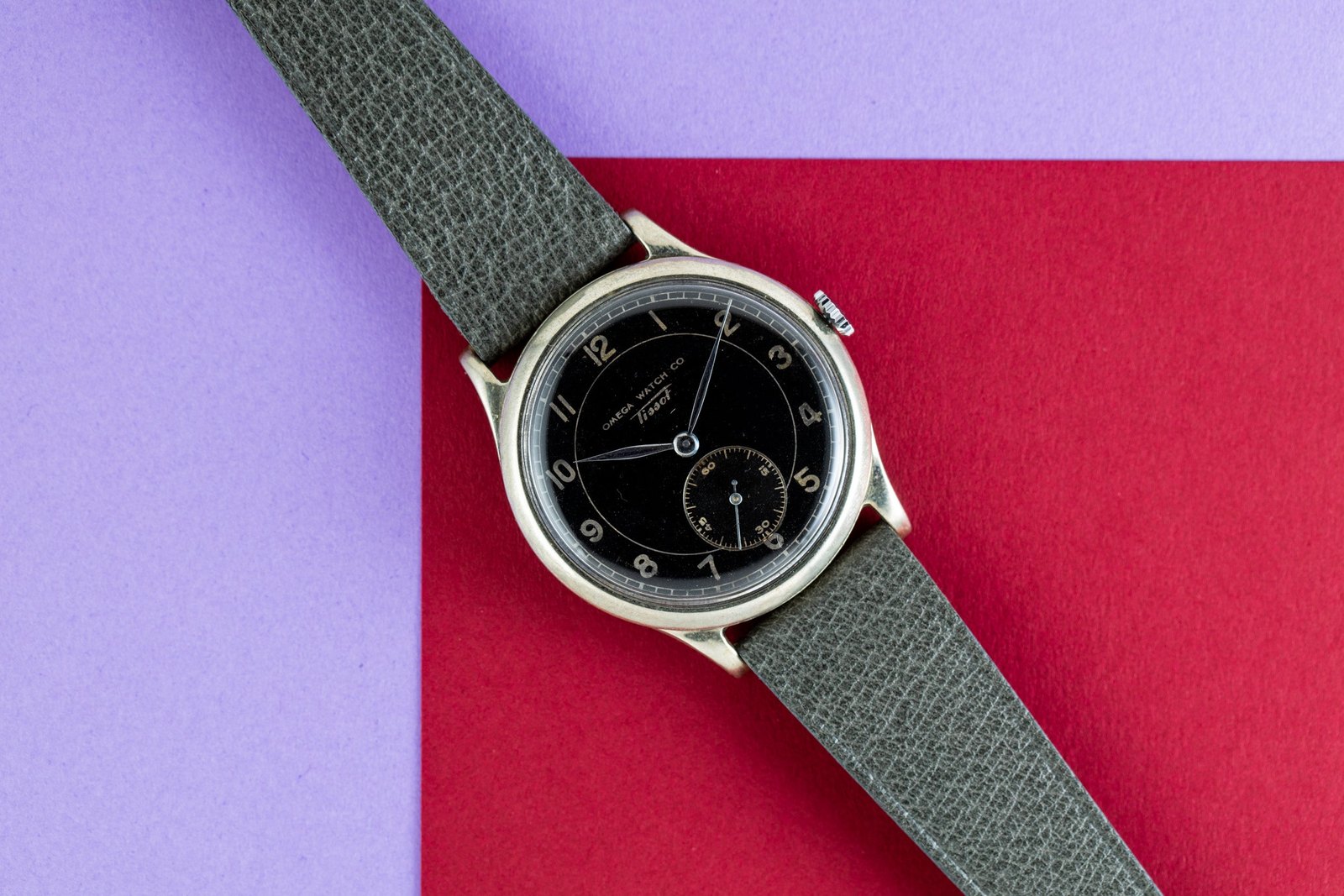
Tissot/Omega Double Signed Oversized Calatrava, 1930s
- Maker / attribution
- Tissot (maker)
- Date
- 1930s
- Historical period
- Golden Age of Mechanical Watchmaking (1900 – 1945)
- Country of origin
- Switzerland
- Object type
- Wristwatch
- Stock no.
- 40960013
- Credit line
- Dealer listing, Analog/Shift (40960013)
- Catalogue title (original)
- Tissot/Omega Double Signed Oversized Calatrava (English)
View the source record (dealer listing) ↗ (opens another website in a new tab)Suggest a correction
Record summary
Catalogued by Analog/Shift (dealer), New York (stock number 40960013), this is a wristwatch by Tissot, made in Switzerland, dated 1930s. The Atlas places it in the Golden Age of Mechanical Watchmaking period (1900 – 1945) of its Wristwatches collection. The record is illustrated with 6 photographs.
Assembled from the source record's structured fields. Dates and attributions are given as the source states them; where a field is missing the Atlas leaves it blank rather than estimating.
Catalogue description
Dealer description — Analog/Shift
Why We Love It Often times in the hobby of watch collecting, there can be a bit too much focus on what the hot watch of the moment might be - the piece that no one can get, or the watch that everyone wants to own purely so they can say they own it. But in this frenzy of emphasis on what the next big windfall investment piece might be, there are literally tons of watches and brands which slip woefully under the radar. Tissot is among those brands. This steel oversized time-only model dates to the 1930s and offers an exceptional value relative to its contemporaries. Its glossy black Arabic dial is as richly aged and patinated as any gilt Sub or vintage Speedy, and features a subsidiary seconds register and a stunning steel 'feuille' handset. The snap-back case is well loved and worn, showing evidence of a real life having been worn and used, not merely relegated to the dark corner of a safety deposit box. But the best part is its nearly forgotten heritage, signified by the double-signed Omega Watch Co/Tissot branding on the dial. Sometimes a vintage watch doesn't need to shout from the rooftop of its coroneted pedigree or six figure exclusivity. Sometimes all a watch needs to be is understated, old, and beautiful. Discerning collectors take note - this is just such a watch. The Story Founded in 1853 and in nearly continuous production ever since, Tissot is one of the oldest surviving watch manufactures, sporting a back catalog replete with highly collectible wristwatches. In the minds of many collectors, the golden age of Tissot was during the mid-20 th century, shortly after the company merged with Omega and Lemania to form the partnership Société Suisse pour l’Industrie Horlogère, or SSIH. This partnership lasted until 1983, when SSIH and other watchmakers were brought together under the umbrella of the Swatch Group. During the 1930s, 40s and 50s, Omega and Tissot produced a number of co-branded models for the South American market, offering brand recognition and a tremendous value proposition for collector's today!
Historical context
Golden Age of Mechanical Watchmaking (1900 – 1945)
The wristwatch displaces the pocket watch; waterproof cases, self-winding and grand complications.
The wristwatch overtook the pocket watch. Military use in the First World War, aviation, water-resistant cases (1926), automatic winding (1923–31), rectangular Art Deco designs and early chronographs and calendars defined the period.
Read the period in the timelineMore wristwatches from this periodEarlier: Industrial Revolution
Atlas type guide
Wristwatches
Bracelet watches were worn by women from the early nineteenth century — Breguet made one for Caroline Murat, Queen of Naples, in 1810–12 — but the wristwatch only became a man's instrument with military use and aviation in the early twentieth century. Between the World Wars it overtook the pocket watch; the 1920s and 1930s brought rectangular Art Deco cases, water-resistant cases and the first automatic winding systems.
After 1945 the wristwatch became a carrier of identity — dress watches, sports and dive watches, chronographs, calendars — produced by Swiss, American, Japanese, German, Soviet and Chinese industries. The quartz revolution after 1969 and the mechanical renaissance since the 1990s, including the rise of independent watchmakers, complete the story.
What to look for
- The reference number (between the lugs or inside the case back) and serial number, the starting point for dating.
- The calibre: its maker and number are often stamped under the dial or on the bridge.
- Originality of dial, hands and crown — refinished ('redial') dials are common.
- Case material marks: 18K/750, 14K/585, stainless steel, gold-filled, plated.
Dating clues
- Wire-lug cases: before c. 1925.
- Water-resistant screw-down cases: from 1926.
- Quartz movements: from 1969; sapphire crystals widespread after c. 1980.
General guidance written by the Atlas editors about this kind of object. It is not a statement about this particular piece; for that, rely on the source record above and on physical examination.
Related records
Pocket Watches · 1971–2001
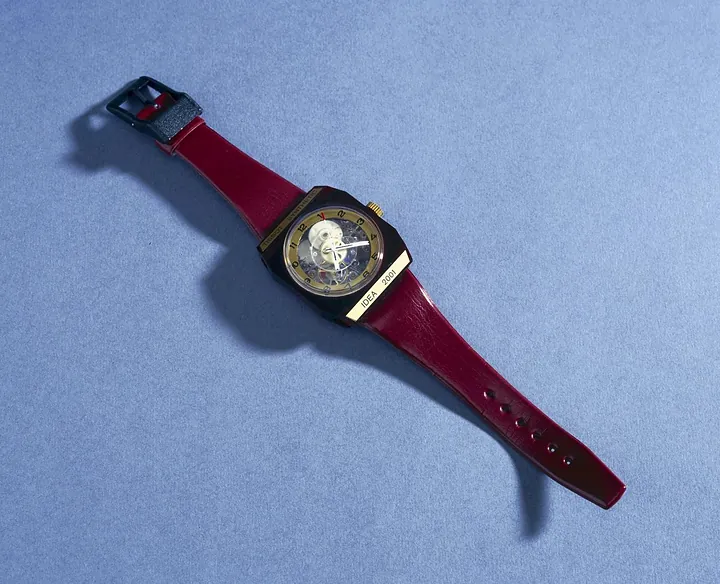
"Tissot synthetic idea 2001" the first plastic watch, introduced in 1971
Science Museum Group, London
Wristwatches · c. 1960
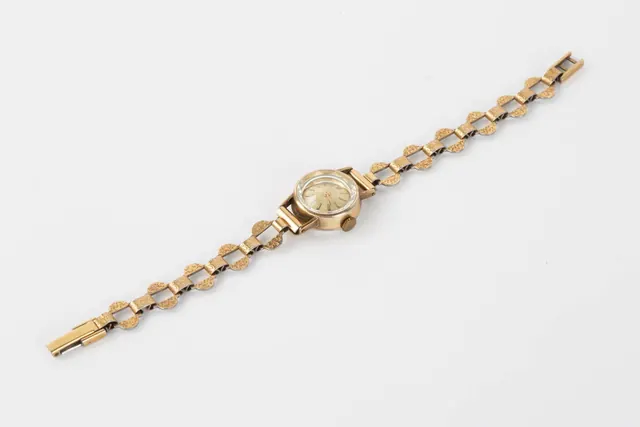
Wristwatch by Tissot, Switzerland, c. 1960
German Clock Museum
Wristwatches · 1930s
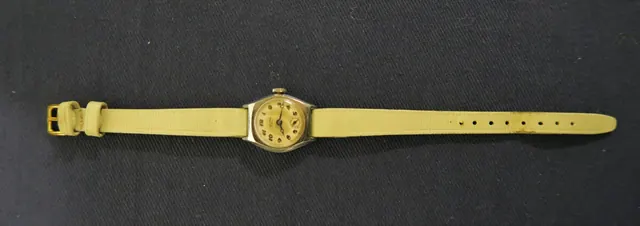
Wristwatch by Tissot, Switzerland, 1930s
HKM / Kulttuurihistoriallinen
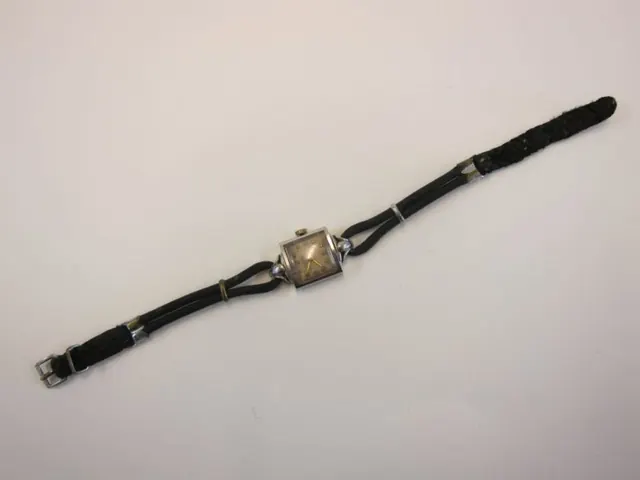
Wristwatches · 1950–1960
Wristwatch by Tissot, 1950–1960
Modemuseum Hasselt

Wristwatches · 1931
Rolex 'Oyster Perpetual' rotor self-winding wrist-watch, lever escapement, in steel case with glass in back, Montres Rolex SA, Geneva, Switzerland, 1931
Science Museum Group, London

Wristwatches · 1900–1999
Wristwatch by Certina, Switzerland, 1900–1999
Nordic Museum Foundation
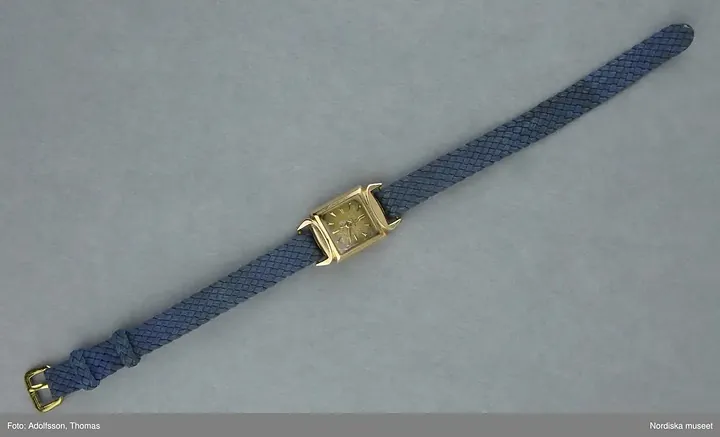
Wristwatches · 1900–1999
Wristwatch by Omega, Västerås, 1900–1999
Nordic Museum Foundation
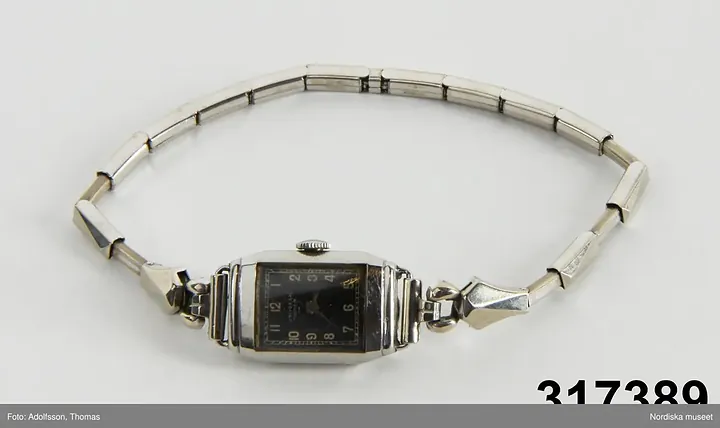
Wristwatches · 1900–1999
Wristwatch by Universal, Switzerland, 1900–1999
Nordic Museum Foundation