
Wristwatches · Wristwatch
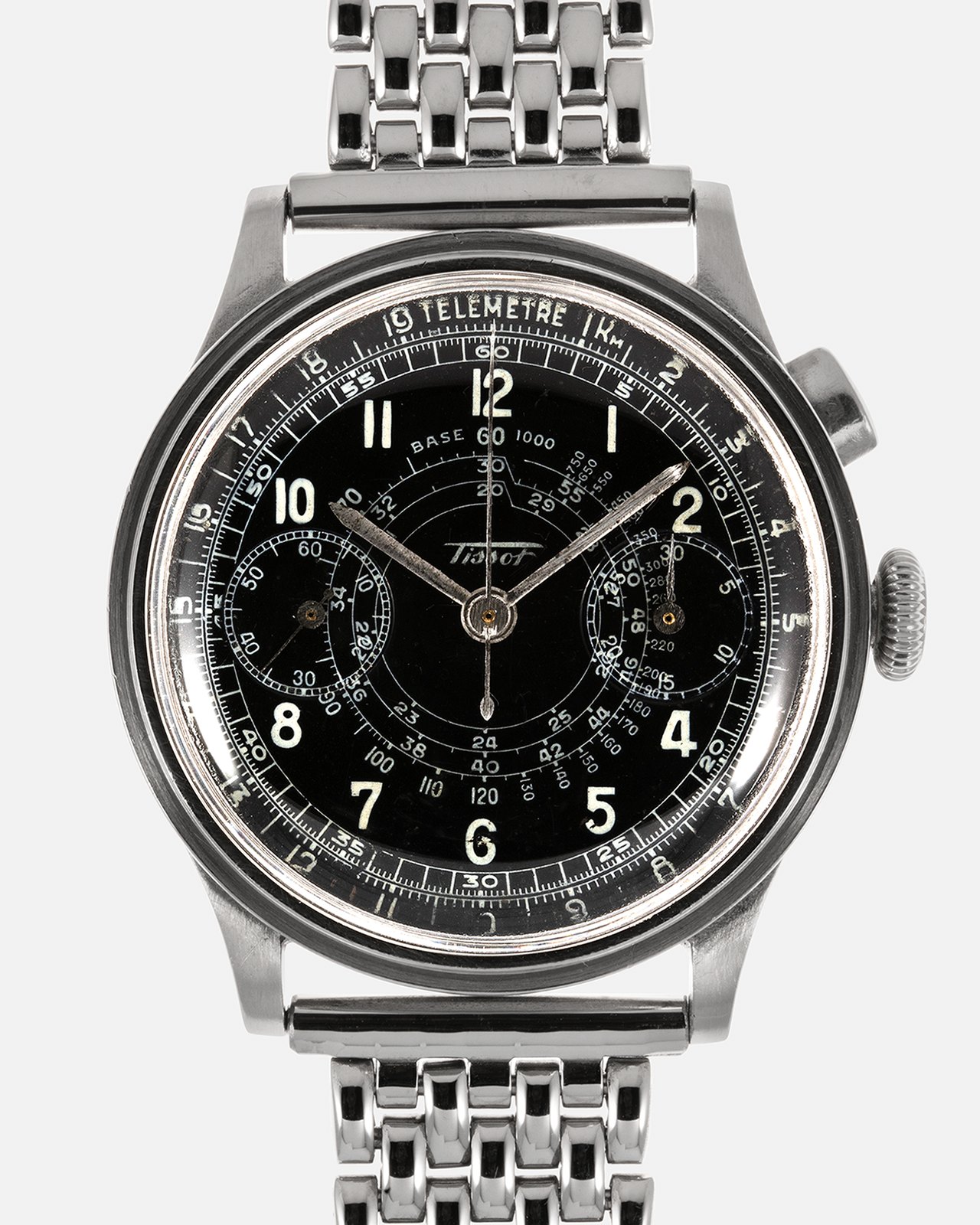
Tissot 15TL 33.3 Monopusher Chronograph, 1940s
- Maker / attribution
- Tissot (maker)
- Date
- 1940s
- Historical period
- Golden Age of Mechanical Watchmaking (1900 – 1945)
- Country of origin
- Switzerland
- Object type
- Wristwatch
- Dimensions
- Case 37 mm
- Stock no.
- Product 6964301824087
- Credit line
- Dealer listing, S.Song Watches (product 6964301824087)
- Catalogue title (original)
- Tissot 15TL 33.3 Monopusher Chronograph (English)
View the source record (dealer listing) ↗ (opens another website in a new tab)Suggest a correction
Record summary
Catalogued by S.Song Watches (dealer), Seattle (stock number Product 6964301824087), this is a wristwatch by Tissot, made in Switzerland, dated 1940s. The Atlas places it in the Golden Age of Mechanical Watchmaking period (1900 – 1945) of its Wristwatches collection. Recorded dimensions: Case 37 mm. The record is illustrated with 6 photographs.
Assembled from the source record's structured fields. Dates and attributions are given as the source states them; where a field is missing the Atlas leaves it blank rather than estimating.
Catalogue description
Dealer description — S.Song Watches
No doubt about it – vintage Tissot stands out as one of the most exciting areas in the world of watch collecting. Over the years, I've witnessed the emergence of some of the most captivating vintage pieces bearing the Tissot branding on their dials. For those who are unfamiliar, vintage Tissot holds considerable appeal due to their extensive involvement in motorsport, which gave rise to a diverse array of stylish, funky and exceptionally cool chronographs during its prime. While the brand has evolved into a different identity today (still cool, albeit for different reasons, in my opinion), vintage Tissot chronographs are still highly coveted and desirable by collectors in general. Up for grabs today is quite an interesting and rare specimen – a Tissot 15TL (33.3) Monopusher Chronograph from the 1940s. It is housed within a 37mm steel case and powered by the famed manual-winding Tissot (or Omega) Cal. 33.3 chronograph movement. For historical context, Tissot and Omega merged in 1930 to establish the inaugural Swiss SSIH (Société Suisse pour l'Industrie Horlogère), which explains why Tissot uses the famed Cal. 33.3 that many enthusiasts may be acquainted with from vintage Omega chronographs. Interestingly, Lemania, another partner within the SSIH at the time, played a significant role by supplying Cal. 15TL movements, which were eventually designated as the Cal. 33.3 by Tissot and Omega collectively. For many collectors, the Cal. 33.3 holds distinct significance, serving as the progenitor to two subsequent esteemed chronograph calibres. Among them is the renowned Lemania Cal. 27CH, used by Maisons such as Patek Philippe, Vacheron Constantin, and Audemars Piguet. The other is the Cal. 321, which played a pivotal role in the creation of one of the most iconic and historically significant watches to reach the moon in 1957 – the Omega Speedmaster. Despite this, there is a strong contingent of collectors who will vouch for the 33.3 as one of the greatest chronograph calibres ever made. It's hard to dispute the allure of a well-crafted, multi-scale chronograph, particularly when it features a lustrous black dial with well-balanced sub-dials within a steel case like this rare example. Notably well-preserved, with only minor blemishes on the lower portion of the dial, the watch retains all its other elements in good condition. We’ve paired it with a period-style bead-of-rice bracelet, and as you can see, the result here is just absolutely stunning. Regrettably, many of them may have been lost or damaged in battles. Thus, it brings us great joy to be able to offer one in such condition on our site today.
Historical context
Golden Age of Mechanical Watchmaking (1900 – 1945)
The wristwatch displaces the pocket watch; waterproof cases, self-winding and grand complications.
The wristwatch overtook the pocket watch. Military use in the First World War, aviation, water-resistant cases (1926), automatic winding (1923–31), rectangular Art Deco designs and early chronographs and calendars defined the period.
Read the period in the timelineMore wristwatches from this periodEarlier: Industrial Revolution
Atlas type guide
Chronographs and split-seconds watches
A chronograph is a watch with an additional seconds hand that can be started, stopped and returned to zero independently of the timekeeping. Louis Moinet built an early example in 1816 and Nicolas Rieussec a recording 'chronographe' in 1821; Adolphe Nicole's heart-shaped reset cam (patented 1862) made the modern return-to-zero possible. Split-seconds (rattrapante) chronographs add a second hand that can be stopped for intermediate times; flyback chronographs restart instantly.
Chronographs were essential tools for doctors (pulsometer scales), artillery (telemeter), engineers and sport. In wristwatches, Valjoux, Venus, Lemania and later the automatic chronographs of 1969 (Zenith El Primero, the Chronomatic Calibre 11 group and Seiko 6139) are milestones.
What to look for
- Push-pieces on the case band or a single button in the crown (monopusher).
- Subsidiary registers for minutes and hours; tachymeter, telemeter or pulsometer scales.
- Column wheel versus cam control visible in the movement.
- Calibre markings of specialist makers (Valjoux, Lemania, Venus, Landeron).
Dating clues
- Pocket chronographs with heart cam reset: after 1862.
- Wrist chronographs: from c. 1910; two-button designs from the 1930s.
- Automatic chronographs: from 1969.
General guidance written by the Atlas editors about this kind of object. It is not a statement about this particular piece; for that, rely on the source record above and on physical examination.
Read next:Flyback chronographChronograph
Related records
Pocket Watches · 1971–2001
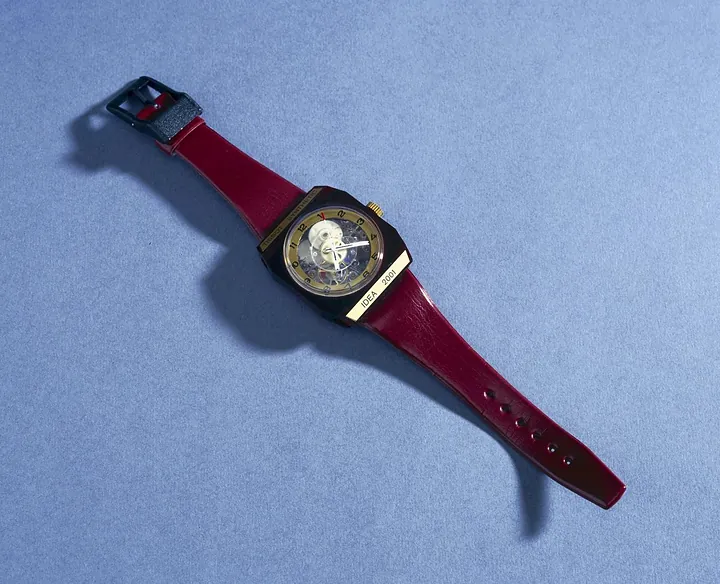
"Tissot synthetic idea 2001" the first plastic watch, introduced in 1971
Science Museum Group, London
Wristwatches · c. 1960
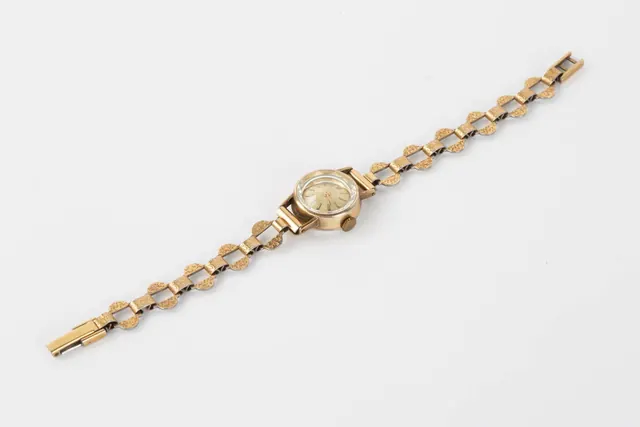
Wristwatch by Tissot, Switzerland, c. 1960
German Clock Museum
Wristwatches · 1930s
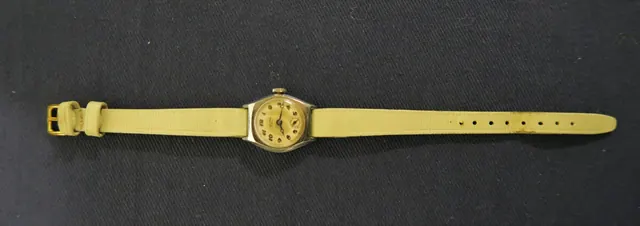
Wristwatch by Tissot, Switzerland, 1930s
HKM / Kulttuurihistoriallinen
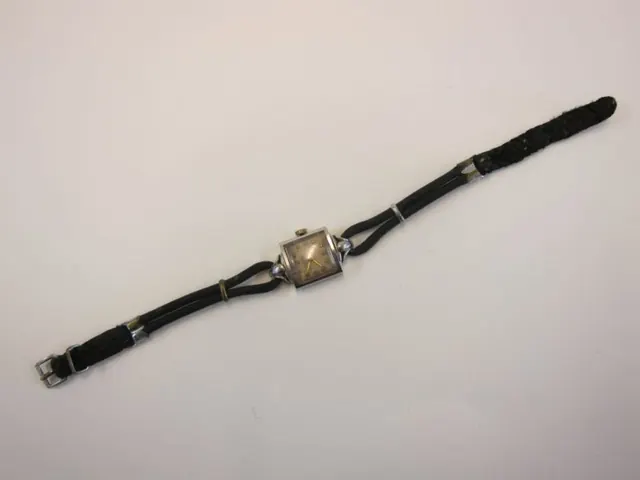
Wristwatches · 1950–1960
Wristwatch by Tissot, 1950–1960
Modemuseum Hasselt

Wristwatches · 1931
Rolex 'Oyster Perpetual' rotor self-winding wrist-watch, lever escapement, in steel case with glass in back, Montres Rolex SA, Geneva, Switzerland, 1931
Science Museum Group, London

Wristwatches · 1900–1999
Wristwatch by Certina, Switzerland, 1900–1999
Nordic Museum Foundation
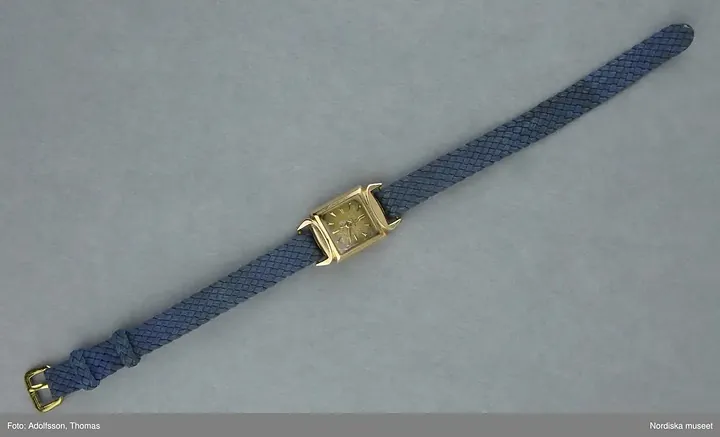
Wristwatches · 1900–1999
Wristwatch by Omega, Västerås, 1900–1999
Nordic Museum Foundation
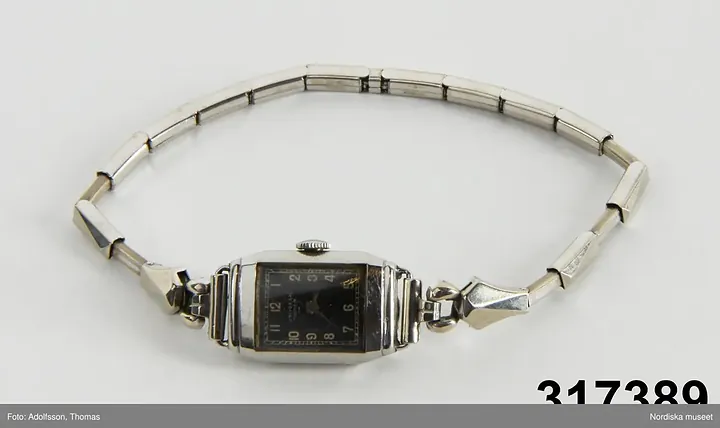
Wristwatches · 1900–1999
Wristwatch by Universal, Switzerland, 1900–1999
Nordic Museum Foundation