
Instruments · Time clock
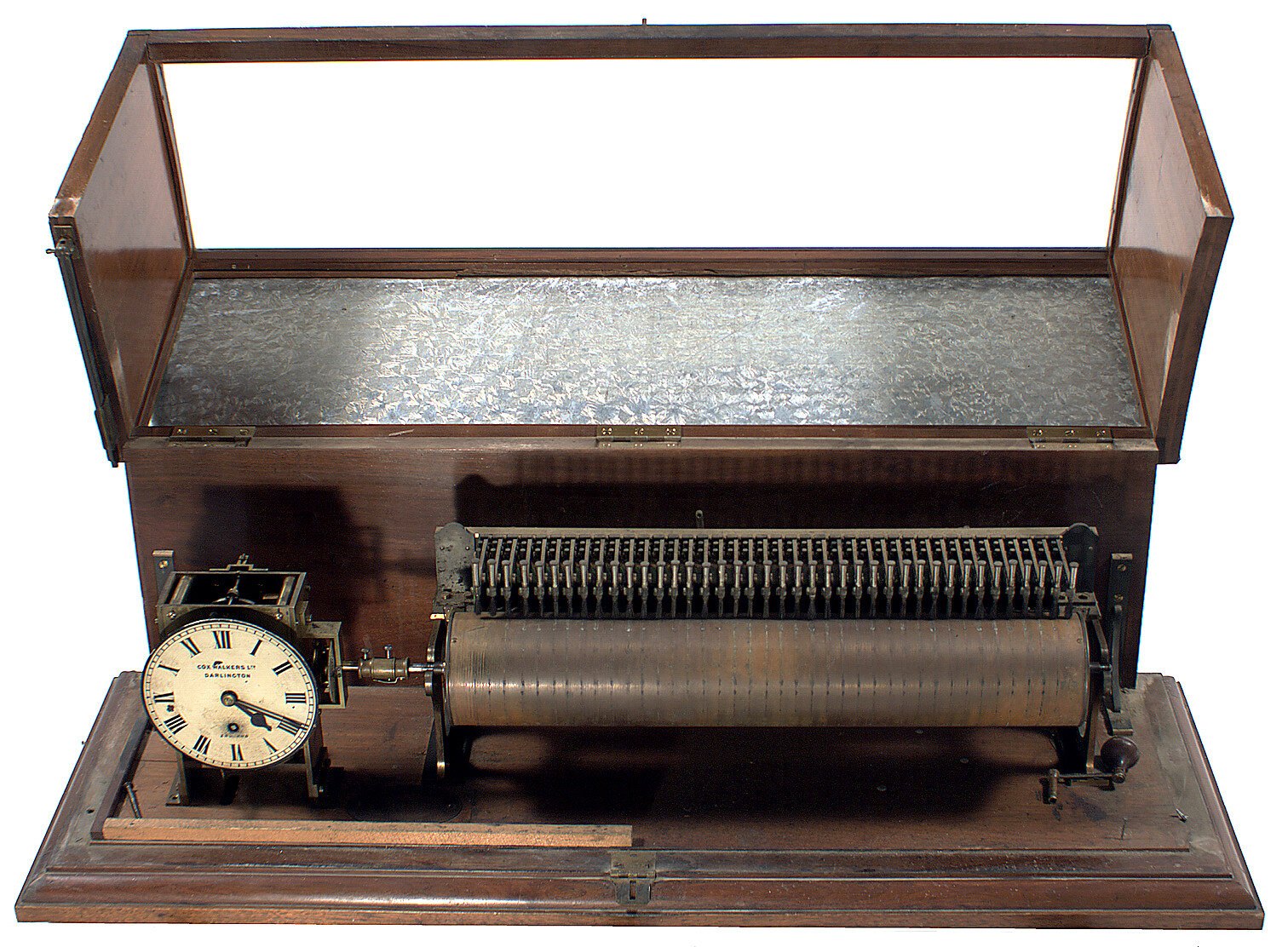
Time Clock - Cox Walkers Ltd, c. 1898
- Maker / attribution
- Unrecorded in source
- Date
- c. 1898
- Historical period
- Industrial Revolution (1850 – 1900)
- Country of origin
- Unrecorded in source
- Object type
- Time clock
- Dimensions
- 104.8 cm (Length), 36.2 cm (Width), 32.7 cm (Height)
- Holding institution
- Museums Victoria, Melbourne
- Accession / object no.
- SH 923100
- Catalogue title (original)
- Time Clock - Cox Walkers Ltd, circa 1898 (English)
View the source record ↗ (opens another website in a new tab)Suggest a correction
Record summary
Held and catalogued by Museums Victoria, Melbourne (object number SH 923100), this is a time clock, dated c. 1898. The Atlas places it in the Industrial Revolution period (1850 – 1900) of its Instruments collection. Recorded dimensions: 104.8 cm (Length), 36.2 cm (Width), 32.7 cm (Height). The record is illustrated with 1 photograph.
Assembled from the source record's structured fields. Dates and attributions are given as the source states them; where a field is missing the Atlas leaves it blank rather than estimating.
Catalogue description
Summary — Museums Victoria
A time clock is a mechanical device used to track the amount of time an employee has worked. This clock was manufactured by Cox Walkers Limited, with electrical engineering work by Lawrence and Hanson of Sydney and Melbourne, circa 1898. It was located in the Superintendent's Office at Mayday Hills Hospital, Beechworth, Victoria. The Head Attendant would change the roll of paper and hand the marked roll to the Superintendent who checked that all attendants had punched the bell to mark their rounds at the appropriate times.
Physical description — Museums Victoria
Clock consists of a round clock face mounted on a metal frame at the back of which is a bell. Numbered wheel at side attaches to a long copper cylinder. A row of brushes is suspended above cylinder. Time clock is housed in a varn- ished wood box with a glass front and a piece of galvanized iron over the top. A winder with a wooden knob lies inside the box. Box lifts off base to access clock.
Significance — Museums Victoria
Example of equipment used in the daily running of a Victorian mental health hospital
Inscriptions & marks
Painted around edge of clock face: [Roman numerals 1-12 and min- ute marks]. Inscribed: COX WALKERS LTD... [Extensive text].
Provenance
Donation from Mayday Hills Hospital, Sep 1992
Historical context
Industrial Revolution (1850 – 1900)
American interchangeable-parts manufacture; railroad time standards; Swiss and German factory systems.
Instruments spread into industry, science and sport: stopwatches, chronoscopes, metronomes, watchmen's clocks and time recorders.
Read the period in the timelineMore instruments from this periodEarlier: Precision & Scientific Horology
Atlas type guide
Timers, stopwatches, chronoscopes and time recorders
Instruments for measuring short intervals or recording when something happened form a large and practical branch of horology. Sports stopwatches and split-seconds timers, laboratory chronoscopes (such as Hipp's, which measured thousandths of a second for psychology and ballistics experiments), metronomes for music, watchmen's clocks that recorded patrol rounds, and the time recorders that clocked factory workers in and out all derive from clock and watch technology.
These objects matter historically because they show timekeeping leaving the observatory and the drawing room and entering industry, science and sport. Many were mass-produced, and their dials, scales and patents chart the rise of electrification and industrial management.
What to look for
- Scales graduated in fifths, tenths or hundredths of a second, or decimal minutes for industrial use.
- Start, stop and reset push-pieces; a second hand that can be stopped independently (split seconds).
- Recording devices: paper discs or tapes, printing mechanisms, keys or punches.
- Patent numbers and dates on the dial or case, which give a terminus post quem.
Dating clues
- Hipp chronoscopes were made from the 1840s into the twentieth century.
- Employee time recorders spread from the 1890s (Bundy, IBM, International Time Recording Co.).
- Quartz and electronic timers replaced mechanical stopwatches in sport from the 1970s.
General guidance written by the Atlas editors about this kind of object. It is not a statement about this particular piece; for that, rely on the source record above and on physical examination.
Read next:ChronographFlyback chronograph
Related records
Instruments · 1831–1870
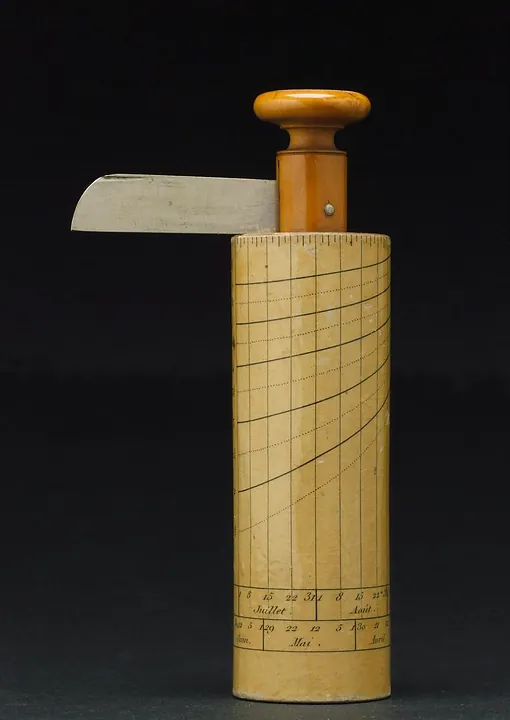
Column dial by Henry Robert, Horloger, au Palais Royal, paper on wood, early 19th century
Science Museum Group, London
Instruments · 1831–1870
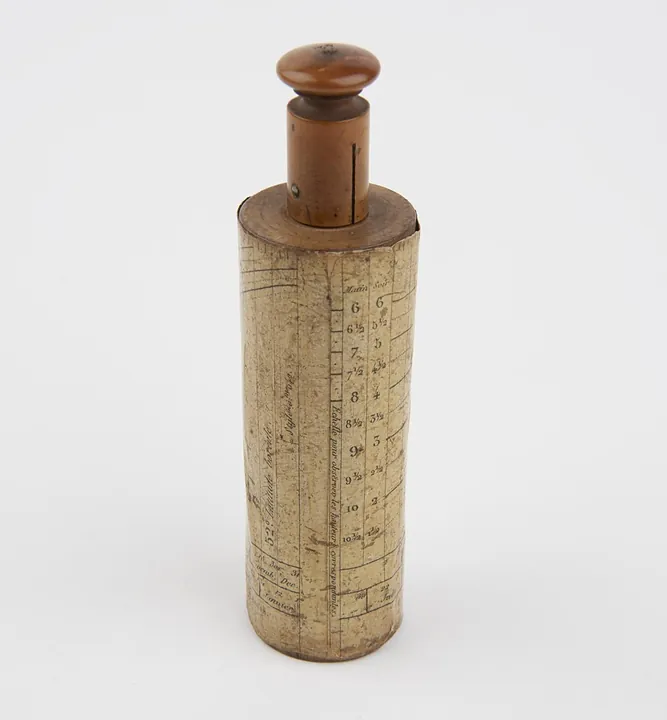
Column sundial for latitude 52 degrees, in boxwood with paper scales by Henry Robert, Horloger, Au Palais Royal, Paris, c.1832
Science Museum Group, London
Instruments · 1831–1870
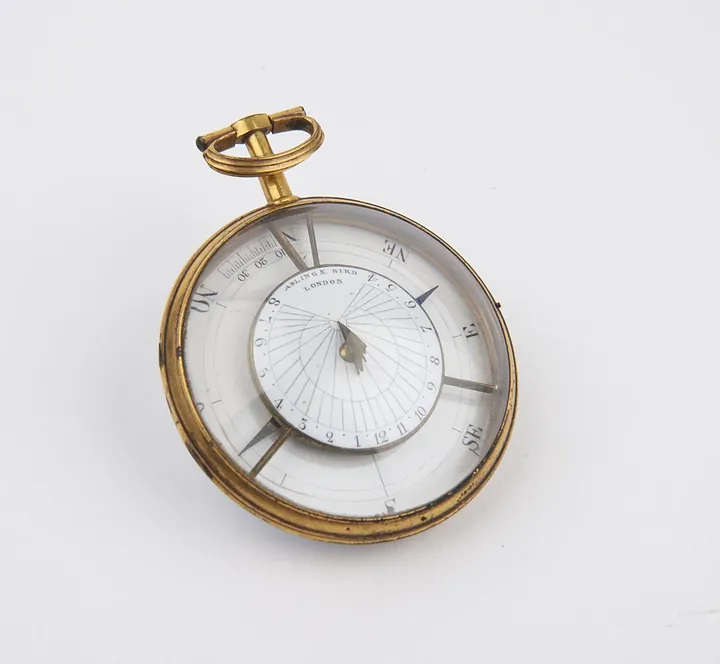
Horizontal compass sundial for latitude for 42 degrees, signed "Asling & Bird, London", in watch type case. English, c.1840.
Science Museum Group, London
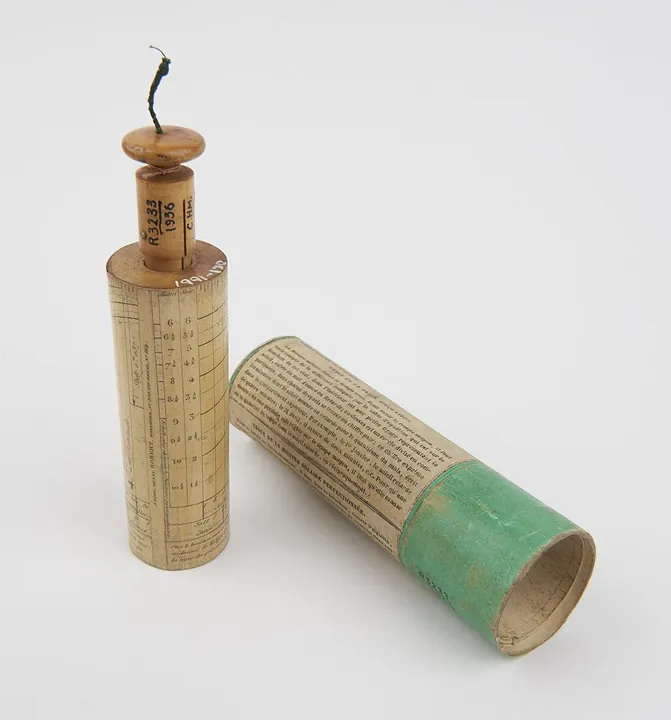
Instruments · 1831–1870
Sundial by Henry Robert, France, 1831–1870
Science Museum Group, London
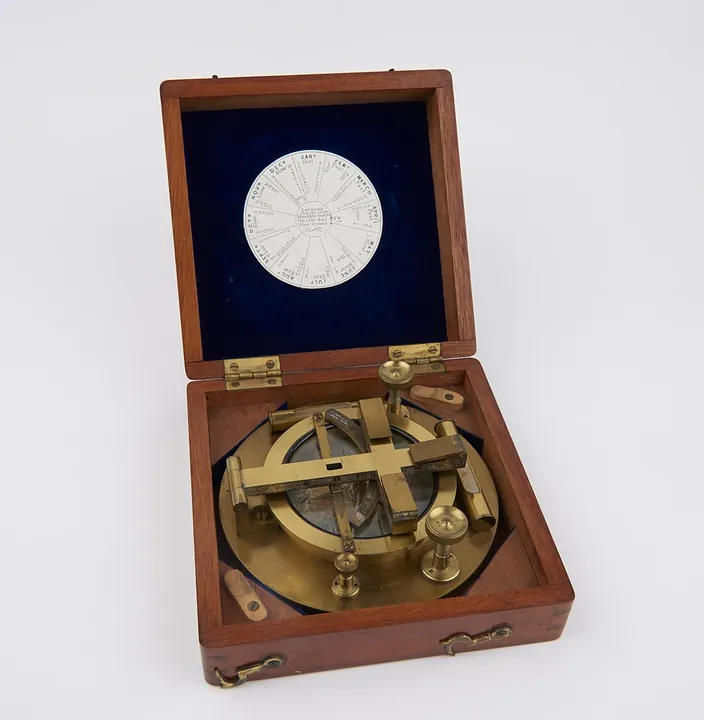
Instruments · 1831–1870
Sundial, in mahogany case
Science Museum Group, London
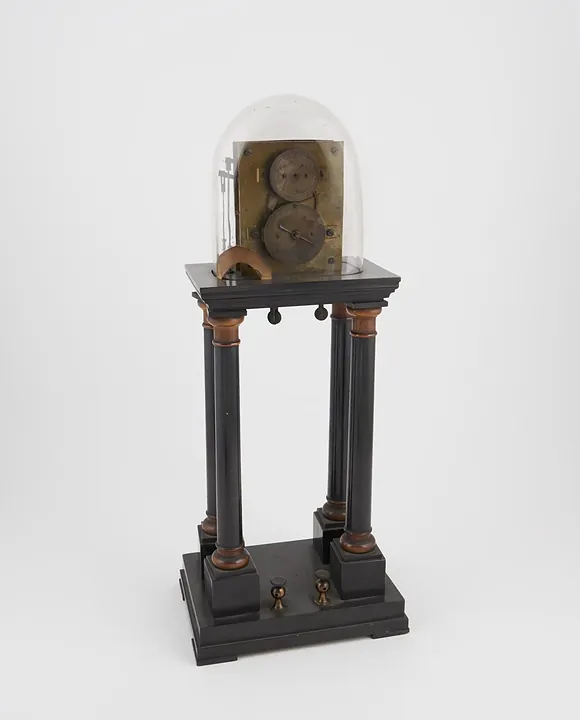
Instruments · 1848–1874
Chronoscope of Hipp type
Science Museum Group, London
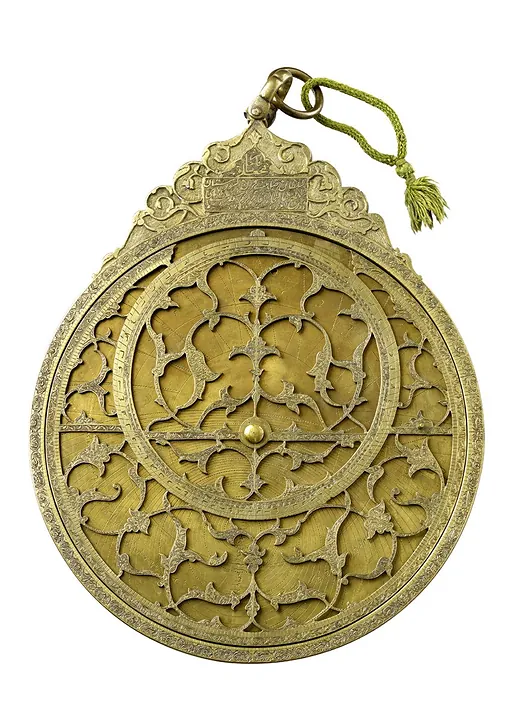
Instruments · 1850–1899
Astrolabe, Islamic world, 1850–1899
Museum of Arts and Crafts, Hamburg
Instruments · 1850–1872
Chronometer watch in silver case by John Arnold and Son, London, no.454/755. Hall marked 1872
Science Museum Group, London