
Wristwatches · Wristwatch
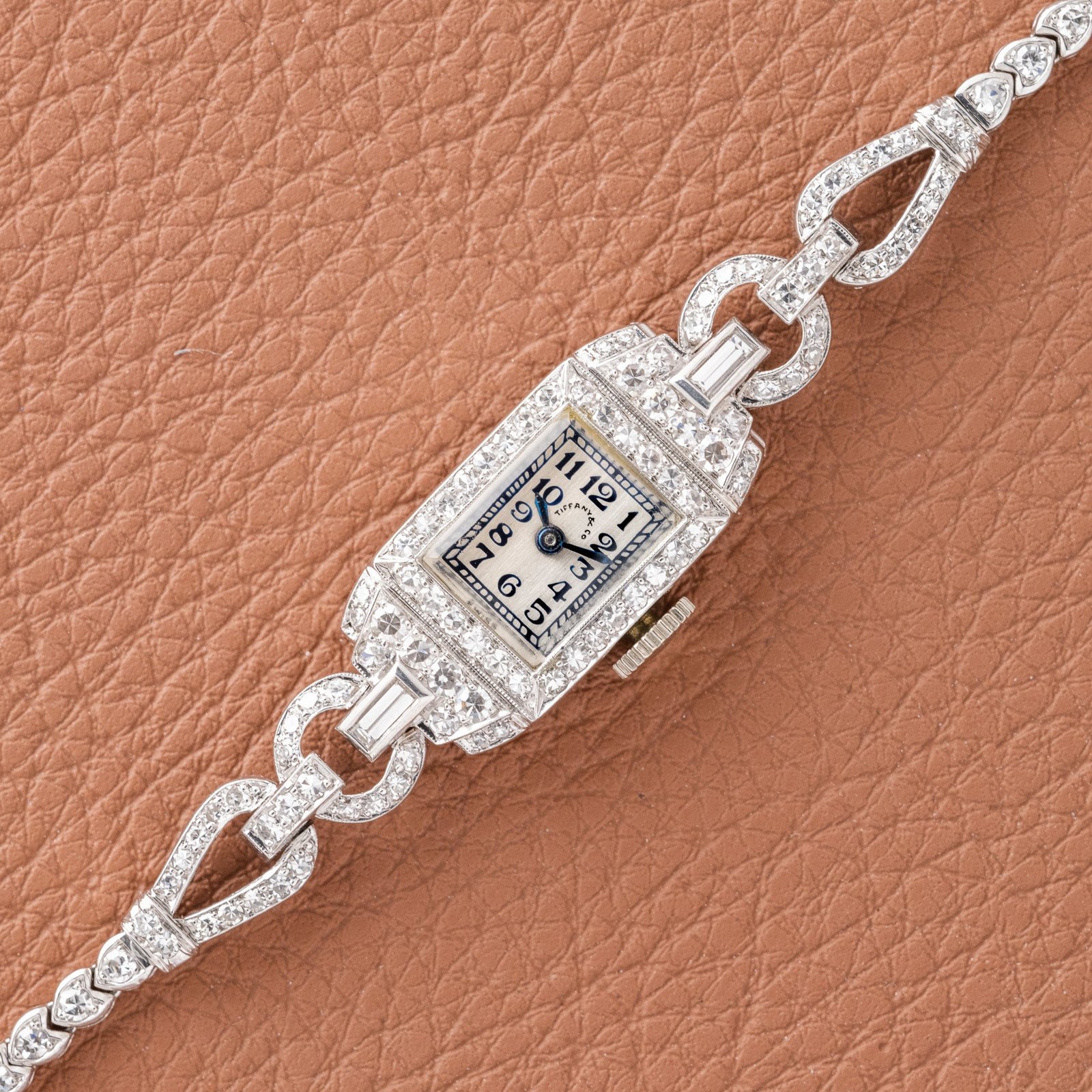
Tiffany and Co. Movado Platinum and Diamond Cocktail Watch, 1930s
- Maker / attribution
- Tiffany and Co. (maker)
- Date
- 1930s
- Historical period
- Golden Age of Mechanical Watchmaking (1900 – 1945)
- Country of origin
- Unrecorded in source
- Object type
- Wristwatch
- Materials / technique
- platinum
- Stock no.
- Product 8403179897015
- Credit line
- Dealer listing, Huntington Company (product 8403179897015)
- Catalogue title (original)
- 1930s Tiffany and Co. Movado Platinum and Diamond Cocktail Watch (English)
View the source record (dealer listing) ↗ (opens another website in a new tab)Suggest a correction
Record summary
Catalogued by Huntington Company (dealer) (stock number Product 8403179897015), this is a wristwatch by Tiffany and Co., dated 1930s. The Atlas places it in the Golden Age of Mechanical Watchmaking period (1900 – 1945) of its Wristwatches collection. Materials and techniques recorded by the source: platinum. The record is illustrated with 6 photographs.
Assembled from the source record's structured fields. Dates and attributions are given as the source states them; where a field is missing the Atlas leaves it blank rather than estimating.
Catalogue description
Dealer description — Huntington Company
History and Significance This platinum Movado was produced for Tiffany & Co. during the 1930s, a period when Tiffany frequently partnered with elite Swiss makers to produce watches that met its own aesthetic and technical standards. The result is a piece that feels unmistakably Art Deco, defined by its elongated rectangular case, architectural bracelet construction, and refined dial layout. Watches of this era were designed as jewelry as much as timekeepers, and this example captures that balance well, combining fine watchmaking with high jewelry craftsmanship. Co-signed pieces from this period remain especially desirable due to their limited production and strong historical context. Writer’s Thoughts This is a watch that reads more like a piece of wearable architecture than a traditional wristwatch. The proportions are elegant, the bracelet drapes naturally, and the raised enamel dial adds depth that photographs rarely do justice. It feels deliberate and sophisticated, with a presence that comes from design rather than size. Our Promise Every watch is thoroughly vetted, carefully described with complete transparency, and guaranteed authentic. This watch is offered in honest condition. Specifications Brand: Movado for Tiffany & Co. Model: Rectangular bracelet watch Year: circa 1930s Case Material: Platinum Movement: Manual wind Strap: Integrated platinum bracelet Buckle/Clasp: Integrated clasp Contents: Watch only Condition Case: Solid platinum case shows light surface wear consistent with age and careful use. Crystal: Clean, with no visible chips or cracks. Dial: Raised enamel dial is clean with strong contrast, even aging, and well-preserved printing. Hands: In excellent condition, with no corrosion or damage. Strap: Integrated platinum bracelet shows light wear consistent with age and remains structurally sound. Buckle/Clasp: Integrated clasp functions properly with light handling marks visible.
Historical context
Golden Age of Mechanical Watchmaking (1900 – 1945)
The wristwatch displaces the pocket watch; waterproof cases, self-winding and grand complications.
The wristwatch overtook the pocket watch. Military use in the First World War, aviation, water-resistant cases (1926), automatic winding (1923–31), rectangular Art Deco designs and early chronographs and calendars defined the period.
Read the period in the timelineMore wristwatches from this periodEarlier: Industrial Revolution
Atlas type guide
Wristwatches
Bracelet watches were worn by women from the early nineteenth century — Breguet made one for Caroline Murat, Queen of Naples, in 1810–12 — but the wristwatch only became a man's instrument with military use and aviation in the early twentieth century. Between the World Wars it overtook the pocket watch; the 1920s and 1930s brought rectangular Art Deco cases, water-resistant cases and the first automatic winding systems.
After 1945 the wristwatch became a carrier of identity — dress watches, sports and dive watches, chronographs, calendars — produced by Swiss, American, Japanese, German, Soviet and Chinese industries. The quartz revolution after 1969 and the mechanical renaissance since the 1990s, including the rise of independent watchmakers, complete the story.
What to look for
- The reference number (between the lugs or inside the case back) and serial number, the starting point for dating.
- The calibre: its maker and number are often stamped under the dial or on the bridge.
- Originality of dial, hands and crown — refinished ('redial') dials are common.
- Case material marks: 18K/750, 14K/585, stainless steel, gold-filled, plated.
Dating clues
- Wire-lug cases: before c. 1925.
- Water-resistant screw-down cases: from 1926.
- Quartz movements: from 1969; sapphire crystals widespread after c. 1980.
General guidance written by the Atlas editors about this kind of object. It is not a statement about this particular piece; for that, rely on the source record above and on physical examination.
Related records
Wristwatches · 1900–1999
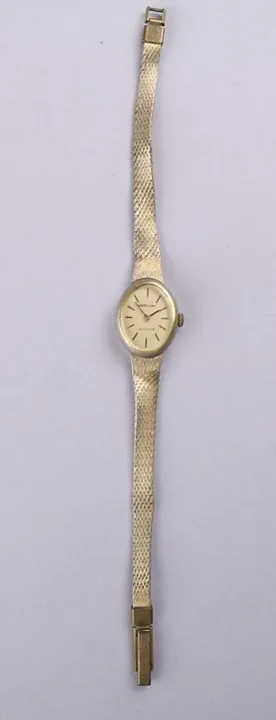
Wristwatch by Mercury, 1900–1999
Modemuseum Hasselt
Wristwatches · 1900–1999
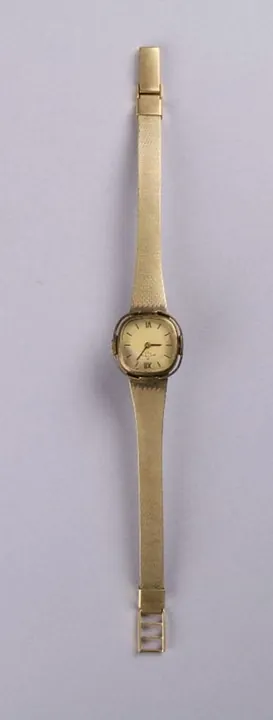
Wristwatch by Nutrix, 1900–1999
Modemuseum Hasselt

Wristwatches · 1920
Wristwatch, 1920
Modemuseum Hasselt

Wristwatches · 1931
Rolex 'Oyster Perpetual' rotor self-winding wrist-watch, lever escapement, in steel case with glass in back, Montres Rolex SA, Geneva, Switzerland, 1931
Science Museum Group, London
Wristwatches · c. 1936
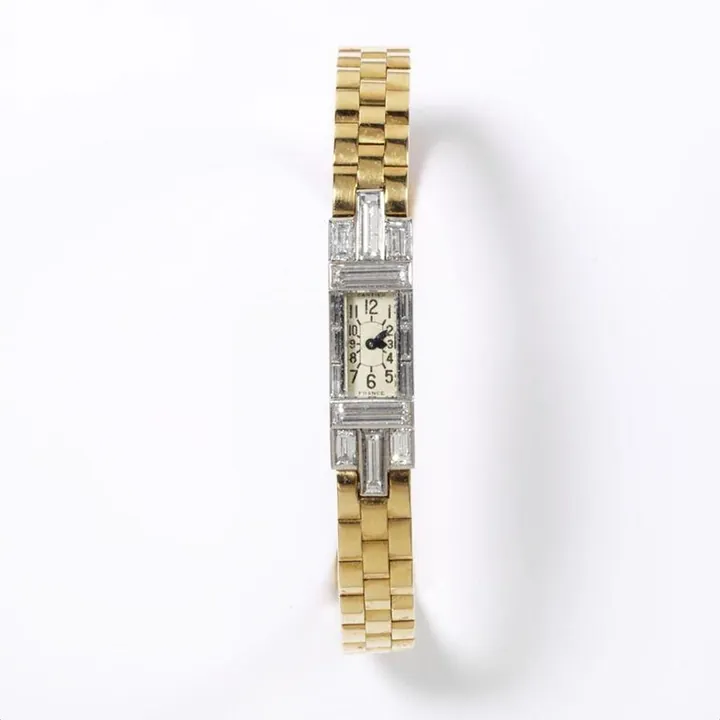
Watch with diamond-set platinum case and gold link bracelet, Cartier, Paris, c. 1936.
Victoria and Albert Museum, London
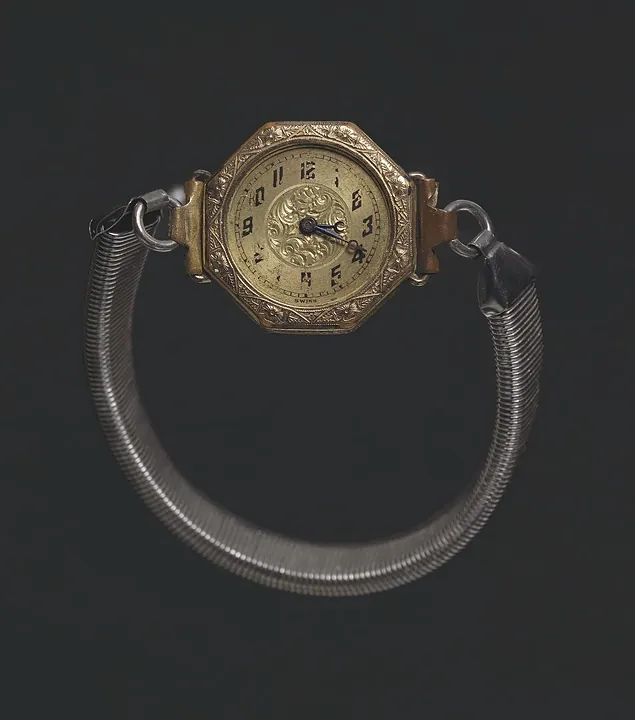
Wristwatches · early to mid 20th century
Woman's wristwatch worn by Harriette Vyda Simms Moore, early to mid 20th century
National Museum of African American History and Culture, Smithsonian Institution, Washington DC

Wristwatches · 1900–1999
Wristwatch by Certina, Switzerland, 1900–1999
Nordic Museum Foundation
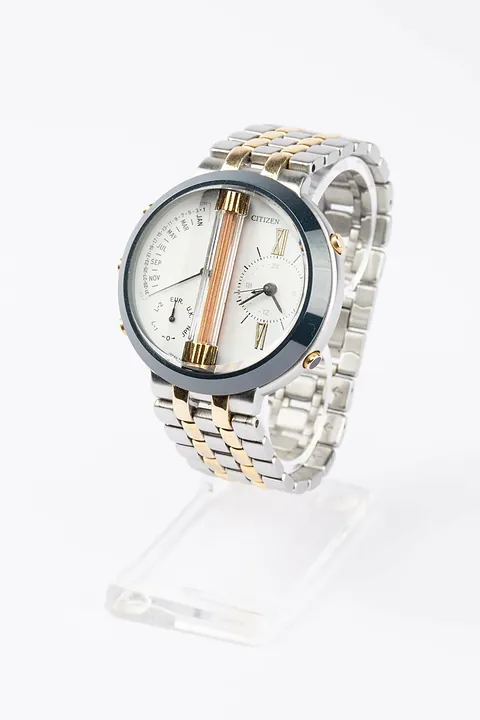
Wristwatches · 1900–1999
Wristwatch by Citizen, Japan, 1900–1999
German Clock Museum