
Instruments · Sundial
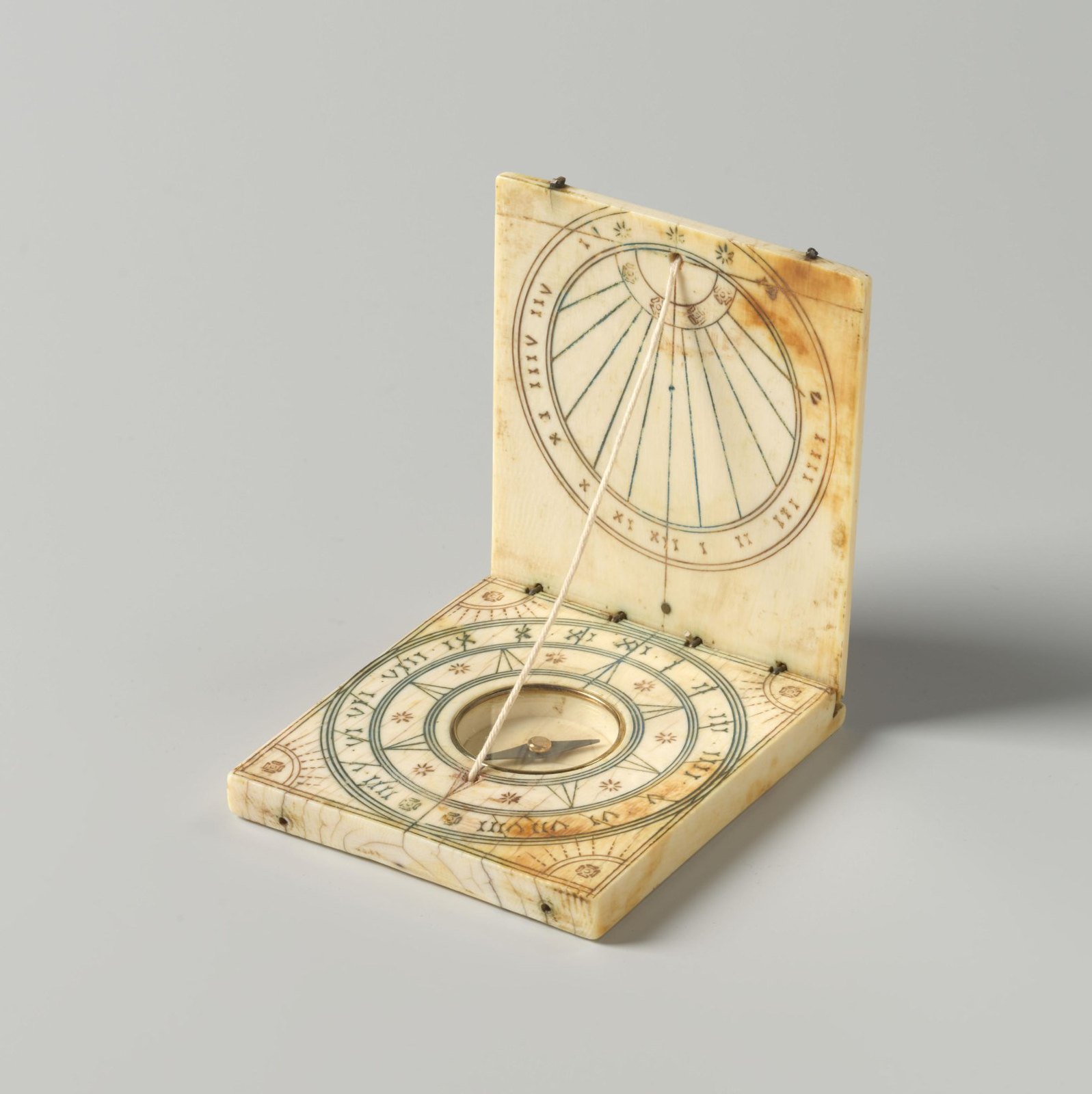
Sundial, 1500–1525
- Maker / attribution
- Unrecorded in source
- Date
- 1500–1525
- Historical period
- Renaissance Horology (1400 – 1600)
- Country of origin
- Unrecorded in source
- Object type
- Sundial
- Materials / technique
- iron (metal), pigment, bone (material)
- Dimensions
- height 9.1 cm x width 7.3 cm x depth 0 cm
- Holding institution
- Rijksmuseum
- Accession / object no.
- BK-2024-31
- Credit line
- Purchased with the support of the Ebus Fonds/Rijksmuseum Fonds
- Catalogue title (original)
- Zonnewijzer-kompas met Madonna Hodegetria (Dutch)
View the source record ↗ (opens another website in a new tab)Suggest a correction
Record summary
Held and catalogued by Rijksmuseum (object number BK-2024-31), this is a sundial, dated 1500–1525. The Atlas places it in the Renaissance Horology period (1400 – 1600) of its Instruments collection. Materials and techniques recorded by the source: iron (metal), pigment, bone (material). Recorded dimensions: height 9.1 cm x width 7.3 cm x depth 0 cm. The record is illustrated with 1 photograph.
Assembled from the source record's structured fields. Dates and attributions are given as the source states them; where a field is missing the Atlas leaves it blank rather than estimating.
Catalogue description
Description — Rijksmuseum (Dutch)
Tweeluik van twee plaatjes van been, die kunnen worden opengeklapt. De buitenzijde is versierd met een reliëf van de Madonna Hodegetria (‘Zij die de weg wijst’), dat is ingezwart. De binnenzijde vertoont aan de ene kant een ingegraveerde windroos van drie concentrische cirkels met pijlen voor de windrichtingen en aanduidingen van de uren in Romeinse cijfers, rondom een verdiept rond veld, waarin zich de kompasnaald bevond. In de vier hoeken van dit plaatje been zijn kwartrondjes aangebracht met zonnestralen en een klein rozet. De andere zijde bevat een rozet van twee concentrische cirkels met uurcijfers en uurlijnen, ten behoeve van de zonnewijzer, waarvan de ‘wijzer’ wordt gevormd door het (nu afwezige) koord tussen beide plaatjes. De ingegraveerde voorstellingen van beide plaatjes zijn in groen en rood gepigmenteerd. Een sluithaak van ijzer bevindt zich op de bovenzijde van het zakkompas.
Shown in the original language of the source catalogue. An editor-reviewed English translation has not yet been published; we do not publish machine translations as authoritative text.
Historical context
Renaissance Horology (1400 – 1600)
Spring power makes clocks portable; Nuremberg and Augsburg produce the first watches; the Prague Orloj is built.
Instrument-making flourished in Nuremberg, Augsburg, Louvain and London: ivory diptych dials, astronomical compendia, astrolabes and nocturnals for wealthy patrons, navigators and scholars.
Read the period in the timelineMore instruments from this periodEarlier: Medieval Period
Atlas type guide
Sundials and solar time-finders
A sundial tells time from the position of a shadow cast by a gnomon or style. Because the sun's apparent motion depends on latitude, every fixed dial is laid out for a particular latitude, and portable dials either carry a latitude scale or are made for one region. Sundials show local apparent solar time, which drifts against mean (clock) time by up to about sixteen minutes over the year — the equation of time.
Portable dials were the pocket instruments of the sixteenth to eighteenth centuries. Nuremberg and Augsburg workshops produced folding ivory diptych dials with inset compasses; English and French makers sold brass horizontal dials, ring dials and the Butterfield type; Japanese and Chinese makers had their own traditions of compass dials. After mechanical watches became reliable, dials remained in use for setting them, and nineteenth-century heliochronometers were built to correct directly for the equation of time.
What to look for
- The latitude engraved on the dial plate or a latitude arc on the gnomon — it shows where the dial was meant to be used.
- The type of hour lines: equal (equinoctial) hours, Italian or Babylonian hours counted from sunset or sunrise, or unequal temporal hours on early and Islamic instruments.
- An inset magnetic compass and whether a magnetic-declination mark is drawn on its card — a useful dating clue because declination changes over time.
- Maker's signatures and town marks: Nuremberg compass-makers (Kompassmacher) often struck a personal mark and the town's punch.
- Additional scales such as lunar volvelles, wind roses, perpetual calendars or lists of cities with their latitudes.
Dating clues
- Ivory diptych dials are characteristic of Nuremberg between about 1500 and 1700.
- Butterfield-type dials with a bird-shaped adjustable gnomon point to Paris workshops from the late seventeenth century onward.
- Equation-of-time tables engraved on the plate became common after the mid-seventeenth century, once pendulum clocks made the difference between solar and mean time obvious.
General guidance written by the Atlas editors about this kind of object. It is not a statement about this particular piece; for that, rely on the source record above and on physical examination.
Read next:The history timeline
Related records
Instruments · 1425–1435
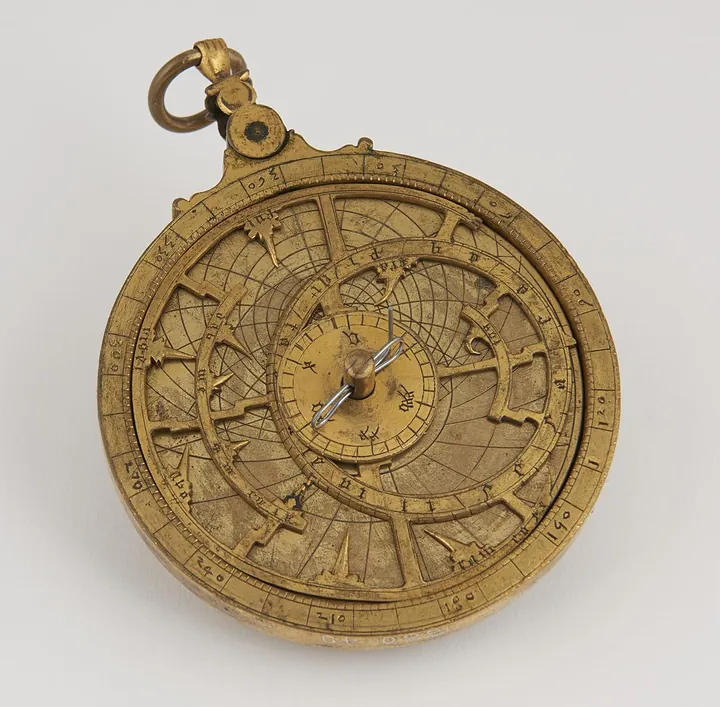
Astrolabe, 1425–1435
Science Museum Group, London
Instruments · late 15th century
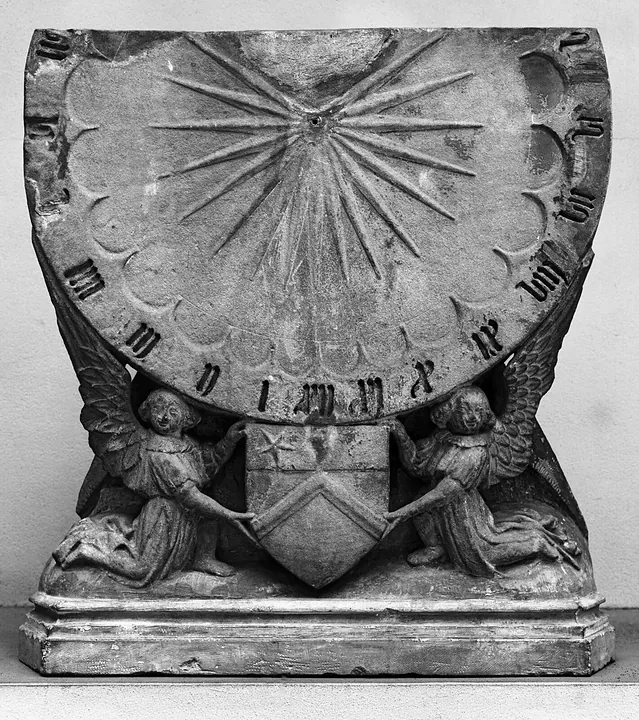
Sundial, stone, northern France, late 15th century
Victoria and Albert Museum, London
Instruments · 1462
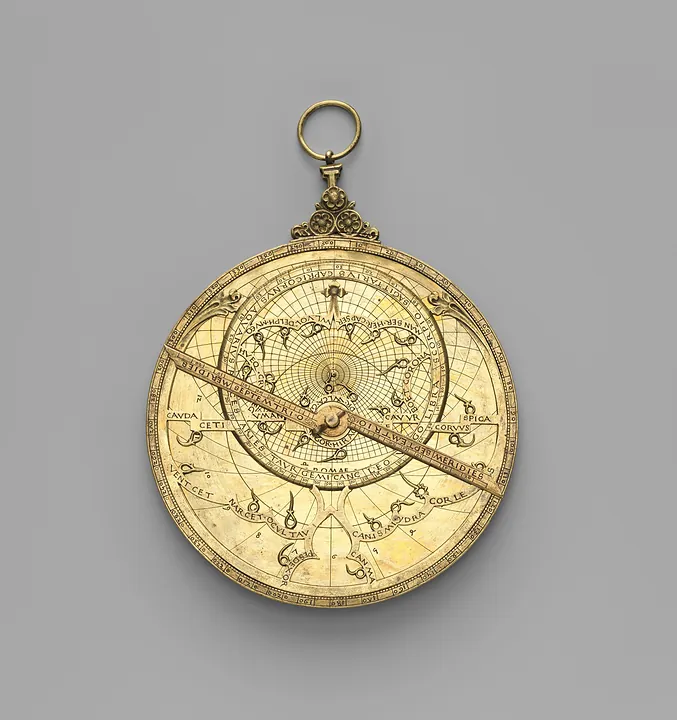
Astrolabe by Regiomontanus, 1462
The Metropolitan Museum of Art, New York
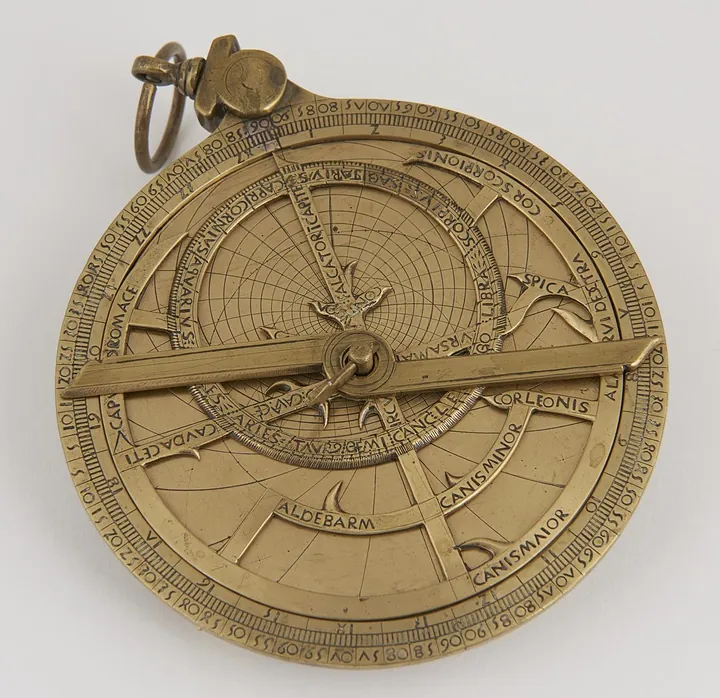
Instruments · 1495–1505
Astrolabe, Italy, 1495–1505
Science Museum Group, London
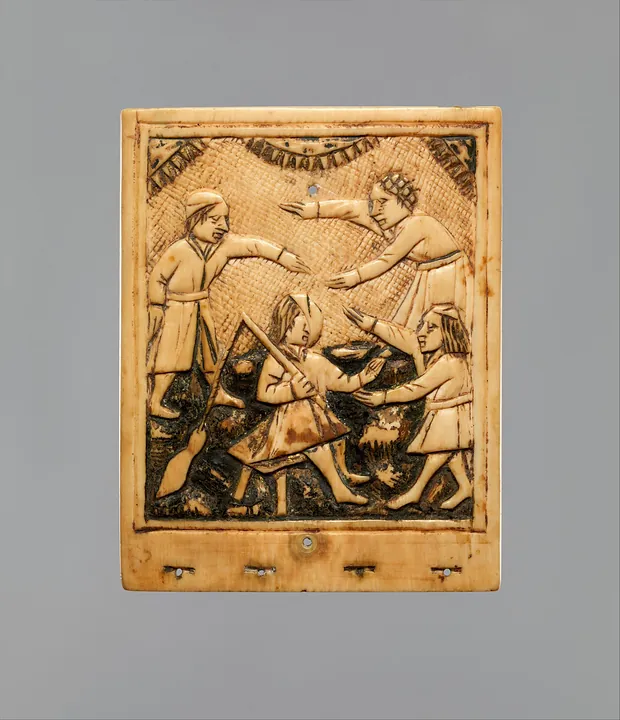
Instruments · c. 1500
Sundial, Germany, c. 1500
The Metropolitan Museum of Art, New York
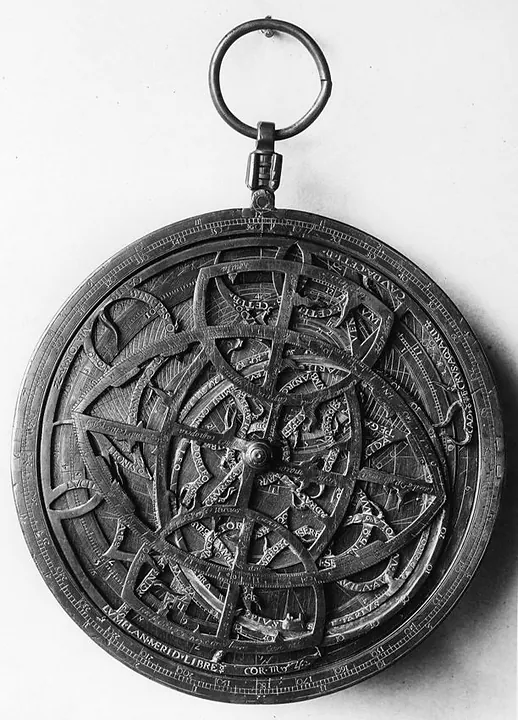
Instruments · 1500–1599
Astrolabe by Gemma Frisius, Belgium, 1500–1599
Royal Institute for Cultural Heritage
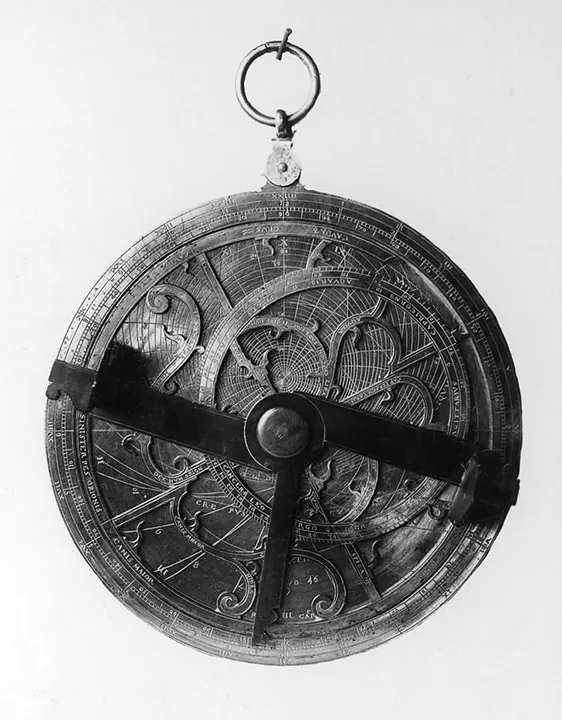
Instruments · 1500–1599
Astrolabe by J. A. Lynden, Belgium, 1500–1599
Royal Institute for Cultural Heritage
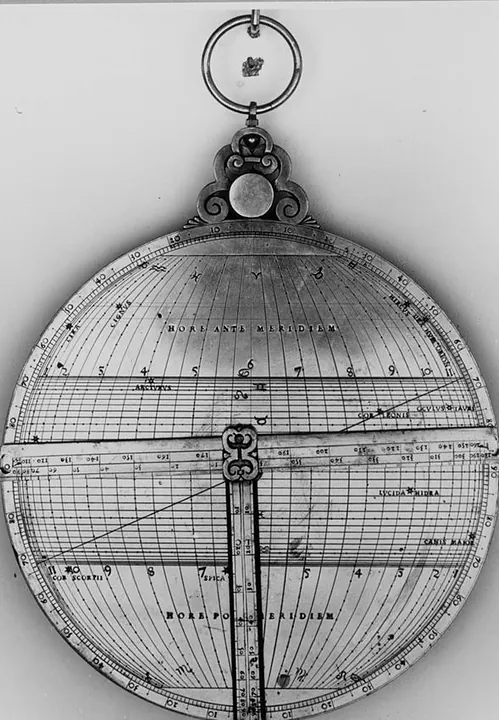
Instruments · 1500–1599
Astrolabe by Juan de Roias, Belgium, 1500–1599
Royal Institute for Cultural Heritage