
Pocket Watches · Pocket watch
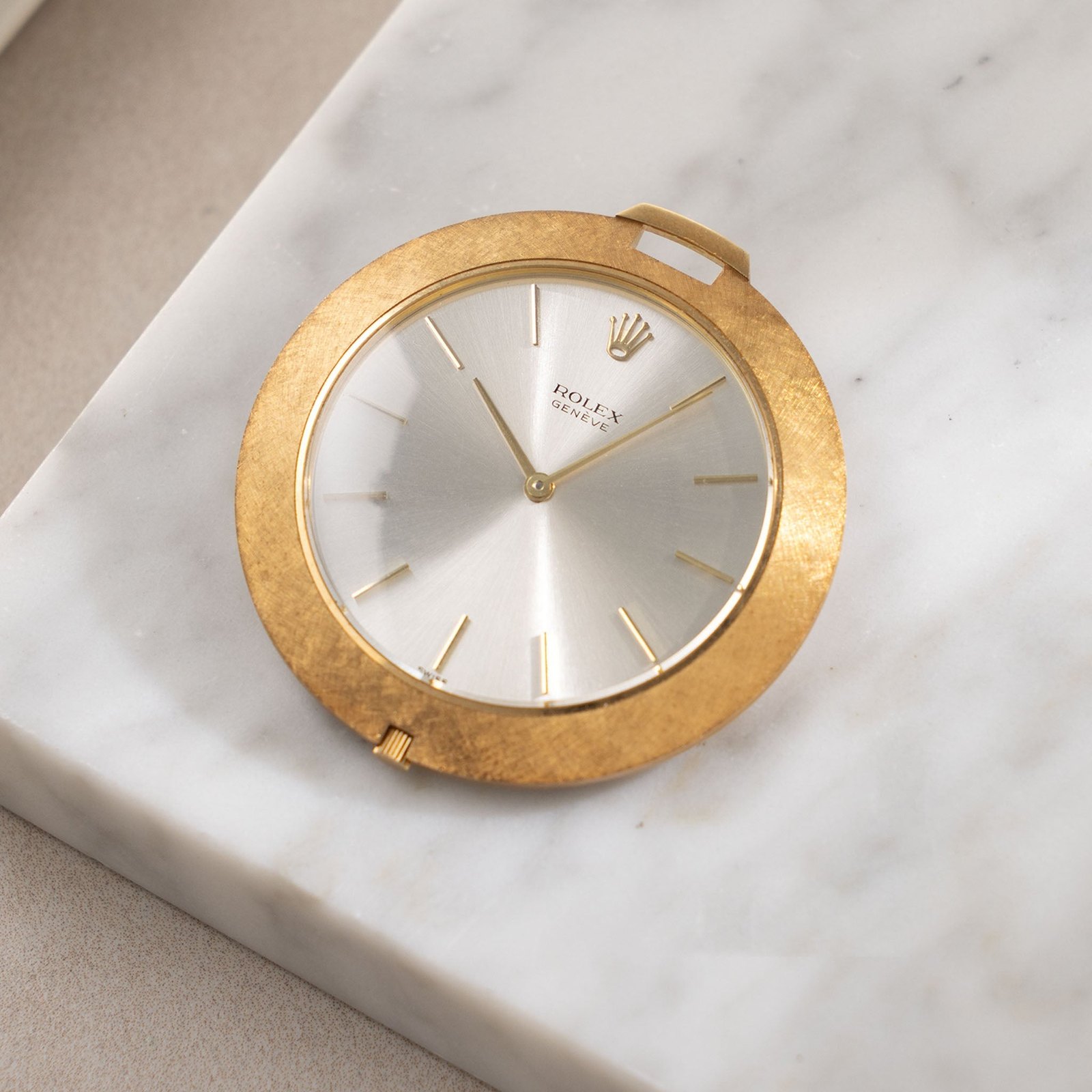
Rolex 18k Yellow Gold Pocket/Pendant Watch ref. 3608 Silver Dial, 1967
- Maker / attribution
- Rolex (maker)
- Date
- 1967
- Historical period
- Modern Mechanical Horology (1945 – 1969)
- Country of origin
- Switzerland
- Object type
- Pocket watch
- Materials / technique
- 18k yellow gold
- Dimensions
- Case 39 mm
- Stock no.
- W-3448
- Credit line
- Dealer listing, Bulang & Sons (W-3448)
- Catalogue title (original)
- Rolex 18k Yellow Gold Pocket/Pendant Watch ref. 3608 Silver Dial (English)
View the source record (dealer listing) ↗ (opens another website in a new tab)Suggest a correction
Record summary
Catalogued by Bulang & Sons (dealer), Copenhagen (stock number W-3448), this is a pocket watch by Rolex, made in Switzerland, dated 1967. The Atlas places it in the Modern Mechanical Horology period (1945 – 1969) of its Pocket Watches collection. Materials and techniques recorded by the source: 18k yellow gold. Recorded dimensions: Case 39 mm. The record is illustrated with 4 photographs.
Assembled from the source record's structured fields. Dates and attributions are given as the source states them; where a field is missing the Atlas leaves it blank rather than estimating.
Catalogue description
Dealer description — Bulang & Sons
We don’t typically carry many pocket watches in our shop, but we have a deep appreciation for well-designed objects — even if they’re not currently in fashion. This Reference 3608 pocket watch is a great example. With a slotted opening at 12 o’clock, it could easily double as a pendant watch when fitted with a chain. On the 6 o’clock side, you’ll find a notched crown used for winding. The 39mm round case remains unpolished, retaining its original finish — even the case back sticker is still intact. The bezel features a refined Florentine finish, framing a simple and elegant silver sunburst dial with applied gold stick hour markers, matching hands, and an applied coronet at 12 o’clock. Powering the watch is the manually wound Caliber 1600, which has been fully serviced by our watchmaker. With its slim 10mm profile, this piece feels delicate in the hand and would wear beautifully as an accessory — or serve as a refined charming vintage decorative object. Get back to us to get you this one delivered a new home! Specifications: Rolex Reference 3608 Pendant/pocket watch 39 mm 18k yellow gold case with Florentine finish Serial 155xxxx dating to 1967 Silver sun burst dial , no-lume and stick markers Caliber 1600 hand wound movement Fully serviced by our watchmaker
Historical context
Modern Mechanical Horology (1945 – 1969)
Tool watches for divers, pilots and astronauts; electric watches anticipate the electronic age.
After 1945 the pocket watch became a niche product — presentation and railway watches, inexpensive pin-lever watches, and commemorative pieces — while most innovation moved to the wrist.
Read the period in the timelineMore pocket watches from this periodEarlier: Golden Age of Mechanical Watchmaking
Atlas type guide
Early spring-driven watches
Portable spring-driven timepieces appeared in southern Germany, France and Italy in the early sixteenth century; Peter Henlein of Nuremberg is traditionally credited, although the historical record is complex. These early watches were worn as pendants or carried, had iron or brass movements with a verge escapement and a foliot or small balance, and used a stackfreed or fusee to equalise spring force. They indicated hours only and were notoriously inaccurate.
From the later sixteenth century watches were made in Blois, Paris, Geneva, London and Augsburg in oval, octagonal, cruciform, skull and other 'form' cases of rock crystal, gilt brass, silver and enamel. They were jewellery and status objects as much as timekeepers.
What to look for
- A single hour hand and often a touch-pin hour ring for feeling the time.
- Stackfreed (a cam and spring) instead of a fusee on German watches.
- Pierced and engraved cocks over the balance, fine gut fusee lines.
- Rock-crystal, enamelled or engraved form cases.
Dating clues
- Drum-shaped German watches: c. 1530–1580.
- Oval and form watches: c. 1580–1650.
- Before c. 1675 there is no balance spring; watches can vary by many minutes a day.
General guidance written by the Atlas editors about this kind of object. It is not a statement about this particular piece; for that, rely on the source record above and on physical examination.
Related records

Movements & Components · c. 1970s
Rolex watch movement, c. 1970s
Antiquorum auction archive, Geneva

Pocket Watches · 1982
Fake Rolex watch, gold coloured metal, possibly made in Taiwan, 1982; part of a casual outfit, UK, 1982-84.
Victoria and Albert Museum, London

Wristwatches · c. 1920s
Rolex wristwatch, c. 1920s
Antiquorum auction archive, Geneva

Wristwatches · c. 1920s
Rolex wristwatch, ref. 6194, c. 1920s
Antiquorum auction archive, Geneva
Pocket Watches · c. 1945
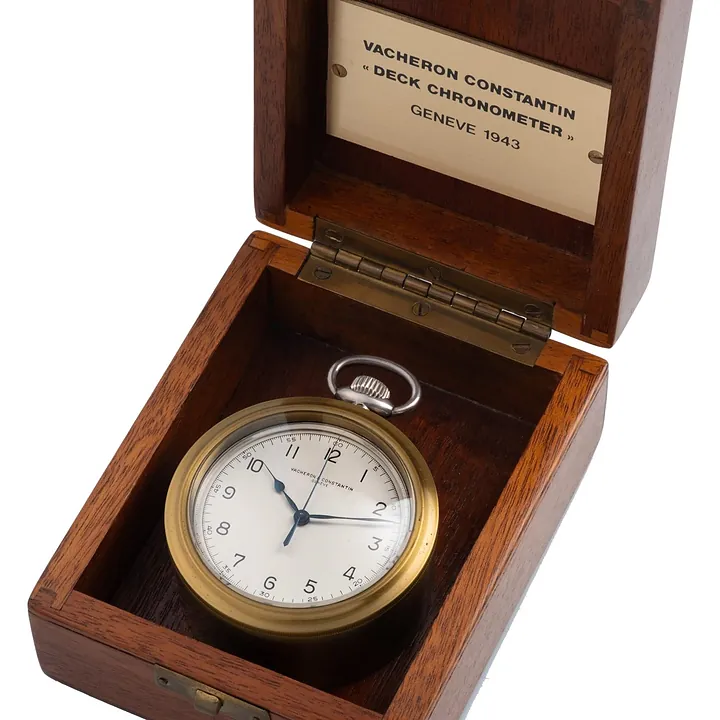
Vacheron Constantin pocket chronometer, c. 1945
Antiquorum auction archive, Geneva
Pocket Watches · c. 1945
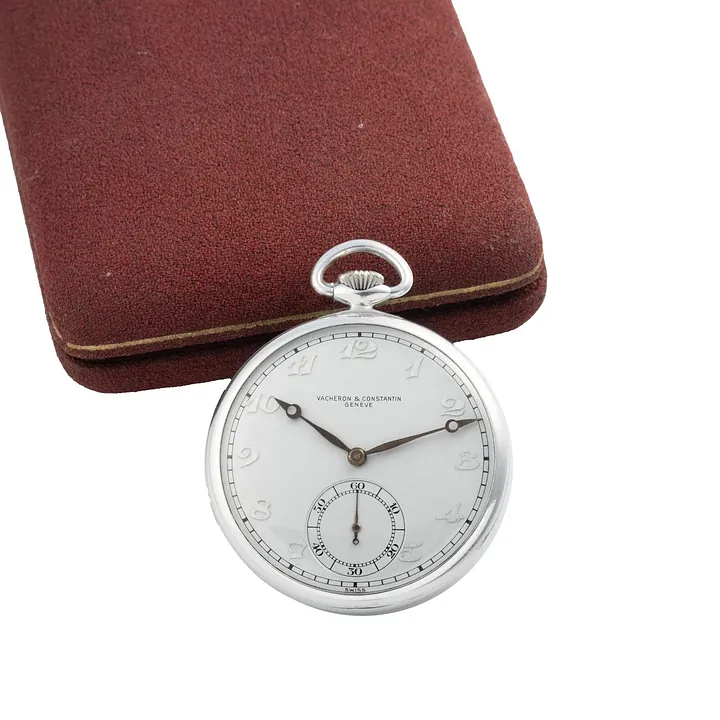
Vacheron Constantin watch, c. 1945
Antiquorum auction archive, Geneva
Pocket Watches · Sold to Longines France in January 1946
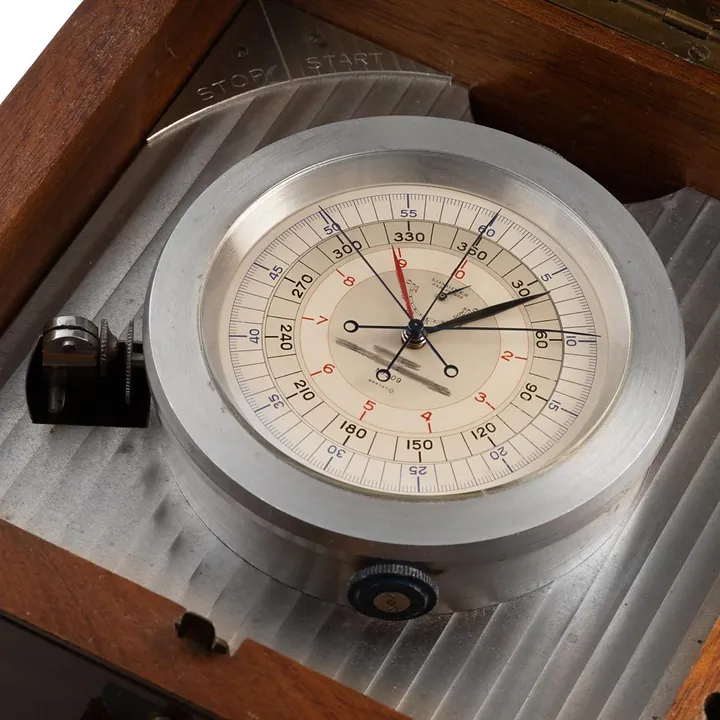
Longines Siderograph, ref. 5397, Sold to Longines France in January 1946
Antiquorum auction archive, Geneva
Pocket Watches · c. 1950
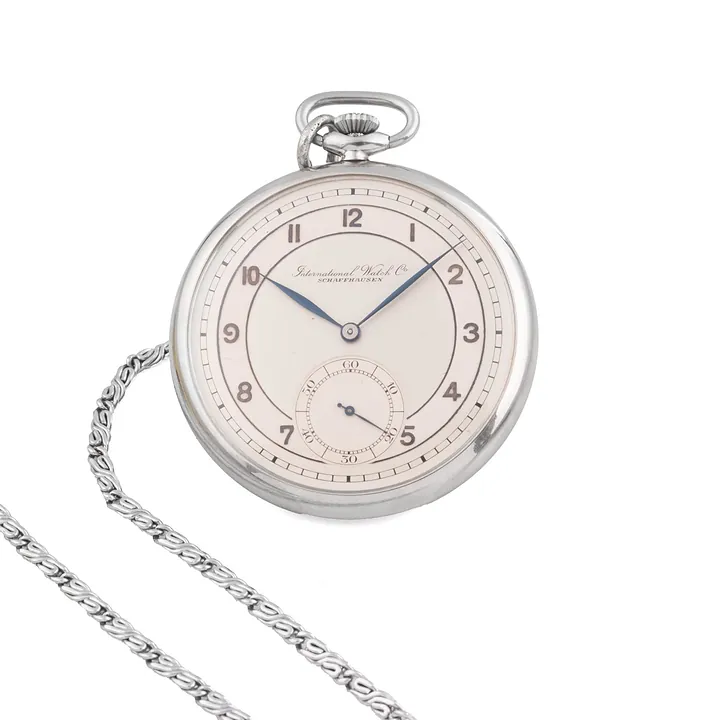
IWC Pocket Watch, c. 1950
Antiquorum auction archive, Geneva