
Wristwatches · Wristwatch
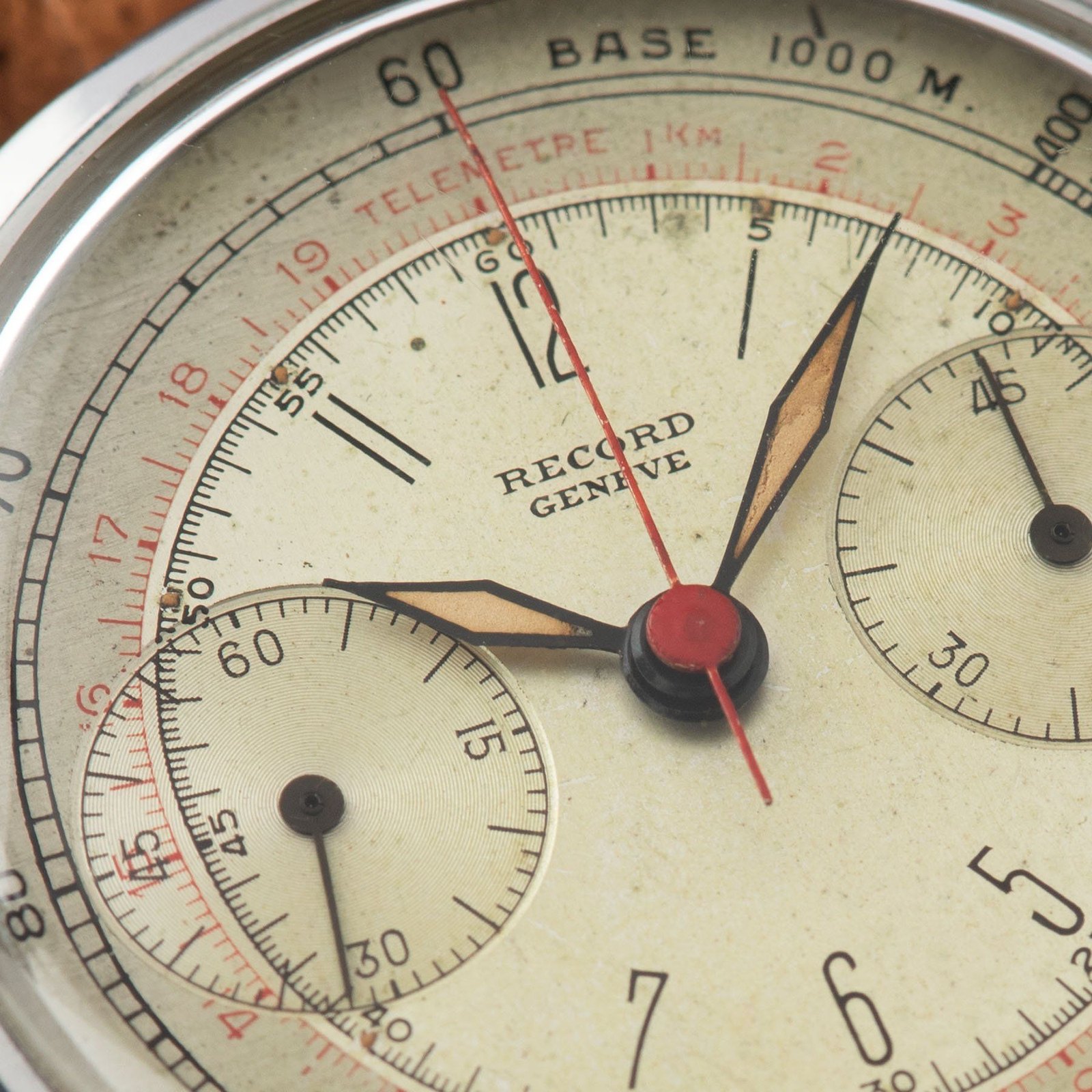
Record Geneve Chrono Waterproof Case 1940s
- Maker / attribution
- Record Genève (maker)
- Date
- 1940s
- Historical period
- Golden Age of Mechanical Watchmaking (1900 – 1945)
- Country of origin
- Switzerland
- Object type
- Wristwatch
- Dimensions
- Case 36 mm
- Stock no.
- W-1325
- Credit line
- Dealer listing, Bulang & Sons (W-1325)
- Catalogue title (original)
- Record Geneve Chrono Waterproof Case 1940s (English)
View the source record (dealer listing) ↗ (opens another website in a new tab)Suggest a correction
Record summary
Catalogued by Bulang & Sons (dealer), Copenhagen (stock number W-1325), this is a wristwatch by Record Genève, made in Switzerland, dated 1940s. The Atlas places it in the Golden Age of Mechanical Watchmaking period (1900 – 1945) of its Wristwatches collection. Recorded dimensions: Case 36 mm. The record is illustrated with 6 photographs.
Assembled from the source record's structured fields. Dates and attributions are given as the source states them; where a field is missing the Atlas leaves it blank rather than estimating.
Catalogue description
Dealer description — Bulang & Sons
A vintage skiing prize… Steel vintage chronos from the 1940s are still hugely sought after by collectors and this Record is a real beauty. The watch is housed in a waterproof 36mm case with cylindrical pushers and large size winding crown, which remains in lovely condition. This dual-function chronograph has an inner time-telling section with painted Art-Deco esque numerals. The outer track is a 1000-base tachymeter scale and there is also an additional red print inner telemeter scale too. The telemeter scale was used to accurately assess the distance away of an event by timing the journey of its sound, which was very useful in military applications. The tachymeter scale allowed the wearer to measure the elapsed time it took to cover the distance of a mile (or km) and see at a glace what the average speed of that run was. The dial has no lume but the hour and minute hand do have a richly coloured lume. The central chrono hand is striking red. The case back features an engraving that reads, “Ski - Meisterschaften Davos 1944 1. Preis T.S.”, which roughly translates to the watch commemorating “T.S.” achieving first place in the Davos Skiing Championships in 1944. The watch has been checked and regulated by our watchmaker. Specifications: - Record Geneve Chronograph - 36mm waterproof steel case - Dates to 1940s - Two-tone dial - Dual Scale – Telemeter and Tachymeter - Venus 175 movement - Fully checked by our watchmaker - Includes a handmade leather watch pouch
Historical context
Golden Age of Mechanical Watchmaking (1900 – 1945)
The wristwatch displaces the pocket watch; waterproof cases, self-winding and grand complications.
The wristwatch overtook the pocket watch. Military use in the First World War, aviation, water-resistant cases (1926), automatic winding (1923–31), rectangular Art Deco designs and early chronographs and calendars defined the period.
Read the period in the timelineMore wristwatches from this periodEarlier: Industrial Revolution
Atlas type guide
Dive and water-resistant watches
Keeping water and dust out of a wristwatch was a long-standing challenge. Rolex's screw-down Oyster case (1926) and Omega's Marine (1932) were landmarks; in the early 1950s Blancpain's Fifty Fathoms and Rolex's Submariner defined the professional dive watch with rotating bezels for timing dives, luminous dials and high water resistance. The ISO 6425 standard (1982) later codified what a 'diver's watch' must do.
Dive watches became icons of post-war design and exploration, and their evolution — helium escape valves, ceramic bezels, saturation-diving depth ratings — records the history of underwater work.
What to look for
- Unidirectional or bidirectional rotating bezel with minute markings.
- Screw-down crown and case back; depth rating printed on the dial.
- Luminous hands and markers (radium before c. 1960, tritium c. 1960–1998, then Super-LumiNova).
- Reference numbers on the case between the lugs or inside the back.
Dating clues
- Screw-down Oyster cases: from 1926.
- Professional dive watches: from 1953.
- Tritium 'T' marks on dials: c. 1960–1998.
General guidance written by the Atlas editors about this kind of object. It is not a statement about this particular piece; for that, rely on the source record above and on physical examination.
Related records
Wristwatches · 1950s
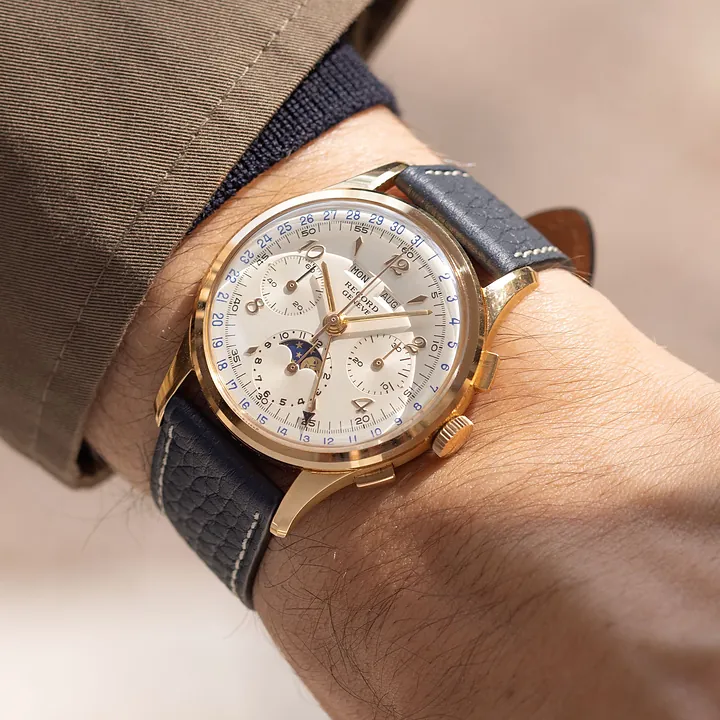
Record Geneve Triple Date Moonphase Chronograph Valjoux 88 in 18 k yellow gold, 1950s
Bulang & Sons (dealer), Copenhagen

Wristwatches · 1931
Rolex 'Oyster Perpetual' rotor self-winding wrist-watch, lever escapement, in steel case with glass in back, Montres Rolex SA, Geneva, Switzerland, 1931
Science Museum Group, London

Wristwatches · 1900–1999
Wristwatch by Certina, Switzerland, 1900–1999
Nordic Museum Foundation
Wristwatches · 1900–1999
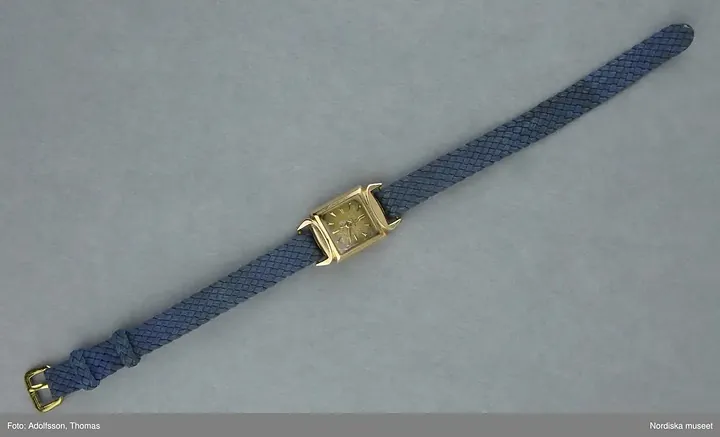
Wristwatch by Omega, Västerås, 1900–1999
Nordic Museum Foundation
Wristwatches · 1900–1999
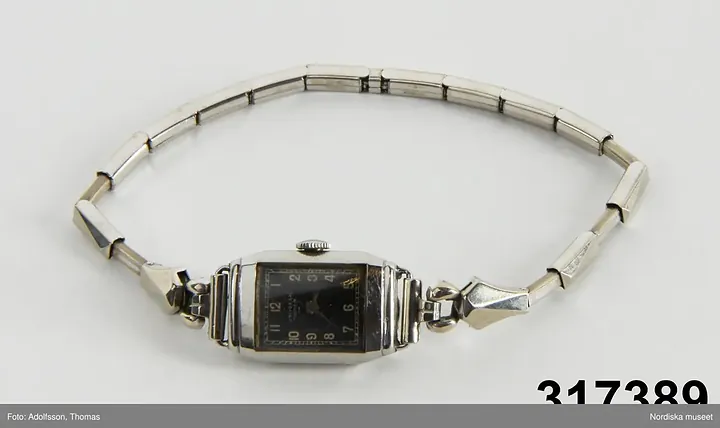
Wristwatch by Universal, Switzerland, 1900–1999
Nordic Museum Foundation
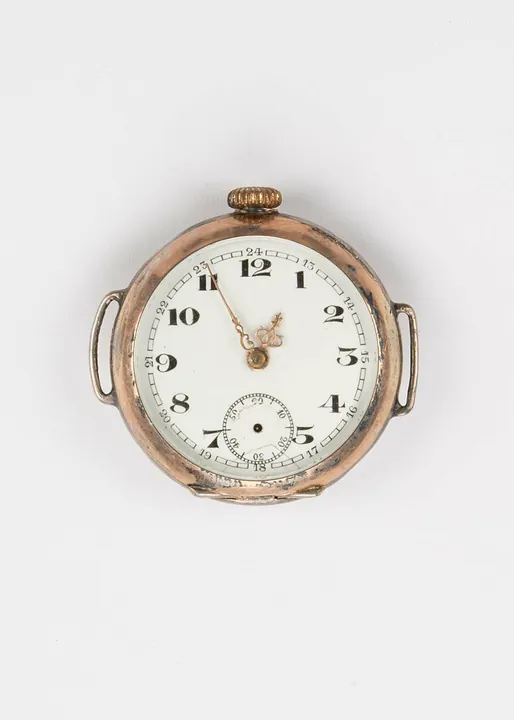
Wristwatches · c. 1900
Wristwatch, probably Switzerland, c. 1900 (no. 57124)
German Clock Museum
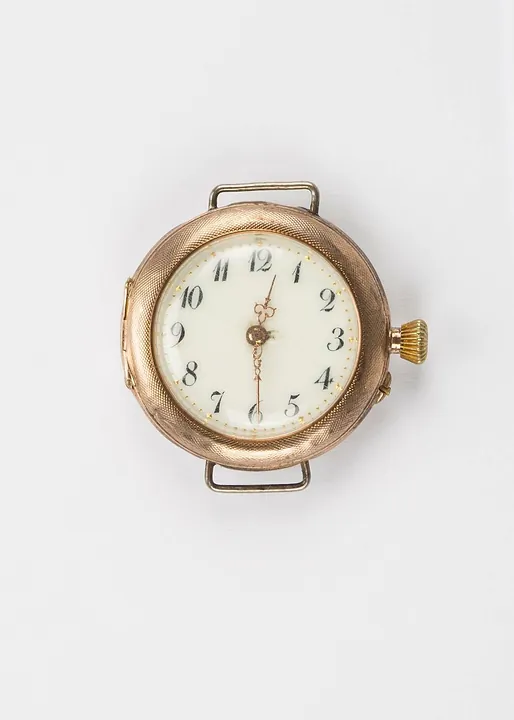
Wristwatches · c. 1900
Wristwatch, probably Switzerland, c. 1900 (no. 57216)
German Clock Museum
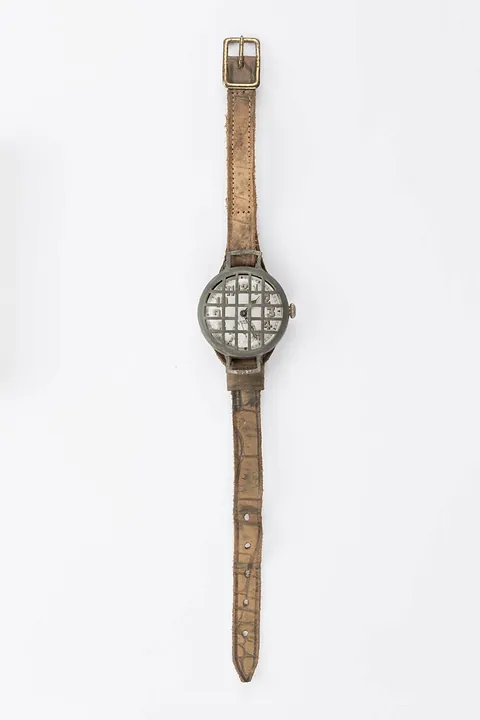
Wristwatches · c. 1915
Wristwatch by S.S.und Co., Stauffer, Son und Co., Switzerland, c. 1915
German Clock Museum