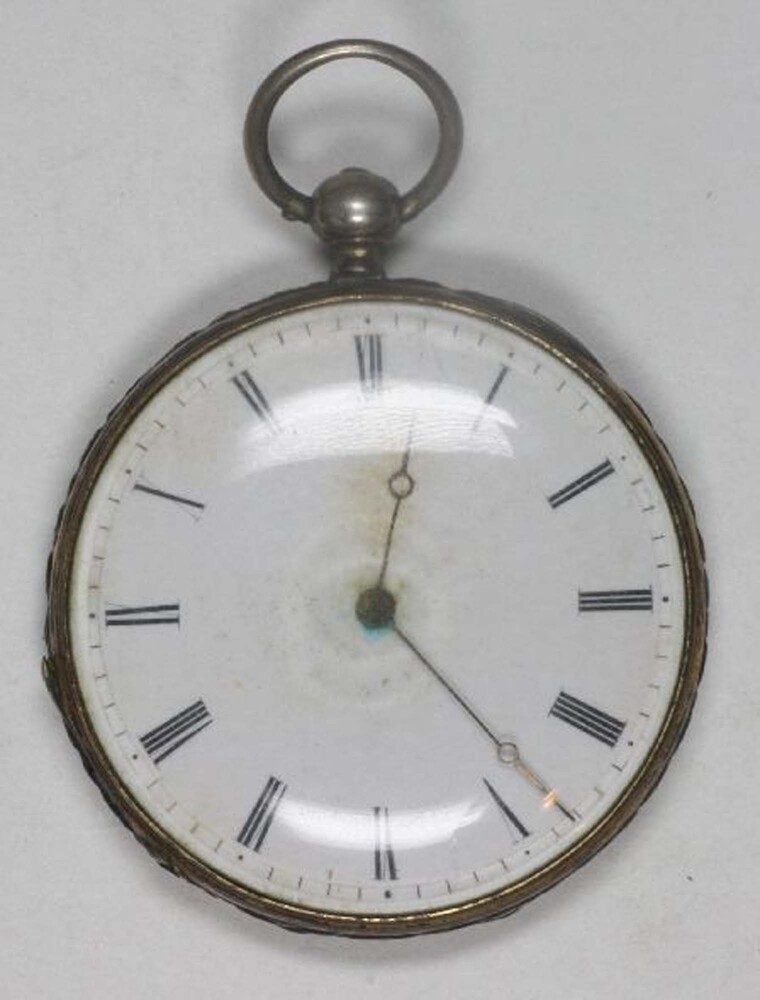
Pocket Watches · Pocket watch
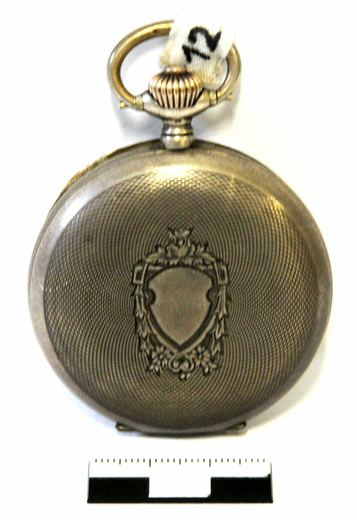
Pocket watch by Patek, Switzerland, 1840
- Maker / attribution
- Patek (creator)
- Date
- 1840
- Historical period
- Precision & Scientific Horology (1750 – 1850)
- Country of origin
- Switzerland
- Object type
- Pocket watch
- Holding institution
- City Museum Zutphen
- Accession / object no.
- resource_document_collectiegelderland_NEKUKZFDVH7KIIVDD2ZMY66XL55S5VZ7GMD5M35M3EW7WEXT4WCQ
- Catalogue title (original)
- Heren zakhorloge (Dutch)
Record summary
Held and catalogued by City Museum Zutphen (object number resource_document_collectiegelderland_NEKUKZFDVH7KIIVDD2ZMY66XL55S5VZ7GMD5M35M3EW7WEXT4WCQ), this is a pocket watch by Patek, made in Switzerland, dated 1840. The Atlas places it in the Precision & Scientific Horology period (1750 – 1850) of its Pocket Watches collection. The record is illustrated with 1 photograph.
Assembled from the source record's structured fields. Dates and attributions are given as the source states them; where a field is missing the Atlas leaves it blank rather than estimating.
Catalogue description
Catalogue description from City Museum Zutphen (Dutch)
Zwitsers heren zakhorloge vervaardigd door Patek Genève, circa 1840; ECHAPPEMENT CYLINDRE Quatre Trous Rubia(s?) DOUBLE D'OR. De zilveren kast (ooit verguld geweest) heeft een voorstelling op de achterdeksel van een springend paard met ruiter, omringd door gestileerde blad- en C-motieven. Het horloge heeft een wit emaille wijzerplaat met zwart Romeinse cijfers. De wijzers zijn van gestanst en geblauwd staal in het model Breguet. Het uurwerk is van messing en heeft verzilverde platines en kloven. Het échappement bestaat uit cilindergang met regulering achterop de balanskloof d.m.v. een kompasnaald en heeft een tikgetal van 18.000 tikken per uur. De aandrijving geschiedt d.m.v. een veer met hangende veerton en veerbegrenzing en loopt ruim één dag. De veer wordt opgewonden met een sleuteltje aan de achterzijde en ook gelijk gezet met een sleuteltje aan de achterzijde.
Shown in the original language of the source catalogue. An editor-reviewed English translation has not yet been published; we do not publish machine translations as authoritative text.
Historical context
Precision & Scientific Horology (1750 – 1850)
Harrison solves longitude; Mudge invents the lever; Breguet's Paris workshop defines the modern watch.
From 1750 to 1850 the watch became a precision instrument. Mudge's lever escapement, the cylinder escapement, Lépine's thin bar calibre, Breguet's innovations (overcoil, tourbillon, perpétuelle) and the pocket chronometer of Arnold and Earnshaw all date from this period, while verge watches remained common in cheaper production.
Read the period in the timelineMore pocket watches from this periodEarlier: Early Modern Horology
Atlas type guide
Pocket watches
The pocket watch was the dominant personal timekeeper from the late seventeenth century until the First World War. Its development tracks the history of the escapement: verge watches with fusees until the late eighteenth century; Thomas Mudge's lever escapement (c. 1755) and the cylinder escapement popularised by George Graham and later by Swiss makers; and the Swiss and English lever watches of the nineteenth century. Lépine's bar-bridge calibre and keyless winding made watches thinner and easier to use.
Industrialisation transformed the trade: American factories such as Waltham (from 1850) and Elgin produced interchangeable parts by machine, and Swiss makers responded with their own mechanisation after the 1876 Philadelphia Exhibition. By 1900 a reliable watch was affordable to millions; the finest makers continued to produce complications and precision watches.
What to look for
- The escapement: verge (crown wheel), cylinder, duplex, English or Swiss lever.
- Key winding (a square arbor in dial or back) or keyless crown winding.
- Signatures and serial numbers on the movement, dial and inside case back.
- Hallmarks, case maker's marks and gold or silver standards stamped in the case.
- Dial material: enamel, silver, gold, later printed metal.
Dating clues
- Verge watches dominate before c. 1800; cylinder watches c. 1770–1900; lever watches after c. 1820.
- Keyless winding: increasingly common after c. 1860.
- Manufacturer serial number lists exist for Waltham, Elgin, Longines, Omega, Patek Philippe and others.
General guidance written by the Atlas editors about this kind of object. It is not a statement about this particular piece; for that, rely on the source record above and on physical examination.
Read next:Verge escapementDetached lever escapementFuseeIdentification Centre
Related records
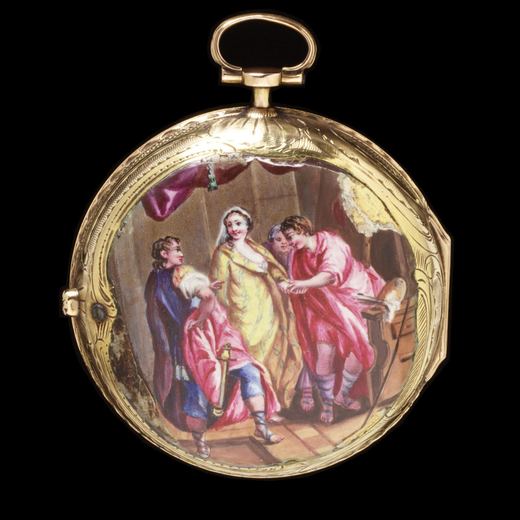
Pocket Watches · 1750-60
Watch by Noël Balthazard, Switzerland, 1750-60
Victoria and Albert Museum, London
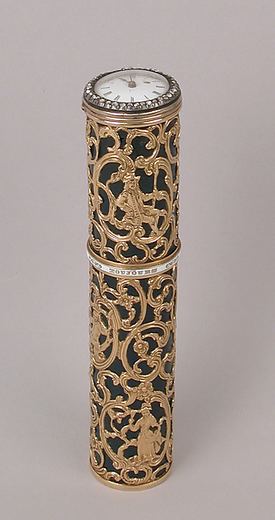
Pocket Watches · second half 18th century
Watch by Probably by an imitator of Abraham-Louis Bréguet, Switzerland, second half 18th century
The Metropolitan Museum of Art, New York
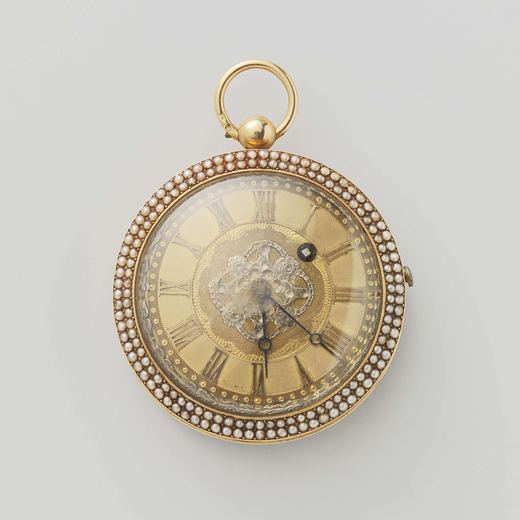
Pocket Watches · 1754
Pocket watch by anoniem, Switzerland, 1754
Rijksmuseum
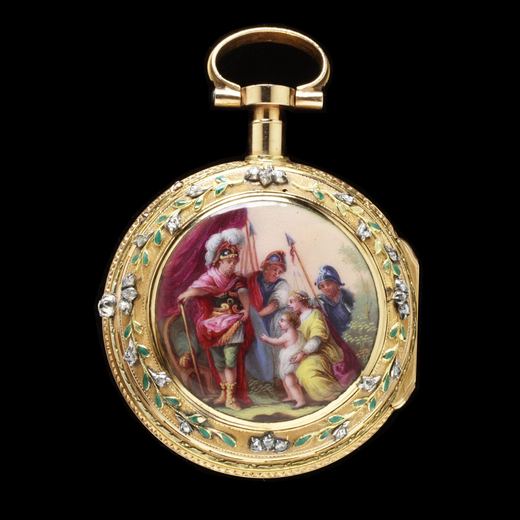
Pocket Watches · 1765-70
Watch and case by Jean Fazy, Switzerland, 1765-70
Victoria and Albert Museum, London
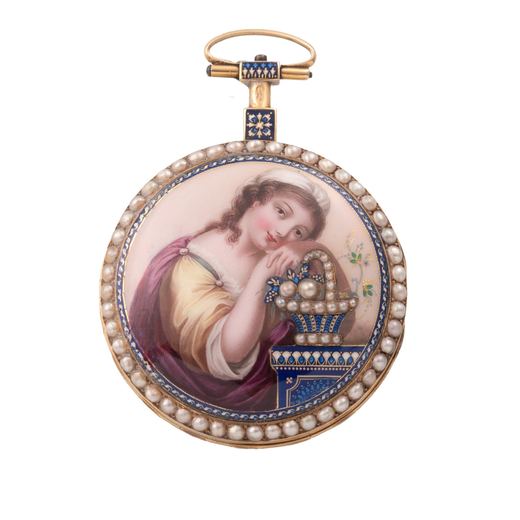
Pocket Watches · circa 1780
Moricand Beautiful Lady, circa 1780
Antiquorum auction archive, Geneva
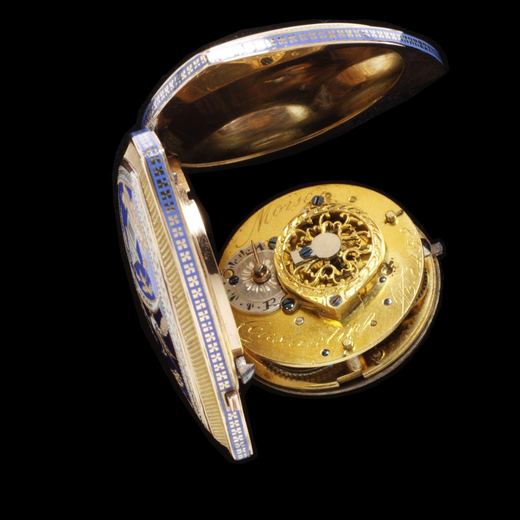
Pocket Watches · ca.1790
Enamelled gold watch signed 'Moise Constantin', Geneva, ca.1790
Victoria and Albert Museum, London
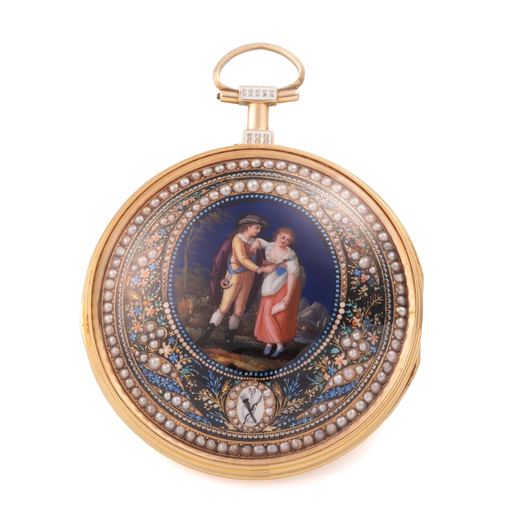
Pocket Watches · circa 1790
Breguet Love Letter, circa 1790
Antiquorum auction archive, Geneva
Pocket Watches · 1800–1899
Pocket watch, Switzerland, 1800–1899
Montanhistorisches Dokumentationszentrum