
Pocket Watches · Pocket watch
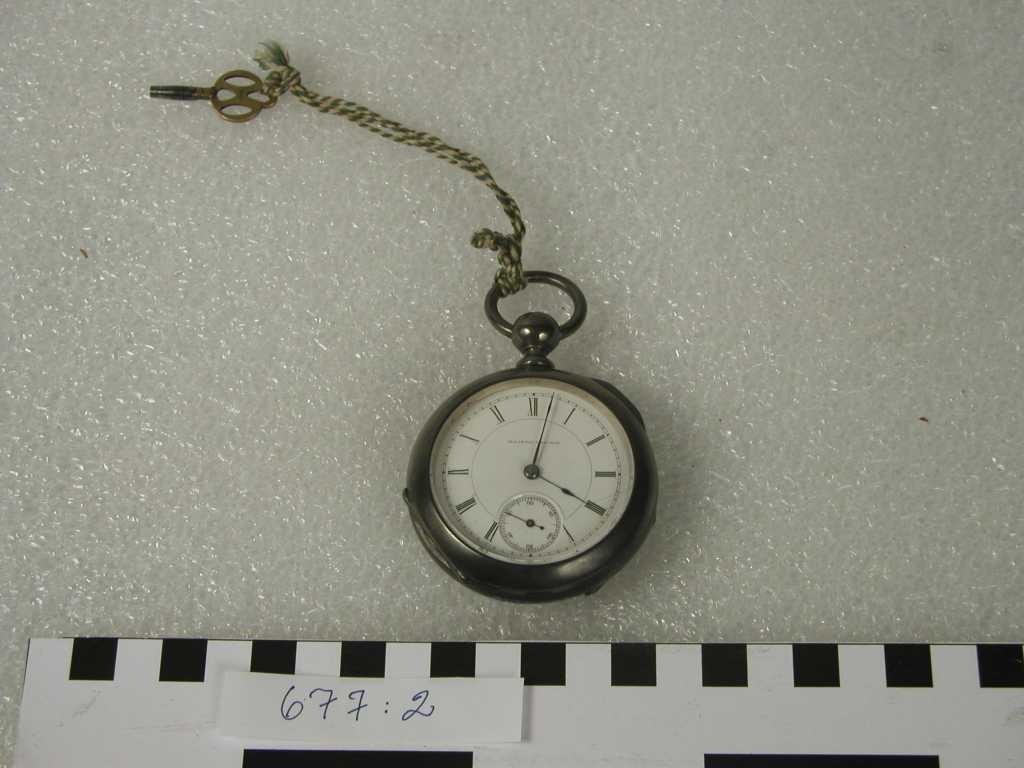
Pocket watch by Illinois Watch Co, United States, late 1800s
- Maker / attribution
- Illinois Watch Co (maker)
- Date
- late 1800s
- Historical period
- Industrial Revolution (1850 – 1900)
- Country of origin
- United States
- Place
- United States
- Object type
- Pocket watch
- Materials / technique
- metal, silver, glass, avain, brass
- Dimensions
- diameter: 5.8 cm; thickness: 2.2 cm; diameter, lasi: 4.7 cm; length, avain: 3.3 cm; height, nuppi: 1.5 cm; height, max.: 8.9 cm
- Holding institution
- Suomen kansallismuseo
- Accession / object no.
- SMM677:2
- Credit line
- Suomen kansallismuseo (via Finna)
- Catalogue title (original)
- taskukello, Illinois Watch (Finnish)
View the source record ↗ (opens another website in a new tab)Suggest a correction
Record summary
Held and catalogued by Suomen kansallismuseo (object number SMM677:2), this is a pocket watch by Illinois Watch Co, made in United States, dated late 1800s. The Atlas places it in the Industrial Revolution period (1850 – 1900) of its Pocket Watches collection. Materials and techniques recorded by the source: metal, silver, glass, avain, brass. Recorded dimensions: diameter: 5.8 cm; thickness: 2.2 cm; diameter, lasi: 4.7 cm; length, avain: 3.3 cm; height, nuppi: 1.5 cm; height, max.: 8.9 cm. The record is illustrated with 2 photographs.
Assembled from the source record's structured fields. Dates and attributions are given as the source states them; where a field is missing the Atlas leaves it blank rather than estimating.
Catalogue description
Description — Suomen kansallismuseo
fyysinen kuvaus: Hopeinen taskukello. Valkoisessa, emaloidussa kellotaulussa mustat ohuet roomalaiset numerot ja keskellä teksti: Illinois Watch Cd. Alareunassa erillinen pieni kehä sekuntiviisarille. Numerot ja kirjaimet on käsin maalattu. Kellotaulun päällä on saranoilla avautuva lasillinen kuori, jonka sisäreunassa syväleima: M 2 5 4. Kellon selkäpuolelle on kaiverrettu lehtiornamentteja ja 10-kulmainen kilpeä muistuttava kenttä, jossa kaksi riviä kaunokirjoitustekstiä: A. D. ja Hard sekä pieniä koukeroita. Selkäpuolen sisällä, saranan lähellä on neljä leimaa: FAHYS (6-kulmainen), COIN (kaareva) ja No1 (suorakaideleima), sekä M 254 lyötyinä. Näiden lisäksi vasemmassa alareunassa kaiverrus/raaputus: 2563, TL-43 ja 4.91.04 ja yläreunassa: 2499? ja +. Kellon koneistoa suojaavassa kuoressa sisäpinnalla kaksirivinen syväleima: 4 A ja 8872, sekä näistä alaviistoon vasemmalle kaiverrus/raaputus: 3159 ja kaunokirjain I? tai L?; vasemmassa reunassa myös numerosarjat: 3630M ja 3541 allekkain. Nämä raapustuksia muistuttavat kaiverrukset näkyvät vain mikroskoopilla. Kullattuun kellokoneistoon on kaiverrettu tekstit isoilla kirjaimilla: ILLINOIS WATCH CO, SPRINGFIELD ILL. ulkokehälle ja keskelle kahteen riviin: PATENT PINION sekä numerosarja: 664380 myös ulkokehälle. Kullatussa pinnassa on myös abraktia ornamenttikoristelua eri tavoin tehtynä. Koneiston hopeisessa kotelossa reunassa svyäleima: M 254 lähellä saranaa ja toisella puolella saranaa kirjain H. Kellon yläreunassa on pyöreä nuppi, jossa rengas (kellonperiä varten). Renkaaseen on solmittu kelta/vihreä puuvillanaru, jossa on kiinni pieni messinkinen avain, jolla kellon voi vetää. Avaimen kädensija on pyöreähkö ja siihen on lävistetty neljä soikeaa aukkoa ja toinen pää on sorvattu puikko. Avaimen keskelle on lyöty kirjainyhdistelmä KJ (?) nuolella ja toiselle puolelle numero 3.
Shown in the original language of the source catalogue. An editor-reviewed English translation has not yet been published; we do not publish machine translations as authoritative text.
Inscriptions & marks
tuotemerkintä: Valmistajan nimi, isoilla kirjaimilla: ILLINOIS WATCH CO, SPRINGFIELD ILL, kullattu kellokoneisto
Historical context
Industrial Revolution (1850 – 1900)
American interchangeable-parts manufacture; railroad time standards; Swiss and German factory systems.
Machine production with interchangeable parts, pioneered by Waltham (1850s) and adopted by Elgin, Longines, Omega and others, made reliable lever watches widely affordable. Keyless winding became standard, railroad watch standards were introduced (1890s), and Swiss and American industries competed globally.
Read the period in the timelineMore pocket watches from this periodEarlier: Precision & Scientific Horology
Atlas type guide
Pocket watches
The pocket watch was the dominant personal timekeeper from the late seventeenth century until the First World War. Its development tracks the history of the escapement: verge watches with fusees until the late eighteenth century; Thomas Mudge's lever escapement (c. 1755) and the cylinder escapement popularised by George Graham and later by Swiss makers; and the Swiss and English lever watches of the nineteenth century. Lépine's bar-bridge calibre and keyless winding made watches thinner and easier to use.
Industrialisation transformed the trade: American factories such as Waltham (from 1850) and Elgin produced interchangeable parts by machine, and Swiss makers responded with their own mechanisation after the 1876 Philadelphia Exhibition. By 1900 a reliable watch was affordable to millions; the finest makers continued to produce complications and precision watches.
What to look for
- The escapement: verge (crown wheel), cylinder, duplex, English or Swiss lever.
- Key winding (a square arbor in dial or back) or keyless crown winding.
- Signatures and serial numbers on the movement, dial and inside case back.
- Hallmarks, case maker's marks and gold or silver standards stamped in the case.
- Dial material: enamel, silver, gold, later printed metal.
Dating clues
- Verge watches dominate before c. 1800; cylinder watches c. 1770–1900; lever watches after c. 1820.
- Keyless winding: increasingly common after c. 1860.
- Manufacturer serial number lists exist for Waltham, Elgin, Longines, Omega, Patek Philippe and others.
General guidance written by the Atlas editors about this kind of object. It is not a statement about this particular piece; for that, rely on the source record above and on physical examination.
Read next:Verge escapementDetached lever escapementFuseeIdentification Centre
Related records
Movements & Components · 1880
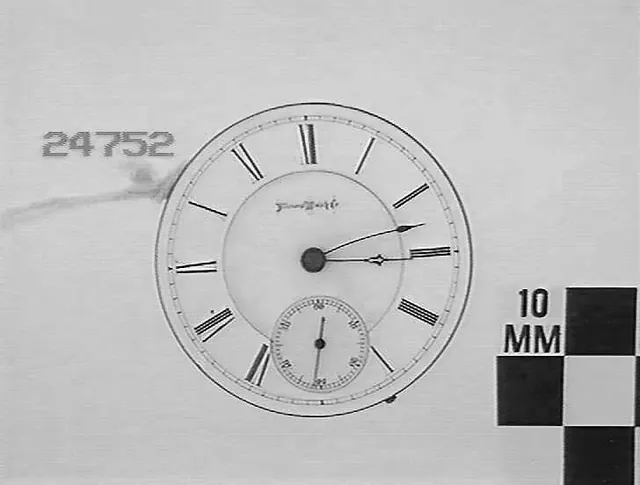
Pocket Watch Movement - Illinois Watch Co, 1880
Museums Victoria, Melbourne
Pocket Watches · 1850
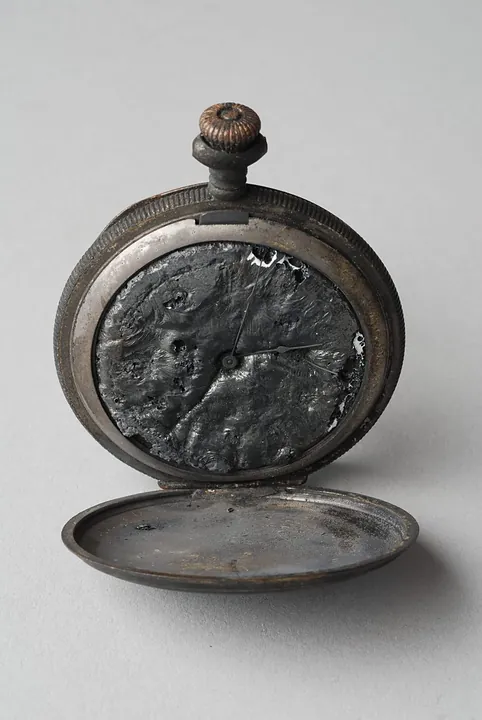
Pocket watch by Standard Watch, United States, 1850
Museum Rotterdam
Pocket Watches · 1877
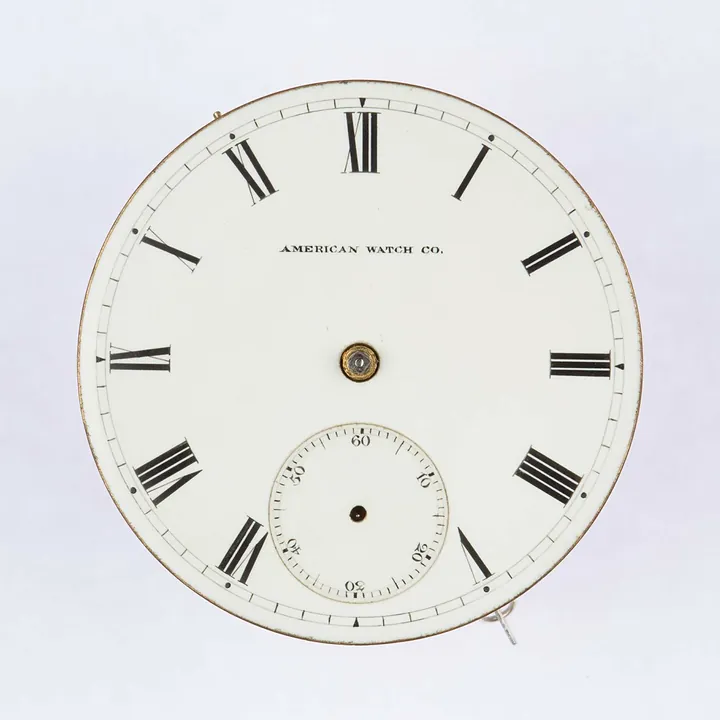
Pocket watch by Waltham A. W. W. Co., United States, 1877
German Clock Museum
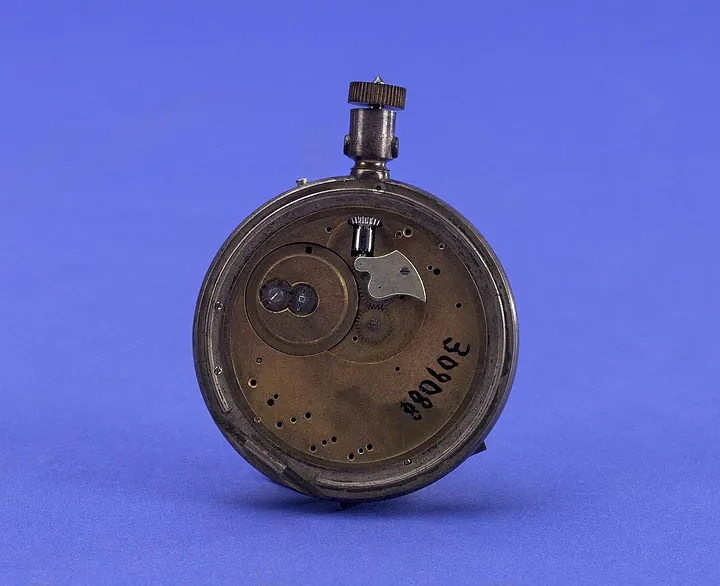
Pocket Watches · 1879
Watch by P. H. Gontard, United States, 1879
National Museum of American History, Smithsonian Institution, Washington DC
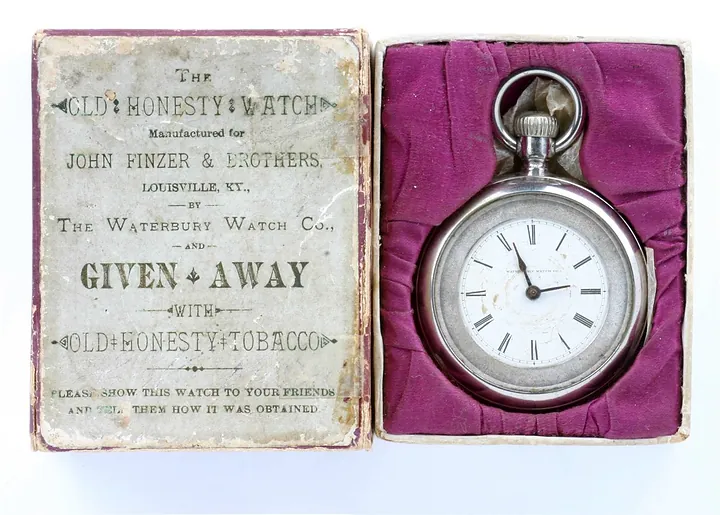
Pocket Watches · c. 1882
Pocket watch, United States, c. 1882
German Clock Museum
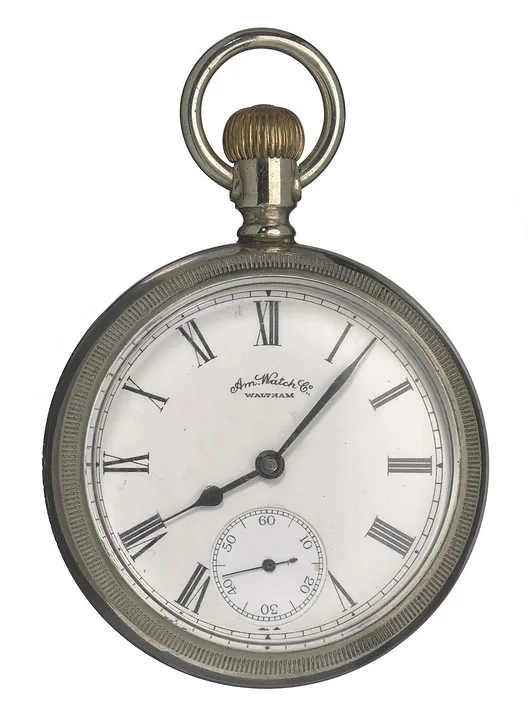
Pocket Watches · 1888-1889; inscribed 1908 or 1909
Pocket watch by the American Watch Company, Waltham, carried by Matthew A. Henson on Peary's 1908–09 North Pole expedition
National Museum of African American History and Culture, Smithsonian Institution, Washington DC
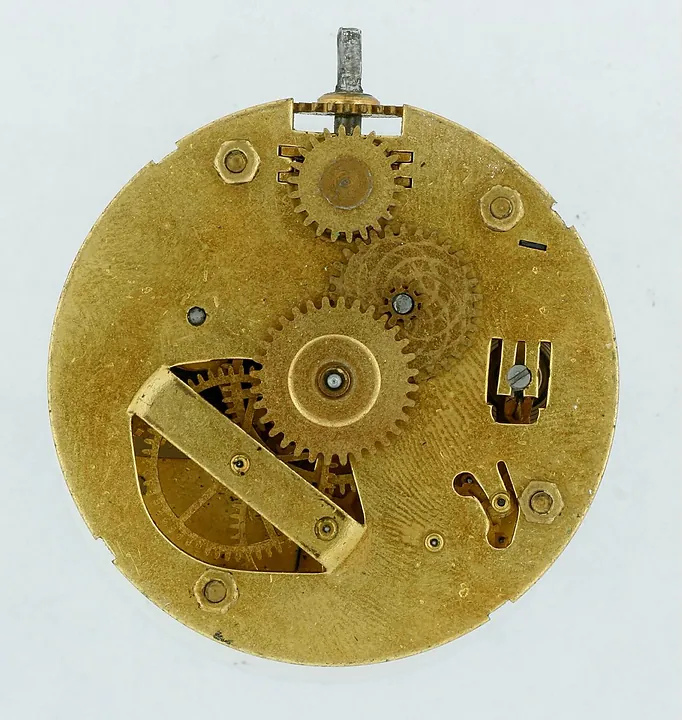
Pocket Watches · c. 1890
Pocket watch by Ansonia Clock Company, United States, c. 1890
German Clock Museum
Pocket Watches · c. 1890
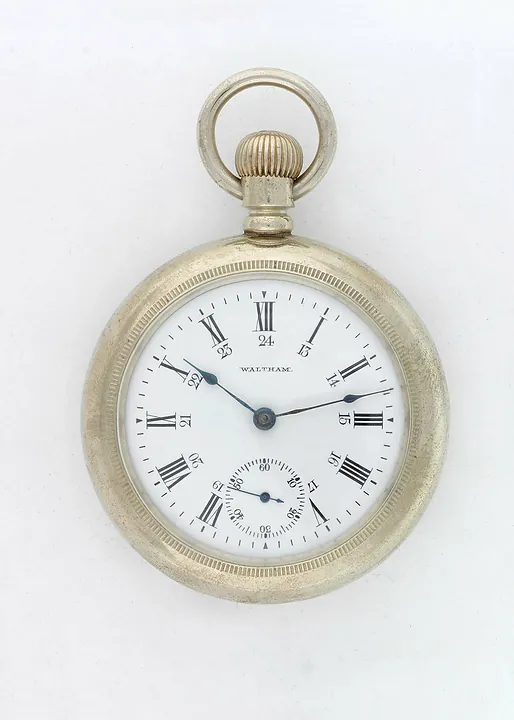
Pocket watch by Waltham A. W. W. Co., United States, c. 1890
German Clock Museum