
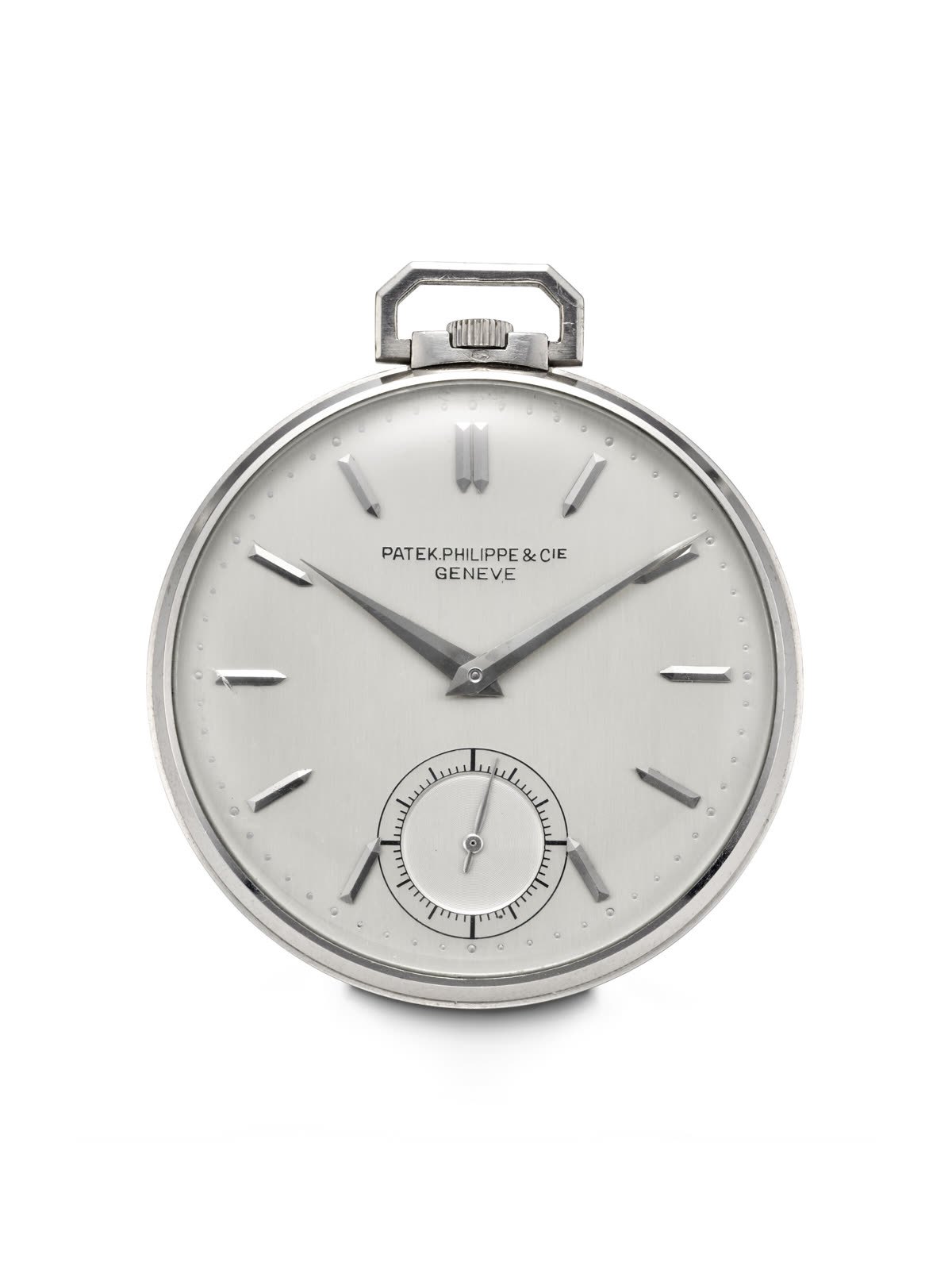
Pocket Watches · Open-face pocket watch
Patek Philippe Ref. 600 Open Face Pocket Watch in Platinum
- Maker / attribution
- Patek Philippe (source attribution)
- Date
- 1952
- Historical period
- Modern Mechanical Horology (1945 – 1969)
- Country of origin
- Switzerland
- Object type
- Open-face pocket watch
- Materials / technique
- Platinum
- Dimensions
- 43 mm
- Auction house
- Christie's
- Lot
- 256
- Credit line
- Christie's
- Catalogue title (original)
- PATEK PHILIPPE, ATTRACTIVE AND ELEGANT PLATINUM OPEN FACE WATCH, REF. 600, | Christie’s (English)
View the source record (auction lot) ↗ (opens another website in a new tab)Suggest a correction
Record summary
Catalogued by Christie's (lot 256), this is an open-face pocket watch attributed to Patek Philippe, made in Switzerland, dated 1952. The Atlas places it in the Modern Mechanical Horology period (1945 – 1969) of its Pocket Watches collection. Materials and techniques recorded by the source: Platinum. Recorded dimensions: 43 mm. The record is illustrated with 1 photograph.
Assembled from the source record's structured fields. Dates and attributions are given as the source states them; where a field is missing the Atlas leaves it blank rather than estimating.
Catalogue description
Original object description
Housed in a 43 mm platinum open-face case, this reference 600 pocket watch by Patek Philippe contains a manually wound movement bearing serial number 891'887 within case number 420'388. A cited archival extract registers its manufacture in 1952 and sale on March 20, 1953; original presentation materials and papers are absent. The silvered dial is signed 'PATEK.PHILIPPE & CIE GENEVE' beneath 12 o'clock and features applied faceted batons with a double marker at 12, dauphine hands, a beaded outer minute track, and a recessed subsidiary seconds subdial with black calibrations above 6 o'clock. An angular bow frames the fluted top winding crown. Outer case hallmarks are visible in the published image, though inner markings, stampings, movement finishing, caliber designations, and internal condition remain unrecorded due to the lack of interior views. Condition assessments report that the movement functioned at cataloguing without accuracy testing, while observing light wear and general scratches on the case, crystal scratches, subtle index aging, minor dial scratches and particles, and surface scratching with debris on the hands.
Inscriptions & marks
891'887
Historical context
Modern Mechanical Horology (1945 – 1969)
Tool watches for divers, pilots and astronauts; electric watches anticipate the electronic age.
After 1945 the pocket watch became a niche product — presentation and railway watches, inexpensive pin-lever watches, and commemorative pieces — while most innovation moved to the wrist.
Read the period in the timelineMore pocket watches from this periodEarlier: Golden Age of Mechanical Watchmaking
Atlas type guide
Hunter, half-hunter and open-face watches
In the nineteenth century the pocket watch case settled into a few standard forms. The hunter (French savonnette) has a hinged front lid protecting the crystal — reputedly for riders who could not risk broken glass — and is opened by pressing the crown or a push-piece. The half-hunter has a small window in the lid so the hands can be read when closed. The open-face (lépine) watch has no front cover, with the crown at 12; hunters normally carry the crown at 3.
Case types also changed with winding: key-wound watches gave way to keyless (stem-wound) mechanisms after Adrien Philippe's and others' designs of the 1840s, with pendant setting or lever setting.
What to look for
- Crown position relative to the seconds dial: at 3 for hunters, at 12 for open-face watches.
- Spring-loaded front cover with a push-piece in the pendant.
- Half-hunter chapter ring enamelled on the lid.
- Key holes in the inner dome (cuvette) versus keyless winding.
Dating clues
- Keyless winding spread after c. 1850 and became standard by c. 1890.
- English hallmarks inside gold and silver cases give the year of assay.
General guidance written by the Atlas editors about this kind of object. It is not a statement about this particular piece; for that, rely on the source record above and on physical examination.
Read next:Detached lever escapement
Related records

Clocks · 1965–1975
Quartz master clock QM 1, with movement by Patek Phillippe, Switzerland, 1965–1975. Supplied by English Clock Systems.
Science Museum Group, London

Instruments · 1965–1984
Chronometer by Patek Philippe and Kelvin Hughes, England, 1965–1984
Science Museum Group, London

Pocket Watches · c. 1895
Patek Philippe pocket watch, c. 1895
Antiquorum auction archive, Geneva

Pocket Watches · c. 1900
Patek Philippe Chronometro Gondolo, c. 1900
Antiquorum auction archive, Geneva
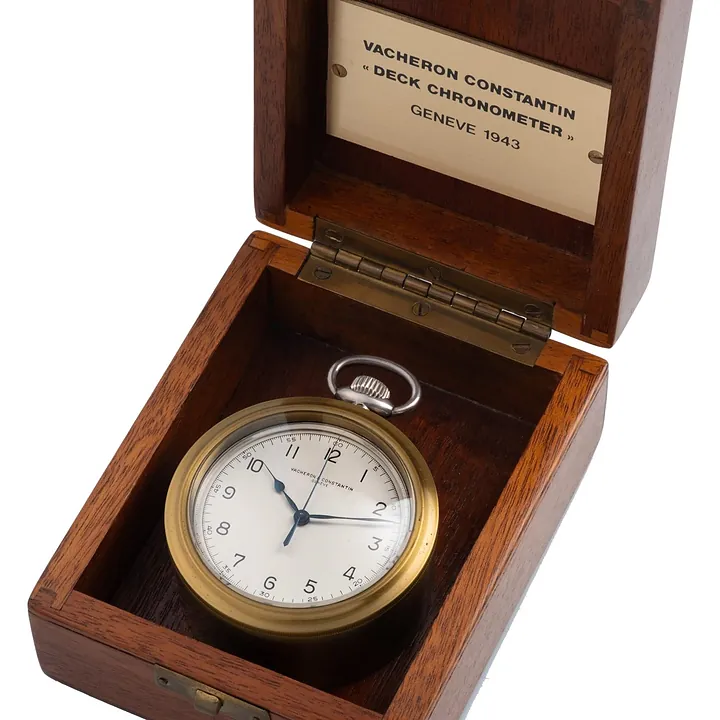
Pocket Watches · c. 1945
Vacheron Constantin pocket chronometer, c. 1945
Antiquorum auction archive, Geneva
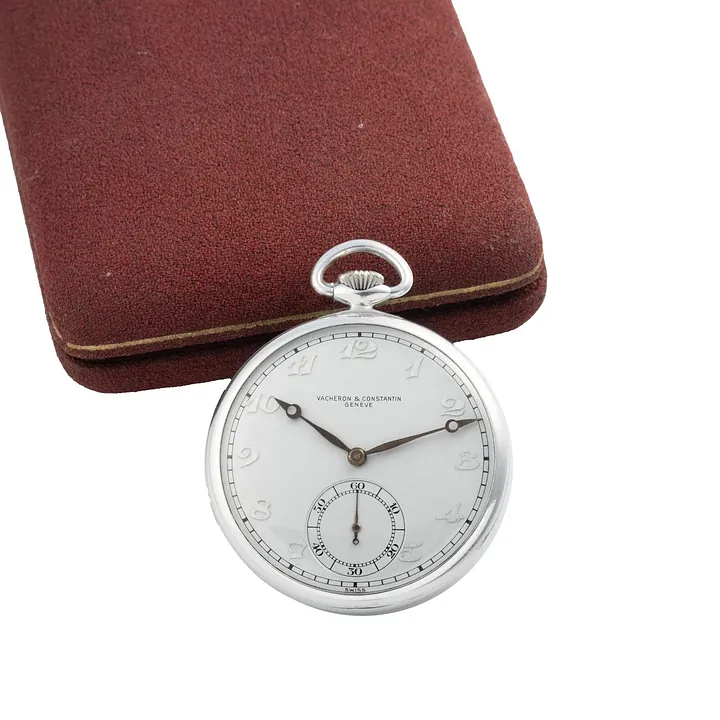
Pocket Watches · c. 1945
Vacheron Constantin watch, c. 1945
Antiquorum auction archive, Geneva
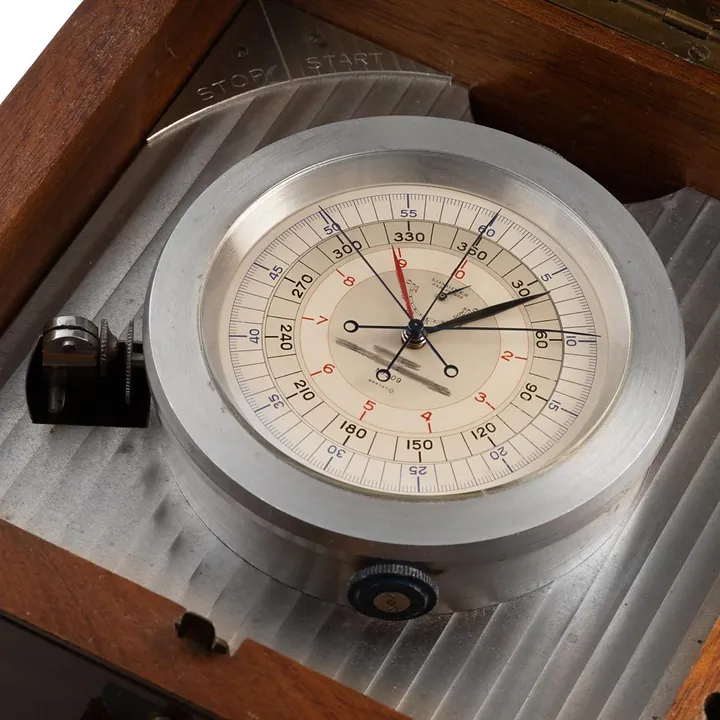
Pocket Watches · Sold to Longines France in January 1946
Longines Siderograph, ref. 5397, Sold to Longines France in January 1946
Antiquorum auction archive, Geneva
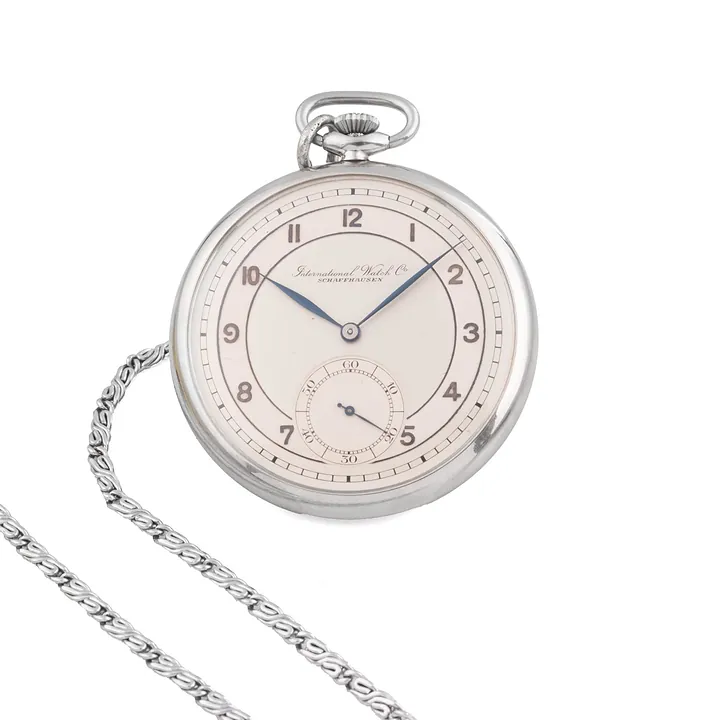
Pocket Watches · c. 1950
IWC Pocket Watch, c. 1950
Antiquorum auction archive, Geneva