
Wristwatches · Wristwatch
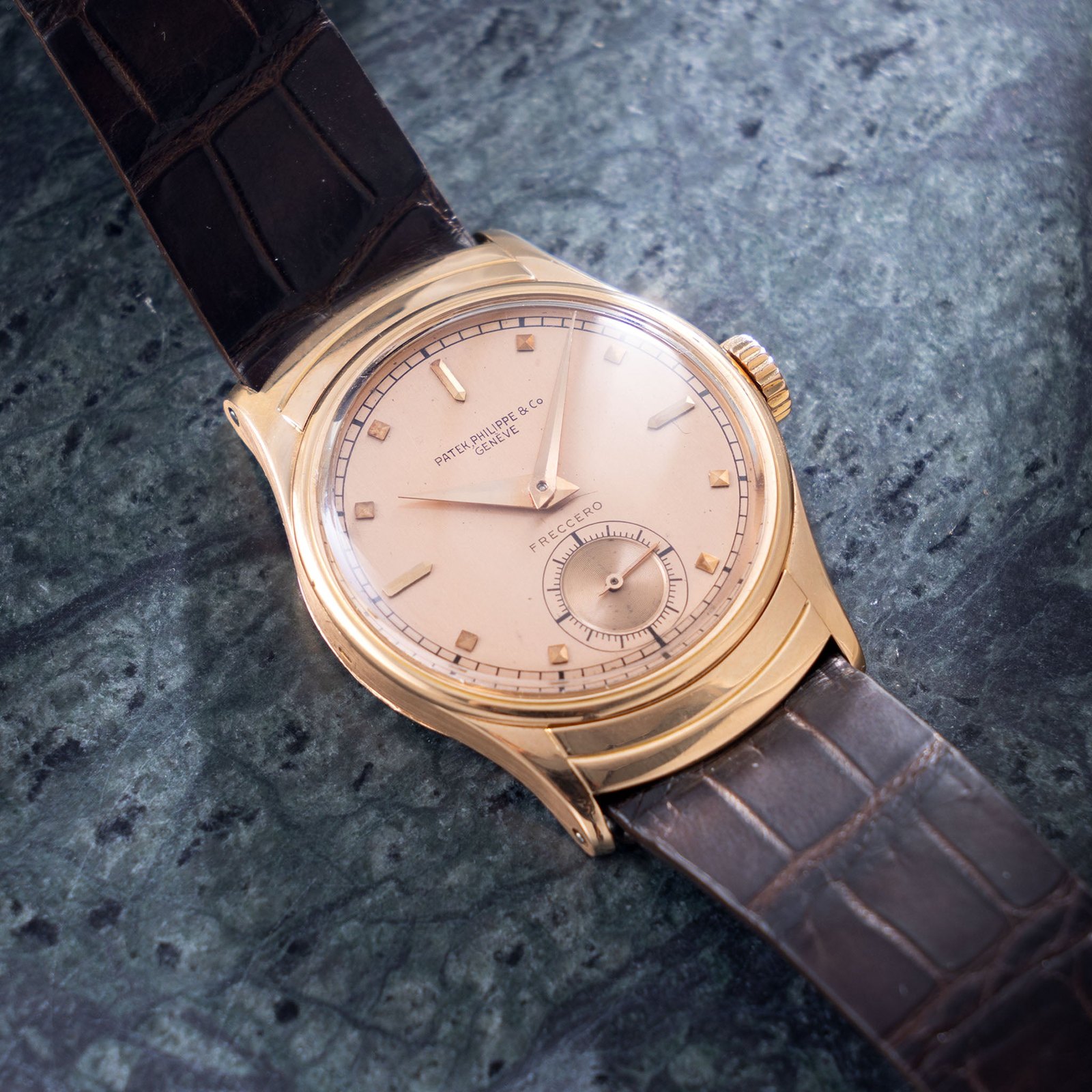
Patek Philippe Calatrava ref 539 "Armadillo" pink on pink double signed Freccero in 18k pink gold, 1930
- Maker / attribution
- Patek Philippe (maker)
- Date
- 1930
- Historical period
- Golden Age of Mechanical Watchmaking (1900 – 1945)
- Country of origin
- Switzerland
- Object type
- Wristwatch
- Materials / technique
- gold
- Dimensions
- Case 31 mm
- Stock no.
- w-3244
- Credit line
- Dealer listing, Bulang & Sons (w-3244)
- Catalogue title (original)
- Patek Philippe Calatrava ref 539 "Armadillo" pink on pink double signed Freccero in 18k pink gold (English)
View the source record (dealer listing) ↗ (opens another website in a new tab)Suggest a correction
Record summary
Catalogued by Bulang & Sons (dealer), Copenhagen (stock number w-3244), this is a wristwatch by Patek Philippe, made in Switzerland, dated 1930. The Atlas places it in the Golden Age of Mechanical Watchmaking period (1900 – 1945) of its Wristwatches collection. Materials and techniques recorded by the source: gold. Recorded dimensions: Case 31 mm. The record is illustrated with 6 photographs.
Assembled from the source record's structured fields. Dates and attributions are given as the source states them; where a field is missing the Atlas leaves it blank rather than estimating.
Catalogue description
Dealer description — Bulang & Sons
Today’s spotlight is on the rare and refined Patek Philippe Ref. 539 Calatrava, nicknamed "The Armadillo" by collectors. This is a rarely seen version of one of the brand’s most well-known Calatrava models. The case design stands out for Patek Philippe, offering a more striking look compared to their usually understated style. In both construction and style, it shares a lot with the Ref. 96 Calatrava, produced during the same era—but this reference has a much bolder presence. Check out the double “hood” detail between the lugs—unique and eye-catching! As rare as it is attractive, this watch is a true collector’s piece. While total production numbers are unknown across all metals, only eight pink gold examples have been confirmed in Antiquorum auction records. The dial is simple but sharp, with a pink tone, diamond-shaped faceted markers, a small seconds sub-dial, and classic dauphine hands. Adding to its rarity, this one is double-signed “Freccero.” Freccero & Ci was a watch and jewelry dealer in Montevideo, Uruguay. The business began in 1868, founded by German-born Oscar Spangerberg, and was later sold to his employee Francisco J. Freccero. In 1908, the company moved to 25 de Mayo in Montevideo. Though originally a jewelry shop, Freccero’s descendants shifted the focus to watches and became the exclusive Patek Philippe retailer in Montevideo in 1929. That partnership lasted 70 years and resulted in some of the rarest retailer-signed Patek watches of the 20th century. Inside the watch is Patek’s respected 12-ligne hand-wound movement—the same caliber found in the Ref. 96. It’s a proven, beautifully made mechanism. The watch is paired with an original Patek Philippe leather strap and features its matching 18k pink gold pin buckle.This fine Calatrava has been fully serviced by our watch maker and is ready for the years to come. As we’ve said before, there’s an undeniable elegance in the simplicity of a time-only watch. This "Armadillo" is seriously cool—and pink on pink on Patek? No one does it quite like they do. Don’t hesitate to get in touch! Specifications: Patek Philippe Calatrava Reference ref 539 R 31 mm 18 k rose gold case in 30.5 mm “double hooded lugs” Movement serial 82xxxx / Case serial 29xxxx dating to the 1930’s Pink dial with diamond shaped hand applied hour markers,Dauphine hands and small seconds sub dial double signed “Freccero” Patek Philippe hand wound movement Patek leather strap and a PP 18K rose gold pin buckle Fully serviced by our watchmaker
Historical context
Golden Age of Mechanical Watchmaking (1900 – 1945)
The wristwatch displaces the pocket watch; waterproof cases, self-winding and grand complications.
The wristwatch overtook the pocket watch. Military use in the First World War, aviation, water-resistant cases (1926), automatic winding (1923–31), rectangular Art Deco designs and early chronographs and calendars defined the period.
Read the period in the timelineMore wristwatches from this periodEarlier: Industrial Revolution
Atlas type guide
Wristwatches
Bracelet watches were worn by women from the early nineteenth century — Breguet made one for Caroline Murat, Queen of Naples, in 1810–12 — but the wristwatch only became a man's instrument with military use and aviation in the early twentieth century. Between the World Wars it overtook the pocket watch; the 1920s and 1930s brought rectangular Art Deco cases, water-resistant cases and the first automatic winding systems.
After 1945 the wristwatch became a carrier of identity — dress watches, sports and dive watches, chronographs, calendars — produced by Swiss, American, Japanese, German, Soviet and Chinese industries. The quartz revolution after 1969 and the mechanical renaissance since the 1990s, including the rise of independent watchmakers, complete the story.
What to look for
- The reference number (between the lugs or inside the case back) and serial number, the starting point for dating.
- The calibre: its maker and number are often stamped under the dial or on the bridge.
- Originality of dial, hands and crown — refinished ('redial') dials are common.
- Case material marks: 18K/750, 14K/585, stainless steel, gold-filled, plated.
Dating clues
- Wire-lug cases: before c. 1925.
- Water-resistant screw-down cases: from 1926.
- Quartz movements: from 1969; sapphire crystals widespread after c. 1980.
General guidance written by the Atlas editors about this kind of object. It is not a statement about this particular piece; for that, rely on the source record above and on physical examination.
Related records
Clocks · 1965–1975
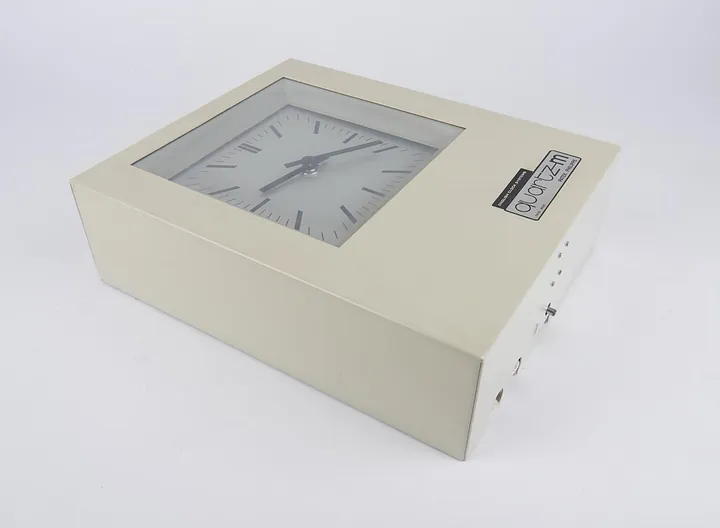
Quartz master clock QM 1, with movement by Patek Phillippe, Switzerland, 1965–1975. Supplied by English Clock Systems.
Science Museum Group, London
Instruments · 1965–1984
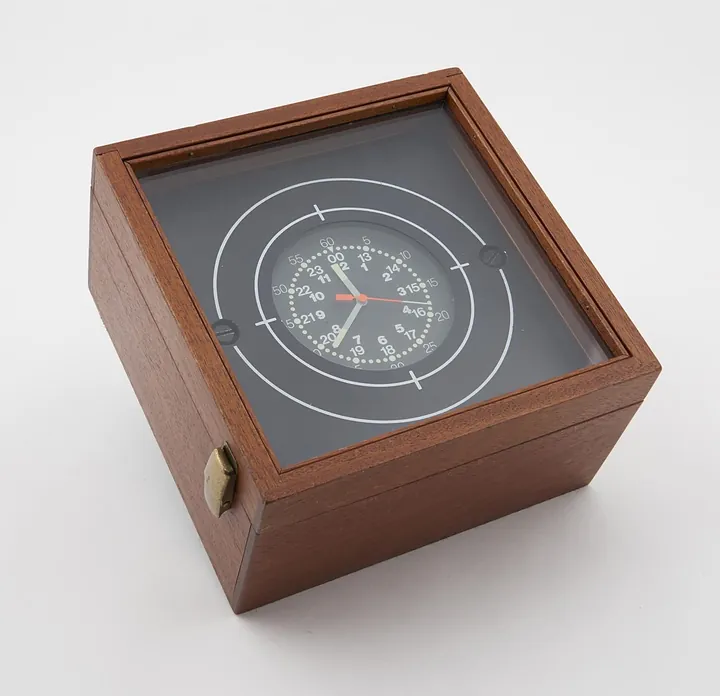
Chronometer by Patek Philippe and Kelvin Hughes, England, 1965–1984
Science Museum Group, London
Pocket Watches · c. 1895
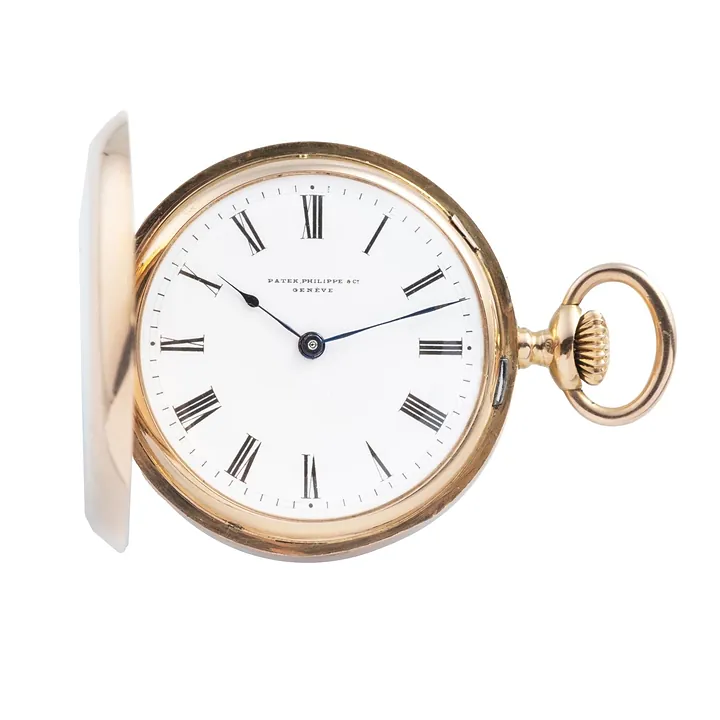
Patek Philippe pocket watch, c. 1895
Antiquorum auction archive, Geneva

Pocket Watches · c. 1900
Patek Philippe Chronometro Gondolo, c. 1900
Antiquorum auction archive, Geneva

Wristwatches · 1931
Rolex 'Oyster Perpetual' rotor self-winding wrist-watch, lever escapement, in steel case with glass in back, Montres Rolex SA, Geneva, Switzerland, 1931
Science Museum Group, London

Wristwatches · 1900–1999
Wristwatch by Certina, Switzerland, 1900–1999
Nordic Museum Foundation

Wristwatches · 1900–1999
Wristwatch by Omega, Västerås, 1900–1999
Nordic Museum Foundation

Wristwatches · 1900–1999
Wristwatch by Universal, Switzerland, 1900–1999
Nordic Museum Foundation