
Wristwatches · Wristwatch
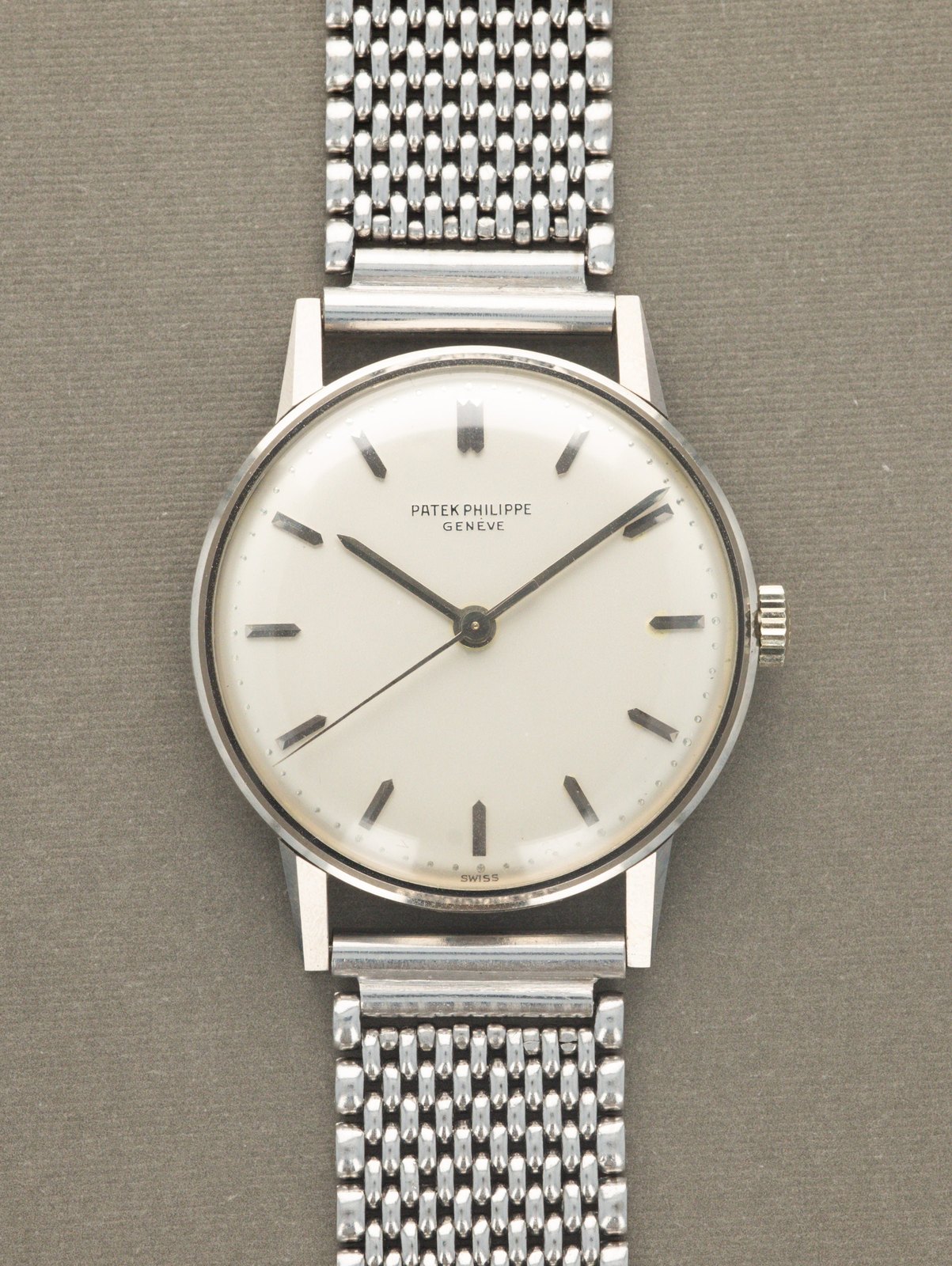
Patek Philippe Calatrava ref. 3411
- Maker / attribution
- Patek Philippe (maker)
- Date
- c. 1965
- Historical period
- Modern Mechanical Horology (1945 – 1969)
- Country of origin
- Switzerland
- Object type
- Wristwatch
- Dimensions
- Case 34.5 mm
- Stock no.
- OC2313
- Credit line
- Dealer listing, Oliver & Clarke (OC2313)
- Catalogue title (original)
- Patek Philippe Calatrava Ref. 3411 - Exceptional Unpolished Condition (English)
View the source record (dealer listing) ↗ (opens another website in a new tab)Suggest a correction
Record summary
Catalogued by Oliver & Clarke (dealer), United Kingdom (stock number OC2313), this is a wristwatch by Patek Philippe, made in Switzerland, dated c. 1965. The Atlas places it in the Modern Mechanical Horology period (1945 – 1969) of its Wristwatches collection. Recorded dimensions: Case 34.5 mm. The record is illustrated with 6 photographs.
Assembled from the source record's structured fields. Dates and attributions are given as the source states them; where a field is missing the Atlas leaves it blank rather than estimating.
Catalogue description
Dealer description — Oliver & Clarke
The Patek Philippe Calatrava. Arguably the brands most iconic model line, and purest expression of the brand. Their raison d'etre if you will. The line has been a hit since its debut in 1932. So much so, that the name "Calatrava" itself has become something of a byword within the watch industry for traditionally styled, no-frills dress watches that simply tell the time. Over the course of its nearly 100-years of production, there have been seemingly countless iterations within the line, with variations in the metal they are made in, with their size, dial configurations, and eventually, complications. The Calatrava that we have here, a Reference 3411, dates to circa 1965 and if we hadn't mentioned it, you almost wouldn't know! The condition of this piece is simply outstanding and could nearly be mistaken with a re-issue or modern watch. The 34.5mm white gold case is razor sharp with clear lug bevels and shows very little wear. The satin silver dial is also in remarkable well-preserved condition, exhibiting only one faint spot of discoloration near the 3 o'clock marker and a faint impression between the 11 and 12 o'clock markers. The applied, faceted indices and a matching 'pencil' handset are virtually flawless, and the period white gold 'mesh' bracelet shows light wear and suits the watch perfectly. Powering this time-capsule is Patek's Cal. 27 SC manual-winding movement. This is a treat fit for a collector of the model, or someone looking for an exceedingly clean example of a vintage dress watch, or an exquisite timepiece that flies under the radar in a big way.
Historical context
Modern Mechanical Horology (1945 – 1969)
Tool watches for divers, pilots and astronauts; electric watches anticipate the electronic age.
The classic era of the mechanical wristwatch: dive watches, chronographs for motor racing and space flight, GMT watches for jet travel, slim dress watches, automatic calendars, and the rise of Japanese manufacturers alongside Swiss, American, German and Soviet industries.
Read the period in the timelineMore wristwatches from this periodEarlier: Golden Age of Mechanical Watchmaking
Atlas type guide
Wristwatches
Bracelet watches were worn by women from the early nineteenth century — Breguet made one for Caroline Murat, Queen of Naples, in 1810–12 — but the wristwatch only became a man's instrument with military use and aviation in the early twentieth century. Between the World Wars it overtook the pocket watch; the 1920s and 1930s brought rectangular Art Deco cases, water-resistant cases and the first automatic winding systems.
After 1945 the wristwatch became a carrier of identity — dress watches, sports and dive watches, chronographs, calendars — produced by Swiss, American, Japanese, German, Soviet and Chinese industries. The quartz revolution after 1969 and the mechanical renaissance since the 1990s, including the rise of independent watchmakers, complete the story.
What to look for
- The reference number (between the lugs or inside the case back) and serial number, the starting point for dating.
- The calibre: its maker and number are often stamped under the dial or on the bridge.
- Originality of dial, hands and crown — refinished ('redial') dials are common.
- Case material marks: 18K/750, 14K/585, stainless steel, gold-filled, plated.
Dating clues
- Wire-lug cases: before c. 1925.
- Water-resistant screw-down cases: from 1926.
- Quartz movements: from 1969; sapphire crystals widespread after c. 1980.
General guidance written by the Atlas editors about this kind of object. It is not a statement about this particular piece; for that, rely on the source record above and on physical examination.
Related records
Clocks · 1965–1975
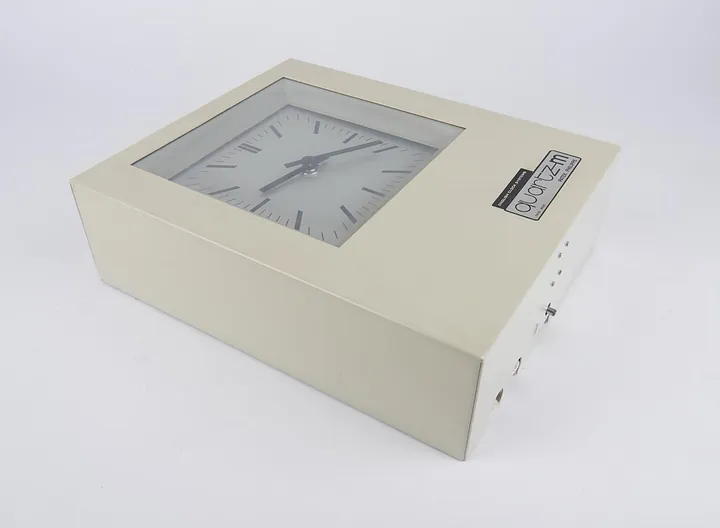
Quartz master clock QM 1, with movement by Patek Phillippe, Switzerland, 1965–1975. Supplied by English Clock Systems.
Science Museum Group, London
Instruments · 1965–1984
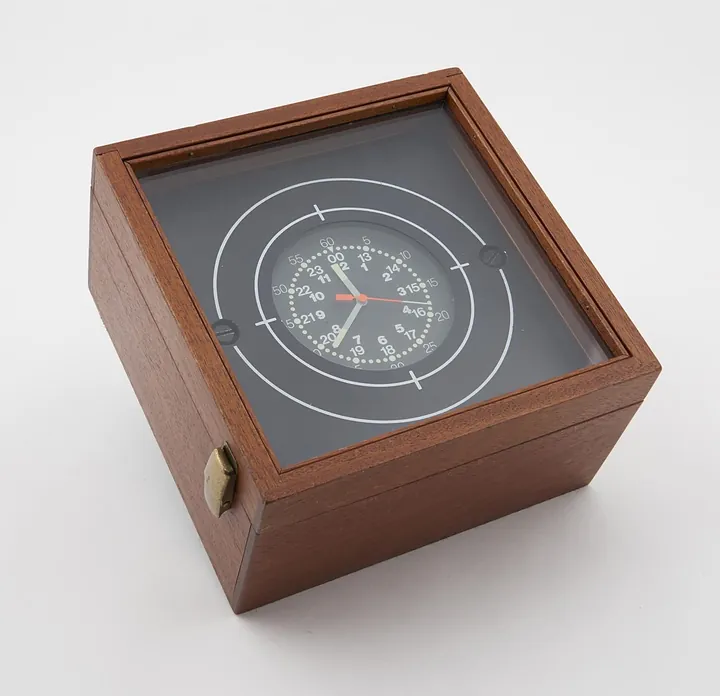
Chronometer by Patek Philippe and Kelvin Hughes, England, 1965–1984
Science Museum Group, London
Pocket Watches · c. 1895
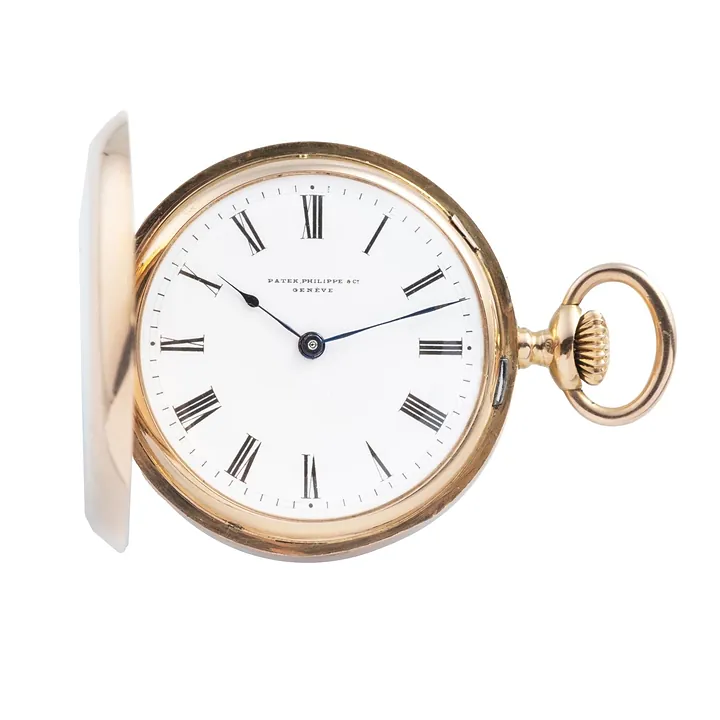
Patek Philippe pocket watch, c. 1895
Antiquorum auction archive, Geneva
Pocket Watches · c. 1900
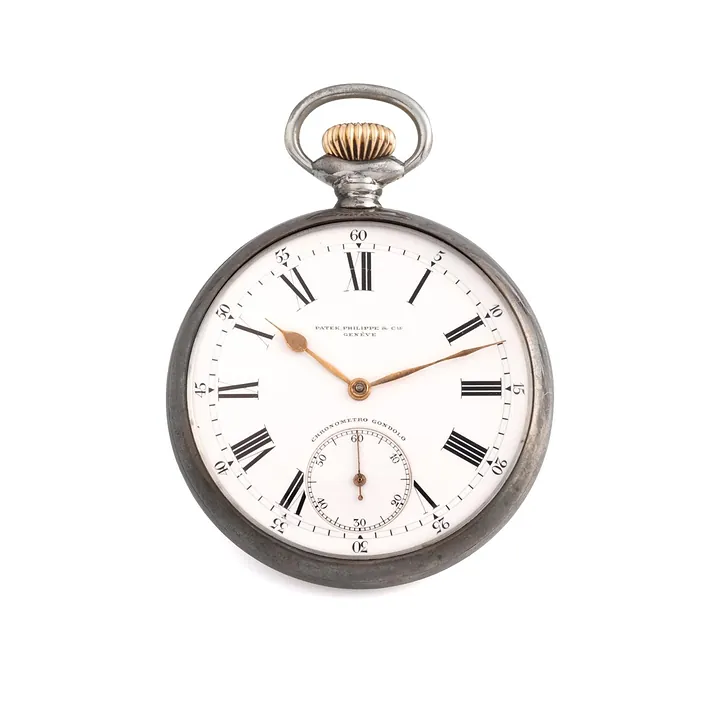
Patek Philippe Chronometro Gondolo, c. 1900
Antiquorum auction archive, Geneva

Wristwatches · 1945
Wristwatch by Eterna, 1945
Museum Rotterdam

Wristwatches · c. 1945
Breitling Premier, ref. 790, c. 1945
Antiquorum auction archive, Geneva

Wristwatches · c. 1945
Universal Genève Uni-Compax, ref. 22492, c. 1945
Antiquorum auction archive, Geneva

Wristwatches · c. 1950s
Baume & Mercier wristwatch, c. 1950s
Antiquorum auction archive, Geneva