
Wristwatches · Wristwatch
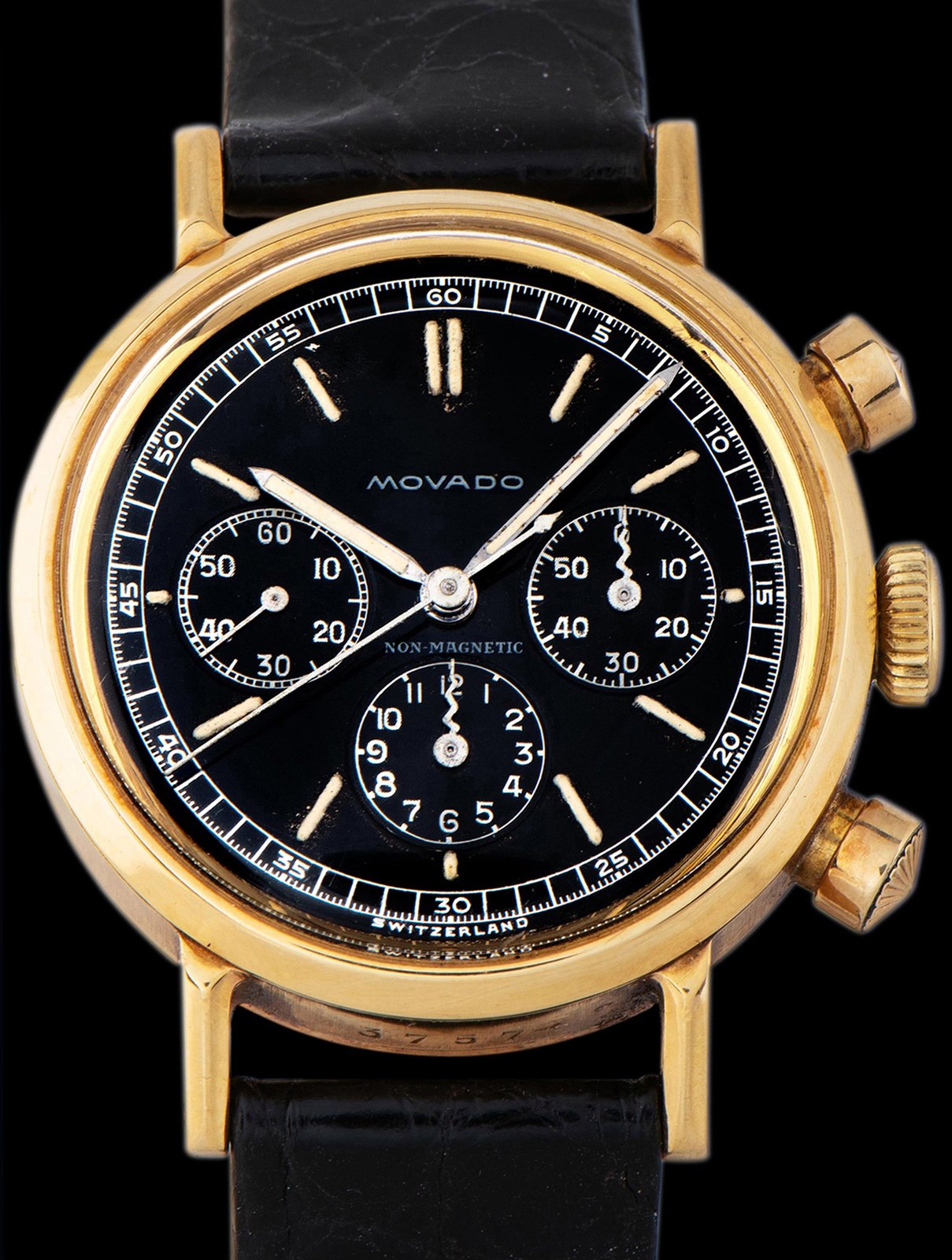
Movado M95 Chronograph 18K YG (Ref. 9018) Black Gilt Dial W/ Ornate Pushers, 1940s
- Maker / attribution
- Movado (maker)
- Date
- 1940s
- Historical period
- Golden Age of Mechanical Watchmaking (1900 – 1945)
- Country of origin
- Switzerland
- Object type
- Wristwatch
- Stock no.
- MOVM95-4
- Credit line
- Dealer listing, Craft & Tailored (MOVM95-4)
- Catalogue title (original)
- 1940s Movado M95 Chronograph 18K YG (Ref. 9018) Black Gilt Dial W/ Ornate Pushers (English)
View the source record (dealer listing) ↗ (opens another website in a new tab)Suggest a correction
Record summary
Catalogued by Craft & Tailored (dealer), Los Angeles (stock number MOVM95-4), this is a wristwatch by Movado, made in Switzerland, dated 1940s. The Atlas places it in the Golden Age of Mechanical Watchmaking period (1900 – 1945) of its Wristwatches collection. The record is illustrated with 6 photographs.
Assembled from the source record's structured fields. Dates and attributions are given as the source states them; where a field is missing the Atlas leaves it blank rather than estimating.
Catalogue description
Dealer description — Craft & Tailored
Movado stands as a perfect example of what makes vintage watches so captivating compared to their modern counterparts. During the mid-century, the brand competed directly with the likes of Rolex and Patek Philippe, earning acclaim for its design innovation and craftsmanship. Movado firmly established itself as a premium manufacturer, one whose influence continues to resonate throughout the watch industry today. The Movado M90 and M95 chronographs, for example, remain today as some of the most sought-after, collectible, and incredibly beautiful wristwatches to come out of the mid-century era of watch design. This revolutionary modular chronograph movement was designed by renowned watchmaker, Frederic Piguet, in 1938 for the M90 caliber and the following year for the M95. The most notable difference between the two movements is the number of registers, with the M90 employing two registers while the M95 employs three. Interestingly, the operation of the caliber M95 is inverted from conventional chronographs, with the bottom pusher starting and stopping the chronograph and the top pusher resetting it. The Movado M95 has long been celebrated by collectors as one of the most elegant and compelling vintage chronographs ever produced. While many references utilized the revered M95 movement, the most sought-after examples are often those housed in cases manufactured by François Borgel, the legendary case maker behind iconic Patek Philippe references such as the ref. 1463 “Tasti Tondi” and ref. 565. This particular example showcases Borgel’s distinguished cylinder-style case design, featuring slender pointed lugs and beautifully ornate pushers that evoke the timeless sophistication of its famed Patek counterpart. What truly sets this watch apart, however, is its exceptionally rare black gilt dial. Striking, refined, and endlessly charismatic, the dial elevates an already desirable chronograph into an extraordinary collector’s piece, blending technical pedigree with unmistakable mid-century luxury SPECS Stock # MOVM95-4 Brand Movado Style 'Cal. M95' Chronograph Model 9018 Serial 1037XX Size Men's Material 18K Yellow Gold Dial Glossy Black "Gilt" Millimeters 33 Strap 2pc Leather Strap CASE & BRACELET The impressively crisp 18K yellow gold cylinder case retains sharp factory finishing throughout, with well-defined geometry across its slender, pointed lugs and deep, clearly visible hallmarks. Showing only minimal evidence of past polishing, the case remains exceptionally well-preserved with signs of only gentle prior wear. Its original ornate “Tasti Tondi” pump pushers are equally sharp and remain in excellent condition. The crown is believed to be an early service replacement. The screw-down case back also remains remarkably crisp, exhibiting only light wear from use. The last four digits on the serial stamped on the inside of the case back match the four digit serial of the mid-case. The watch is fitted on a two-piece leather strap. DIAL & HANDS The original and exceptionally rare black gilt dial is beautifully preserved, presenting in excellent vintage condition, particularly considering its age. The dial shows minor, expected aging around the radium lume plots, largely imperceptible to the naked eye and expected for the materials used, while the 11 o’clock marker displays slightly more pronounced aging, including a small area of lacquer loss. The radium lume plots have developed an attractive sandy patina and exhibit only nominal degradation under UV light inspection. The original radium hands match the dial almost perfectly, having aged only a shade lighter than the dial lume, and exhibit no degradation under UV light inspection. ACCESSORIES None. The watch is running, but the service history is unknown. A movement service can be provided upon request.
Historical context
Golden Age of Mechanical Watchmaking (1900 – 1945)
The wristwatch displaces the pocket watch; waterproof cases, self-winding and grand complications.
The wristwatch overtook the pocket watch. Military use in the First World War, aviation, water-resistant cases (1926), automatic winding (1923–31), rectangular Art Deco designs and early chronographs and calendars defined the period.
Read the period in the timelineMore wristwatches from this periodEarlier: Industrial Revolution
Atlas type guide
Chronographs and split-seconds watches
A chronograph is a watch with an additional seconds hand that can be started, stopped and returned to zero independently of the timekeeping. Louis Moinet built an early example in 1816 and Nicolas Rieussec a recording 'chronographe' in 1821; Adolphe Nicole's heart-shaped reset cam (patented 1862) made the modern return-to-zero possible. Split-seconds (rattrapante) chronographs add a second hand that can be stopped for intermediate times; flyback chronographs restart instantly.
Chronographs were essential tools for doctors (pulsometer scales), artillery (telemeter), engineers and sport. In wristwatches, Valjoux, Venus, Lemania and later the automatic chronographs of 1969 (Zenith El Primero, the Chronomatic Calibre 11 group and Seiko 6139) are milestones.
What to look for
- Push-pieces on the case band or a single button in the crown (monopusher).
- Subsidiary registers for minutes and hours; tachymeter, telemeter or pulsometer scales.
- Column wheel versus cam control visible in the movement.
- Calibre markings of specialist makers (Valjoux, Lemania, Venus, Landeron).
Dating clues
- Pocket chronographs with heart cam reset: after 1862.
- Wrist chronographs: from c. 1910; two-button designs from the 1930s.
- Automatic chronographs: from 1969.
General guidance written by the Atlas editors about this kind of object. It is not a statement about this particular piece; for that, rely on the source record above and on physical examination.
Read next:Flyback chronographChronograph
Related records
Pocket Watches · c. 1960s
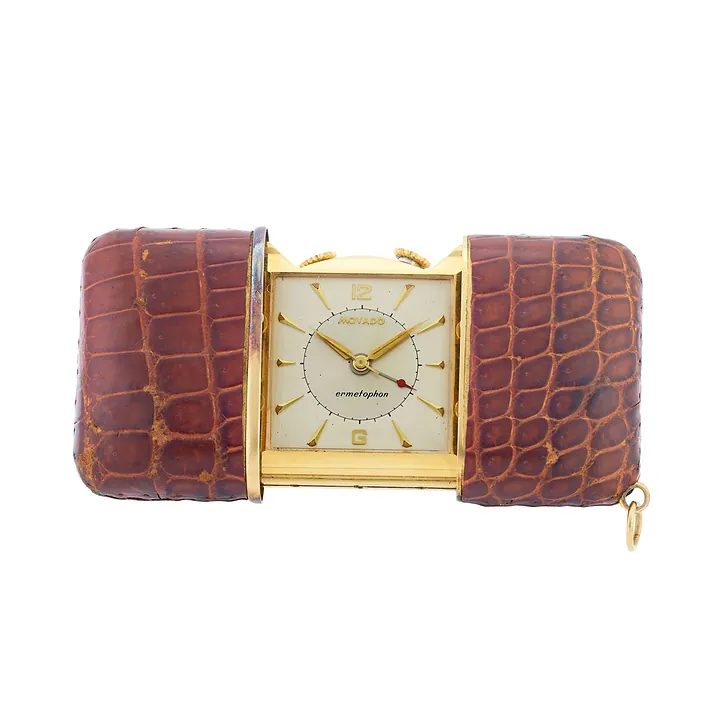
Movado Ermetophone, c. 1960s
Antiquorum auction archive, Geneva
Wristwatches · c. 1920s
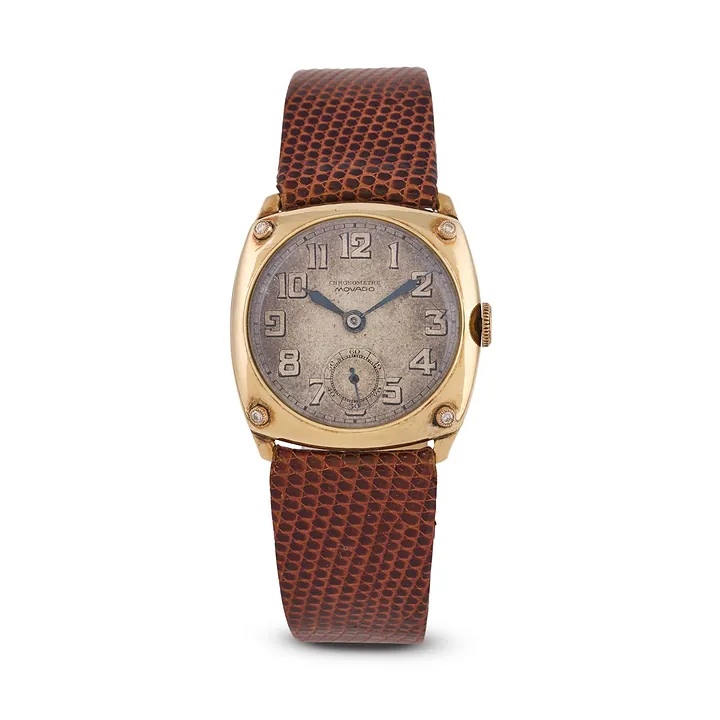
Movado Chronometre, ref. 41536, c. 1920s
Antiquorum auction archive, Geneva
Wristwatches · c. 1930s
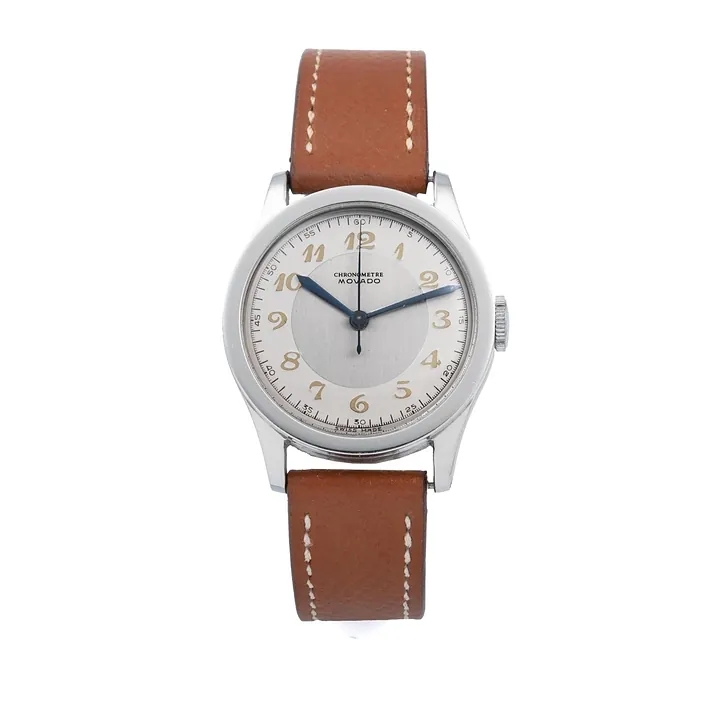
Movado "calatrava", ref. 17726, c. 1930s
Antiquorum auction archive, Geneva
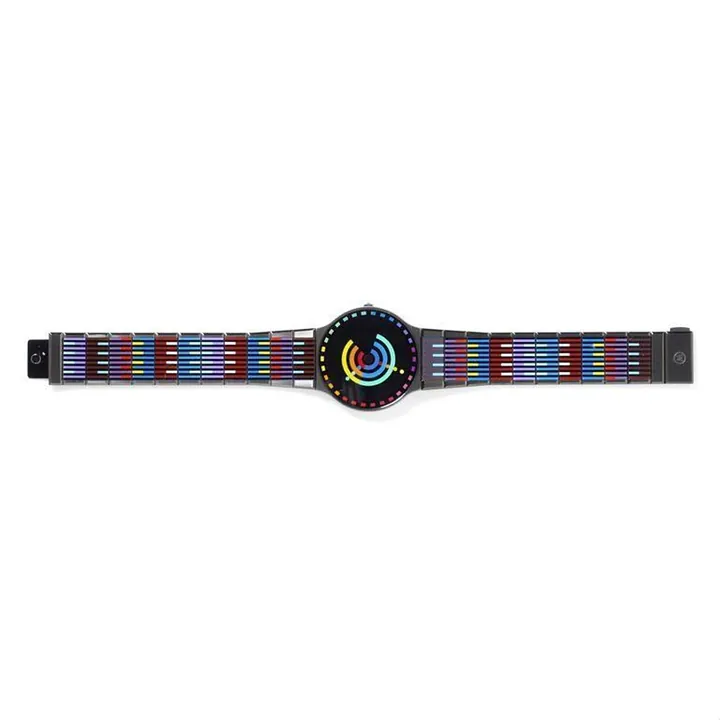
Wristwatches · c.1989
Steel, France and Switzerland, 1989; designed by Yaacov Agam (born 1928) for a limited edition by Movado
Victoria and Albert Museum, London

Wristwatches · 1931
Rolex 'Oyster Perpetual' rotor self-winding wrist-watch, lever escapement, in steel case with glass in back, Montres Rolex SA, Geneva, Switzerland, 1931
Science Museum Group, London

Wristwatches · 1900–1999
Wristwatch by Certina, Switzerland, 1900–1999
Nordic Museum Foundation
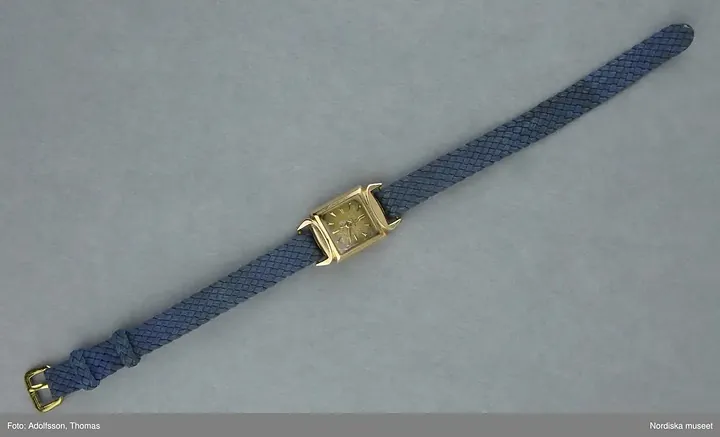
Wristwatches · 1900–1999
Wristwatch by Omega, Västerås, 1900–1999
Nordic Museum Foundation
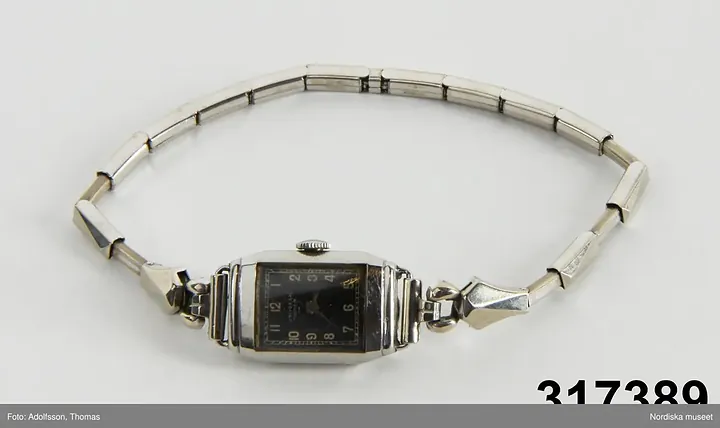
Wristwatches · 1900–1999
Wristwatch by Universal, Switzerland, 1900–1999
Nordic Museum Foundation