
Wristwatches · Wristwatch
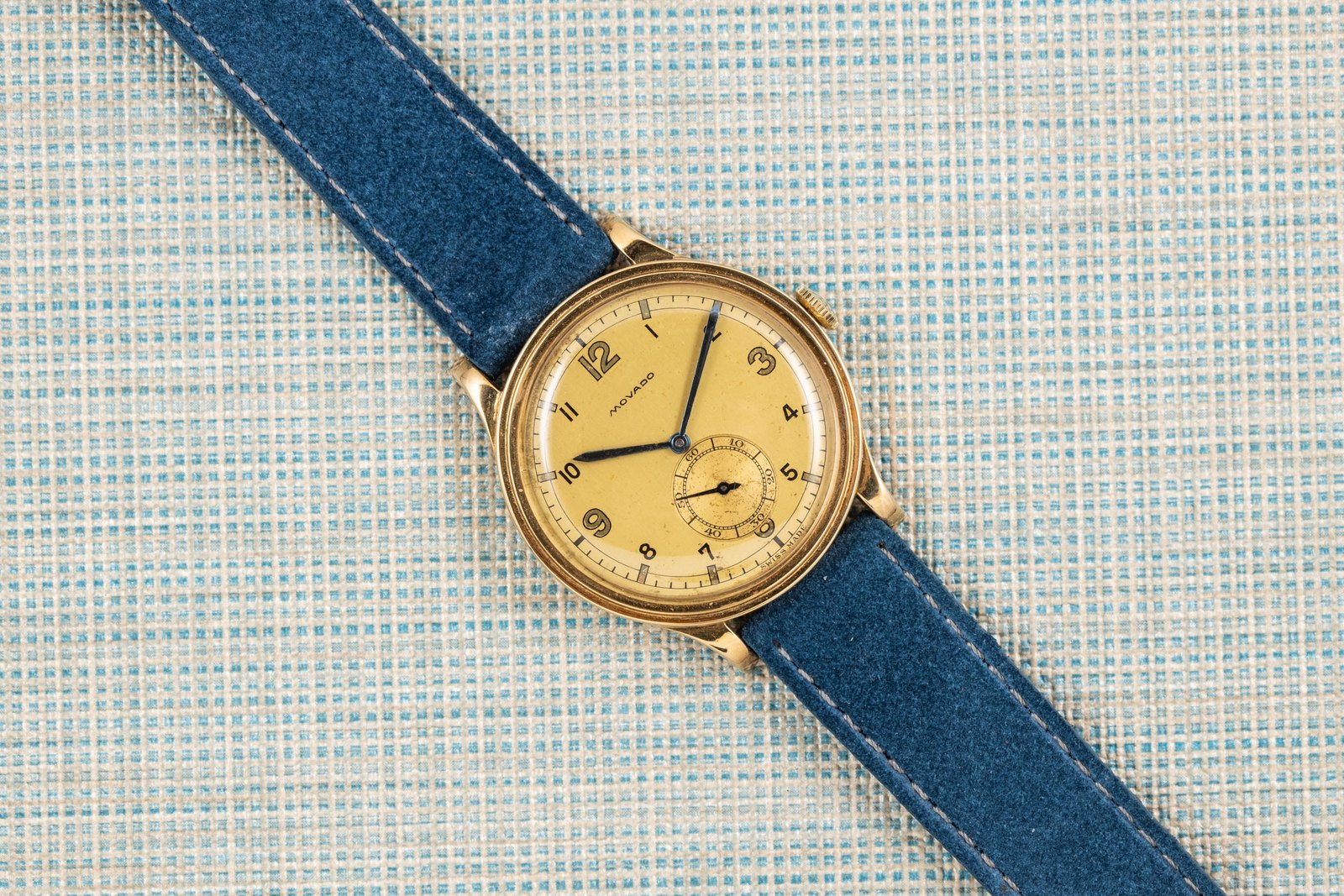
Movado 14K Gent's Dress Watch, late 1940s
- Maker / attribution
- Movado (maker)
- Date
- late 1940s
- Historical period
- Golden Age of Mechanical Watchmaking (1900 – 1945)
- Country of origin
- Switzerland
- Object type
- Wristwatch
- Dimensions
- Case 36 mm
- Stock no.
- 40990031
- Credit line
- Dealer listing, Analog/Shift (40990031)
- Catalogue title (original)
- Movado 14K Gent's Dress Watch (English)
View the source record (dealer listing) ↗ (opens another website in a new tab)Suggest a correction
Record summary
Catalogued by Analog/Shift (dealer), New York (stock number 40990031), this is a wristwatch by Movado, made in Switzerland, dated late 1940s. The Atlas places it in the Golden Age of Mechanical Watchmaking period (1900 – 1945) of its Wristwatches collection. Recorded dimensions: Case 36 mm. The record is illustrated with 6 photographs.
Assembled from the source record's structured fields. Dates and attributions are given as the source states them; where a field is missing the Atlas leaves it blank rather than estimating.
Catalogue description
Dealer description — Analog/Shift
Why We Love It Many watch brands suffer from their modern image being at odds with their historic identity. Movado isn't what it used to be. And thats sad - because once upon a time, the brand made some of the cleanest and most elegant timepieces on the market - even getting the notoriety of placement in some of the world's most prestigious retail shops; including the legendary Tiffany & Co.. This lovely example dates to the late 1940s/early 1950s and features a large 36mm 14k yellow gold snap-back case with a champagne dial with gold foil appliqué indices, fancy blued-steel hands, and an oversized subsidiary seconds register. This is a handsome watch, no matter the brand! The truth of the matter is vintage Movado is somewhat esoteric. There is a small but growing number of collectors who have been focusing on the deep well of unique and undervalued watches from the brand, but until recently, Movado has been somewhat under the radar of the larger collector world. Pieces like this however- especially with strong mid-century styling and crisp precious metal cases- won't stay off the radar for much longer. The Story While Movado is now best known as a producer of fashion watches like the Museum Watch, Movado's roots go much deeper than that. The company’s history reaches all the way back to 1881, when watchmaker Achilles Ditesheim opened a workshop in La Chaux-de-Fonds. His brothers Léopold and Isidore joined him in 1886. Production from that point on proved how true the name brand was—it means "always in motion" in Esperanto. Throughout the 20th century Movado produced incredible mechanical timepieces. They gained notoriety for the sophistication of the equipment and technology they employed, including electric tools. Unlike many of their counterparts, Movado's movements were designed and manufactured in-house.
Historical context
Golden Age of Mechanical Watchmaking (1900 – 1945)
The wristwatch displaces the pocket watch; waterproof cases, self-winding and grand complications.
The wristwatch overtook the pocket watch. Military use in the First World War, aviation, water-resistant cases (1926), automatic winding (1923–31), rectangular Art Deco designs and early chronographs and calendars defined the period.
Read the period in the timelineMore wristwatches from this periodEarlier: Industrial Revolution
Atlas type guide
Wristwatches
Bracelet watches were worn by women from the early nineteenth century — Breguet made one for Caroline Murat, Queen of Naples, in 1810–12 — but the wristwatch only became a man's instrument with military use and aviation in the early twentieth century. Between the World Wars it overtook the pocket watch; the 1920s and 1930s brought rectangular Art Deco cases, water-resistant cases and the first automatic winding systems.
After 1945 the wristwatch became a carrier of identity — dress watches, sports and dive watches, chronographs, calendars — produced by Swiss, American, Japanese, German, Soviet and Chinese industries. The quartz revolution after 1969 and the mechanical renaissance since the 1990s, including the rise of independent watchmakers, complete the story.
What to look for
- The reference number (between the lugs or inside the case back) and serial number, the starting point for dating.
- The calibre: its maker and number are often stamped under the dial or on the bridge.
- Originality of dial, hands and crown — refinished ('redial') dials are common.
- Case material marks: 18K/750, 14K/585, stainless steel, gold-filled, plated.
Dating clues
- Wire-lug cases: before c. 1925.
- Water-resistant screw-down cases: from 1926.
- Quartz movements: from 1969; sapphire crystals widespread after c. 1980.
General guidance written by the Atlas editors about this kind of object. It is not a statement about this particular piece; for that, rely on the source record above and on physical examination.
Related records
Pocket Watches · c. 1960s
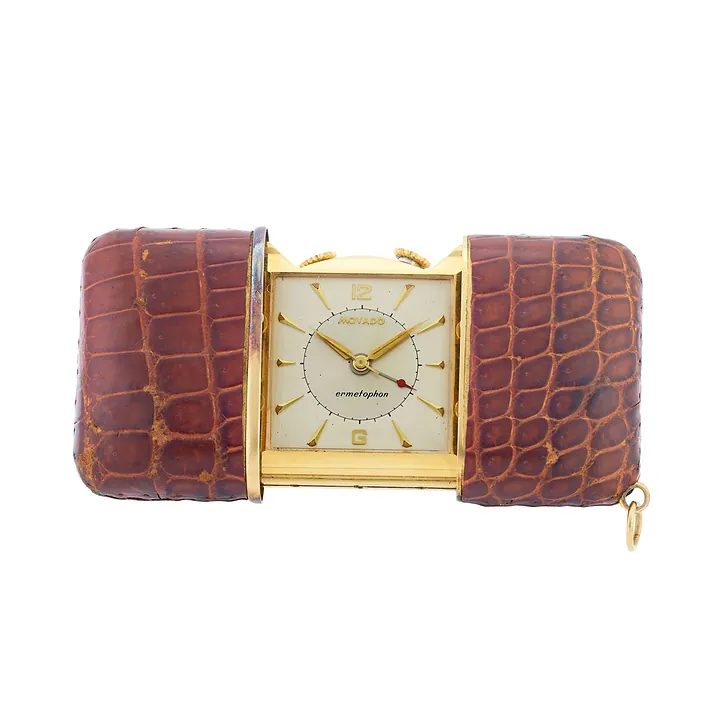
Movado Ermetophone, c. 1960s
Antiquorum auction archive, Geneva
Wristwatches · c. 1920s
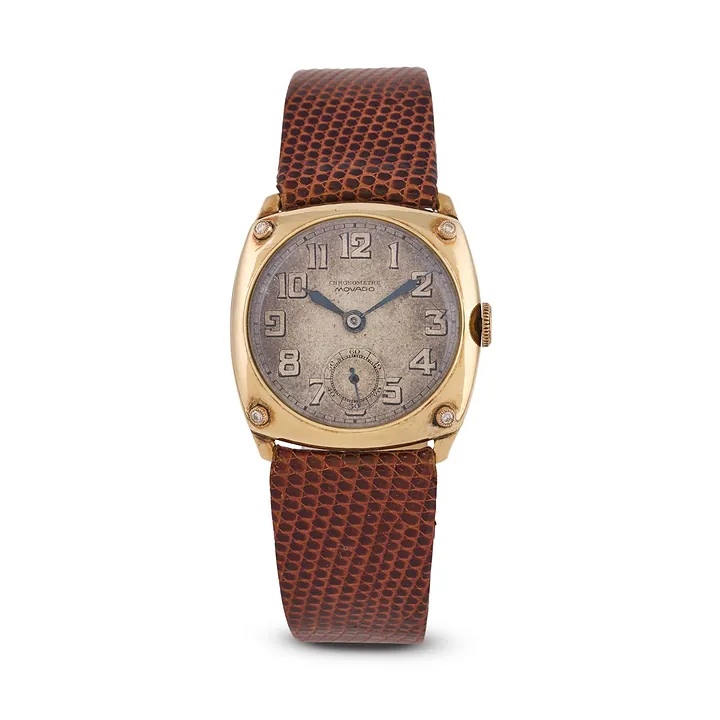
Movado Chronometre, ref. 41536, c. 1920s
Antiquorum auction archive, Geneva
Wristwatches · c. 1930s
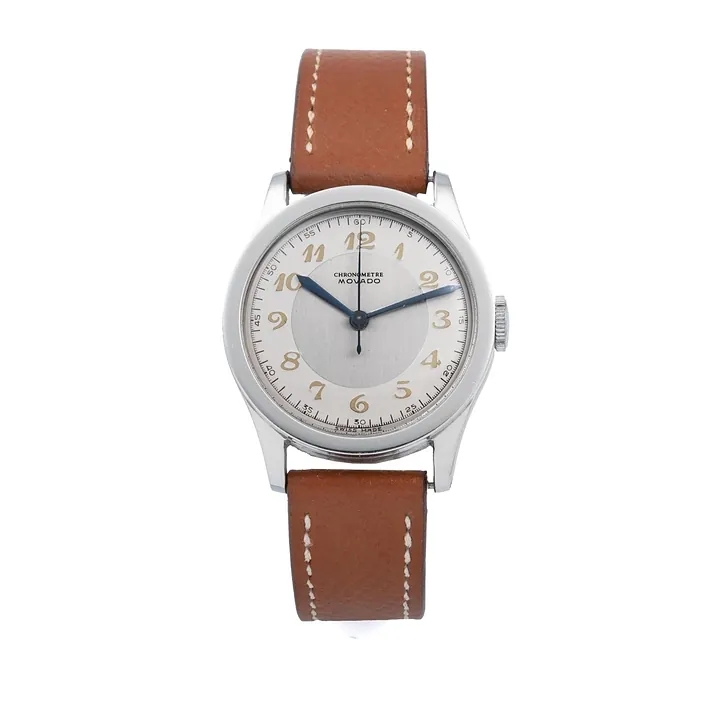
Movado "calatrava", ref. 17726, c. 1930s
Antiquorum auction archive, Geneva
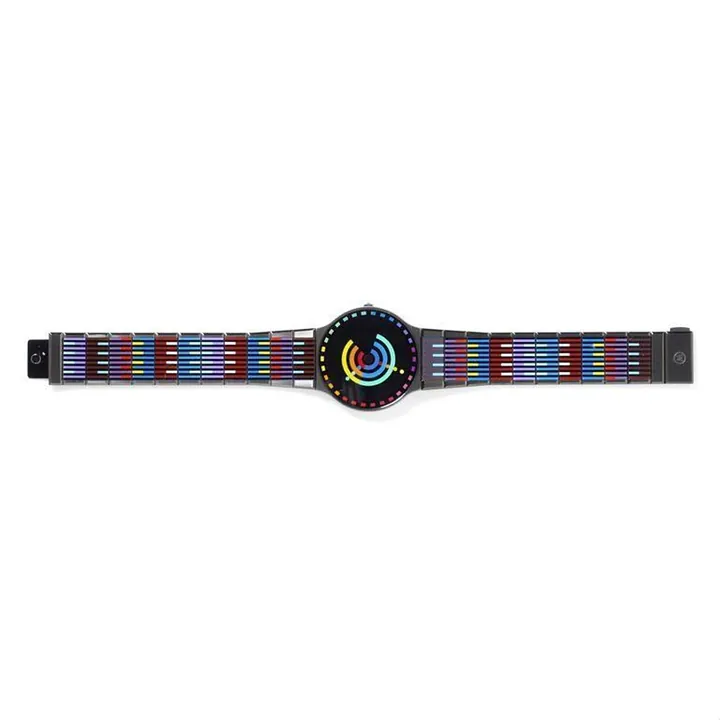
Wristwatches · c.1989
Steel, France and Switzerland, 1989; designed by Yaacov Agam (born 1928) for a limited edition by Movado
Victoria and Albert Museum, London

Wristwatches · 1931
Rolex 'Oyster Perpetual' rotor self-winding wrist-watch, lever escapement, in steel case with glass in back, Montres Rolex SA, Geneva, Switzerland, 1931
Science Museum Group, London

Wristwatches · 1900–1999
Wristwatch by Certina, Switzerland, 1900–1999
Nordic Museum Foundation

Wristwatches · 1900–1999
Wristwatch by Omega, Västerås, 1900–1999
Nordic Museum Foundation

Wristwatches · 1900–1999
Wristwatch by Universal, Switzerland, 1900–1999
Nordic Museum Foundation