Clocks · Longcase clock
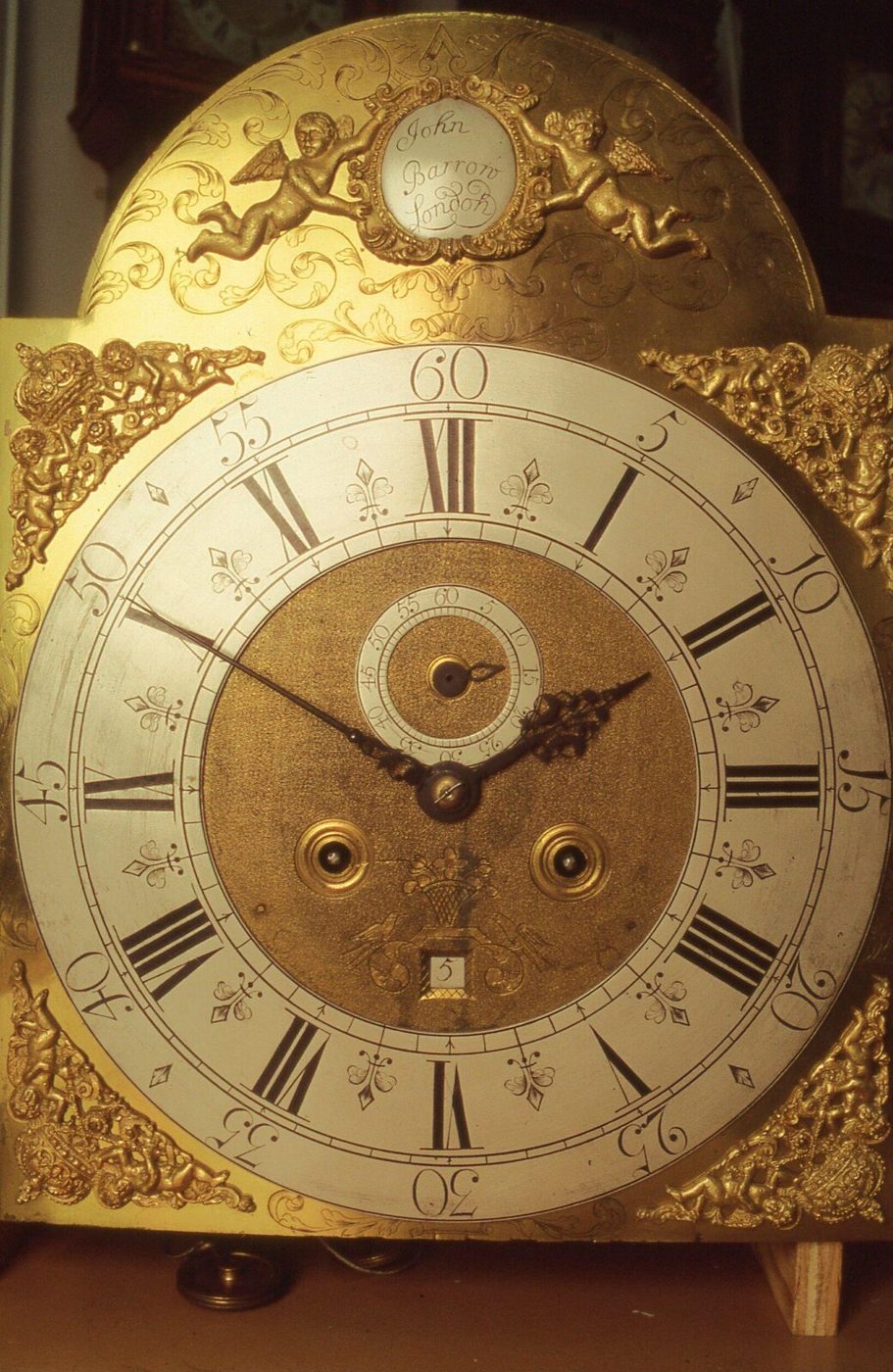
Month-going longcase clock, 1700-1740, English. Walnut veneer with bone stringing, inscribed 'John Barrow London'
- Maker / attribution
- John Barrow (made)
- Date
- 1700-1740
- Historical period
- Early Modern Horology (1600 – 1750)
- Country of origin
- England
- Place
- London
- Object type
- Longcase clock
- Materials / technique
- walnut, bone, brass, enamel
- Dimensions
- Height: 297 cm; Width: 61 cm; Depth: 30 cm; Weight: 8.95 kg (W.31:2 weight 10/10/2025 NH); Weight: 6.05 kg (w.31:3 weight 10/10/2025 NH)
- Holding institution
- Victoria and Albert Museum, London
- Accession / object no.
- W.31:1 to 11-1949
- Credit line
- Bequeathed to the Museum by Lady C. J. C. Wilson-Todd
Record summary
Held and catalogued by Victoria and Albert Museum, London (object number W.31:1 to 11-1949), this is a longcase clock by John Barrow, made in London, England, dated 1700-1740. The Atlas places it in the Early Modern Horology period (1600 – 1750) of its Clocks collection. Materials and techniques recorded by the source: walnut, bone, brass, enamel. Recorded dimensions: Height: 297 cm; Width: 61 cm; Depth: 30 cm; Weight: 8.95 kg (W.31:2 weight 10/10/2025 NH); Weight: 6.05 kg (w.31:3 weight 10/10/2025 NH). The record is illustrated with 4 photographs.
Assembled from the source record's structured fields. Dates and attributions are given as the source states them; where a field is missing the Atlas leaves it blank rather than estimating.
Catalogue description
V&A — Summary
John Barrow was apprenticed to Francis Ireland in 1671, became a member of the Clockmakers' Company in 1681 and was Master from 1714-1717. The movement of this clock is month going but the bell is a modern replacement.
V&A — Physical description
Longcase clock in case of walnut veneer. The hood is framed between columns, with arched top. The frieze is decorated with a design of foliage, fretted and applied. The cornice is composed of wide ovals and cavetto mouldings ornamented by a brass ball and spike. The face is of brass, engraved with scrolls, the corners ornamented with pairs of putti bearing a white enamel cartouche inscribed 'John Barrow, London'. Silvered dial, Roman hours, minutes in Arabic figures. Minute hand and hour hand. A silvered seconds hand in the upper part of the circle, an aperture below. The case and plinth of rectangular shape, veneered in walnut with narrow strings of bone marquetry.
V&A — Object history
John Barrow grandfather clock, bequeathed by Lady Catherine James Crawford Rusel Wilson Todd of Halnaby Hall, Croft, Darlington. Notes from R.P. 534 - 1949 27 October 1925 minute paper, Oliver Brackett reports on visit to Halnaby Hall, originally built for the Milbanke family (Lord Bryon spent his honeymoon there). Sold to Todd of Hull in 1842. "Some of the furniture …..was bought with the house. I saw a rough inventory made in 1854 which includes most of the furniture". Brackett selected furniture that he viewed as "of particular importance and …..underrepresented in the Museum". His selection includes a large Queen Anne clock in the Gallery. Listed in her Will as "Large Queen Anne Clock by John Barrow, London V & A Description "Grandfather clock with chased brass and silvered dial by John Barrow, London, in Queen Anne inlaid walnut case with small glass panel in brass frame let into door surmounted by three brass ball pediments. 9ft high" A handwritten margin note reads "several pieces".
V&A gallery label
LONG-CASE CLOCK ENGLISH; about 1710 Walnut with bone stringing Signed on the face John Barrow London. John Barrow, apprenticed in 1671, became a member of the Clockmakers' Company in 1681 and was its Master from 1714-1717. Bequeathed by Lady Wilson Todd.
Historical context
Early Modern Horology (1600 – 1750)
Huygens' pendulum and balance spring transform accuracy; English makers develop the anchor and deadbeat escapements.
Huygens's pendulum (1656–57) improved clock accuracy from about a quarter of an hour to under a minute a day. The anchor escapement (c. 1670) and the long seconds pendulum created the longcase clock; London makers such as Fromanteel, Knibb, Tompion and Quare led European clockmaking, and French makers created the Boulle pendule.
Read the period in the timelineMore clocks from this periodEarlier: Renaissance Horology
Atlas type guide
Longcase (tall-case or grandfather) clocks
The longcase clock was born from two seventeenth-century innovations: Christiaan Huygens's pendulum (1656–57) and the anchor escapement (c. 1670). A long seconds pendulum, nearly a metre long, swings with a small arc, and enclosing it together with the driving weights in a tall wooden case protected the mechanism and created a new piece of furniture. London makers such as Ahasuerus Fromanteel, Thomas Tompion and Joseph Knibb set the pattern.
By the eighteenth century longcase clocks were made throughout Britain, the Netherlands, Scandinavia (the Swedish Mora clock), France (the Comtoise from the Franche-Comté), Germany and colonial America. Eight-day movements with two weights became standard in better clocks; thirty-hour clocks with one weight and a rope or chain were cheaper alternatives.
What to look for
- Winding holes in the dial: two (eight-day, going and striking) or none (thirty-hour, pulled up by a chain).
- Brass dials with applied chapter rings (earlier) versus painted iron 'white' dials (after c. 1770 in Britain).
- Moon-phase arches, date apertures, seconds dials and maker's name on the dial.
- Case woods and style: ebonised, walnut marquetry, lacquer, oak or mahogany; regional styles from London, Lancashire, Scotland or America.
- Whether the movement and dial match the case — 'marriages' are common.
Dating clues
- Square brass dials suggest c. 1670–1720; arched brass dials c. 1715–1790.
- Painted (white) dials were made by Birmingham dial-makers from about 1772.
- Comtoise clocks with repoussé pendulums are mostly nineteenth century.
General guidance written by the Atlas editors about this kind of object. It is not a statement about this particular piece; for that, rely on the source record above and on physical examination.
Related records
Clocks · 1598-1603
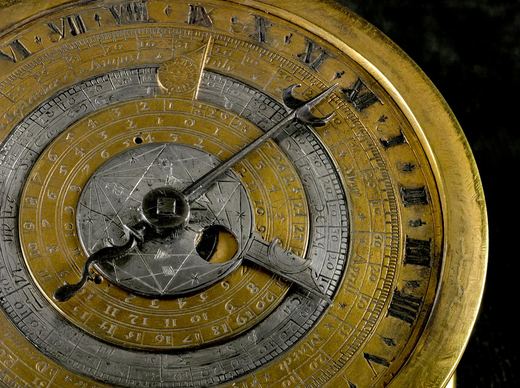
Circular table-clock with calendrical and lunar indications made by Nicholas Vallin in London between 1598 and 1603.
Science Museum Group, London
Clocks · 1611
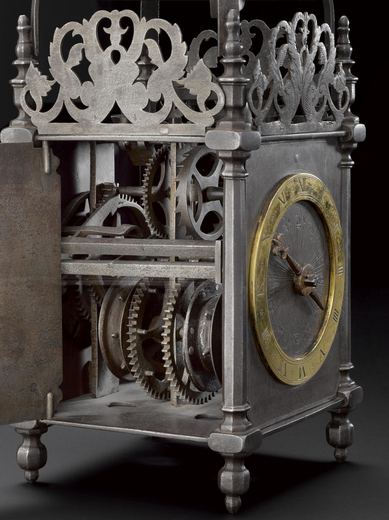
English iron lantern clock, with wheel balance, by John Holloway, Market Lavington, Wiltshire, England, 1611.
Science Museum Group, London
Clocks · 1630
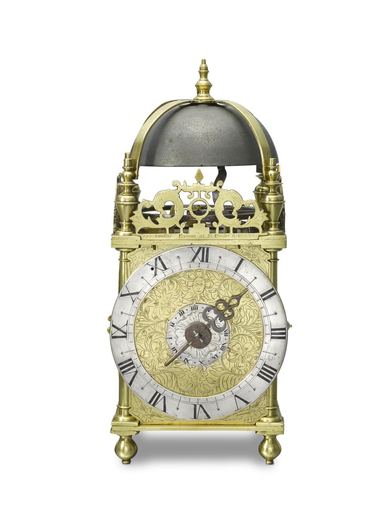
Lantern clock by Forman, Francis, England, 1630
Science Museum Group, London
Clocks · 1632-1640
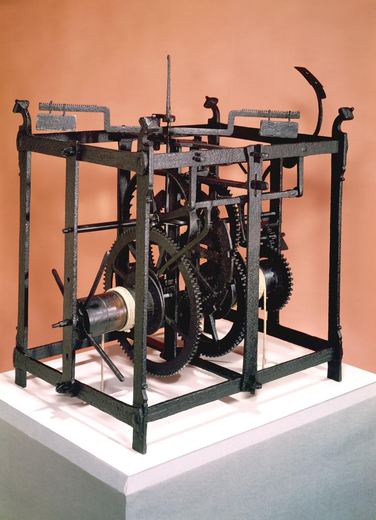
Turret clock, England, 1632-1640
Science Museum Group, London
Clocks · 1645-1655
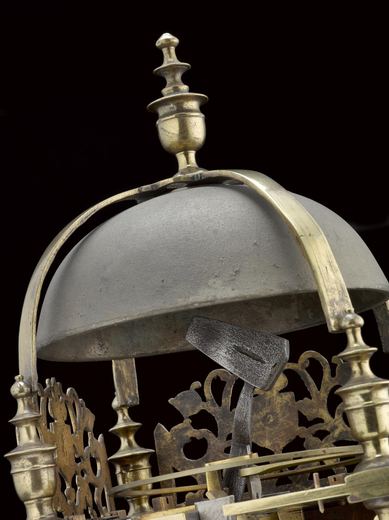
Balance-wheel brass lantern clock, with two driving weights and one counterweight, by Thomas Knifton, Cross Keys, Lothbury, London, England, 1645-1655.
Science Museum Group, London
Clocks · ca. 1650
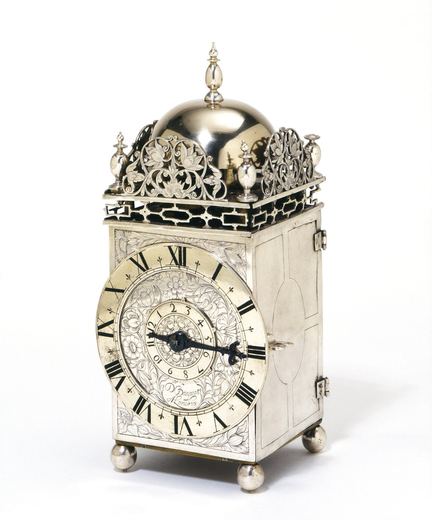
Lantern alarm clock, silver, by David Bouquet, circa 1650
Victoria and Albert Museum, London
Clocks · 1650-1660
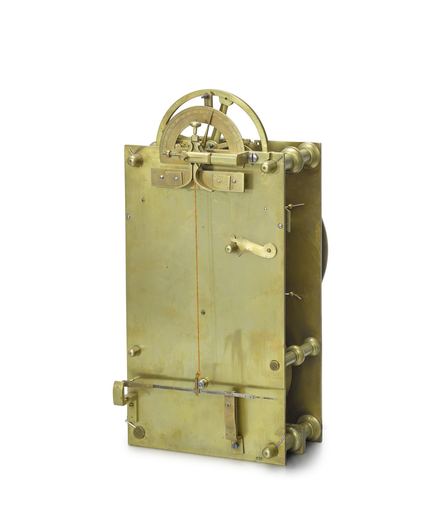
Lantern clock by Closon, Peter, England, 1650-1660
Science Museum Group, London
Clocks · ca. 1660
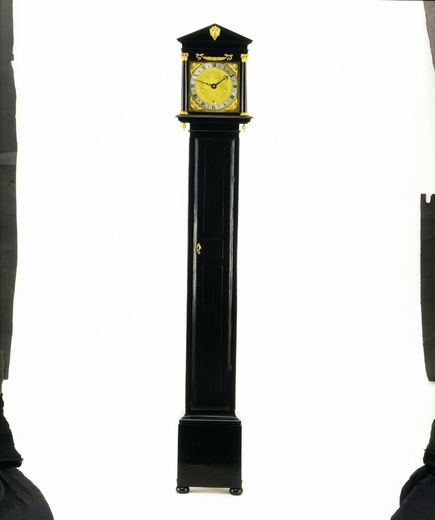
Longcase clock, ca. 1660, English, made by Ahasuerus Fromanteel
Victoria and Albert Museum, London