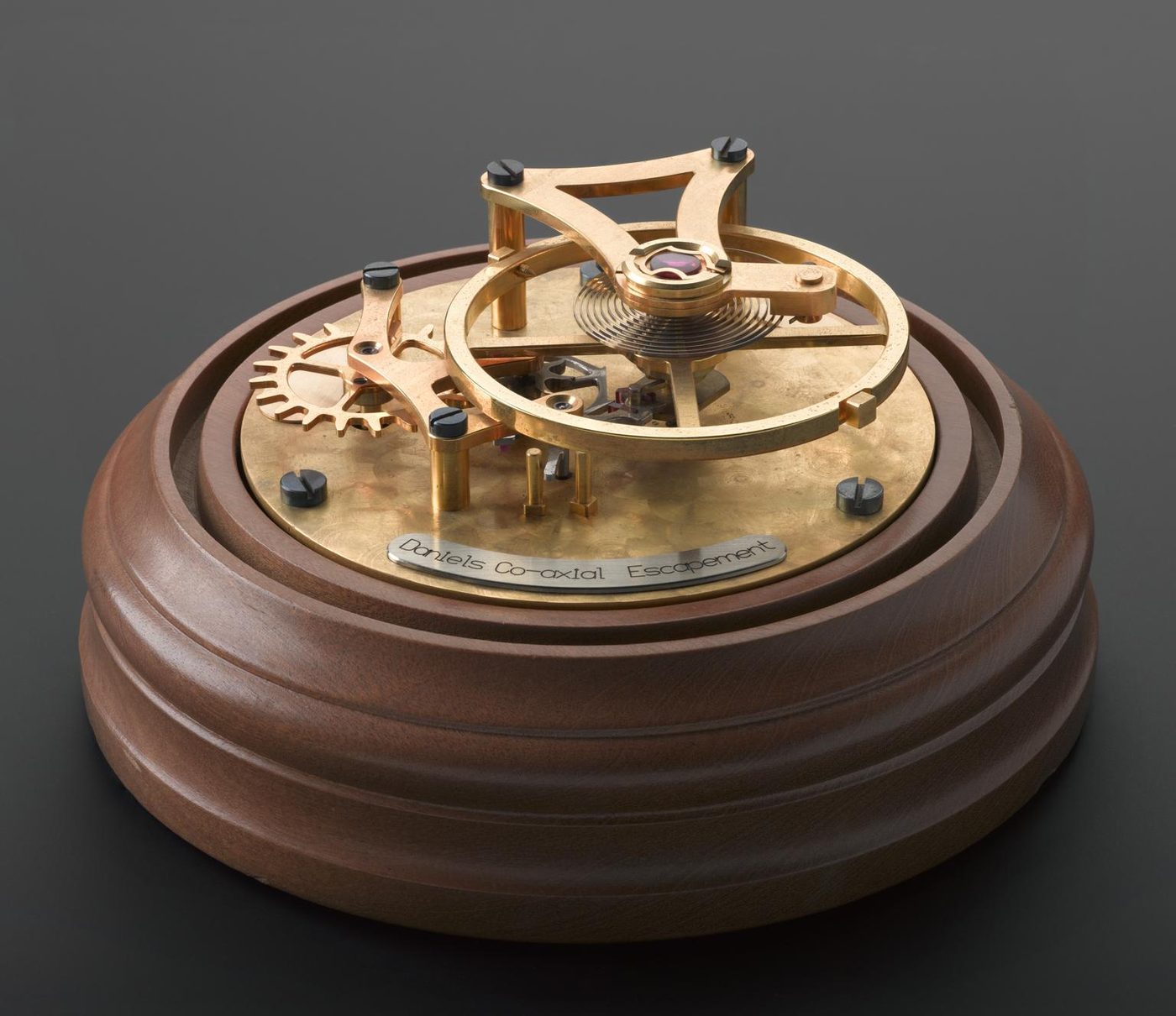
Movements & Components · Escapement model
Model of coaxial escapement invented by George Daniels CBE (1926-2011), made for him by Omega, Switzerland in 1999.
- Maker / attribution
- Daniels, George (maker); George Daniels (maker); Omega (maker)
- Date
- 1999
- Historical period
- Mechanical Renaissance (1990 – 2010)
- Country of origin
- Switzerland
- Place
- Switzerland, Switzerland
- Object type
- Escapement model
- Holding institution
- Science Museum Group, London
- Accession / object no.
- 2012-2
- Credit line
- Dr George Daniels CBE
- Catalogue title (original)
- Model of co-axial escapement
Record summary
Held and catalogued by Science Museum Group, London (object number 2012-2), this is an escapement model by Daniels, George, made in Switzerland, Switzerland, dated 1999. The Atlas places it in the Mechanical Renaissance period (1990 – 2010) of its Movements & Components collection. The record is illustrated with 4 photographs.
Assembled from the source record's structured fields. Dates and attributions are given as the source states them; where a field is missing the Atlas leaves it blank rather than estimating.
Catalogue description
The source record does not include a narrative description. The structured fields above are reproduced from it.
Historical context
Mechanical Renaissance (1990 – 2010)
Mechanical watches return as cultural objects; independent watchmaking flourishes.
New mechanical calibres, co-axial and other escapements, and silicon components renewed mechanical movement design.
Read the period in the timelineMore movements & components from this periodEarlier: Quartz Revolution
Atlas type guide
Escapements and escapement models
The escapement is the heart of every mechanical clock and watch: it releases the gear train one tooth at a time and gives small impulses to the oscillator (pendulum or balance) to keep it swinging. The verge (thirteenth century), anchor (c. 1670), deadbeat (c. 1715), cylinder (1720s), lever (c. 1755), detent (1780s) and co-axial (1970s) escapements each solved problems of friction, recoil and isochronism in different ways.
Large demonstration models of escapements were made for teaching in horological schools, for patent applications and for exhibitions. They are valuable because they make visible, at large scale, the minute interactions that take place in a watch many times per second.
What to look for
- The shape of the escape wheel teeth: crown wheel (verge), pointed (anchor), club-toothed (Swiss lever), ratchet (English lever), or two-tiered (co-axial).
- Pallets: flags on an arbor (verge), anchor-shaped, jewelled lever fork, or a detent spring.
- Whether impulse is given directly, through a lever, or in one direction only (detent).
- Teaching models usually carry the name of a school or demonstrator.
Dating clues
- Verge: c. 1275–1850.
- Anchor and deadbeat for clocks: after c. 1670 and c. 1715.
- Club-tooth Swiss lever: standard after c. 1880; co-axial in series from 1999.
General guidance written by the Atlas editors about this kind of object. It is not a statement about this particular piece; for that, rely on the source record above and on physical examination.
Read next:Verge escapementAnchor (recoil) escapementDetached lever escapementSpring detent escapementGrasshopper escapementEscapement simulation lab
Related records
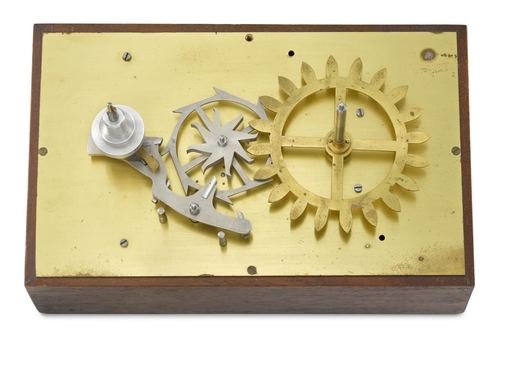
Pocket Watches · 1985
Electrically powered demonstration model of the Co-axial escapement by George Daniels. Isle of Man c.1985.
Science Museum Group, London
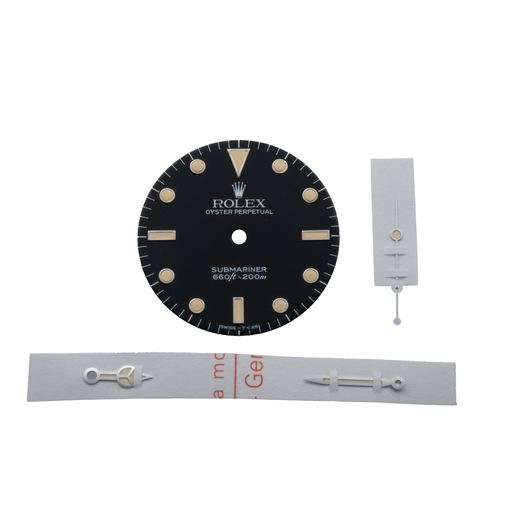
Movements & Components · circa 1990
Rolex watch dial, ref. 5513, circa 1990
Antiquorum auction archive, Geneva
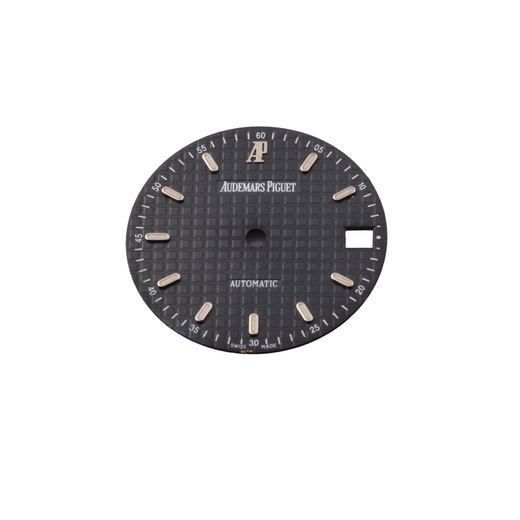
Movements & Components · circa 2000
Audemars Piguet Royal Oak, ref. 14790, circa 2000
Antiquorum auction archive, Geneva
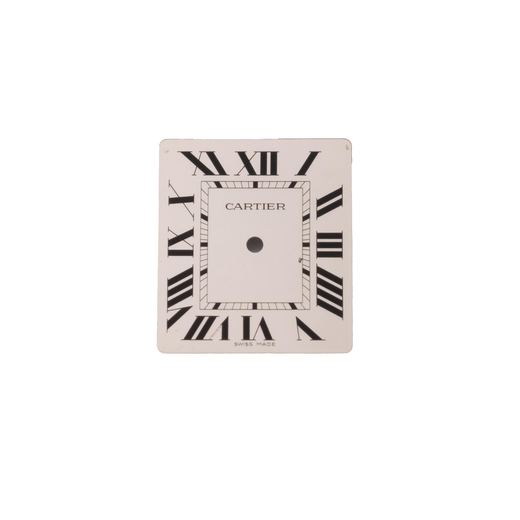
Movements & Components · circa 2000
Cartier watch dial, circa 2000
Antiquorum auction archive, Geneva
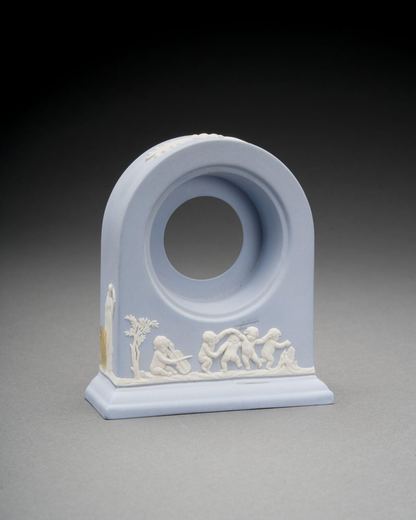
Movements & Components · 1993
Clock case, Jasperware with applied reliefs, Josiah Wedgwood and Sons, Barlaston, 1993 (V&A WE.18534-2014)
Victoria and Albert Museum, London
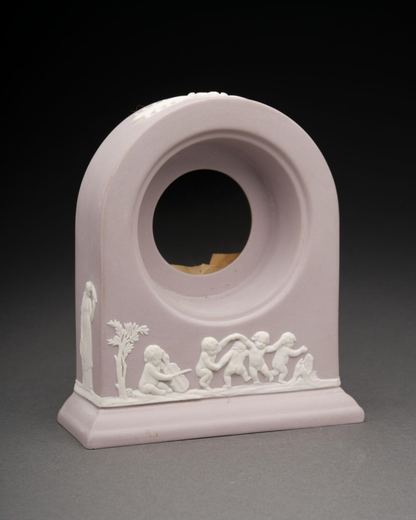
Movements & Components · 1993
Clock case, Jasperware with applied reliefs, Josiah Wedgwood and Sons, Barlaston, 1993 (V&A WE.18551-2014)
Victoria and Albert Museum, London
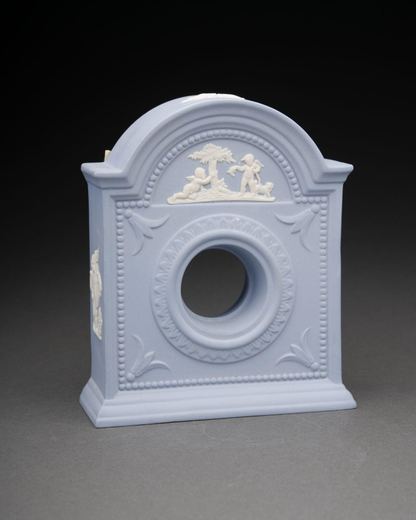
Movements & Components · ca. 1999
Clock case, Jasperware with applied reliefs and moulding, Josiah Wedgwood and Sons, Barlaston, ca. 1999
Victoria and Albert Museum, London
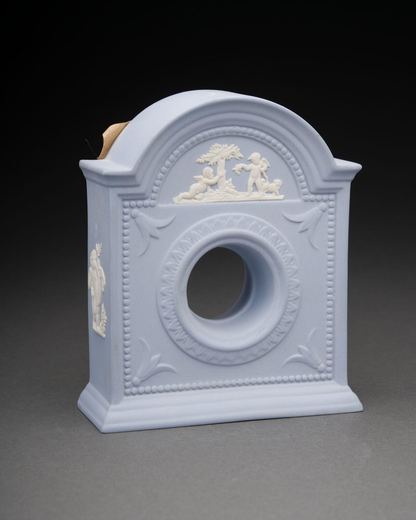
Movements & Components · 1997
Clock case, Jasperware with applied reliefs and moulding, Josiah Wedgwood and Sons, Barlaston, 1996
Victoria and Albert Museum, London