
Wristwatches · Wristwatch
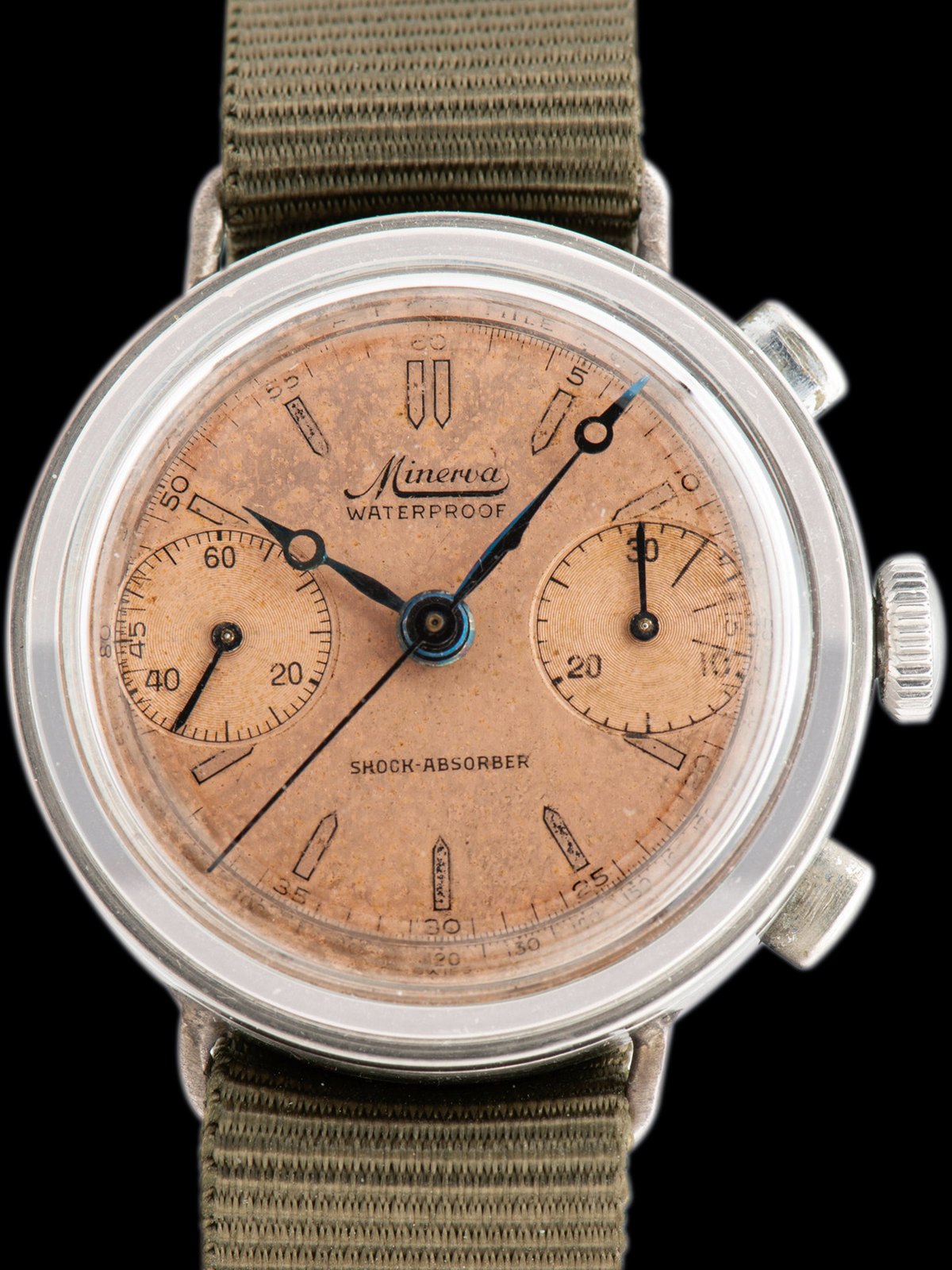
Minerva Waterproof Chronograph "Salmon Dial", 1940s
- Maker / attribution
- Minerva (maker)
- Date
- 1940s
- Historical period
- Golden Age of Mechanical Watchmaking (1900 – 1945)
- Country of origin
- Switzerland
- Object type
- Wristwatch
- Stock no.
- MNVAWC
- Credit line
- Dealer listing, Craft & Tailored (MNVAWC)
- Catalogue title (original)
- 1940s Minerva Waterproof Chronograph "Salmon Dial" (English)
View the source record (dealer listing) ↗ (opens another website in a new tab)Suggest a correction
Record summary
Catalogued by Craft & Tailored (dealer), Los Angeles (stock number MNVAWC), this is a wristwatch by Minerva, made in Switzerland, dated 1940s. The Atlas places it in the Golden Age of Mechanical Watchmaking period (1900 – 1945) of its Wristwatches collection. The record is illustrated with 6 photographs.
Assembled from the source record's structured fields. Dates and attributions are given as the source states them; where a field is missing the Atlas leaves it blank rather than estimating.
Catalogue description
Dealer description — Craft & Tailored
Not many two-word combos get watch people more excited than "waterproof chronograph". The combination of utility makes for almost the perfect daily companion, which this beautiful 1940s Minerva absolutely is. Founded in 1858, the company has spent a century and a half building beautiful, complex, and practical watches that stand the test of time. Stock # MNVAWC Brand Minerva Style Waterproof Chronograph Model N/A Serial N/A Size Men's Material Stainless Steel Dial Salmon Millimeters 33 Bracelet Single Pass Nylon Strap CASE & BRACELET The stainless steel case measures 33 millimeters with soldered wire lugs, a stepped bezel, and oval pump pushers. On paper, the size may seem on the smaller side but the thickness of the case gives it heft on the wrist while the overall design simply sings at these dimensions. This Minerva is accompanied by a single-pass nylon strap. DIAL & HANDS As if the waterproof chronograph wasn't enough for the modern lover of vintage watches, this beauty also features a stunning and sought-after salmon dial. The dial shows light and even aging, unlocking even more subtle vintage charm. The watch features beautiful blued steel Breguet style hands, giving the watch a sophistication normally lacking in sports watches. ACCESSORIES None. The watch is functioning and keeping time, previous service history is unknown.
Historical context
Golden Age of Mechanical Watchmaking (1900 – 1945)
The wristwatch displaces the pocket watch; waterproof cases, self-winding and grand complications.
The wristwatch overtook the pocket watch. Military use in the First World War, aviation, water-resistant cases (1926), automatic winding (1923–31), rectangular Art Deco designs and early chronographs and calendars defined the period.
Read the period in the timelineMore wristwatches from this periodEarlier: Industrial Revolution
Atlas type guide
Chronographs and split-seconds watches
A chronograph is a watch with an additional seconds hand that can be started, stopped and returned to zero independently of the timekeeping. Louis Moinet built an early example in 1816 and Nicolas Rieussec a recording 'chronographe' in 1821; Adolphe Nicole's heart-shaped reset cam (patented 1862) made the modern return-to-zero possible. Split-seconds (rattrapante) chronographs add a second hand that can be stopped for intermediate times; flyback chronographs restart instantly.
Chronographs were essential tools for doctors (pulsometer scales), artillery (telemeter), engineers and sport. In wristwatches, Valjoux, Venus, Lemania and later the automatic chronographs of 1969 (Zenith El Primero, the Chronomatic Calibre 11 group and Seiko 6139) are milestones.
What to look for
- Push-pieces on the case band or a single button in the crown (monopusher).
- Subsidiary registers for minutes and hours; tachymeter, telemeter or pulsometer scales.
- Column wheel versus cam control visible in the movement.
- Calibre markings of specialist makers (Valjoux, Lemania, Venus, Landeron).
Dating clues
- Pocket chronographs with heart cam reset: after 1862.
- Wrist chronographs: from c. 1910; two-button designs from the 1930s.
- Automatic chronographs: from 1969.
General guidance written by the Atlas editors about this kind of object. It is not a statement about this particular piece; for that, rely on the source record above and on physical examination.
Read next:Flyback chronographChronograph
Related records
Wristwatches · c. 1960s
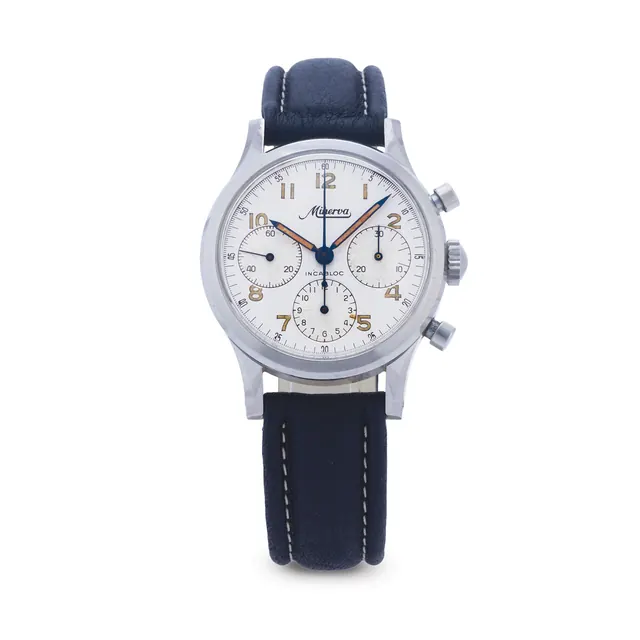
Minerva wristwatch, ref. VD712, Chronograph, circa 1960s
Antiquorum auction archive, Geneva
Pocket Watches · c. 1930s
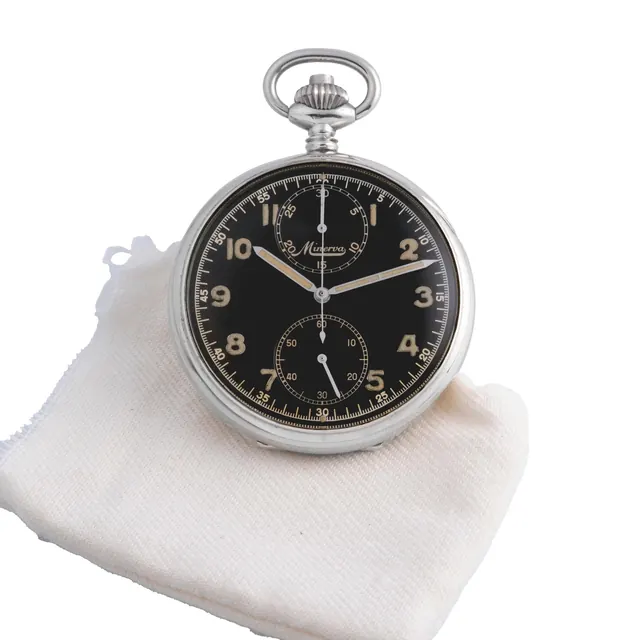
Minerva pocket watch, Single Button Chronograph Black Luminous Dial, circa 1930's
Antiquorum auction archive, Geneva
Wristwatches · c. 1940s
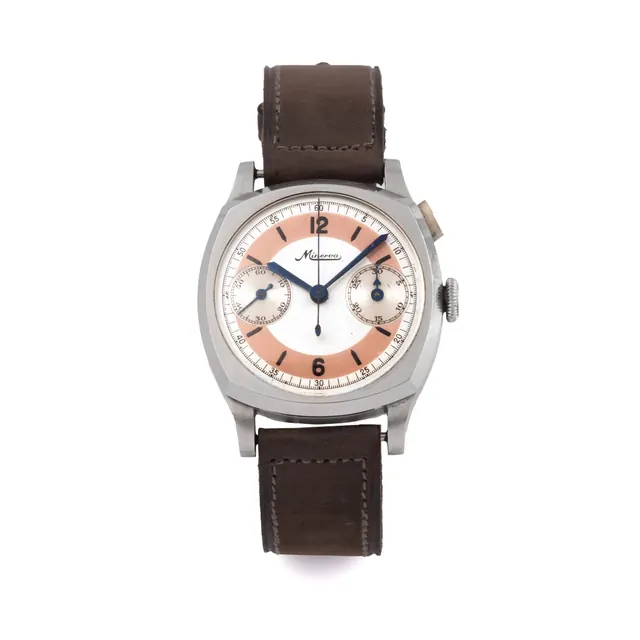
Minerva wristwatch, Single Button Chronograph New Old Stock, circa 1940's
Antiquorum auction archive, Geneva
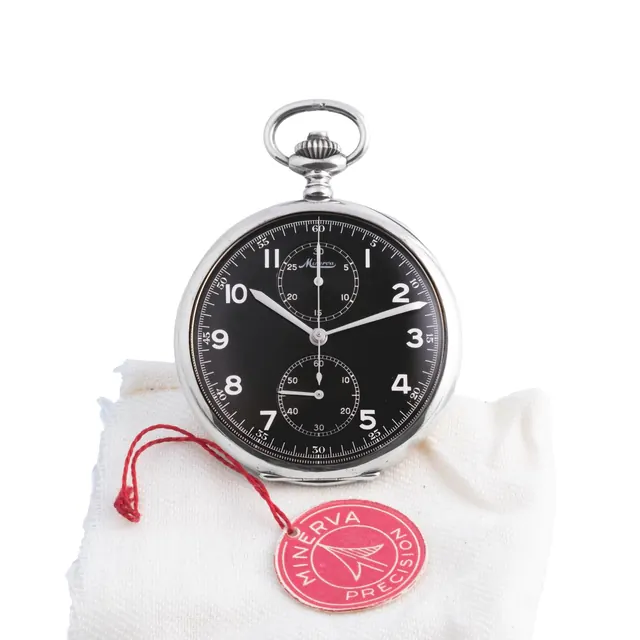
Pocket Watches · c. 1930s
Minerva pocket watch, Single Button Chronograph Black Dial, circa 1930's
Antiquorum auction archive, Geneva

Wristwatches · 1931
Rolex 'Oyster Perpetual' rotor self-winding wrist-watch, lever escapement, in steel case with glass in back, Montres Rolex SA, Geneva, Switzerland, 1931
Science Museum Group, London

Wristwatches · 1900–1999
Wristwatch by Certina, Switzerland, 1900–1999
Nordic Museum Foundation
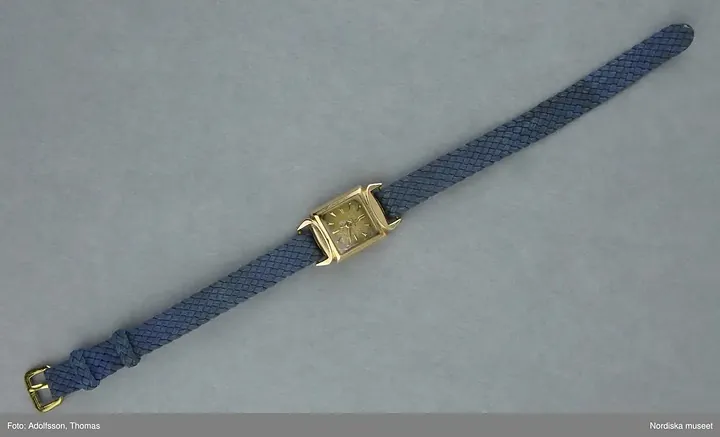
Wristwatches · 1900–1999
Wristwatch by Omega, Västerås, 1900–1999
Nordic Museum Foundation
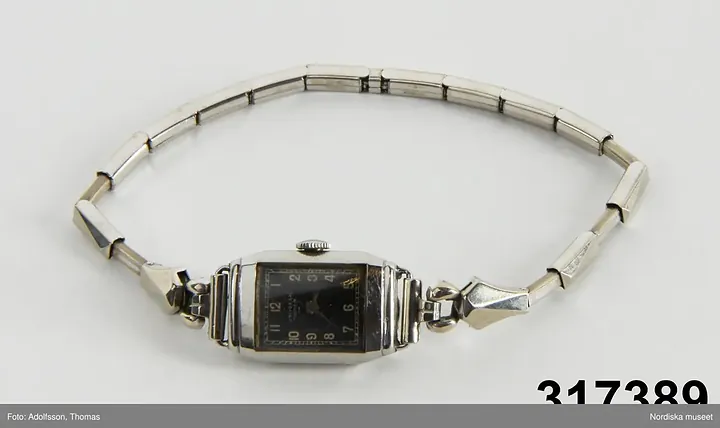
Wristwatches · 1900–1999
Wristwatch by Universal, Switzerland, 1900–1999
Nordic Museum Foundation