
Wristwatches · Wristwatch
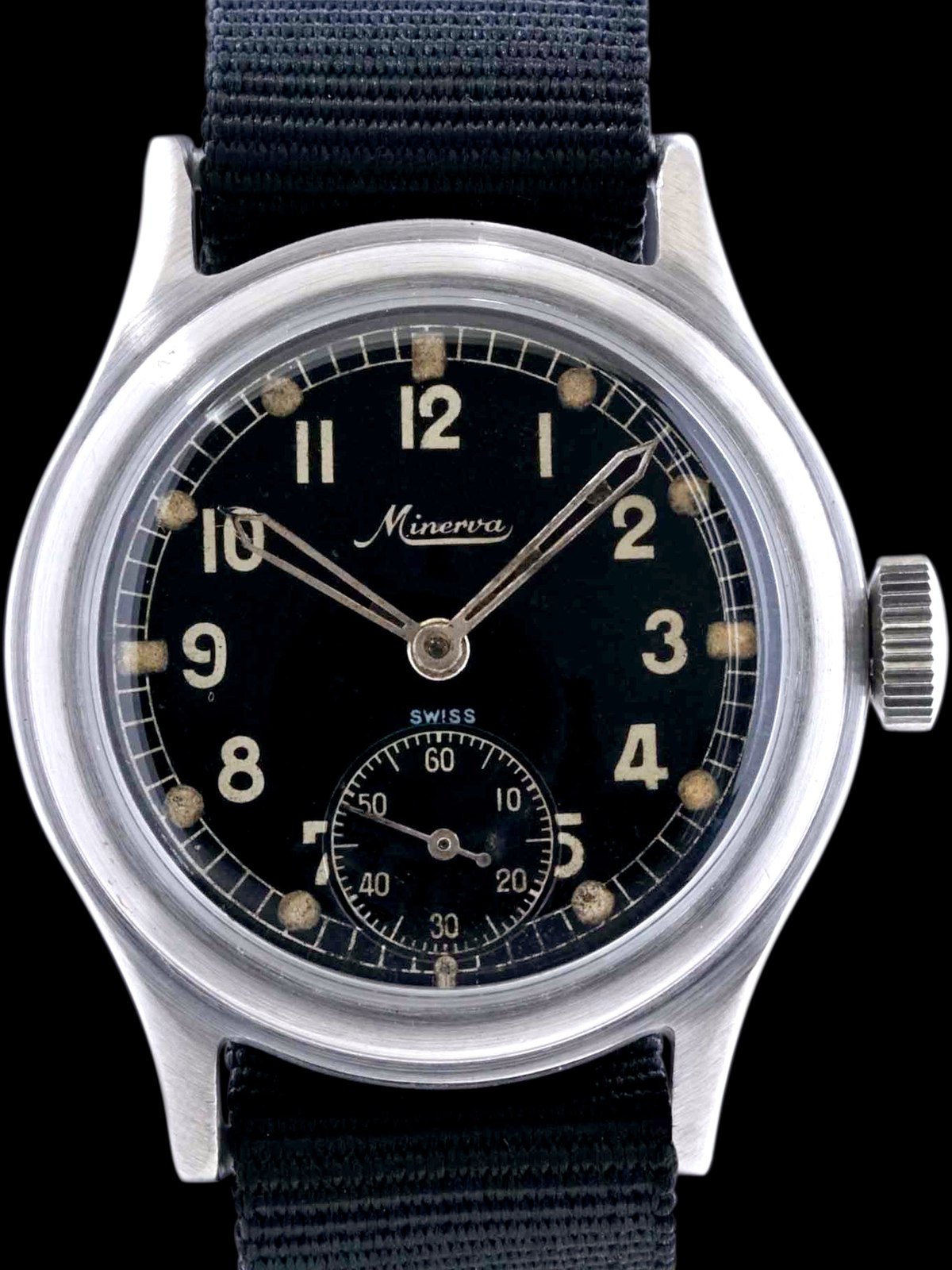
Minerva D.H. German Military Watch, 1940s
- Maker / attribution
- Minerva (maker)
- Date
- 1940s
- Historical period
- Golden Age of Mechanical Watchmaking (1900 – 1945)
- Country of origin
- Germany
- Object type
- Wristwatch
- Dimensions
- Case 34 mm
- Stock no.
- MVADHMW
- Credit line
- Dealer listing, Craft & Tailored (MVADHMW)
- Catalogue title (original)
- 1940s Minerva D.H. German Military Watch (English)
View the source record (dealer listing) ↗ (opens another website in a new tab)Suggest a correction
Record summary
Catalogued by Craft & Tailored (dealer), Los Angeles (stock number MVADHMW), this is a wristwatch by Minerva, made in Germany, dated 1940s. The Atlas places it in the Golden Age of Mechanical Watchmaking period (1900 – 1945) of its Wristwatches collection. Recorded dimensions: Case 34 mm. The record is illustrated with 6 photographs.
Assembled from the source record's structured fields. Dates and attributions are given as the source states them; where a field is missing the Atlas leaves it blank rather than estimating.
Catalogue description
Dealer description — Craft & Tailored
The art of collecting military-issued timepieces has never been more interesting or captivating than in today’s day and age. These alluring timepieces have been sought after for as long as collectors have been rummaging through estate sales and flipping through catalogs, however, due to the availability of archived information we now possess, the community has never been more interconnected or informed. This beautiful Minerva was a piece designed for the Deutsches Heer, the German Army, during WWII. A compact and robust design ensured its safe passage through the decades where now, 80 years later, it still feels and appears as solid as the day it left the Minerva factory. Stock # MVADHMW Brand Minerva Style Military Model N/A Serial 58XXXX Size Men's Material Stainless Steel Dial Glossy Black "Gilt" Millimeters 34 Bracelet Nylon Single-Pass NATO Strap CASE & BRACELET The stainless steel case is 34mm, with a stepped bezel and fixed lug pins. This manually wound military piece features a screw-down case back, with all markings still deep and vibrant, and a movement dust cover only found on the Lavina Caliber 105 version of this watch and not the other, Minerva Caliber 12 option. The watch comes supplied on a NATO strap. The case back features a unique "AD" engraving, likely the initials of the original owner. DIAL & HANDS The gilt dial is a deep black and the aged radium hour markers are all fully intact. The dial features subdial seconds at 6 o'clock which creates a much more full look on what would otherwise be a quite simple design. The tapered hands have long since lost most of their radium filling, but are quite beautiful in their emptiness, the original radium lume that remains in the hands is a very dark coloration. ACCESSORIES None. The watch is keeping time and functioning perfectly, previous service history is unknown.
Historical context
Golden Age of Mechanical Watchmaking (1900 – 1945)
The wristwatch displaces the pocket watch; waterproof cases, self-winding and grand complications.
The wristwatch overtook the pocket watch. Military use in the First World War, aviation, water-resistant cases (1926), automatic winding (1923–31), rectangular Art Deco designs and early chronographs and calendars defined the period.
Read the period in the timelineMore wristwatches from this periodEarlier: Industrial Revolution
Atlas type guide
Military, pilot and travel watches
The wristwatch owes much of its adoption by men to warfare and aviation. Wristlets — small pocket watches soldered with lugs and worn on a strap — were used in colonial campaigns and became standard equipment in the First World War, with protective grilles over the crystal ('shrapnel guards'). Louis Cartier's Santos (1904), designed for the aviator Alberto Santos-Dumont, is often cited as an early purpose-made pilot's watch.
In the Second World War governments specified watches in detail: the German B-Uhr observation watches, the American A-11, and the British 'W.W.W.' (the 'Dirty Dozen' set of 1945). After the war, jet travel brought GMT and world-time watches, which show two or more time zones at once — Louis Cottier's world-time mechanism and the Rolex GMT-Master (1955) are examples.
What to look for
- Military markings on the case back: broad arrow, issue numbers, 'W.W.W.', 'A.T.P.'
- High-legibility black dials with luminous Arabic numerals; oversized crowns for gloved hands.
- 24-hour hands and rotating 24-hour bezels or city rings on GMT/world-time watches.
- Wire lugs on early wristlets converted from pocket watches.
Dating clues
- Wire-lug wristlets: c. 1900–1925.
- Military specifications of the Second World War: 1939–1945.
- GMT and world-time wristwatches: mainly after 1950.
General guidance written by the Atlas editors about this kind of object. It is not a statement about this particular piece; for that, rely on the source record above and on physical examination.
Related records
Wristwatches · c. 1960s
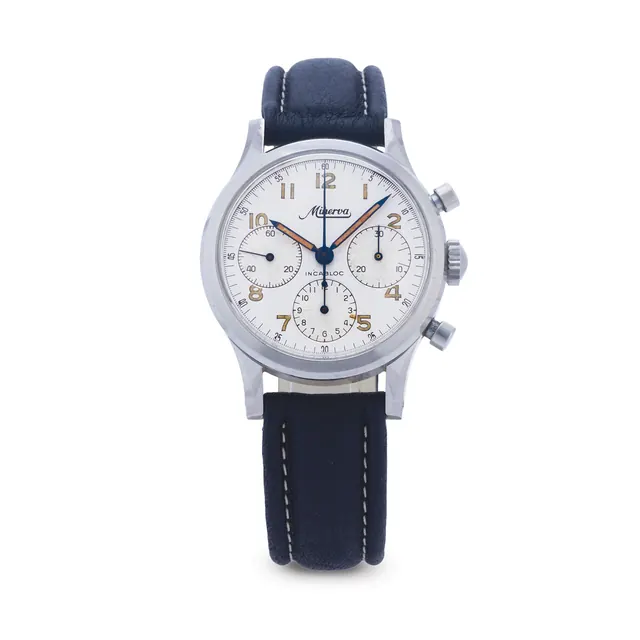
Minerva wristwatch, ref. VD712, Chronograph, circa 1960s
Antiquorum auction archive, Geneva
Pocket Watches · c. 1930s
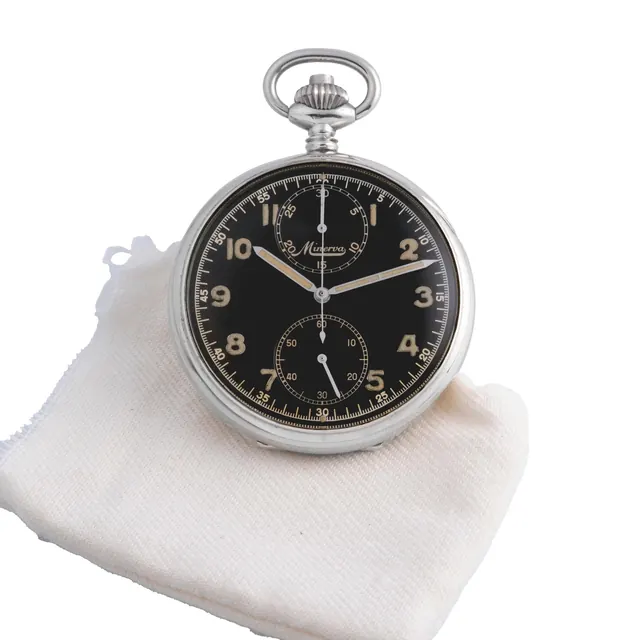
Minerva pocket watch, Single Button Chronograph Black Luminous Dial, circa 1930's
Antiquorum auction archive, Geneva
Wristwatches · c. 1940s
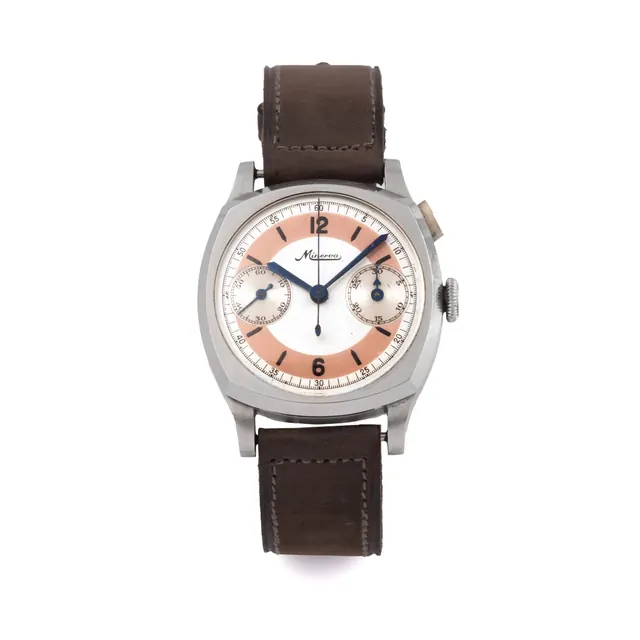
Minerva wristwatch, Single Button Chronograph New Old Stock, circa 1940's
Antiquorum auction archive, Geneva
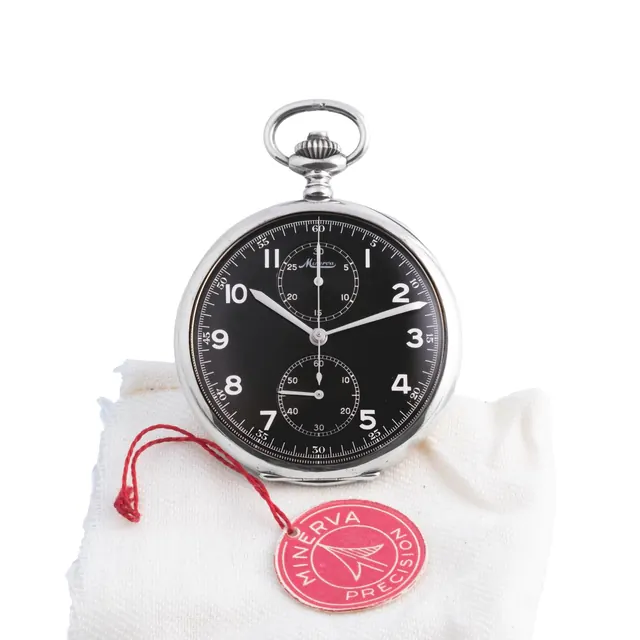
Pocket Watches · c. 1930s
Minerva pocket watch, Single Button Chronograph Black Dial, circa 1930's
Antiquorum auction archive, Geneva
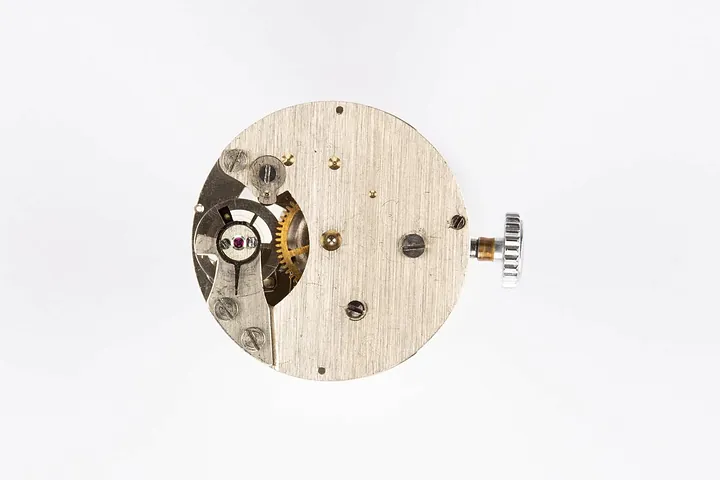
Wristwatches · c. 1925
Wristwatch, Germany, c. 1925
German Clock Museum
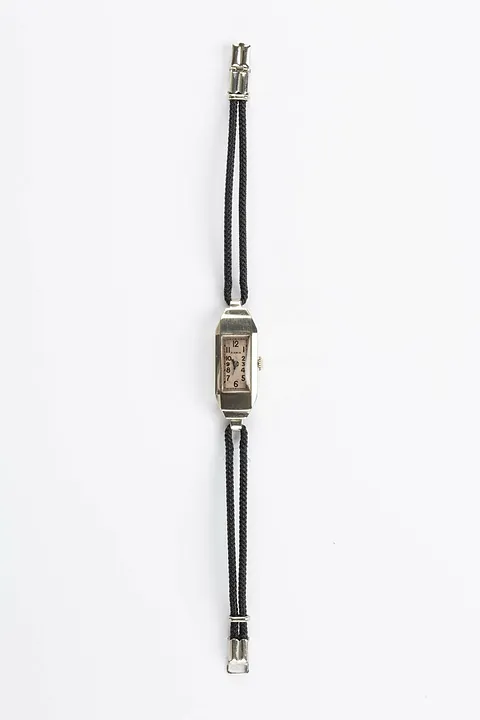
Wristwatches · c. 1930
Wristwatch by Rena, Germany, c. 1930
German Clock Museum
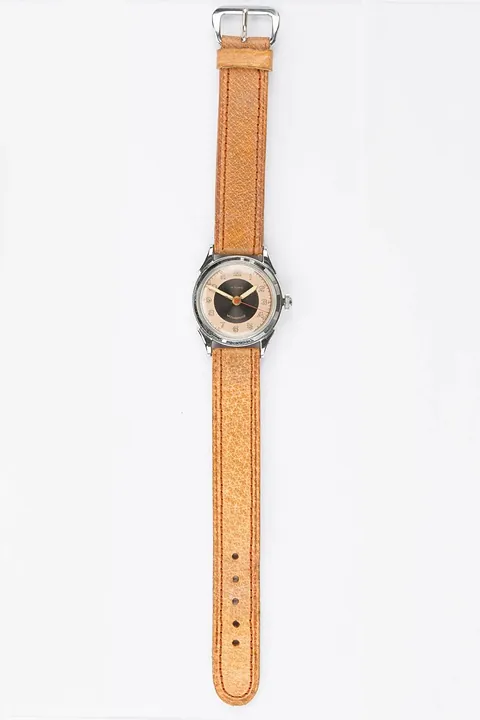
Wristwatches · c. 1940
Wristwatch, Germany, c. 1940
German Clock Museum
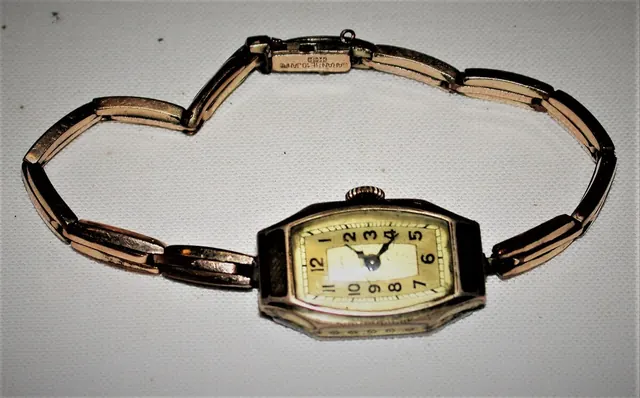
Wristwatches · 1920 - 1930s
Wristwatch, Germany, 1920 - 1930s
HKM / Kulttuurihistoriallinen