
Wristwatches · Wristwatch
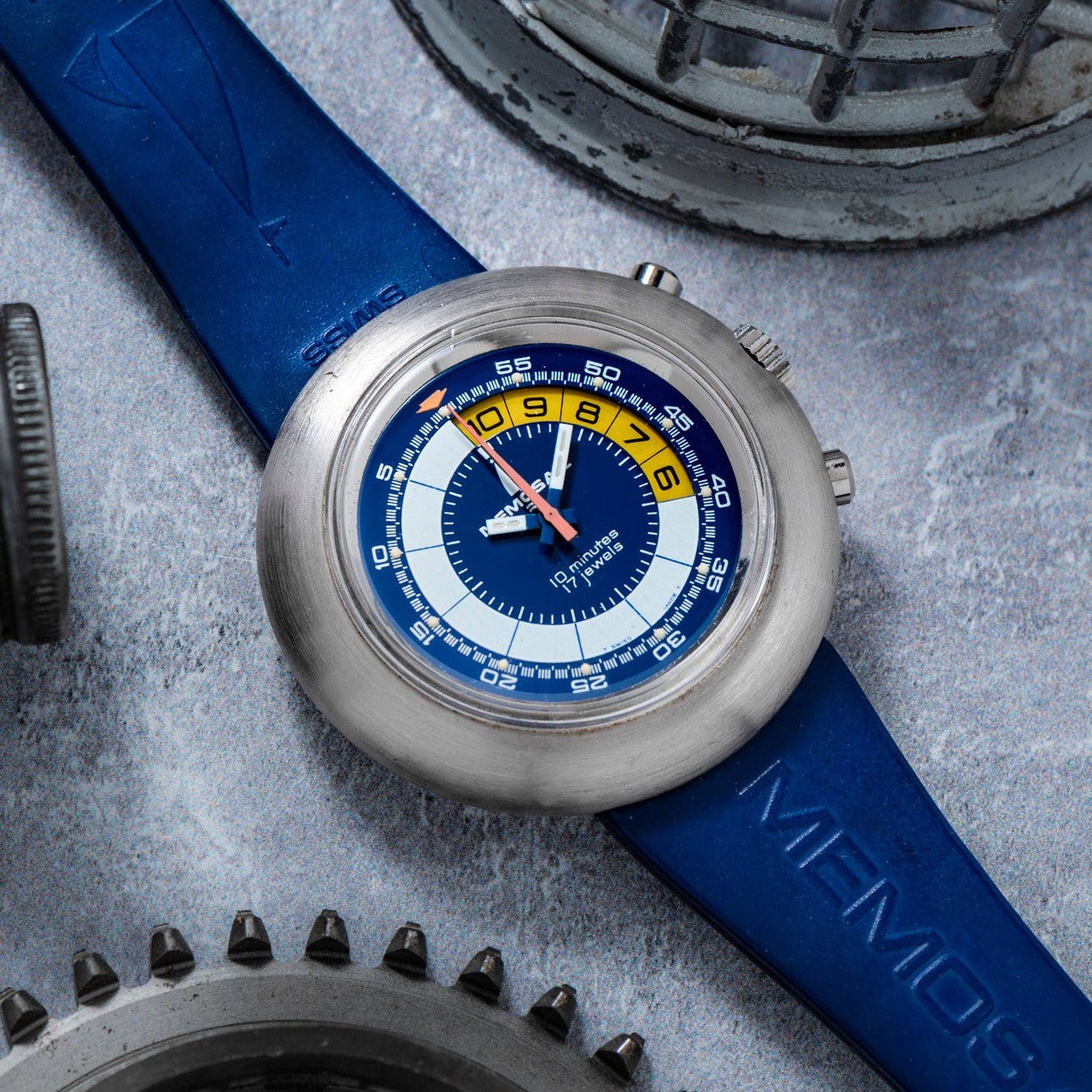
Memosail Regatta Yacht Timer 'UFO' Chronograph, c. 1970s
- Maker / attribution
- Memosail (maker)
- Date
- c. 1970s
- Historical period
- Quartz Revolution (1969 – 1990)
- Country of origin
- Unrecorded in source
- Object type
- Wristwatch
- Dimensions
- Case 45.5 mm
- Stock no.
- 40991210
- Credit line
- Dealer listing, Analog/Shift (40991210)
- Catalogue title (original)
- Memosail Regatta Yacht Timer 'UFO' Chronograph (English)
View the source record (dealer listing) ↗ (opens another website in a new tab)Suggest a correction
Record summary
Catalogued by Analog/Shift (dealer), New York (stock number 40991210), this is a wristwatch by Memosail, dated c. 1970s. The Atlas places it in the Quartz Revolution period (1969 – 1990) of its Wristwatches collection. Recorded dimensions: Case 45.5 mm. The record is illustrated with 6 photographs.
Assembled from the source record's structured fields. Dates and attributions are given as the source states them; where a field is missing the Atlas leaves it blank rather than estimating.
Catalogue description
Dealer description — Analog/Shift
Purpose-built watches have captured the minds and hearts of collectors for decades. Many have found an enduring place in the pantheon of classic designs even though they might not still be used for their intended purpose. During yachting regattas, so-called ‘yacht timers’ were equipped with special countdown functions that allowed a skipper to line up his vessel such that it would cross the start line exactly at the sounding of the starting gun. Of course, these watches also needed to be thoroughly water-resistant, first-rate timekeepers in and of themselves, and as a result, many robust, beautiful watches were developed by companies large and small. This particular regatta timer, dating to circa the 1970s, is from Swiss watchmaker Memosail. It features a 45.5mm stainless steel round case with shrouded lugs — allowing for a piece that wears far smaller that its dimensions would lead you to believe — barrel pushers, an acrylic crystal, a gloss blue Tritium dial with a white chapter ring, a yellow a 10-minute regatta timing disc within, and a matching handset with a bright orange seconds hand. Powered by a manually wound movement and paired to a fantastic signed blue rubber strap, this colorful regatta timer is an awesome artifact from the pre-digital days of sport timing. With a case design that feels comfortable on the wrist, this delightful yachting timer will surely have your yacht timing needs covered, whether you're skippering a yacht or watching from the safety of the pier, cocktail firmly in hand. We know you’ll love it as much as we do!
Historical context
Quartz Revolution (1969 – 1990)
Seiko's Astron begins mass quartz timekeeping; traditional industries contract sharply.
Quartz and digital watches transformed the market after 1969. Swiss employment collapsed, Japanese and Hong Kong production soared, and the Swatch (1983) helped the Swiss industry recover; mechanical watches survived as luxury goods.
Read the period in the timelineMore wristwatches from this periodEarlier: Modern Mechanical Horology
Atlas type guide
Chronographs and split-seconds watches
A chronograph is a watch with an additional seconds hand that can be started, stopped and returned to zero independently of the timekeeping. Louis Moinet built an early example in 1816 and Nicolas Rieussec a recording 'chronographe' in 1821; Adolphe Nicole's heart-shaped reset cam (patented 1862) made the modern return-to-zero possible. Split-seconds (rattrapante) chronographs add a second hand that can be stopped for intermediate times; flyback chronographs restart instantly.
Chronographs were essential tools for doctors (pulsometer scales), artillery (telemeter), engineers and sport. In wristwatches, Valjoux, Venus, Lemania and later the automatic chronographs of 1969 (Zenith El Primero, the Chronomatic Calibre 11 group and Seiko 6139) are milestones.
What to look for
- Push-pieces on the case band or a single button in the crown (monopusher).
- Subsidiary registers for minutes and hours; tachymeter, telemeter or pulsometer scales.
- Column wheel versus cam control visible in the movement.
- Calibre markings of specialist makers (Valjoux, Lemania, Venus, Landeron).
Dating clues
- Pocket chronographs with heart cam reset: after 1862.
- Wrist chronographs: from c. 1910; two-button designs from the 1930s.
- Automatic chronographs: from 1969.
General guidance written by the Atlas editors about this kind of object. It is not a statement about this particular piece; for that, rely on the source record above and on physical examination.
Read next:Flyback chronographChronograph
Related records
Wristwatches · 1970s
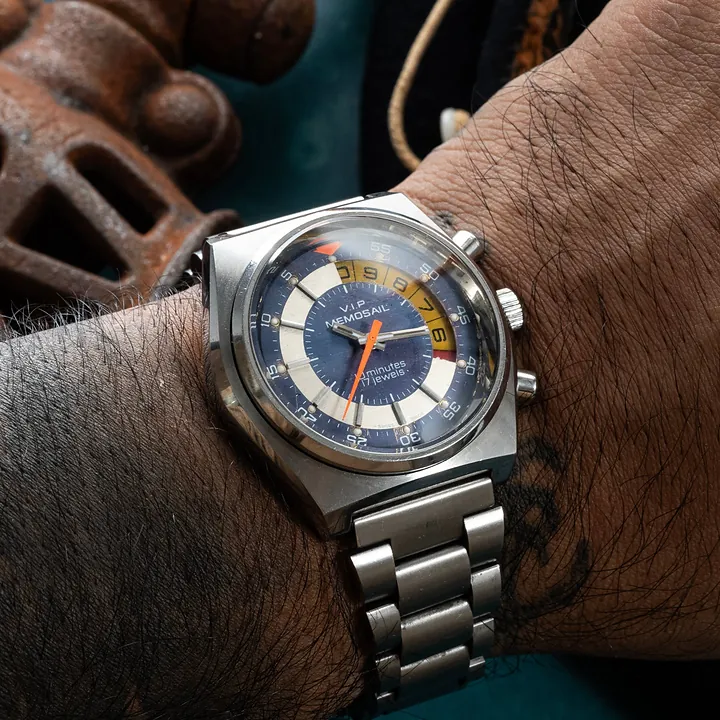
Memosail Regatta Yacht Timer Chronograph, 1970s
Analog/Shift (dealer), New York

Wristwatches · 1970
Wristwatch by Heno, Switzerland, 1970
Museum Rotterdam
Wristwatches · 1970s
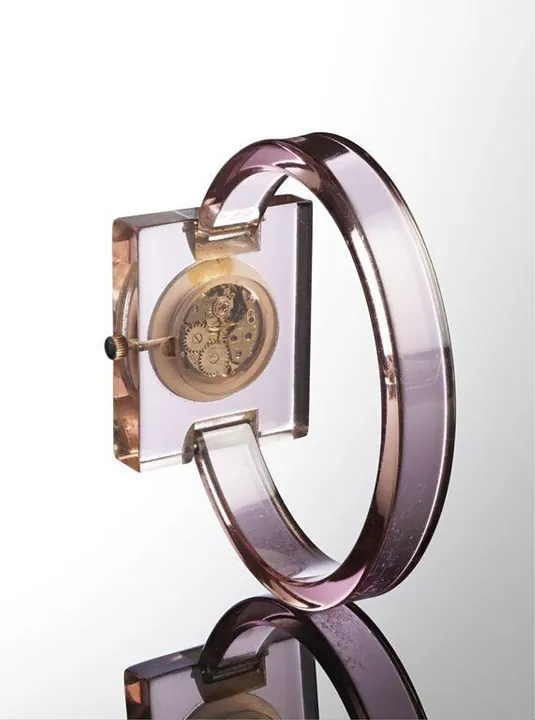
Wristwatch, plastic, by Gucci; Italy, 1970s.
Victoria and Albert Museum, London
Wristwatches · 1978
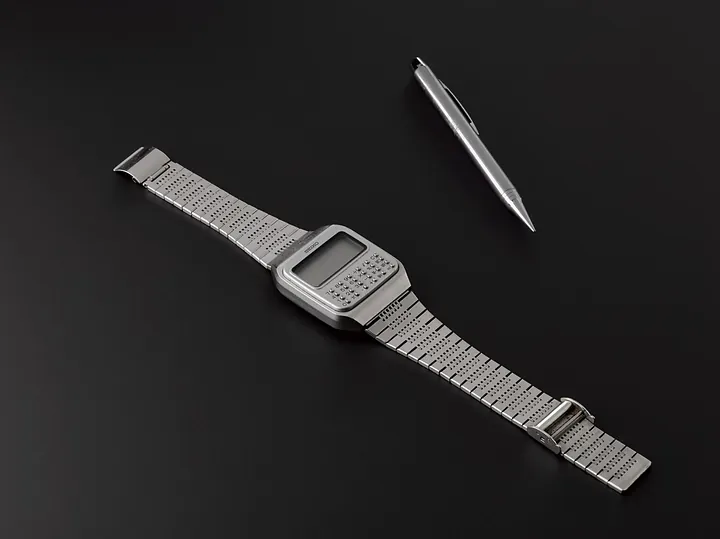
Calculator wristwatch by Suwa Seikosha Co. Limited, Japan, 1978
Science Museum Group, London
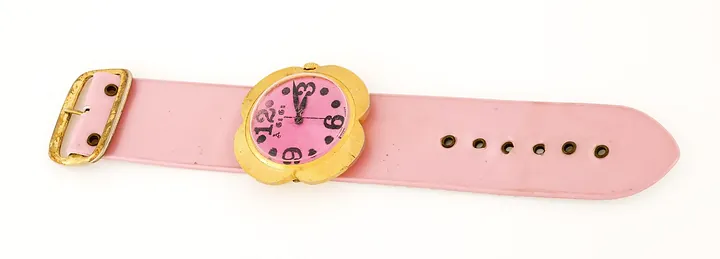
Wristwatches · 1980
Wristwatch, 1980 (no. 71413)
Museum Rotterdam
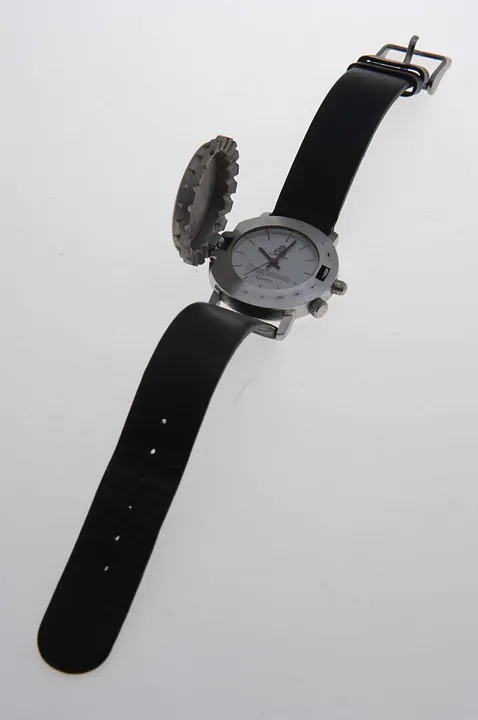
Wristwatches · 1980
Wristwatch, 1980 (no. 91477)
Museum Rotterdam
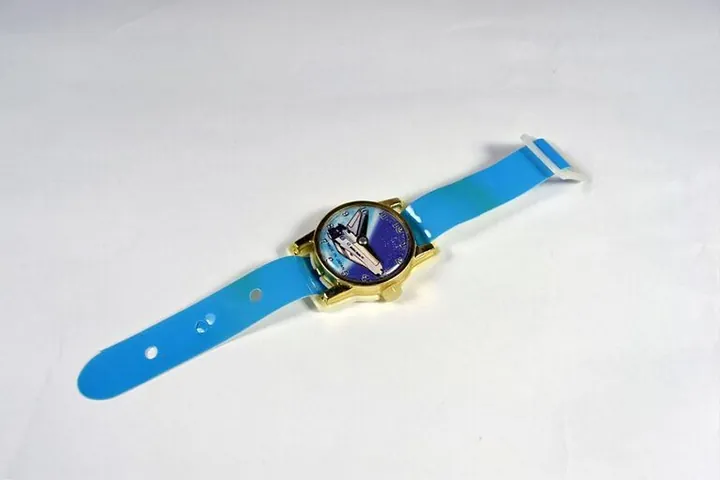
Wristwatches · 1980–1982
Wristwatch, Space Shuttle; plastic, Japan, 1970-1979?
Victoria and Albert Museum, London
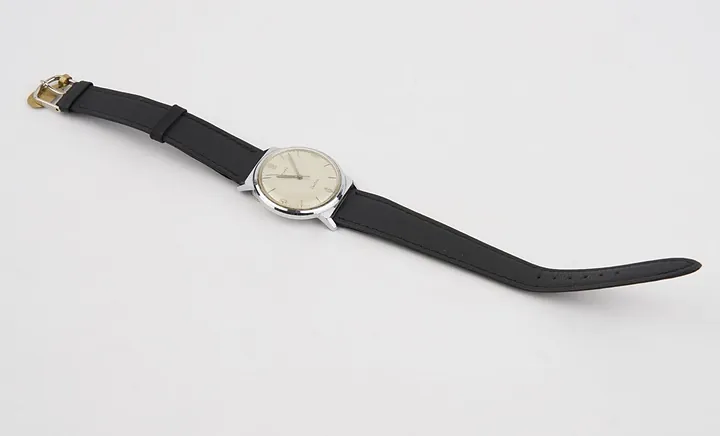
Wristwatches · 1949–1992
Timex `Electric' wristwatch, with electrically operated balance wheel mechanism, United States, 1949–1992
Science Museum Group, London