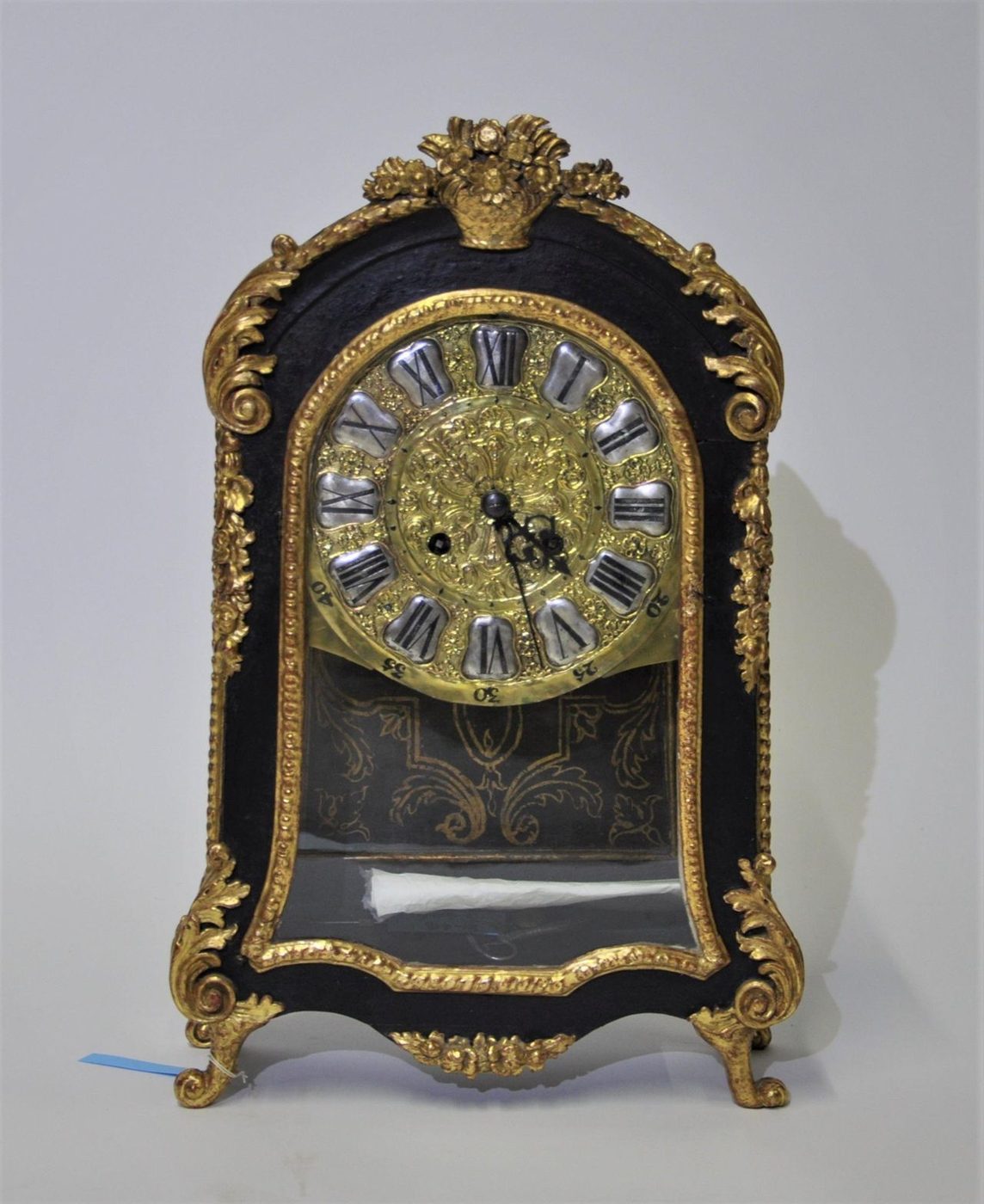
Clocks · Mantel clock
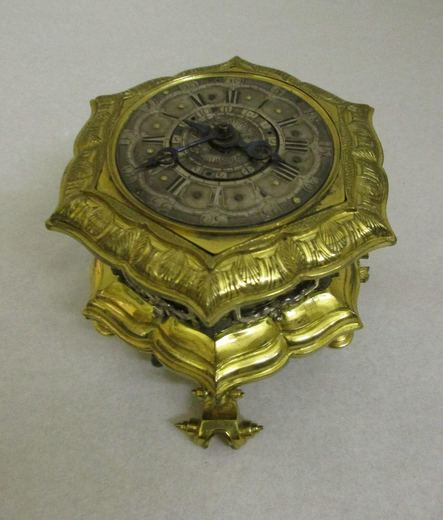
Mantel clock, Switzerland, 1700–1799
- Maker / attribution
- Unrecorded in source
- Date
- 1700–1799
- Historical period
- Early Modern Horology (1600 – 1750)
- Country of origin
- Switzerland
- Place
- Wildegg
- Object type
- Mantel clock
- Holding institution
- Museum Aargau
- Accession / object no.
- _kimnet_cho_ea2c41a9_de67_3098_9b38_b11ed4ffb2aa
- Catalogue title (original)
- Pendule mit Wandkonsole (German)
Record summary
Held and catalogued by Museum Aargau (object number _kimnet_cho_ea2c41a9_de67_3098_9b38_b11ed4ffb2aa), this is a mantel clock, made in Wildegg, Switzerland, dated 1700–1799. The Atlas places it in the Early Modern Horology period (1600 – 1750) of its Clocks collection. The record is illustrated with 1 photograph.
Assembled from the source record's structured fields. Dates and attributions are given as the source states them; where a field is missing the Atlas leaves it blank rather than estimating.
Catalogue description
Catalogue description from Museum Aargau (German)
Diese Pendeluhr, auch Pendule genannt, stammt aus dem Regierungsgebäude in Aarau und so verwundert auch nicht ihre reichhaltige Dekoration. In einer sorgfältigen Holzkonstruktion stechen einige Golddekorelemente heraus und sowohl die Stunden- als auch die Minutenanzeige sind ausgiebig dekoriert. Das Pendel ist hier im Inneren versteckt und wird über einen Federzug betrieben, der die Uhr 8 Tage lang in Betrieb hält. Bis zum Aufkommen von elektrischen Uhren im 20. Jahrhundert waren solche Konstruktionen äusserst beliebt, da die gleichmässigen Schwingungen eines Pendels eine überaus präzise Zeitmessung ermöglichten. Dieses Exemplar kann der Stilrichtung des Rokokos des 18. Jahrhunderts zugeordnet werden. Zu dieser Zeit waren zwar französische Hersteller, was Technik und Form von solchen Uhren angelangte, noch vorgebend, doch auch in der Schweiz hatte sich bei La-Chaux-de-Fonds und Le Locle eine eigene Uhrenindustrie etabliert. Es ist also durchaus möglich, dass es sich beim vorliegenden Objekt um ein Schweizer Fabrikat handelt.
Shown in the original language of the source catalogue. An editor-reviewed English translation has not yet been published; we do not publish machine translations as authoritative text.
Historical context
Early Modern Horology (1600 – 1750)
Huygens' pendulum and balance spring transform accuracy; English makers develop the anchor and deadbeat escapements.
Huygens's pendulum (1656–57) improved clock accuracy from about a quarter of an hour to under a minute a day. The anchor escapement (c. 1670) and the long seconds pendulum created the longcase clock; London makers such as Fromanteel, Knibb, Tompion and Quare led European clockmaking, and French makers created the Boulle pendule.
Read the period in the timelineMore clocks from this periodEarlier: Renaissance Horology
Atlas type guide
Mantel and French pendule clocks
The mantel clock — the French pendule de cheminée — is as much decorative art as timekeeper. From the late seventeenth century Parisian clockmakers worked with cabinet-makers, bronze founders and gilders (ciseleurs-doreurs) to create cases in Boulle marquetry, gilt bronze and marble, while the movements were often supplied by specialist makers. Clocks of the Louis XIV, Louis XV and Louis XVI periods, and Empire clocks with allegorical figures, set fashions copied across Europe.
The nineteenth century industrialised the type. The 'Paris movement', a standardised round movement with silk-thread or Brocot suspension and count-wheel striking, was made in huge numbers by firms such as Japy and Vincenti, and fitted into cases of every style and material.
What to look for
- Round 'Paris' movements with makers' stamps (e.g. Japy Frères, Vincenti, S. Marti) and medal marks from exhibitions.
- Suspension type: silk thread (earlier) or Brocot adjustable suspension (after c. 1840).
- Visible Brocot escapement on the dial in later clocks.
- Fire-gilt (mercury) gilding on bronzes versus later electro-gilding.
- Signed dials naming a retailer rather than the movement maker.
Dating clues
- Silk-suspension Paris movements: c. 1800–1850.
- Brocot suspension and visible escapements: after c. 1840.
- Exhibition medal stamps on movements give dates after the medal year.
General guidance written by the Atlas editors about this kind of object. It is not a statement about this particular piece; for that, rely on the source record above and on physical examination.
Read next:Anchor (recoil) escapement
Related records
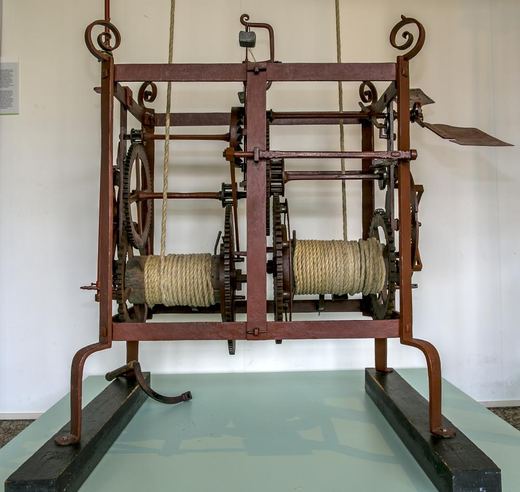
Clocks · 1550–1650
Turret clock, Netherlands, 1550–1650
Museum Klok & Peel
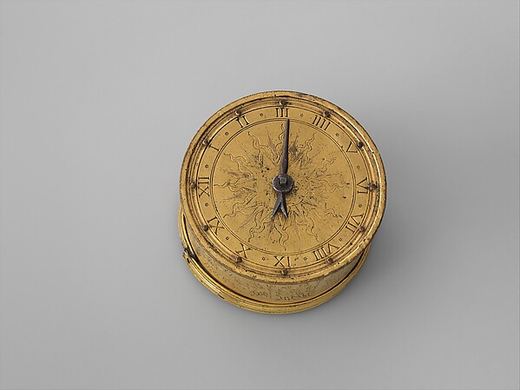
Clocks · case 1554, movement ca. 1680
Table clock by Caspar Behaim (Chasparus Bohemus), Austria, case 1554, movement ca. 1680
The Metropolitan Museum of Art, New York
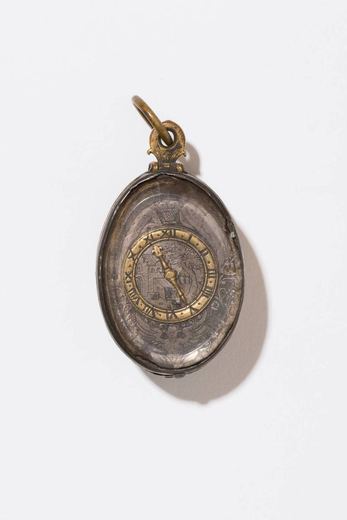
Clocks · 1590–1610
Clock, France, 1590–1610
MAK – Museum of Applied Arts
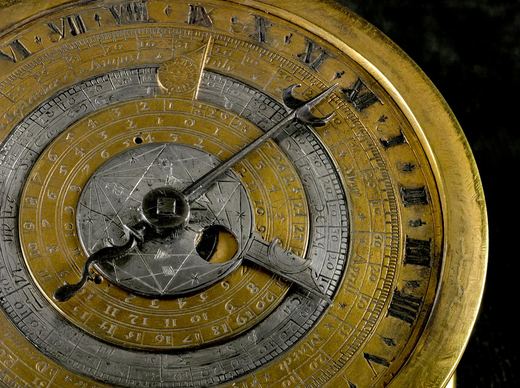
Clocks · 1598-1603
Circular table-clock with calendrical and lunar indications made by Nicholas Vallin in London between 1598 and 1603.
Science Museum Group, London
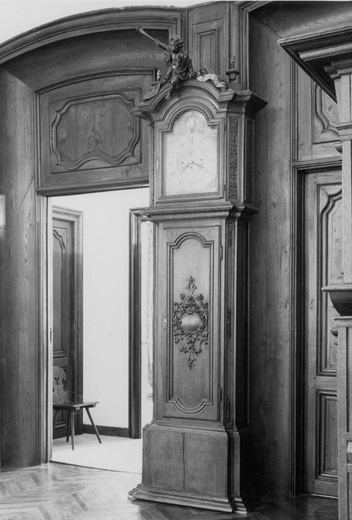
Clocks · 1600–1699
Clock by Joannes Volcker, Belgium, 1600–1699 (Royal Institute for Cultural Heritage AP_10156031)
Royal Institute for Cultural Heritage
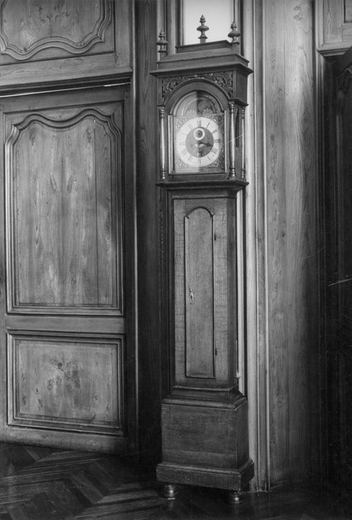
Clocks · 1600–1699
Clock by Joannes Volcker, Belgium, 1600–1699 (Royal Institute for Cultural Heritage AP_10156032)
Royal Institute for Cultural Heritage
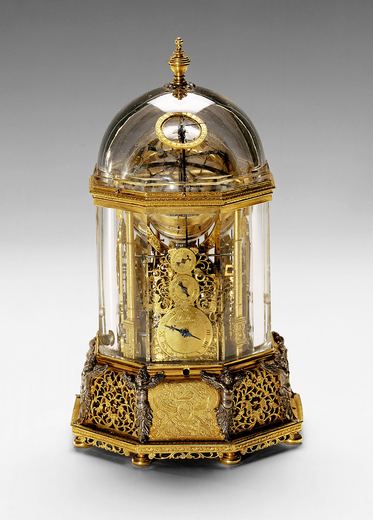
Clocks · 1600–1699
Clock by Jobst Bürgi (ascribed to), Czech Republic, 1600–1699
Fine Arts Museum Vienna
Clocks · 1600-1700
Clock, Germany, 1600-1700
Victoria and Albert Museum, London