
Wristwatches · Wristwatch
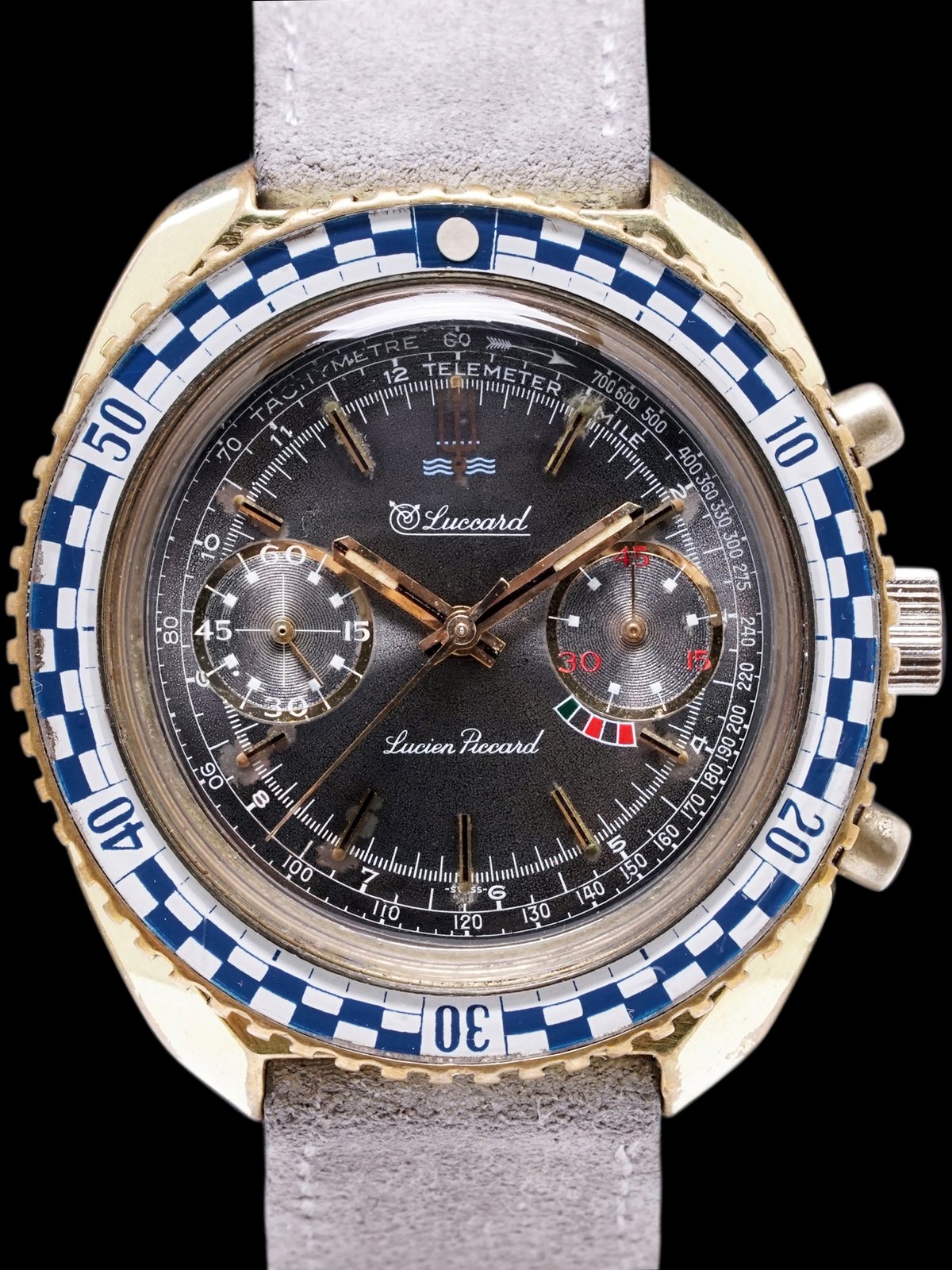
Lucien Piccard Luccard Chronograph "Paul Newman Dial", 1970s
- Maker / attribution
- Newman (maker)
- Date
- 1970s
- Historical period
- Quartz Revolution (1969 – 1990)
- Country of origin
- Unrecorded in source
- Object type
- Wristwatch
- Stock no.
- LPLCHPN
- Credit line
- Dealer listing, Craft & Tailored (LPLCHPN)
- Catalogue title (original)
- 1970s Lucien Piccard Luccard Chronograph "Paul Newman Dial" (English)
View the source record (dealer listing) ↗ (opens another website in a new tab)Suggest a correction
Record summary
Catalogued by Craft & Tailored (dealer), Los Angeles (stock number LPLCHPN), this is a wristwatch by Newman, dated 1970s. The Atlas places it in the Quartz Revolution period (1969 – 1990) of its Wristwatches collection. The record is illustrated with 6 photographs.
Assembled from the source record's structured fields. Dates and attributions are given as the source states them; where a field is missing the Atlas leaves it blank rather than estimating.
Catalogue description
Dealer description — Craft & Tailored
The Lucien Piccard watchmaking brand was founded in 1923, by an American watchmaker who built the brand in Switzerland. Piccard produced luxurious and sought after watches (some of the first timepieces to be designed with diamonds and precious stones), which naturally landed them on the wrists of royalty and celebrities around the world. The global reach of the brand, savvy marketing strategies, paired with the noble and famous clientele, earned the watchmaker quite a reputation as a superior timepiece brand from the 1920s through the 1970s. This unusually designed Lucien Piccard Luccard Chronograph features a seldom-seen gold plated brass case mid-case and an awesomely funky blue and white roulette bakelite bezel. The dial is especially interesting as it was designed by Singer and most notably features the same sub-dial printing as the famous "Paul Newman" Rolex Daytona dial which was also made by Singer. This odd-ball chronograph is the perfect “fun-watch” as it pulls different design cues from the golden era and brings them together in a light-hearted and colorful way. Additionally, this Luccard is powered by a workhorse Valjoux 7733 so not only is it stylish, but also collectible. SPECS Stock # LPLCHPN Brand Lucien Piccard Style Luccard Chronograph Model N/A Serial N/A Size Men's Material Gold Plated Brass Dial Grey "Paul Newman" Millimeters 40 Bracelet 2pc Handmade Leather Strap CASE & BRACELET The unique gold plated brass mid-case remains unpolished, exhibiting expected wear for its age. The bi-directional "roulette" bakelite bezel is in very impressive condition, showing no cracks and light amounts of age. The watch retains its original pump-pushers and crown. The caseback exhibits light signs of use and remains unpolished as well. The watch comes on a two-piece handmade leather strap. DIAL & HANDS The intricate silver dial reveals a stunning galaxy-like finish and exhibits aging around each of the markers, making for a charming vintage aesthetic. All of the text on the dial is fully intact and legible. The gold-bordered sub-dials feature the “Paul Newman” style numerals and remain in very clean condition. The lume plots have aged to a darker green and yellow patina, under U.V. light inspection only the 12 o'clock lume plot displays degradation with the rest of the lume plots remaining fully intact. The original hands have aged to a golden coloration and exhibit no degradation when inspected under U.V. light. ACCESSORIES
Historical context
Quartz Revolution (1969 – 1990)
Seiko's Astron begins mass quartz timekeeping; traditional industries contract sharply.
Quartz and digital watches transformed the market after 1969. Swiss employment collapsed, Japanese and Hong Kong production soared, and the Swatch (1983) helped the Swiss industry recover; mechanical watches survived as luxury goods.
Read the period in the timelineMore wristwatches from this periodEarlier: Modern Mechanical Horology
Atlas type guide
Chronographs and split-seconds watches
A chronograph is a watch with an additional seconds hand that can be started, stopped and returned to zero independently of the timekeeping. Louis Moinet built an early example in 1816 and Nicolas Rieussec a recording 'chronographe' in 1821; Adolphe Nicole's heart-shaped reset cam (patented 1862) made the modern return-to-zero possible. Split-seconds (rattrapante) chronographs add a second hand that can be stopped for intermediate times; flyback chronographs restart instantly.
Chronographs were essential tools for doctors (pulsometer scales), artillery (telemeter), engineers and sport. In wristwatches, Valjoux, Venus, Lemania and later the automatic chronographs of 1969 (Zenith El Primero, the Chronomatic Calibre 11 group and Seiko 6139) are milestones.
What to look for
- Push-pieces on the case band or a single button in the crown (monopusher).
- Subsidiary registers for minutes and hours; tachymeter, telemeter or pulsometer scales.
- Column wheel versus cam control visible in the movement.
- Calibre markings of specialist makers (Valjoux, Lemania, Venus, Landeron).
Dating clues
- Pocket chronographs with heart cam reset: after 1862.
- Wrist chronographs: from c. 1910; two-button designs from the 1930s.
- Automatic chronographs: from 1969.
General guidance written by the Atlas editors about this kind of object. It is not a statement about this particular piece; for that, rely on the source record above and on physical examination.
Read next:Flyback chronographChronograph
Related records
Clocks · c. 1795
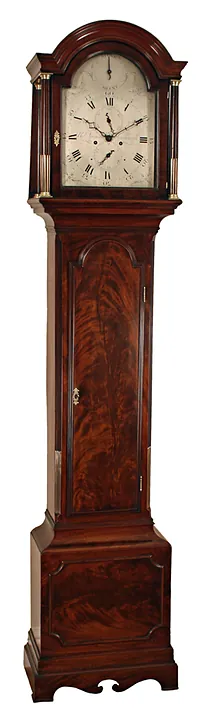
Georgian longcase clock by Newman, Camberwell, London, c. 1795
P A Oxley (dealer), Wiltshire
Clocks · c. 1730
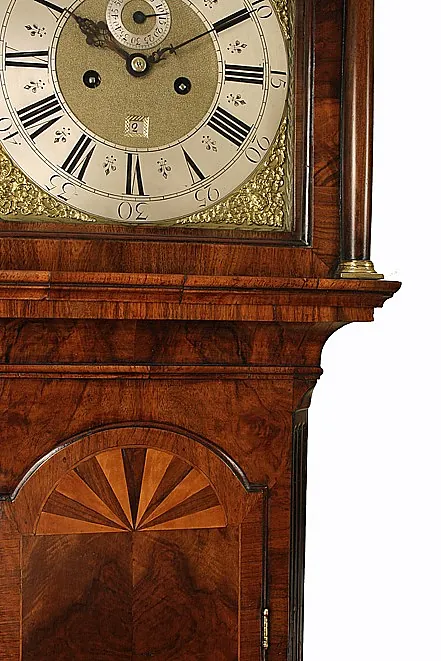
Walnut longcase clock by Newman, Norwich, c. 1730
P A Oxley (dealer), Wiltshire

Wristwatches · 1970
Wristwatch by Heno, Switzerland, 1970
Museum Rotterdam
Wristwatches · 1970s
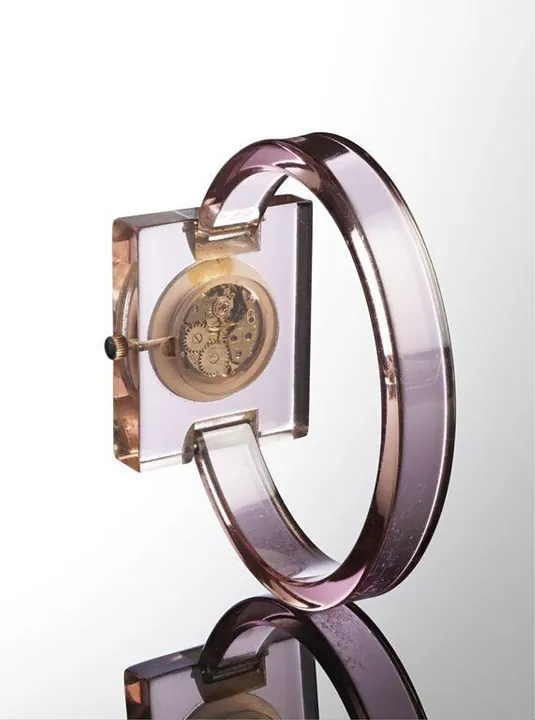
Wristwatch, plastic, by Gucci; Italy, 1970s.
Victoria and Albert Museum, London
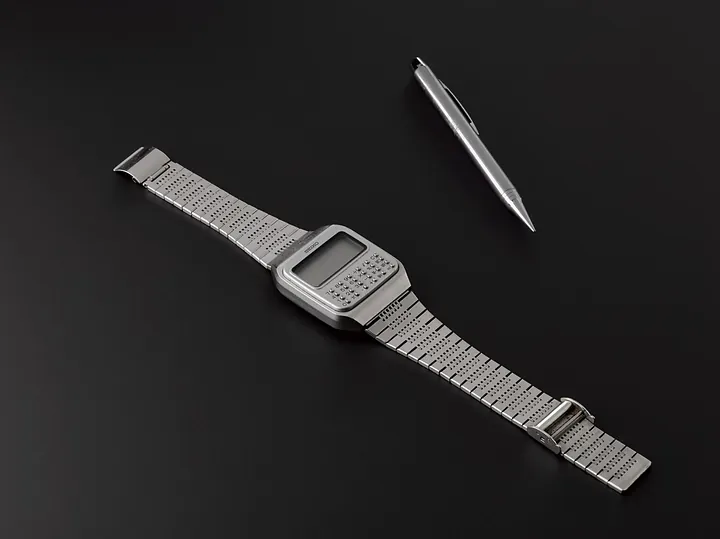
Wristwatches · 1978
Calculator wristwatch by Suwa Seikosha Co. Limited, Japan, 1978
Science Museum Group, London
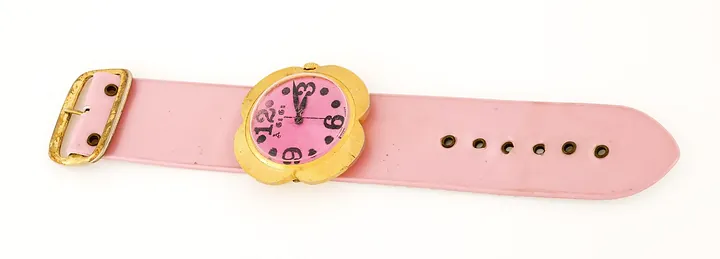
Wristwatches · 1980
Wristwatch, 1980 (no. 71413)
Museum Rotterdam
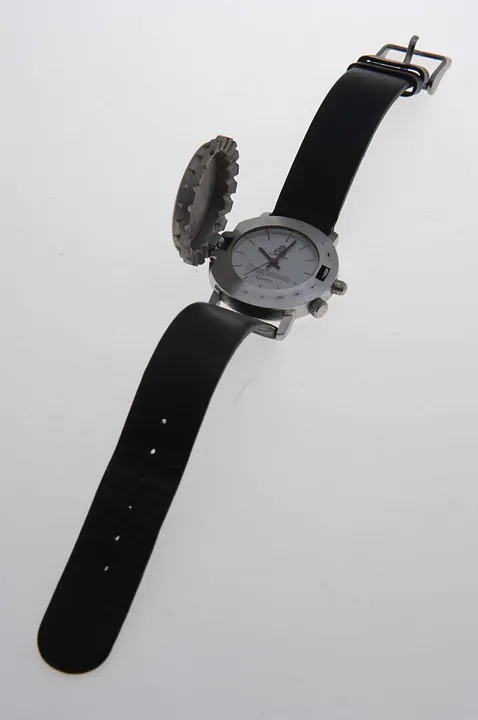
Wristwatches · 1980
Wristwatch, 1980 (no. 91477)
Museum Rotterdam
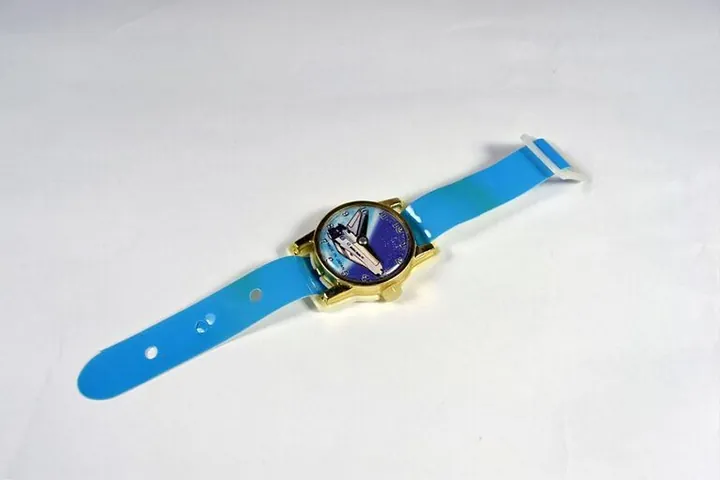
Wristwatches · 1980–1982
Wristwatch, Space Shuttle; plastic, Japan, 1970-1979?
Victoria and Albert Museum, London