
Wristwatches · Wristwatch
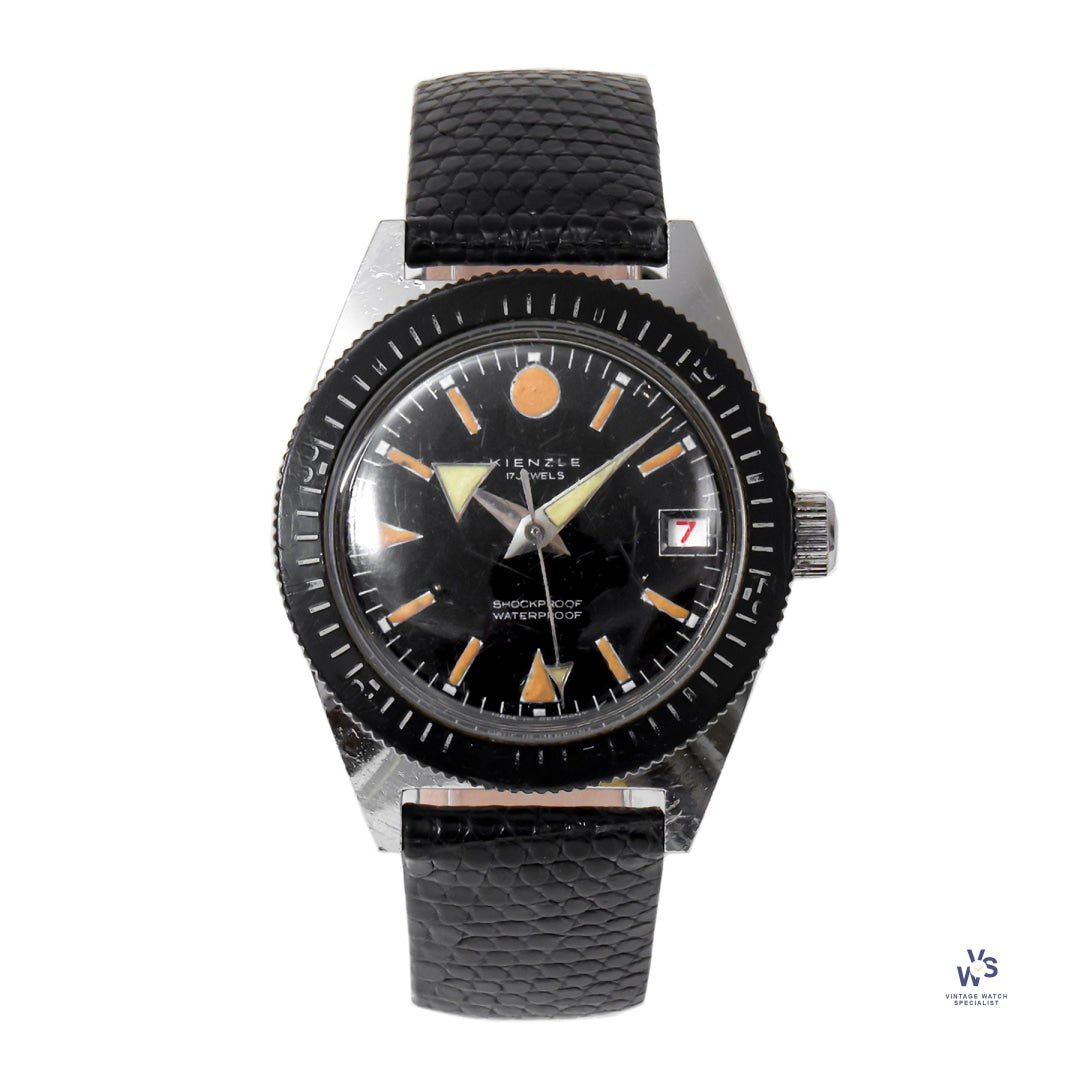
Kienzle Dive Watch, Original Pumpkin Lume, circa 1960s
- Maker / attribution
- Kienzle (maker)
- Date
- c. 1960s
- Historical period
- Modern Mechanical Horology (1945 – 1969)
- Country of origin
- Germany
- Object type
- Wristwatch
- Stock no.
- vws3743
- Credit line
- Dealer listing, Vintage Watch Specialist (vws3743)
- Catalogue title (original)
- Kienzle Dive Watch - Original Pumpkin Lume - c.1960s (English)
View the source record (dealer listing) ↗ (opens another website in a new tab)Suggest a correction
Record summary
Catalogued by Vintage Watch Specialist (dealer), United Kingdom (stock number vws3743), this is a wristwatch by Kienzle, made in Germany, dated c. 1960s. The Atlas places it in the Modern Mechanical Horology period (1945 – 1969) of its Wristwatches collection. The record is illustrated with 6 photographs.
Assembled from the source record's structured fields. Dates and attributions are given as the source states them; where a field is missing the Atlas leaves it blank rather than estimating.
Catalogue description
Dealer description — Vintage Watch Specialist
A Super Cool Kienzle Diver Watch with the Large Circle 12 O'Clock with Original Pumpkin Lume and Chunky Dauphine Hands, c.1960s Kienzle Watches, a prestigious name in horology, was established in 1822 in Schwenningen, Germany, by master clockmaker Johannes Schlenker. What began as a small clockmaking endeavour steadily evolved, with the official brand name Kienzle being introduced in 1883 by Schlenker’s son-in-law, Jakob Kienzle. By 1897, Kienzle had become a full-fledged manufacturer, capitalizing on the demand for pocket watches and precision wall clocks. What's on Offer This 1960s Kienzle dive watch exudes vintage charm and tool-watch character. It features a striking black dial that serves as a bold backdrop for its chunky dauphine hands, which retain their original lume. The hour indices, also lume-filled, have developed a rich, pumpkin-colored patina over the decades, adding a warm and authentic vintage aesthetic. A framed date aperture sits neatly at the 3 o’clock position, offering practical functionality without disrupting the dial's symmetry. The stainless steel case, with a polished finish, displays minor signs of previous wear—entirely consistent with a watch of this age and in no way detracting from its appeal. The coin-edged bezel remains in good condition, with some expected wear to the markings, but nothing beyond the norm for a timepiece that has seen real use. This Kienzle is a classic example of mid-century dive watch design—utilitarian, stylish, and undeniably cool.
Historical context
Modern Mechanical Horology (1945 – 1969)
Tool watches for divers, pilots and astronauts; electric watches anticipate the electronic age.
The classic era of the mechanical wristwatch: dive watches, chronographs for motor racing and space flight, GMT watches for jet travel, slim dress watches, automatic calendars, and the rise of Japanese manufacturers alongside Swiss, American, German and Soviet industries.
Read the period in the timelineMore wristwatches from this periodEarlier: Golden Age of Mechanical Watchmaking
Atlas type guide
Dive and water-resistant watches
Keeping water and dust out of a wristwatch was a long-standing challenge. Rolex's screw-down Oyster case (1926) and Omega's Marine (1932) were landmarks; in the early 1950s Blancpain's Fifty Fathoms and Rolex's Submariner defined the professional dive watch with rotating bezels for timing dives, luminous dials and high water resistance. The ISO 6425 standard (1982) later codified what a 'diver's watch' must do.
Dive watches became icons of post-war design and exploration, and their evolution — helium escape valves, ceramic bezels, saturation-diving depth ratings — records the history of underwater work.
What to look for
- Unidirectional or bidirectional rotating bezel with minute markings.
- Screw-down crown and case back; depth rating printed on the dial.
- Luminous hands and markers (radium before c. 1960, tritium c. 1960–1998, then Super-LumiNova).
- Reference numbers on the case between the lugs or inside the back.
Dating clues
- Screw-down Oyster cases: from 1926.
- Professional dive watches: from 1953.
- Tritium 'T' marks on dials: c. 1960–1998.
General guidance written by the Atlas editors about this kind of object. It is not a statement about this particular piece; for that, rely on the source record above and on physical examination.
Related records
Clocks · 1920s
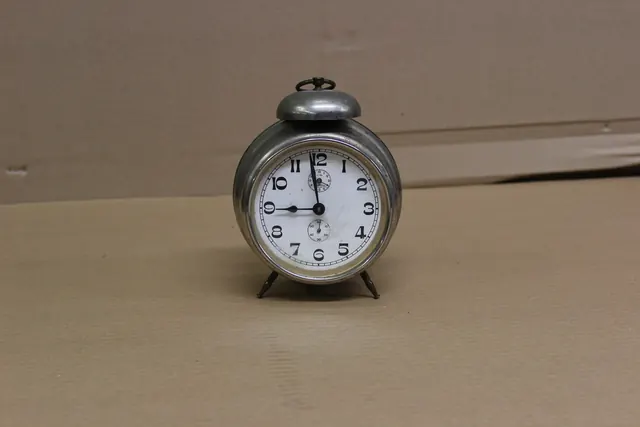
Alarm clock by Kienzle, 1920s
Työväenmuseo Werstas
Wristwatches · c. 1960s
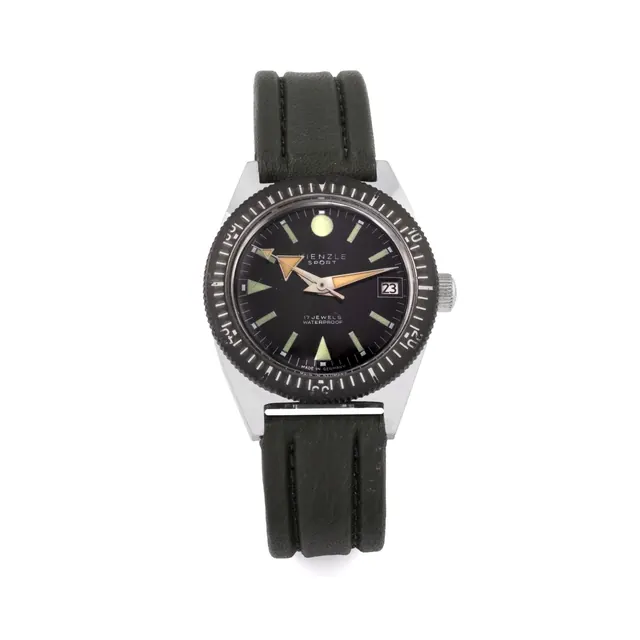
Kienzle wristwatch, Germany Sport, circa 1960's
Antiquorum auction archive, Geneva
Clocks · c. 1890
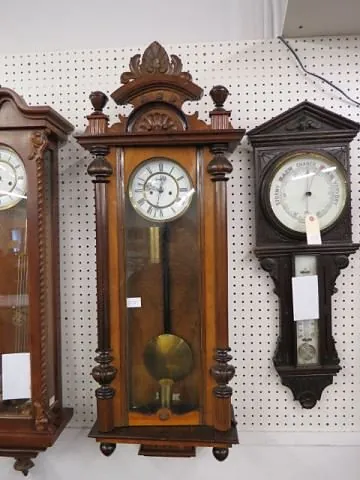
Kienzle German Wall Regulator Clock, c. 1890
LiveAuctioneers auction archive
Clocks · 1970s
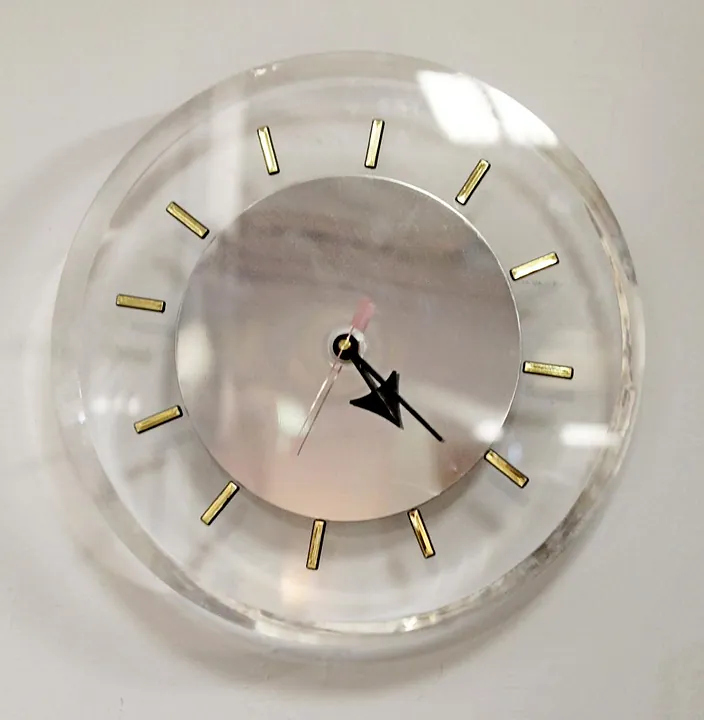
Lucite & Brass Kienzle Wall Clock Modern Art 1970s
LiveAuctioneers auction archive
Wristwatches · c. 1950
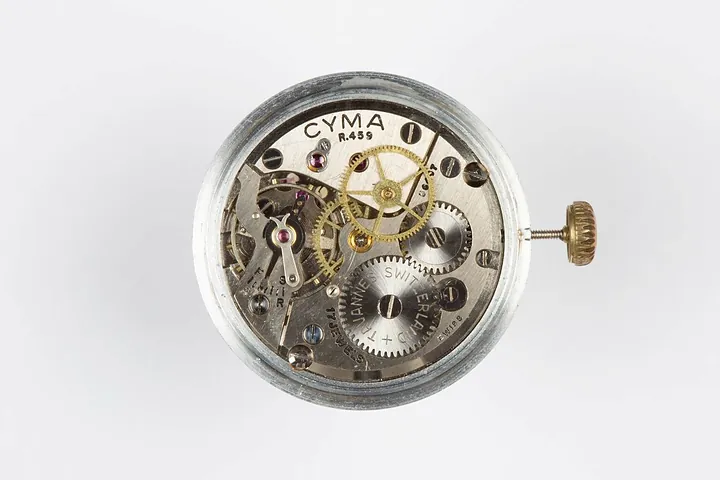
Wristwatch by Tavannes Watch Co., Germany, c. 1950
German Clock Museum
Wristwatches · c. 1958
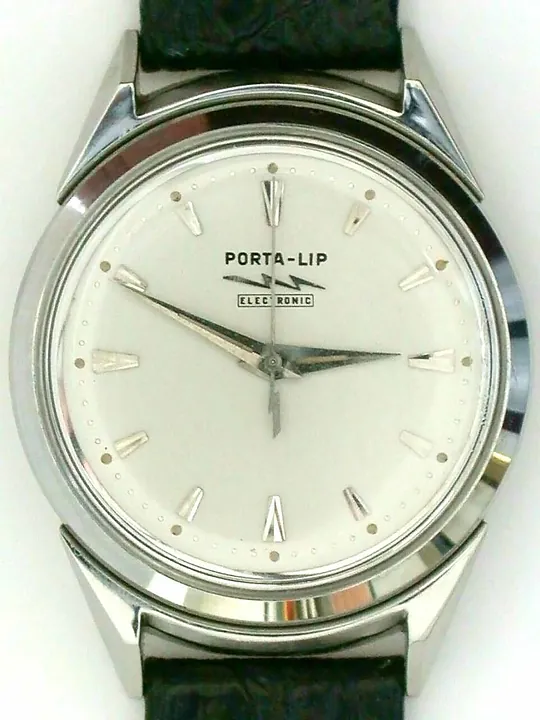
Wristwatch by PUW Pforzheimer Uhrenrohwerke, Germany, c. 1958
German Clock Museum
Wristwatches · c. 1965
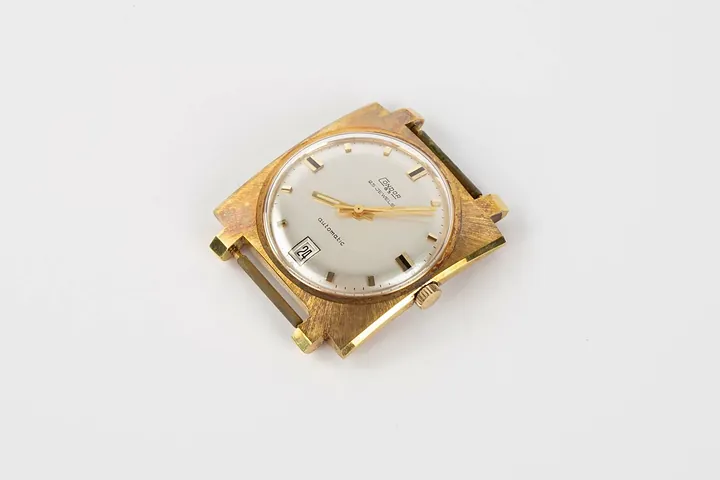
Wristwatch by Condor, Germany, c. 1965
German Clock Museum
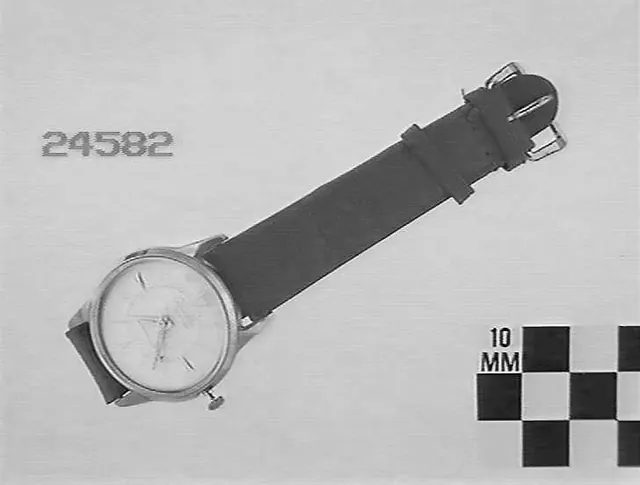
Wristwatches · c. 1959
Wrist Watch - Epperlein Electric, c. 1959
Museums Victoria, Melbourne