
Wristwatches · Wristwatch
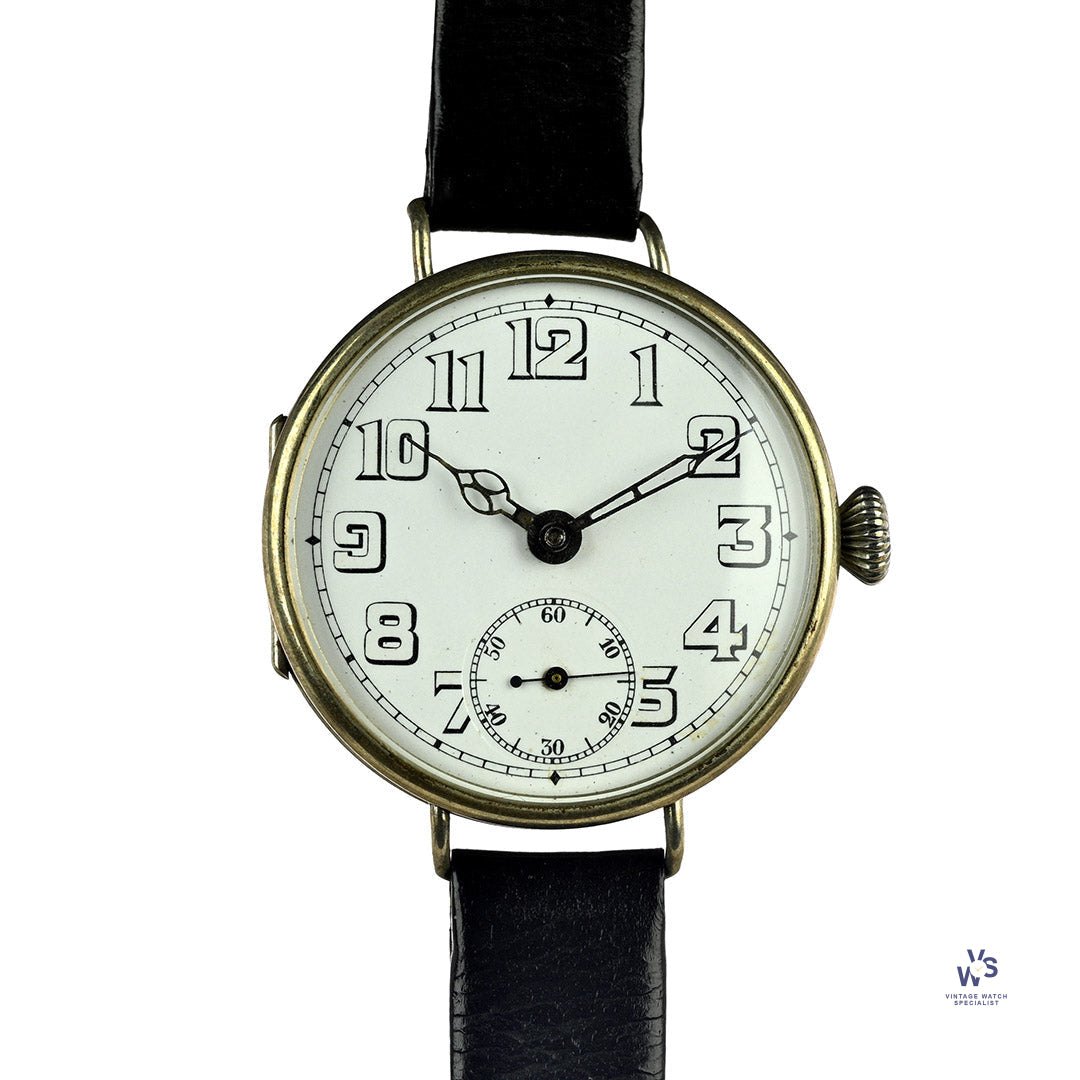
Jumbo, 38mm Trench Watch, White Enamel Dial, 1930s
- Maker / attribution
- Unrecorded in source
- Date
- 1930s
- Historical period
- Golden Age of Mechanical Watchmaking (1900 – 1945)
- Country of origin
- Unrecorded in source
- Object type
- Wristwatch
- Dimensions
- Case 38 mm
- Stock no.
- vws3625cs
- Credit line
- Dealer listing, Vintage Watch Specialist (vws3625cs)
- Catalogue title (original)
- Jumbo, 38mm Trench Watch - White Enamel Dial - 1930s (English)
View the source record (dealer listing) ↗ (opens another website in a new tab)Suggest a correction
Record summary
Catalogued by Vintage Watch Specialist (dealer), United Kingdom (stock number vws3625cs), this is a wristwatch, dated 1930s. The Atlas places it in the Golden Age of Mechanical Watchmaking period (1900 – 1945) of its Wristwatches collection. Recorded dimensions: Case 38 mm. The record is illustrated with 6 photographs.
Assembled from the source record's structured fields. Dates and attributions are given as the source states them; where a field is missing the Atlas leaves it blank rather than estimating.
Catalogue description
Dealer description — Vintage Watch Specialist
A beautiful Jumbo Sized Trench Watch With a White Enamel Dial and Beautiful Design Details Including Decorative Arabic Numerals and Cathedral Hands, c.1930s Trench watches, the precursors to modern wristwatches, emerged during World War 1 as practical adaptations of pocket watches for military use. Soldiers needed timepieces that were easily accessible and reliable in the harsh conditions of the trenches. Initially, they would attach pocket watches to their wrists using makeshift leather straps. Recognizing the need, manufacturers, such as Omega and Longines, began producing purpose-built wristwatches, often encased in metal to offer extra protection against the elements. These early wristwatches featured, luminous dials for visibility in low light, and rugged designs to withstand the rigours of combat. Radium was widely used to make the hands and numerals glow, however the lume on our watch is all missing, but should you wish, this can be replaced by our watchmaker, please just ask at checkout or before! The convenience and functionality of the trench watch quickly gained popularity beyond the military. Post-war, they catalyzed the widespread adoption of wristwatches in civilian fashion, marking the transition from pocket watches and establishing the wristwatch as a ubiquitous accessory. What's on Offer This beautiful trench watch has been incredibly well preserved and is in superb vintage condition. Just look at the brilliant white dial, it is blemish-free to the naked eye and under the loup, there are very few minuscule specks. The Arabic numerals are synonymous with the styling we would expect to see on a trench-style watch and the cathedral hands are another beautiful design detail. The watch is jumbo in size at a whopping 38mm! The plated case is in nice shape as is the onion crown. The dial and movement are unsigned so we are unsure of the manufacturer but many of the big brands produce trench watches. The watch wears beautiful as you will note from our photographs. This is a beautiful piece and will certainly pique the interest of any vintage or military collector.
Historical context
Golden Age of Mechanical Watchmaking (1900 – 1945)
The wristwatch displaces the pocket watch; waterproof cases, self-winding and grand complications.
The wristwatch overtook the pocket watch. Military use in the First World War, aviation, water-resistant cases (1926), automatic winding (1923–31), rectangular Art Deco designs and early chronographs and calendars defined the period.
Read the period in the timelineMore wristwatches from this periodEarlier: Industrial Revolution
Atlas type guide
Military, pilot and travel watches
The wristwatch owes much of its adoption by men to warfare and aviation. Wristlets — small pocket watches soldered with lugs and worn on a strap — were used in colonial campaigns and became standard equipment in the First World War, with protective grilles over the crystal ('shrapnel guards'). Louis Cartier's Santos (1904), designed for the aviator Alberto Santos-Dumont, is often cited as an early purpose-made pilot's watch.
In the Second World War governments specified watches in detail: the German B-Uhr observation watches, the American A-11, and the British 'W.W.W.' (the 'Dirty Dozen' set of 1945). After the war, jet travel brought GMT and world-time watches, which show two or more time zones at once — Louis Cottier's world-time mechanism and the Rolex GMT-Master (1955) are examples.
What to look for
- Military markings on the case back: broad arrow, issue numbers, 'W.W.W.', 'A.T.P.'
- High-legibility black dials with luminous Arabic numerals; oversized crowns for gloved hands.
- 24-hour hands and rotating 24-hour bezels or city rings on GMT/world-time watches.
- Wire lugs on early wristlets converted from pocket watches.
Dating clues
- Wire-lug wristlets: c. 1900–1925.
- Military specifications of the Second World War: 1939–1945.
- GMT and world-time wristwatches: mainly after 1950.
General guidance written by the Atlas editors about this kind of object. It is not a statement about this particular piece; for that, rely on the source record above and on physical examination.
Related records
Wristwatches · 1900–1999
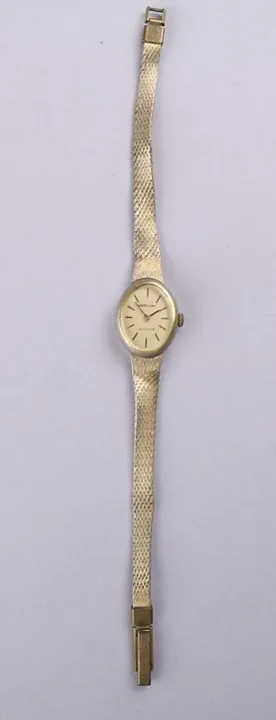
Wristwatch by Mercury, 1900–1999
Modemuseum Hasselt
Wristwatches · 1900–1999
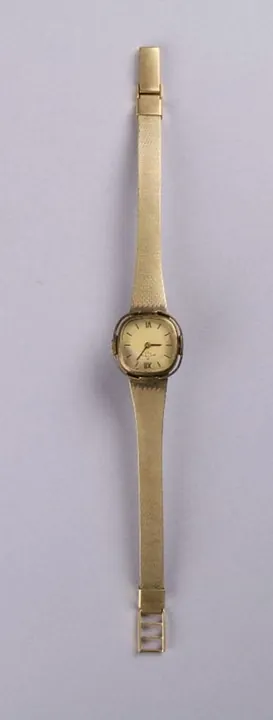
Wristwatch by Nutrix, 1900–1999
Modemuseum Hasselt

Wristwatches · 1920
Wristwatch, 1920
Modemuseum Hasselt

Wristwatches · 1931
Rolex 'Oyster Perpetual' rotor self-winding wrist-watch, lever escapement, in steel case with glass in back, Montres Rolex SA, Geneva, Switzerland, 1931
Science Museum Group, London
Wristwatches · c. 1936
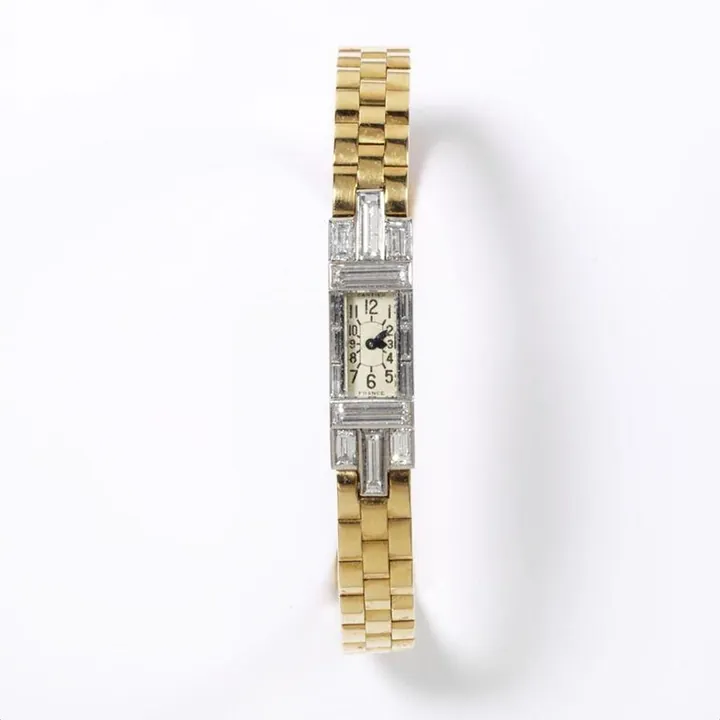
Watch with diamond-set platinum case and gold link bracelet, Cartier, Paris, c. 1936.
Victoria and Albert Museum, London
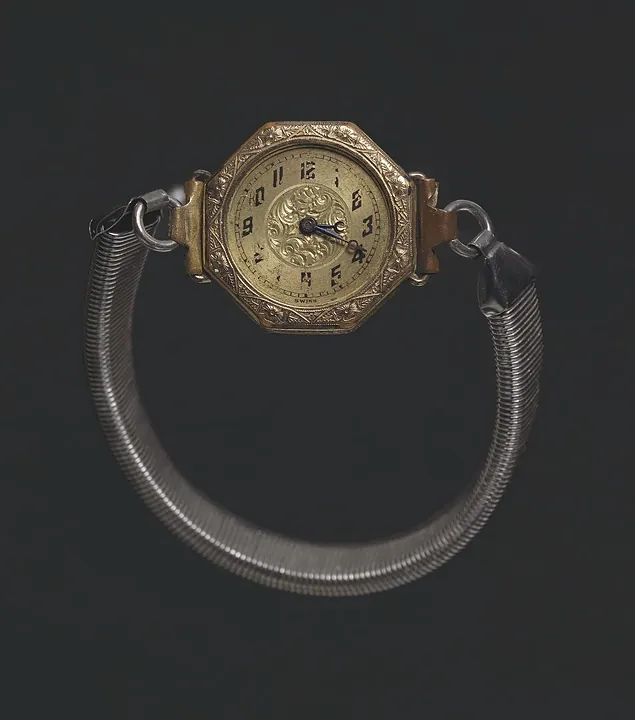
Wristwatches · early to mid 20th century
Woman's wristwatch worn by Harriette Vyda Simms Moore, early to mid 20th century
National Museum of African American History and Culture, Smithsonian Institution, Washington DC

Wristwatches · 1900–1999
Wristwatch by Certina, Switzerland, 1900–1999
Nordic Museum Foundation
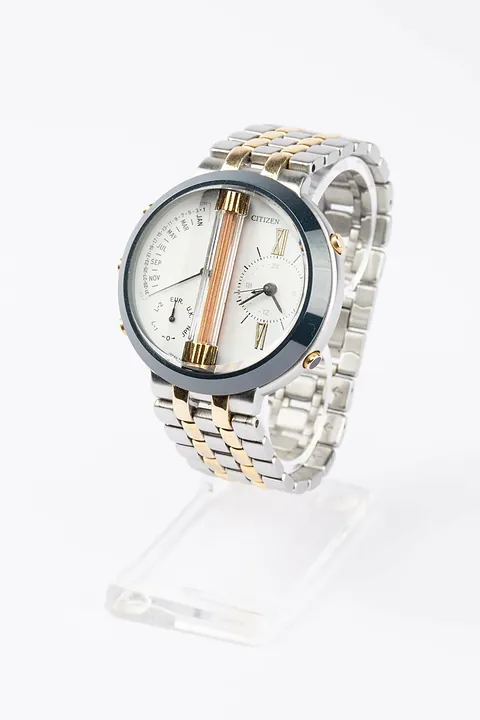
Wristwatches · 1900–1999
Wristwatch by Citizen, Japan, 1900–1999
German Clock Museum