
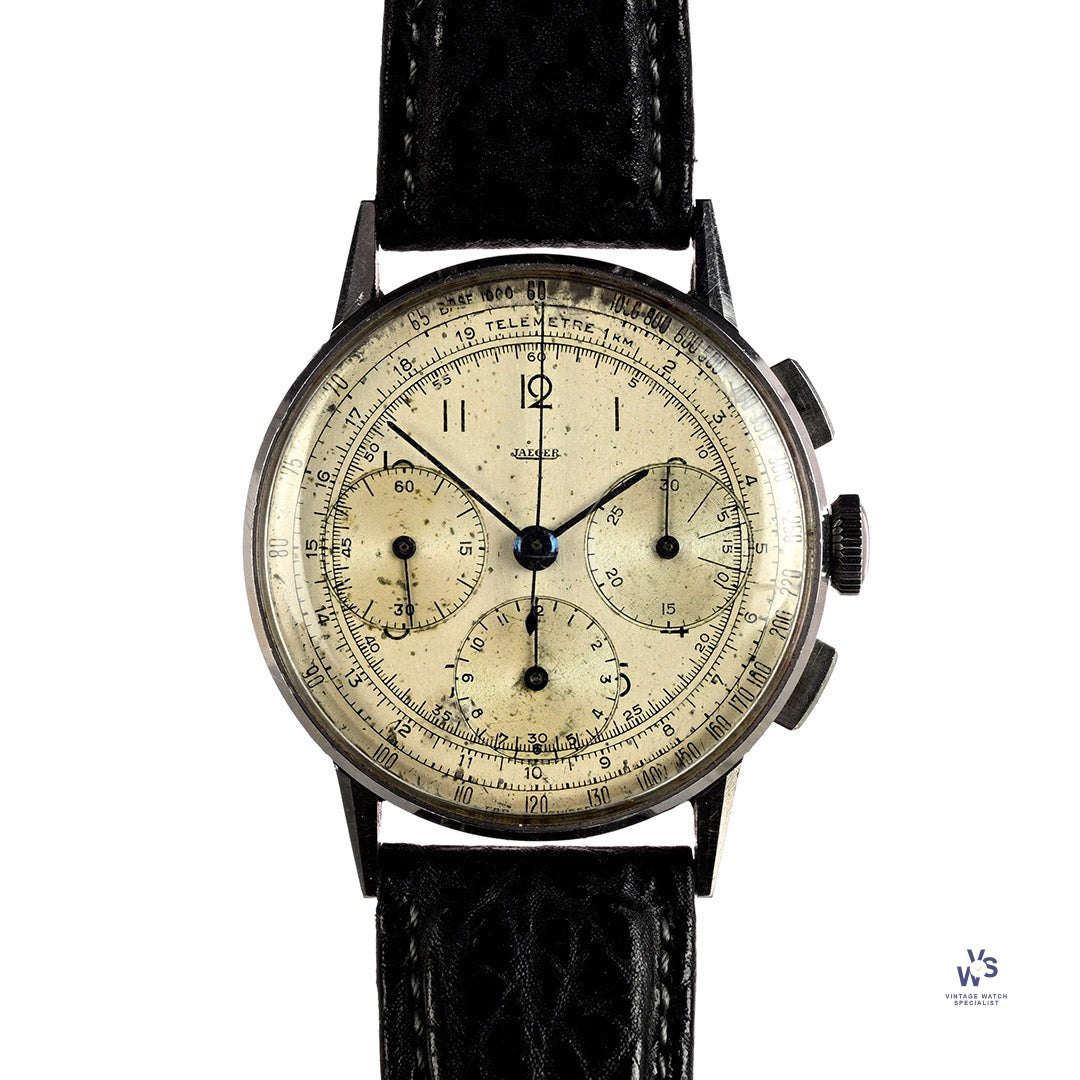
Wristwatches · Wristwatch
Jaeger Telemetre Dial, Three Register Chronograph, circa 1940s
- Maker / attribution
- Jaeger (maker)
- Date
- c. 1940s
- Historical period
- Golden Age of Mechanical Watchmaking (1900 – 1945)
- Country of origin
- Unrecorded in source
- Object type
- Wristwatch
- Dimensions
- Case 36.5 mm
- Stock no.
- vws3932cs
- Credit line
- Dealer listing, Vintage Watch Specialist (vws3932cs)
- Catalogue title (original)
- Jaeger Telemetre Dial - Three Register Chronograph - Original Condition - c.1940s (English)
View the source record (dealer listing) ↗ (opens another website in a new tab)Suggest a correction
Record summary
Catalogued by Vintage Watch Specialist (dealer), United Kingdom (stock number vws3932cs), this is a wristwatch by Jaeger, dated c. 1940s. The Atlas places it in the Golden Age of Mechanical Watchmaking period (1900 – 1945) of its Wristwatches collection. Recorded dimensions: Case 36.5 mm. The record is illustrated with 6 photographs.
Assembled from the source record's structured fields. Dates and attributions are given as the source states them; where a field is missing the Atlas leaves it blank rather than estimating.
Catalogue description
Dealer description — Vintage Watch Specialist
A 1940s Jaeger triple-register chronograph with telemeter scale, blued hands, and rich vintage patina. Founded by Edmond Jaeger in Paris in the early 20th century, Jaeger gained acclaim for precision timekeeping and its role as a supplier to elite watchmakers. Before the full adoption of the Jaeger-LeCoultre name in the late 1930s, many European-market watches bore only the “Jaeger” signature. These timepieces, often housing Swiss-made movements, combined refined design with technical excellence, making them prized among collectors for their rarity, historical significance, and enduring quality. What's on Offer We are delighted to offer for sale this unique piece by Jaeger – a handsome triple-register chronograph dating to the 1940s, powered by the manual-wind Calibre 287. The outer telemeter scale, designed to measure distance based on the speed of sound, was traditionally used in military settings to determine the distance of artillery fire. The original silvered dial features three recessed counters: a running seconds at 9 o’clock, a 30-minute totaliser at 3 o’clock, and a 12-hour totaliser at 6 o’clock. Warm, even patina across the dial adds vintage charm, while blued steel hands provide an attractive contrast. Flanking the crown are two pushers – the upper to start and stop the chronograph, and the lower to reset the counters – offering tactile, mechanical satisfaction. Housed in a robust 36.5mm stainless steel case with a Plexiglass crystal and fitted with a leather strap, this is a fine example of Jaeger’s chronograph-making heritage.
Historical context
Golden Age of Mechanical Watchmaking (1900 – 1945)
The wristwatch displaces the pocket watch; waterproof cases, self-winding and grand complications.
The wristwatch overtook the pocket watch. Military use in the First World War, aviation, water-resistant cases (1926), automatic winding (1923–31), rectangular Art Deco designs and early chronographs and calendars defined the period.
Read the period in the timelineMore wristwatches from this periodEarlier: Industrial Revolution
Atlas type guide
Chronographs and split-seconds watches
A chronograph is a watch with an additional seconds hand that can be started, stopped and returned to zero independently of the timekeeping. Louis Moinet built an early example in 1816 and Nicolas Rieussec a recording 'chronographe' in 1821; Adolphe Nicole's heart-shaped reset cam (patented 1862) made the modern return-to-zero possible. Split-seconds (rattrapante) chronographs add a second hand that can be stopped for intermediate times; flyback chronographs restart instantly.
Chronographs were essential tools for doctors (pulsometer scales), artillery (telemeter), engineers and sport. In wristwatches, Valjoux, Venus, Lemania and later the automatic chronographs of 1969 (Zenith El Primero, the Chronomatic Calibre 11 group and Seiko 6139) are milestones.
What to look for
- Push-pieces on the case band or a single button in the crown (monopusher).
- Subsidiary registers for minutes and hours; tachymeter, telemeter or pulsometer scales.
- Column wheel versus cam control visible in the movement.
- Calibre markings of specialist makers (Valjoux, Lemania, Venus, Landeron).
Dating clues
- Pocket chronographs with heart cam reset: after 1862.
- Wrist chronographs: from c. 1910; two-button designs from the 1930s.
- Automatic chronographs: from 1969.
General guidance written by the Atlas editors about this kind of object. It is not a statement about this particular piece; for that, rely on the source record above and on physical examination.
Read next:Flyback chronographChronograph
Related records
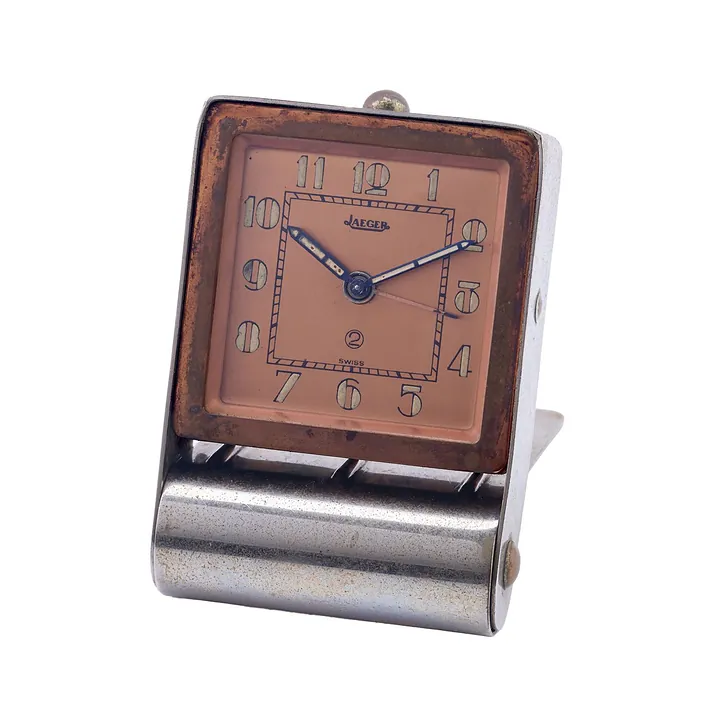
Clocks · c. 1930-1940s
Jaeger Ados, c. 1930-1940s
Antiquorum auction archive, Geneva
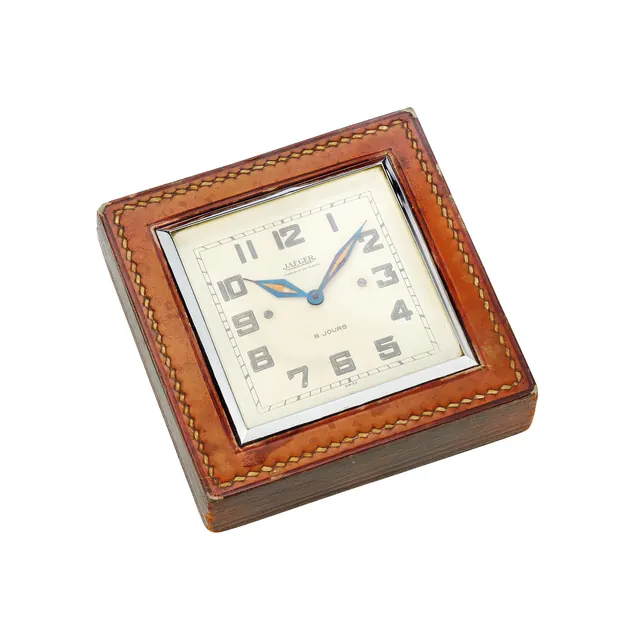
Clocks · c. 1939
Jaeger table clock, Leather, circa 1939
Antiquorum auction archive, Geneva
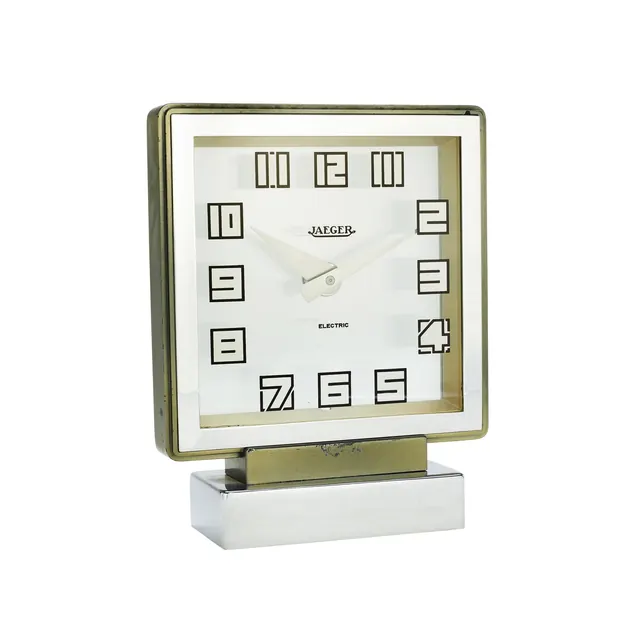
Clocks · c. 1934
Jaeger mantel clock, ref. 200, Pendulette Mystérieuse Chrome-Plated and Metal, circa 1934
Antiquorum auction archive, Geneva
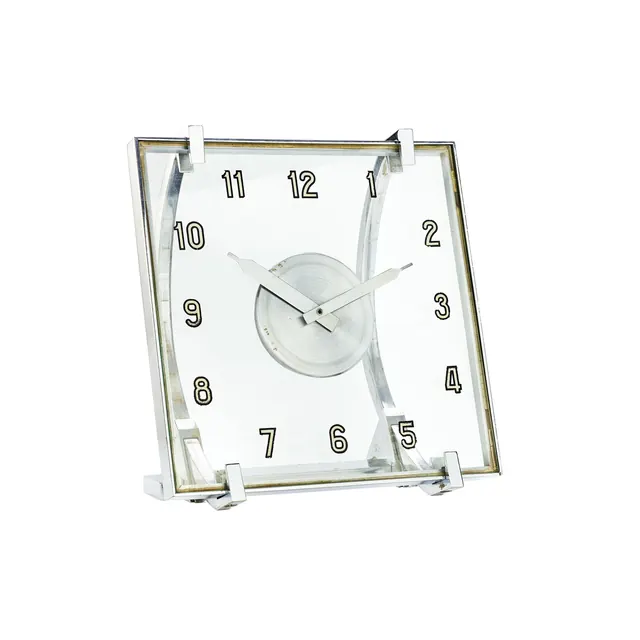
Clocks · c. 1950s
Jaeger table clock, Chrome Plated and Glass, circa 1950's
Antiquorum auction archive, Geneva
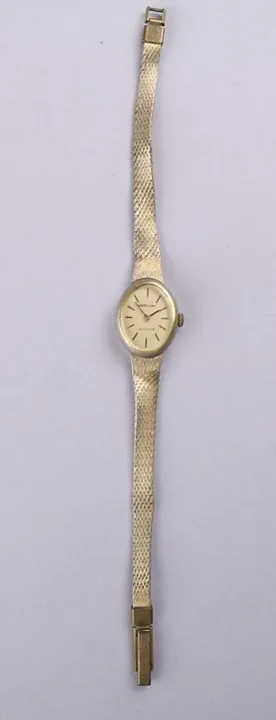
Wristwatches · 1900–1999
Wristwatch by Mercury, 1900–1999
Modemuseum Hasselt
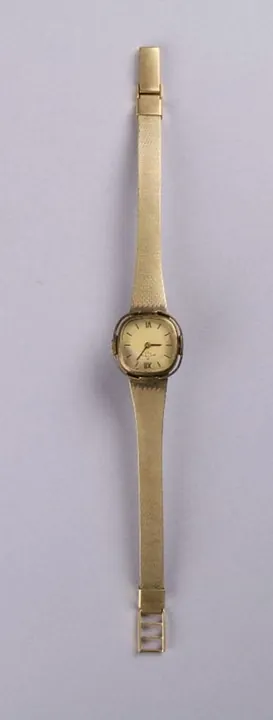
Wristwatches · 1900–1999
Wristwatch by Nutrix, 1900–1999
Modemuseum Hasselt
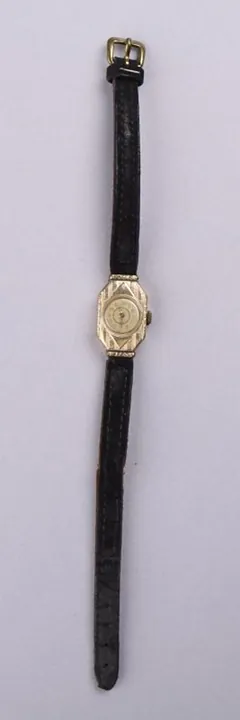
Wristwatches · 1920
Wristwatch, 1920
Modemuseum Hasselt

Wristwatches · 1931
Rolex 'Oyster Perpetual' rotor self-winding wrist-watch, lever escapement, in steel case with glass in back, Montres Rolex SA, Geneva, Switzerland, 1931
Science Museum Group, London