
Wristwatches · Wristwatch
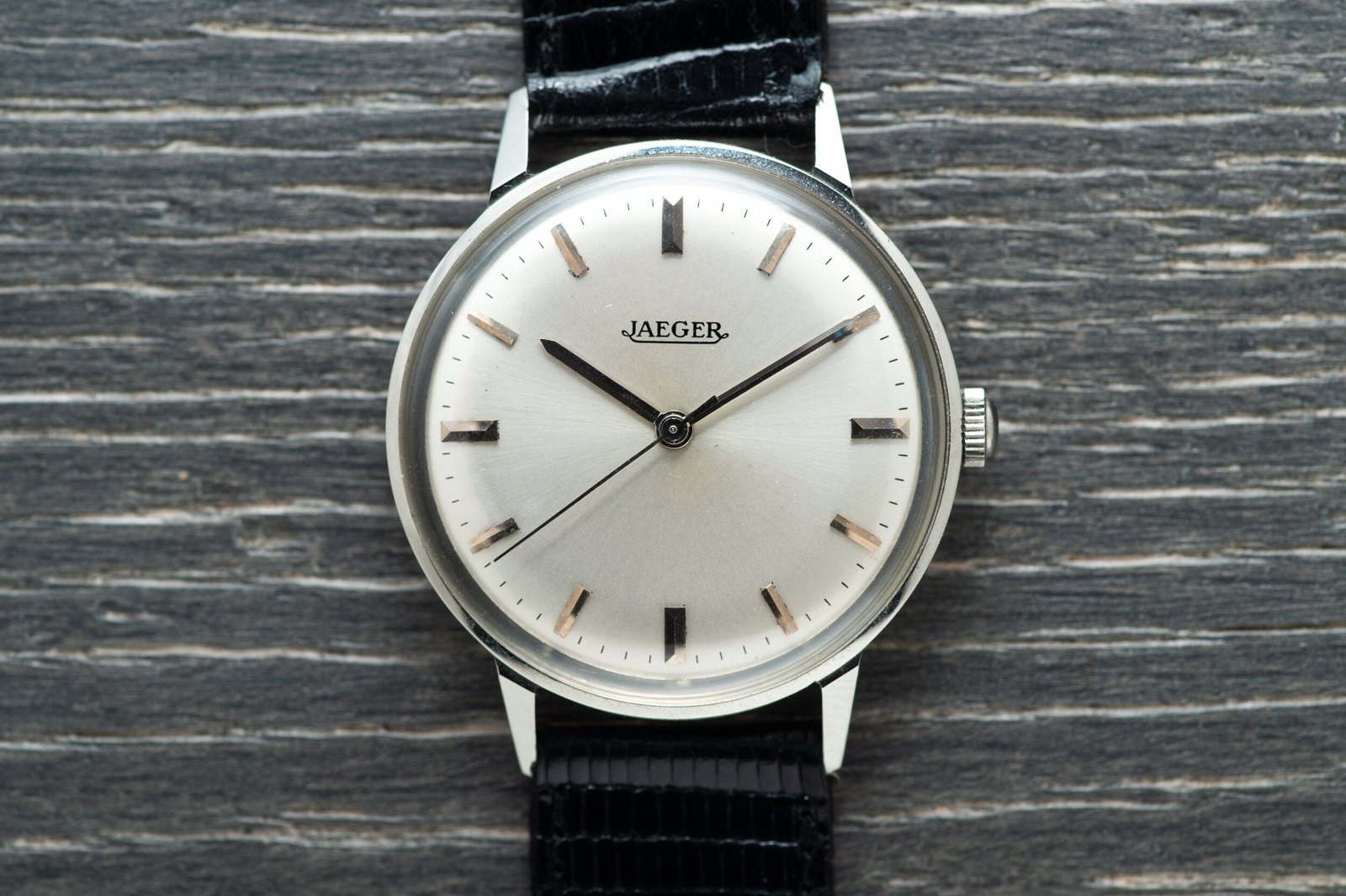
Jaeger "Paris", 1970s
- Maker / attribution
- Jaeger-LeCoultre (maker)
- Date
- 1970s
- Historical period
- Quartz Revolution (1969 – 1990)
- Country of origin
- France
- Object type
- Wristwatch
- Stock no.
- SQ4666613
- Credit line
- Dealer listing, Collectors Corner NY (SQ4666613)
- Catalogue title (original)
- Jaeger "Paris" - Near Mint/Military Provenance - 1970s (English)
View the source record (dealer listing) ↗ (opens another website in a new tab)Suggest a correction
Record summary
Catalogued by Collectors Corner NY (dealer), New York (stock number SQ4666613), this is a wristwatch by Jaeger-LeCoultre, made in France, dated 1970s. The Atlas places it in the Quartz Revolution period (1969 – 1990) of its Wristwatches collection. The record is illustrated with 6 photographs.
Assembled from the source record's structured fields. Dates and attributions are given as the source states them; where a field is missing the Atlas leaves it blank rather than estimating.
Catalogue description
Dealer description — Collectors Corner NY
We believe this Jaeger dress watch dates to the 1970s. It features a radiant silver sunburst dial which glows in the light while remaining understated hiding under a cuff. A unique quirk of this dial is the absence of a "SWISS" marking at 6 o'clock, indicating it was originally produced for the French market. It is paired with a period correct Jaeger Paris-signed strap that has seen little wrist time. This watch came to us from a private collection of a United States military veteran of over 30 years who was deployed in Iraq, stationed at the Pentagon and the Department of Defense. He wears the Combat Action Badge, and The Parachutist Badge amongst others. His awards and decorations include the Legion of Merit, the Bronze Star Medal and a Purple Heart; a career which took him around the globe, all the while he collected watches and took great care to keep them in excellent shape. Explore more of our vintage Jaeger-LeCoultre watches .
Historical context
Quartz Revolution (1969 – 1990)
Seiko's Astron begins mass quartz timekeeping; traditional industries contract sharply.
Quartz and digital watches transformed the market after 1969. Swiss employment collapsed, Japanese and Hong Kong production soared, and the Swatch (1983) helped the Swiss industry recover; mechanical watches survived as luxury goods.
Read the period in the timelineMore wristwatches from this periodEarlier: Modern Mechanical Horology
Atlas type guide
Military, pilot and travel watches
The wristwatch owes much of its adoption by men to warfare and aviation. Wristlets — small pocket watches soldered with lugs and worn on a strap — were used in colonial campaigns and became standard equipment in the First World War, with protective grilles over the crystal ('shrapnel guards'). Louis Cartier's Santos (1904), designed for the aviator Alberto Santos-Dumont, is often cited as an early purpose-made pilot's watch.
In the Second World War governments specified watches in detail: the German B-Uhr observation watches, the American A-11, and the British 'W.W.W.' (the 'Dirty Dozen' set of 1945). After the war, jet travel brought GMT and world-time watches, which show two or more time zones at once — Louis Cottier's world-time mechanism and the Rolex GMT-Master (1955) are examples.
What to look for
- Military markings on the case back: broad arrow, issue numbers, 'W.W.W.', 'A.T.P.'
- High-legibility black dials with luminous Arabic numerals; oversized crowns for gloved hands.
- 24-hour hands and rotating 24-hour bezels or city rings on GMT/world-time watches.
- Wire lugs on early wristlets converted from pocket watches.
Dating clues
- Wire-lug wristlets: c. 1900–1925.
- Military specifications of the Second World War: 1939–1945.
- GMT and world-time wristwatches: mainly after 1950.
General guidance written by the Atlas editors about this kind of object. It is not a statement about this particular piece; for that, rely on the source record above and on physical examination.
Related records
Clocks · 1937–1938
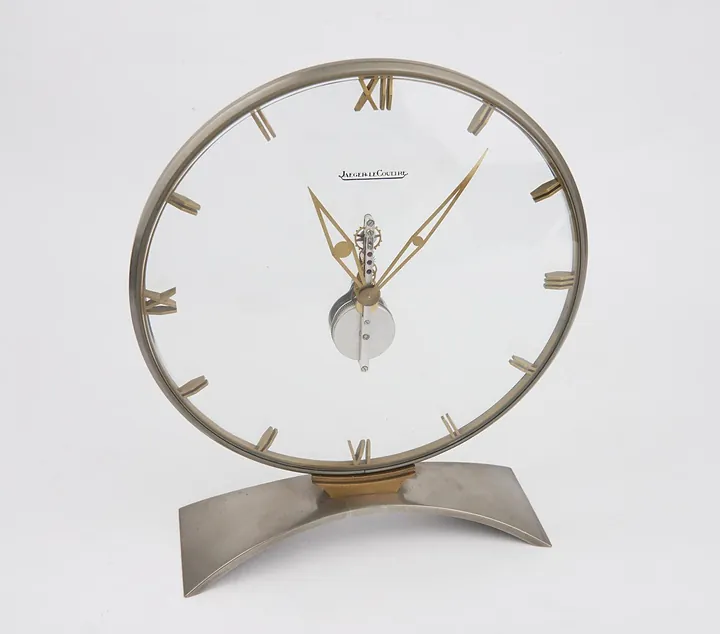
Skeleton clock by Jaeger-LeCoultre, Switzerland, 1937–1938
Science Museum Group, London
Movements & Components · 1953
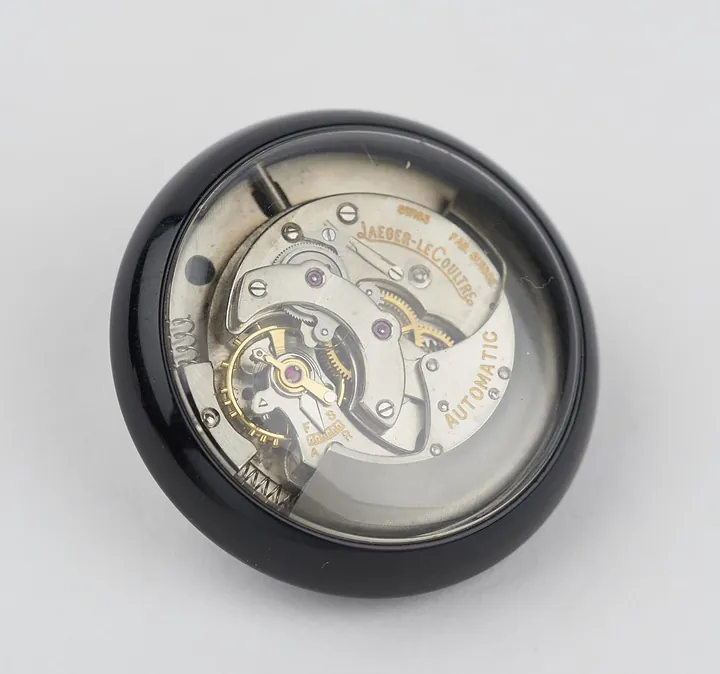
Automatic watch movement, Jaeger-LeCoultre, 1953, Geneva, Switzerland, showing self-winding mechanism
Science Museum Group, London
Wristwatches · 1953
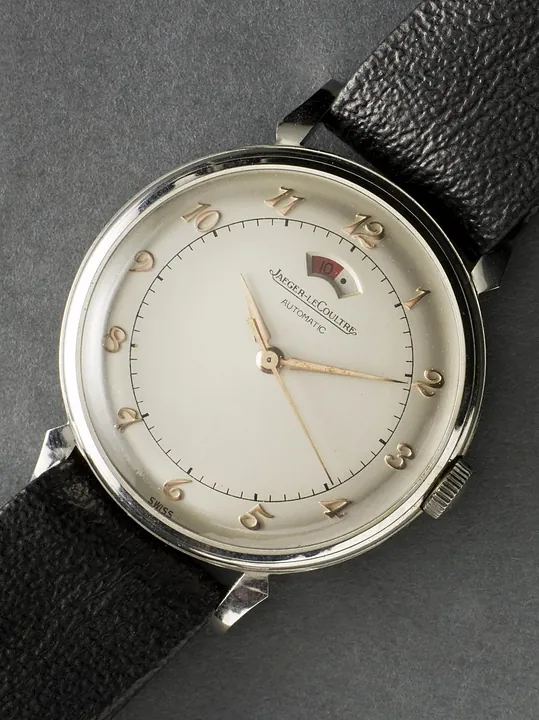
Automatic Wrist-watch, Jaeger-LeCoultre, Geneva, Switzerland, with reserve power indicator complete in steel case, 1953. Back numbered 564556.
Science Museum Group, London
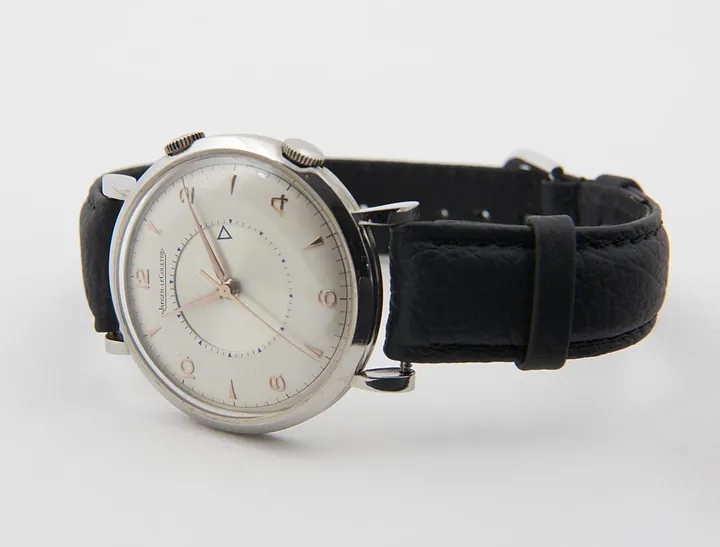
Wristwatches · 1953
Wrist-watch, 'Memovox' alarm, Jaeger-LeCoultre, Geneva, Switzerland, complete in steel case, 1953.
Science Museum Group, London
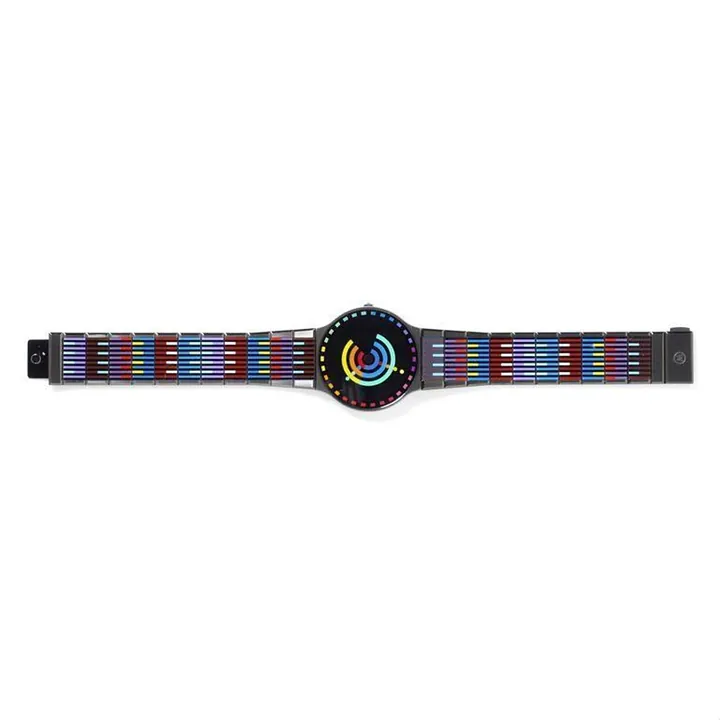
Wristwatches · c.1989
Steel, France and Switzerland, 1989; designed by Yaacov Agam (born 1928) for a limited edition by Movado
Victoria and Albert Museum, London
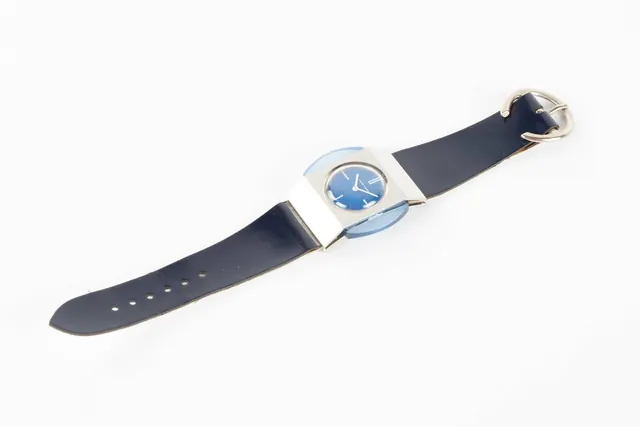
Wristwatches · c. 1972
Wristwatch, France, c. 1972
German Clock Museum
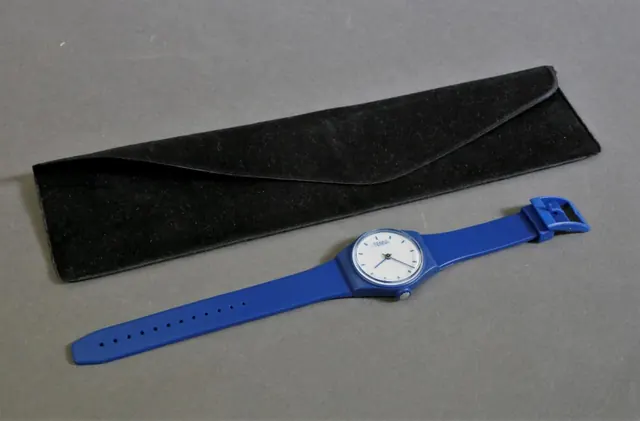
Wristwatches · 1986
Wristwatch, France, 1986
Työväenmuseo Werstas
Wristwatches · c. 1970-1980s
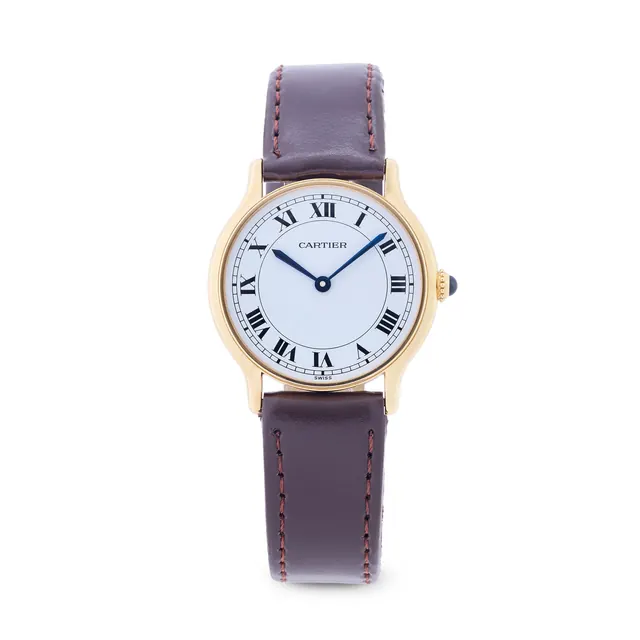
Cartier wristwatch, ref. 10713, Riviera, circa 1970-1980s
Antiquorum auction archive, Geneva