
Wristwatches · Wristwatch
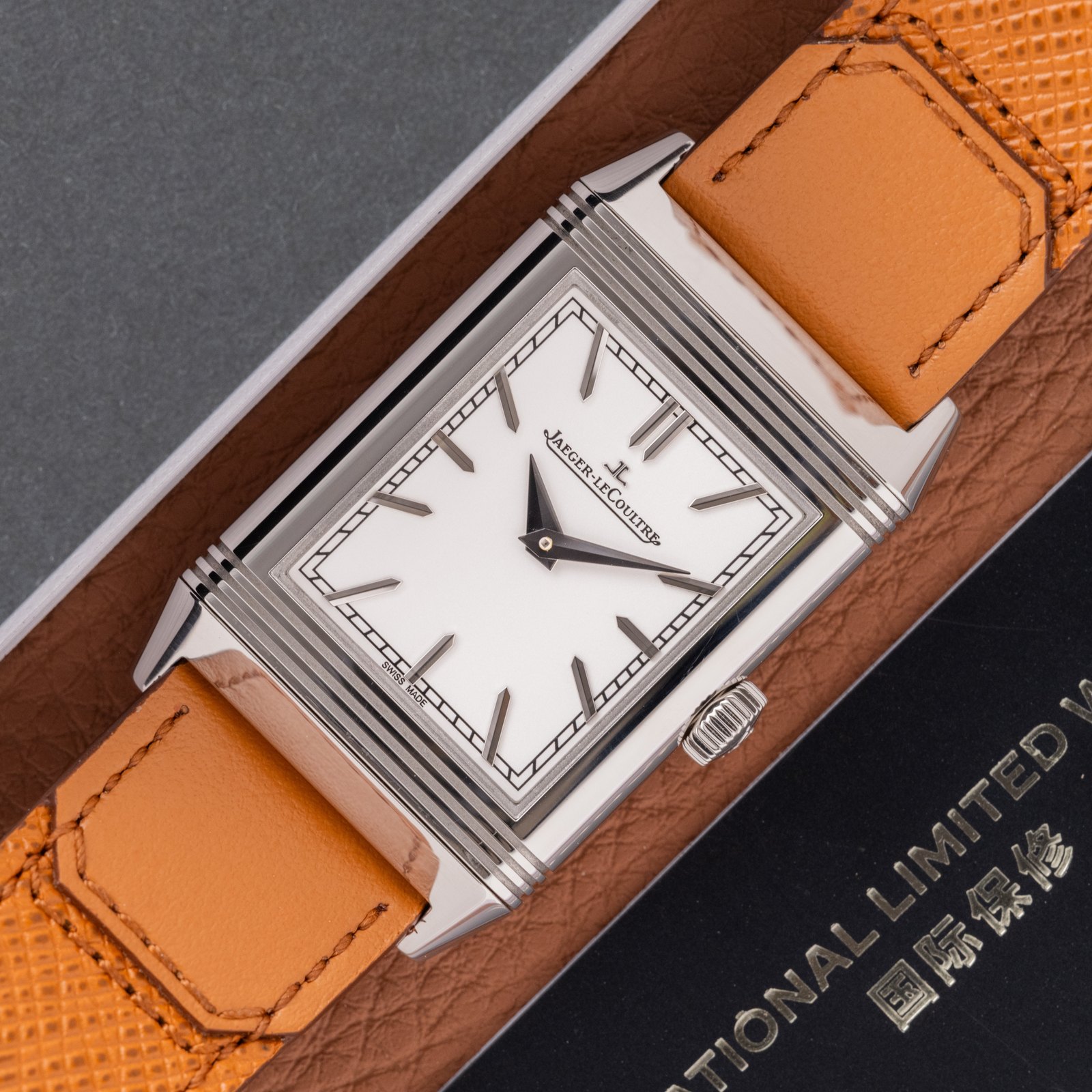
Jaeger-LeCoultre Reverso Tribute (Ref. Q7168420 / 222.8.62), 2025
- Maker / attribution
- Jaeger-LeCoultre (maker)
- Date
- 2025
- Historical period
- Contemporary Horology (2010 – Present)
- Country of origin
- Switzerland
- Object type
- Wristwatch
- Dimensions
- Case 24.5 mm
- Stock no.
- Product 8598770614455
- Credit line
- Dealer listing, Huntington Company (product 8598770614455)
- Catalogue title (original)
- 2025 Jaeger-LeCoultre Reverso Tribute - Box and Papers (Ref. Q7168420 / 222.8.62) (English)
View the source record (dealer listing) ↗ (opens another website in a new tab)Suggest a correction
Record summary
Catalogued by Huntington Company (dealer) (stock number Product 8598770614455), this is a wristwatch by Jaeger-LeCoultre, made in Switzerland, dated 2025. The Atlas places it in the Contemporary Horology period (2010 – Present) of its Wristwatches collection. Recorded dimensions: Case 24.5 mm. The record is illustrated with 6 photographs.
Assembled from the source record's structured fields. Dates and attributions are given as the source states them; where a field is missing the Atlas leaves it blank rather than estimating.
Catalogue description
Dealer description — Huntington Company
History and Significance The modern Reverso lineup has expanded dramatically over the years, with everything from dual-time complications to tourbillons and minute repeaters finding their way into the iconic reversible case. Yet some of the most compelling models remain the simplest. Reference Q7168420 strips the Reverso back to its essentials, offering a manually wound two-hand display housed within proportions that closely echo the vintage watches that made the collection famous. Measuring just 24.5mm by 40mm, this reference captures much of what collectors love about early Reversos. The case remains slim, elegant, and highly wearable, avoiding the oversized dimensions that have become common throughout much of the modern watch industry. The manually wound movement contributes significantly to this experience, allowing the watch to maintain the thin profile that has always been central to the Reverso's appeal. Originally developed in 1931 for polo players seeking a way to protect their watch crystals during matches, the Reverso has evolved into one of the most enduring designs in watchmaking. References like the Q7168420 demonstrate why. Rather than relying on additional complications or elaborate dial work, the watch succeeds through proportion, design, and restraint. Writer’s Thoughts If someone asked me which modern Reverso to buy, this would be near the top of the list. It feels like Jaeger-LeCoultre finally stopped trying to modernize the design and simply focused on what made the original great. The proportions are excellent, the case is slim, and it wears exactly how a Reverso should. Our Promise Every watch is thoroughly vetted, carefully described with complete transparency, and guaranteed authentic. Each piece is offered in honest condition, ensuring collectors receive a timepiece that reflects both originality and integrity. Specifications Brand: Jaeger-LeCoultre Model: Reverso Tribute Small Seconds (Ref. Q7168420 / 222.8.62) Year: 2025 Case Material: Stainless steel Case Size: 27.4mm x 45.6mm Dial: Silver dial with small seconds Movement: Manual wind Strap/Bracelet: Original leather strap Buckle/Clasp: Original butterfly clasp Contents: Complete set Condition Case: Near mint condition with very few signs of wear. Dial: Excellent condition with no blemishes. Hands: Original hands in excellent condition. Crystal: Clean and free of notable marks. Strap/Bracelet: Original strap showing little to no wear. Buckle/Clasp: Original butterfly clasp in excellent condition.
Historical context
Contemporary Horology (2010 – Present)
Silicon components, connected watches, optical-lattice research clocks and a thriving independent scene.
Smartwatches became the world's best-selling watches, while mechanical watchmaking focuses on craft, innovation (silicon components, new escapements) and independent makers.
Read the period in the timelineMore wristwatches from this periodEarlier: Mechanical Renaissance
Atlas type guide
Wristwatches
Bracelet watches were worn by women from the early nineteenth century — Breguet made one for Caroline Murat, Queen of Naples, in 1810–12 — but the wristwatch only became a man's instrument with military use and aviation in the early twentieth century. Between the World Wars it overtook the pocket watch; the 1920s and 1930s brought rectangular Art Deco cases, water-resistant cases and the first automatic winding systems.
After 1945 the wristwatch became a carrier of identity — dress watches, sports and dive watches, chronographs, calendars — produced by Swiss, American, Japanese, German, Soviet and Chinese industries. The quartz revolution after 1969 and the mechanical renaissance since the 1990s, including the rise of independent watchmakers, complete the story.
What to look for
- The reference number (between the lugs or inside the case back) and serial number, the starting point for dating.
- The calibre: its maker and number are often stamped under the dial or on the bridge.
- Originality of dial, hands and crown — refinished ('redial') dials are common.
- Case material marks: 18K/750, 14K/585, stainless steel, gold-filled, plated.
Dating clues
- Wire-lug cases: before c. 1925.
- Water-resistant screw-down cases: from 1926.
- Quartz movements: from 1969; sapphire crystals widespread after c. 1980.
General guidance written by the Atlas editors about this kind of object. It is not a statement about this particular piece; for that, rely on the source record above and on physical examination.
Related records
Clocks · 1937–1938
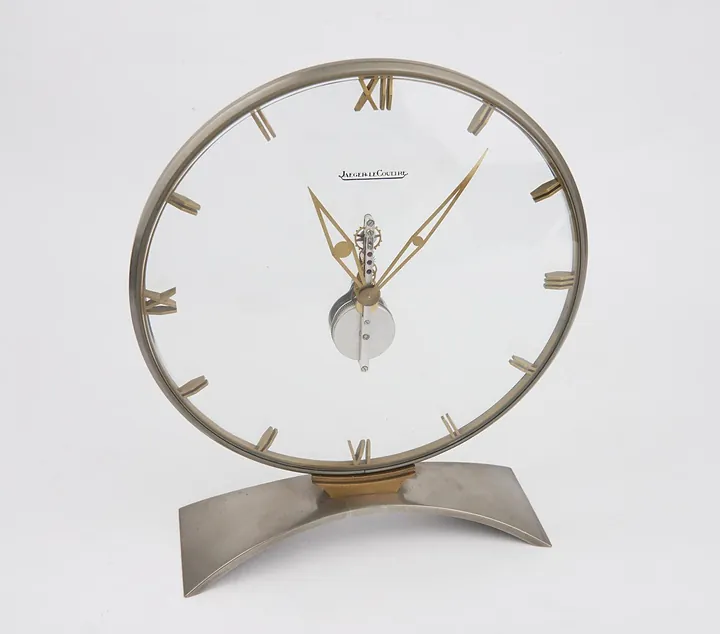
Skeleton clock by Jaeger-LeCoultre, Switzerland, 1937–1938
Science Museum Group, London
Movements & Components · 1953
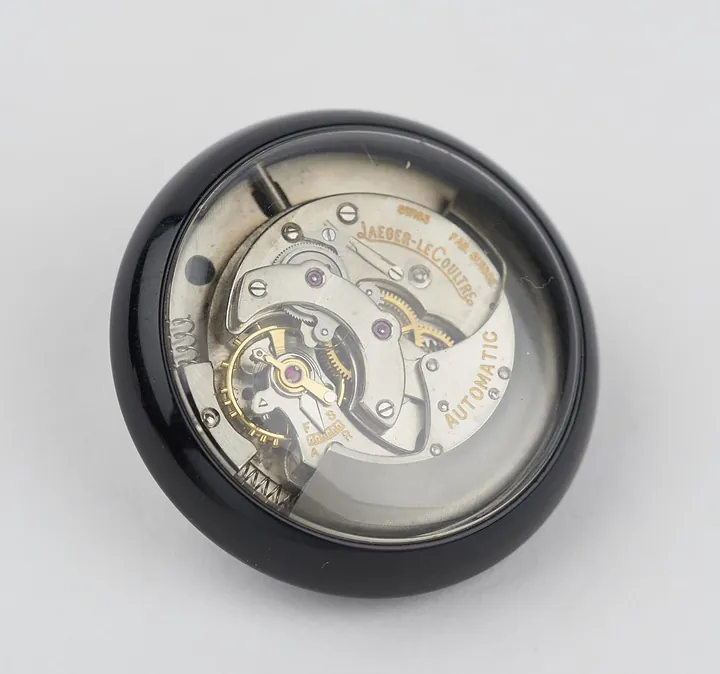
Automatic watch movement, Jaeger-LeCoultre, 1953, Geneva, Switzerland, showing self-winding mechanism
Science Museum Group, London
Wristwatches · 1953
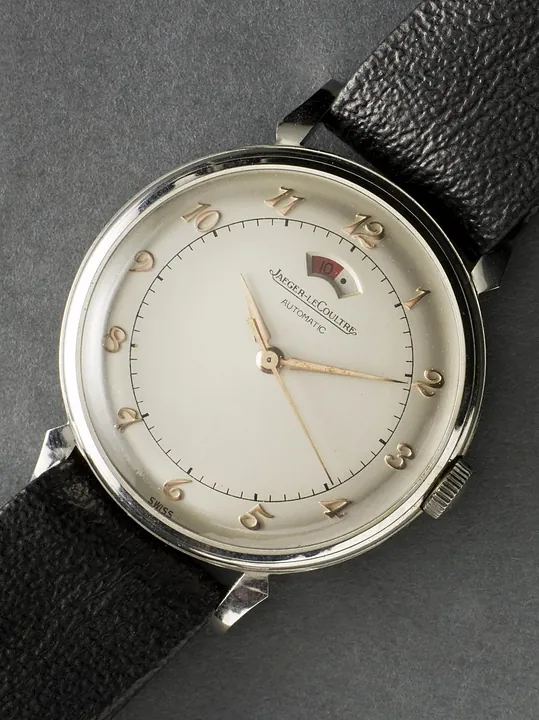
Automatic Wrist-watch, Jaeger-LeCoultre, Geneva, Switzerland, with reserve power indicator complete in steel case, 1953. Back numbered 564556.
Science Museum Group, London
Wristwatches · 1953
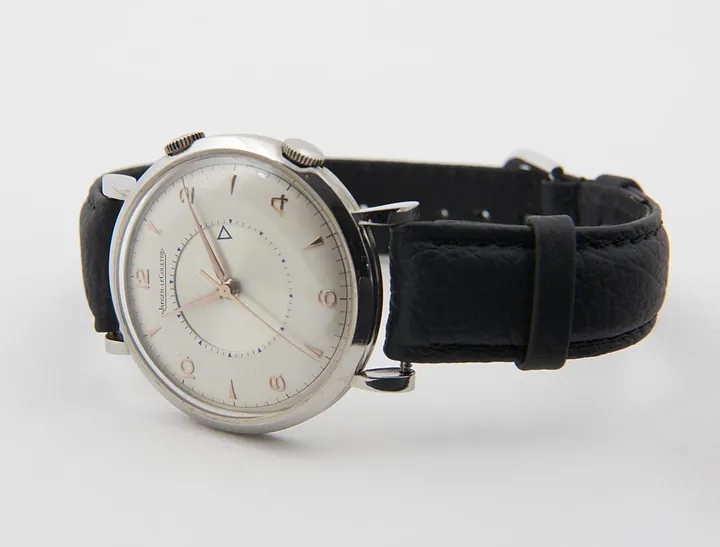
Wrist-watch, 'Memovox' alarm, Jaeger-LeCoultre, Geneva, Switzerland, complete in steel case, 1953.
Science Museum Group, London

Wristwatches · c. 2010s
Breguet Type XXI, ref. 3810, c. 2010s (Antiquorum Lot 381-24)
Antiquorum auction archive, Geneva

Wristwatches · c. 2010s
Breguet Type XXI, ref. 3810, c. 2010s (Antiquorum Lot 386-229)
Antiquorum auction archive, Geneva

Wristwatches · Sold in September 2010
Breitling Cosmonaute, ref. A 22322, Sold in September 2010
Antiquorum auction archive, Geneva

Wristwatches · c. 2010
Corum Bubble Chrono, ref. 396.150.20, c. 2010
Antiquorum auction archive, Geneva