
Wristwatches · Wristwatch
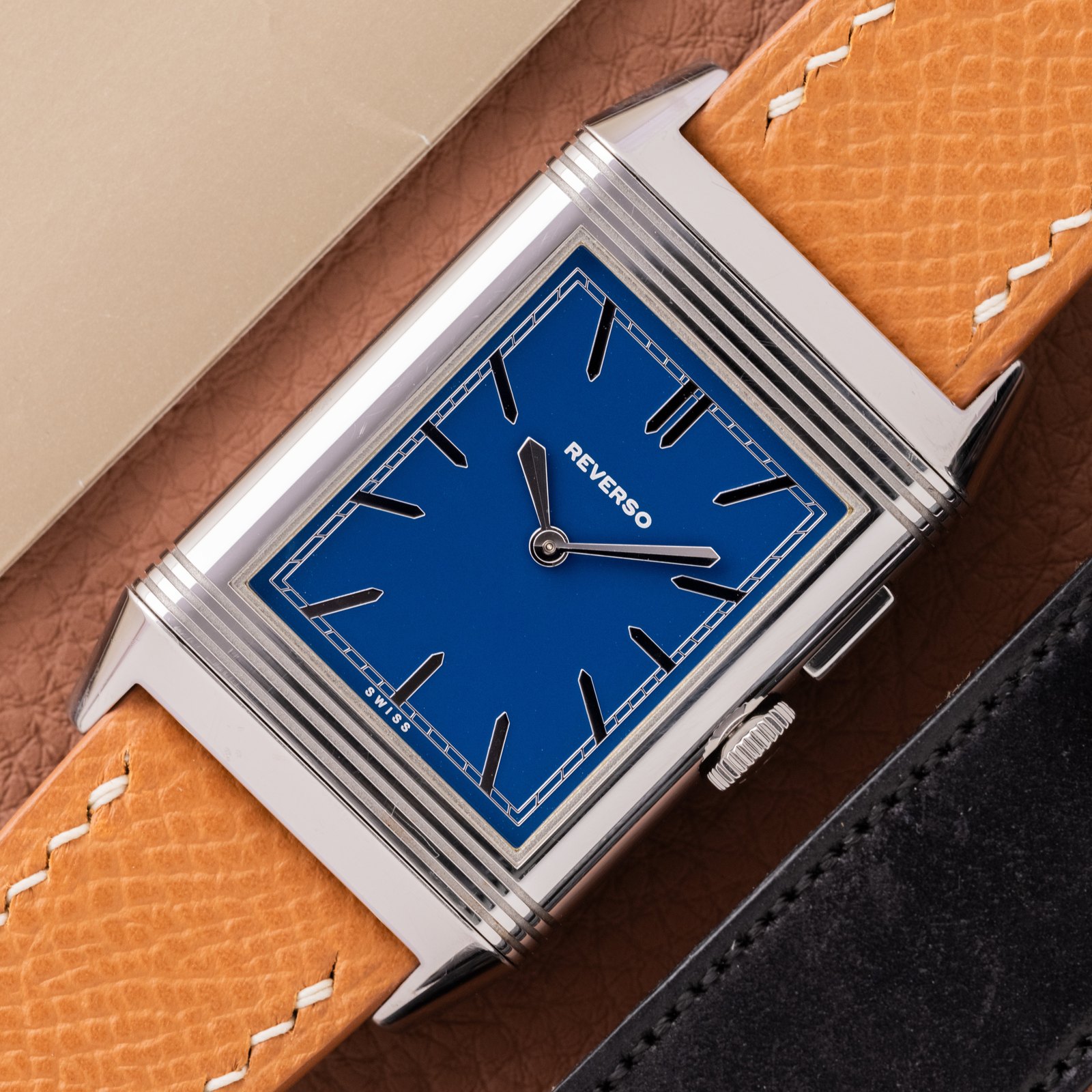
Jaeger-LeCoultre Grande Duoface Bleu Limited Edition (Ref. Q378858J / 278.8.54), 2015
- Maker / attribution
- Jaeger-LeCoultre (maker)
- Date
- 2015
- Historical period
- Contemporary Horology (2010 – Present)
- Country of origin
- Switzerland
- Object type
- Wristwatch
- Dimensions
- Case 27.5 mm
- Stock no.
- Product 15887220146359
- Credit line
- Dealer listing, Huntington Company (product 15887220146359)
- Catalogue title (original)
- 2015 Jaeger-LeCoultre Grande Duoface Bleu Limited Edition (Ref. Q378858J / 278.8.54) (English)
View the source record (dealer listing) ↗ (opens another website in a new tab)Suggest a correction
Record summary
Catalogued by Huntington Company (dealer) (stock number Product 15887220146359), this is a wristwatch by Jaeger-LeCoultre, made in Switzerland, dated 2015. The Atlas places it in the Contemporary Horology period (2010 – Present) of its Wristwatches collection. Recorded dimensions: Case 27.5 mm. The record is illustrated with 6 photographs.
Assembled from the source record's structured fields. Dates and attributions are given as the source states them; where a field is missing the Atlas leaves it blank rather than estimating.
Catalogue description
Dealer description — Huntington Company
History and Significance Few watches have maintained such a recognizable identity for nearly a century as the Jaeger-LeCoultre Reverso. Introduced in 1931, the original design was developed in response to a practical problem encountered by polo players, whose watch crystals were vulnerable to damage during matches. The solution was an ingenious reversible case that allowed the dial to be turned inward, protecting the crystal behind a solid metal surface. What began as a functional innovation quickly became one of the most distinctive designs in Swiss watchmaking. Its rectangular proportions, horizontal gadroons, and unmistakable Art Deco influence established an aesthetic that has remained central to the Reverso collection ever since. The development of the Duoface introduced an entirely new dimension to that original concept. Rather than using the reverse side simply to protect the dial or provide a surface for engraving, Jaeger-LeCoultre incorporated a second functional dial into the rotating case. This transformed the Reverso from a watch with a clever protective mechanism into a genuinely complicated timepiece capable of displaying two different time zones. The arrangement is particularly impressive because both displays are driven by a single mechanical movement housed within the relatively slender rectangular case. It is an elegant example of Jaeger-LeCoultre's ability to develop complications around an existing design without compromising its original character. The Grande Reverso Ultra Thin Duoface Bleu takes that concept in a particularly attractive direction. The deep blue dial introduces a completely different personality from the silver and cream finishes traditionally associated with the Reverso, while retaining the familiar rectangular layout and architectural case details. Its dark finish creates a strong contrast against the polished stainless steel case, giving the watch a distinctly contemporary appearance despite its historical foundations. The restrained dial design allows the proportions of the case and the richness of the blue to become the primary visual elements. It is a thoughtful interpretation of the Reverso, demonstrating how a design established in the 1930s can accommodate a modern aesthetic without losing its identity. One of the most impressive aspects of the Grande Reverso Ultra Thin collection is the mechanical engineering required to preserve its proportions. A reversible case already introduces considerable complexity, with the movement housed inside a rotating carriage that must remain secure and comfortable on the wrist. Incorporating a second dial and an additional time display makes that challenge even greater. Jaeger-LeCoultre's long history of developing complicated movements is particularly evident in these watches, where the technical achievement is largely concealed beneath an exceptionally clean exterior. The result is a watch that feels remarkably straightforward despite the sophistication of its construction. The limited-edition nature of the blue-dial execution adds another interesting element to the reference Q378858J. Although the Reverso has appeared in numerous configurations throughout its history, certain dial treatments and combinations remain considerably less common than the traditional silver executions. The blue dial gives the watch a distinctive place within the broader collection, offering an alternative to the more familiar interpretations of the model. Combined with the Duoface complication and the slender Grande Reverso case, it represents an especially interesting chapter in the modern evolution of Jaeger-LeCoultre's most recognizable design. Writer’s Thoughts The blue dial completely changes the character of the Reverso. The reference Q378858J retains all the architectural details that make the model so recognizable, but the darker dial gives the watch a stronger and more contemporary presence. There is something particularly appealing about the contrast between the deep blue surface and the polished steel case, especially within the elongated proportions of the Grande Reverso. The design feels sophisticated without becoming overly formal, offering a different perspective on a watch that is usually associated with traditional dress watch aesthetics. Our Promise Every watch is thoroughly vetted, carefully described with complete transparency, and guaranteed authentic. Each piece is offered in honest condition, ensuring collectors receive a timepiece that reflects both originality and integrity. Specifications Brand: Jaeger-LeCoultre Model: Grande Reverso Ultra Thin Duoface Bleu Reference: Q378858J / 278.8.54 Year: 2015 Case Material: Stainless Steel Case Size: 27.5 mm by 46.5 mm Dial: Blue Dial and White Dial Movement: Manual-Winding Mechanical Duoface Movement Strap/Buckle: New H.C. Leather Strap, Original Strap Included Buckle/Clasp: Original Jaeger-LeCoultre Buckle Included Contents: Watch, Papers, Original Strap, and Original Buckle Condition Case: Stainless steel case remains in excellent condition with light surface wear consistent with careful use. The reversible case retains attractive definition and well-preserved polished surfaces. Dial: Blue dial remains in excellent condition with rich color, crisp printing, and well-preserved hour markers. Hands: Hands remain in excellent condition with clean finishing. Crystal: Crystal remains in excellent condition with minimal signs of wear. Strap/Buckle: Newly fitted H.C. leather strap remains in excellent condition. Original strap is also included. Buckle/Clasp: Original Jaeger-LeCoultre buckle remains in good condition with light surface wear.
Historical context
Contemporary Horology (2010 – Present)
Silicon components, connected watches, optical-lattice research clocks and a thriving independent scene.
Smartwatches became the world's best-selling watches, while mechanical watchmaking focuses on craft, innovation (silicon components, new escapements) and independent makers.
Read the period in the timelineMore wristwatches from this periodEarlier: Mechanical Renaissance
Atlas type guide
Wristwatches
Bracelet watches were worn by women from the early nineteenth century — Breguet made one for Caroline Murat, Queen of Naples, in 1810–12 — but the wristwatch only became a man's instrument with military use and aviation in the early twentieth century. Between the World Wars it overtook the pocket watch; the 1920s and 1930s brought rectangular Art Deco cases, water-resistant cases and the first automatic winding systems.
After 1945 the wristwatch became a carrier of identity — dress watches, sports and dive watches, chronographs, calendars — produced by Swiss, American, Japanese, German, Soviet and Chinese industries. The quartz revolution after 1969 and the mechanical renaissance since the 1990s, including the rise of independent watchmakers, complete the story.
What to look for
- The reference number (between the lugs or inside the case back) and serial number, the starting point for dating.
- The calibre: its maker and number are often stamped under the dial or on the bridge.
- Originality of dial, hands and crown — refinished ('redial') dials are common.
- Case material marks: 18K/750, 14K/585, stainless steel, gold-filled, plated.
Dating clues
- Wire-lug cases: before c. 1925.
- Water-resistant screw-down cases: from 1926.
- Quartz movements: from 1969; sapphire crystals widespread after c. 1980.
General guidance written by the Atlas editors about this kind of object. It is not a statement about this particular piece; for that, rely on the source record above and on physical examination.
Related records
Clocks · 1937–1938
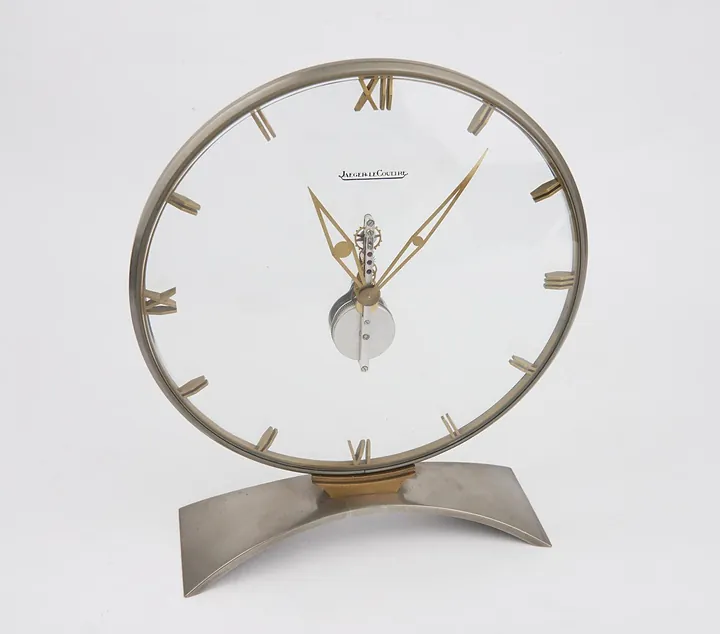
Skeleton clock by Jaeger-LeCoultre, Switzerland, 1937–1938
Science Museum Group, London
Movements & Components · 1953
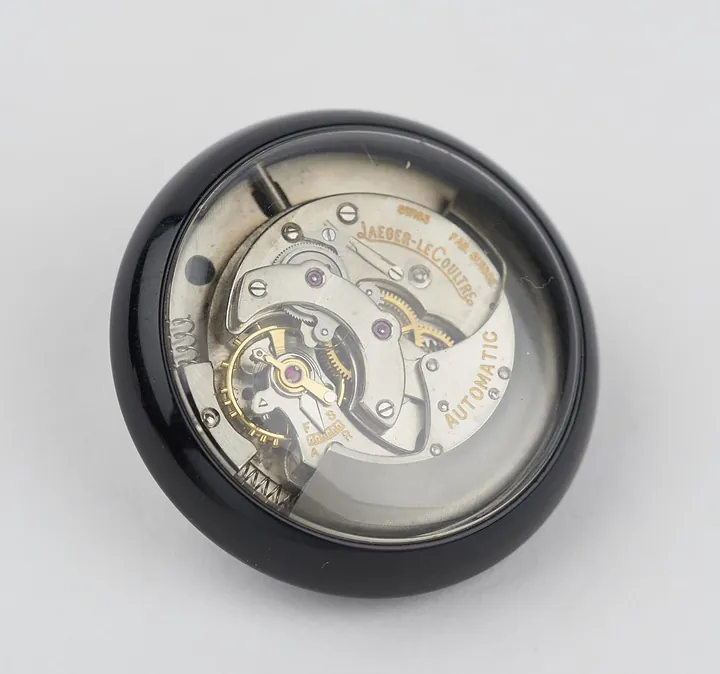
Automatic watch movement, Jaeger-LeCoultre, 1953, Geneva, Switzerland, showing self-winding mechanism
Science Museum Group, London
Wristwatches · 1953
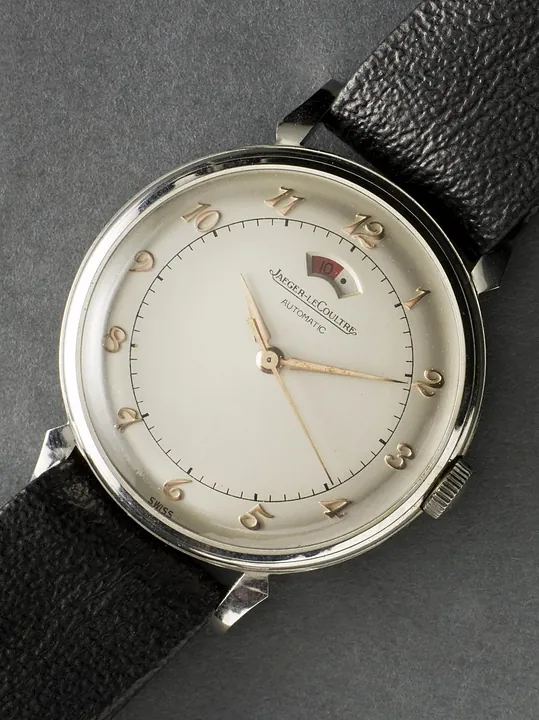
Automatic Wrist-watch, Jaeger-LeCoultre, Geneva, Switzerland, with reserve power indicator complete in steel case, 1953. Back numbered 564556.
Science Museum Group, London
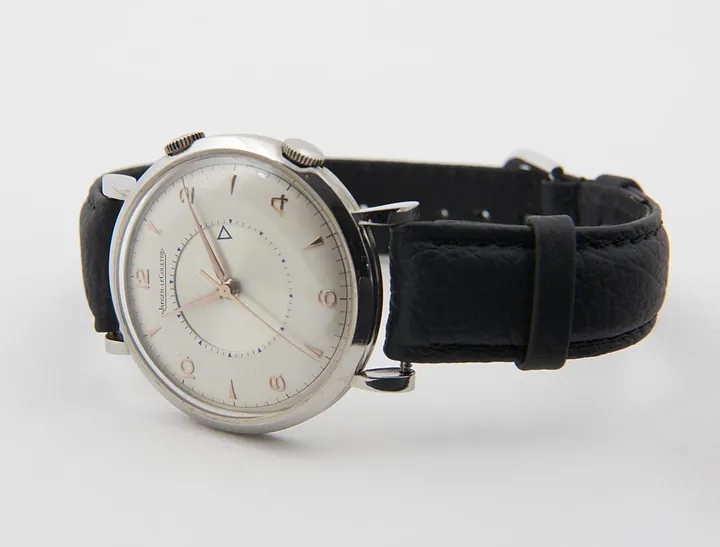
Wristwatches · 1953
Wrist-watch, 'Memovox' alarm, Jaeger-LeCoultre, Geneva, Switzerland, complete in steel case, 1953.
Science Museum Group, London

Wristwatches · c. 2010s
Breguet Type XXI, ref. 3810, c. 2010s (Antiquorum Lot 381-24)
Antiquorum auction archive, Geneva

Wristwatches · c. 2010s
Breguet Type XXI, ref. 3810, c. 2010s (Antiquorum Lot 386-229)
Antiquorum auction archive, Geneva

Wristwatches · Sold in September 2010
Breitling Cosmonaute, ref. A 22322, Sold in September 2010
Antiquorum auction archive, Geneva

Wristwatches · c. 2010
Corum Bubble Chrono, ref. 396.150.20, c. 2010
Antiquorum auction archive, Geneva