
Clocks · Clock
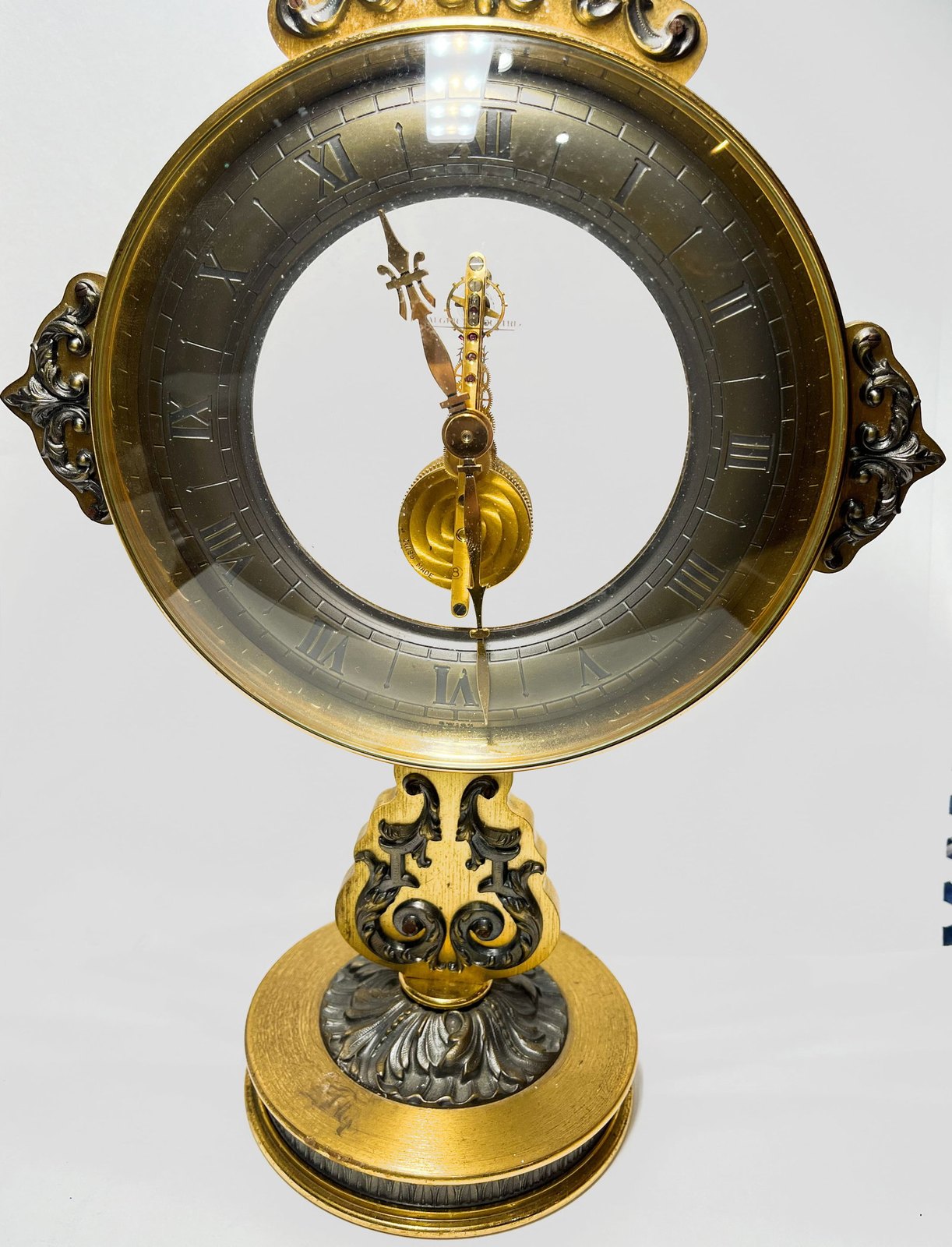
Jaeger LeCoultre 8 days Inline Movement Skeleton Table Desk Clock Monstrance c. 1960
- Maker / attribution
- Jaeger (maker)
- Date
- c. 1960
- Historical period
- Modern Mechanical Horology (1945 – 1969)
- Country of origin
- Unrecorded in source
- Object type
- Clock
- Auction house
- LiveAuctioneers auction archive
- Lot
- Item 210849062
- Credit line
- Auction lot record: lot 40, Fine Luxury, Vintage & Antique Collectable Watc..., Blenheim Auctions (2025), via LiveAuctioneers
- Catalogue title (original)
- Jaeger LeCoultre 8 days Inline Movement Skeleton Table Desk Clock Monstrance c.1960 (English)
View the source record (auction lot) ↗ (opens another website in a new tab)Suggest a correction
Record summary
Catalogued by LiveAuctioneers auction archive (lot Item 210849062), this is a clock by Jaeger, dated c. 1960. The Atlas places it in the Modern Mechanical Horology period (1945 – 1969) of its Clocks collection. The record is illustrated with 4 photographs.
Assembled from the source record's structured fields. Dates and attributions are given as the source states them; where a field is missing the Atlas leaves it blank rather than estimating.
Catalogue description
Lot description — Blenheim Auctions
Jaeger LeCoultre 8 days Inline Movement Skeleton Table Desk Clock Monstrance c.1960 DETAILS CIRCA : 1960 CASE MATERIAL: Brass 8 Day Movement Caliber 210 CASE DIAMETER: 270 mm x 185 mm x 90 mm Condition report: Very Good (Minor Signs of Wear) B All lots are verified for authenticity to be original. Authenticity Certificate & Service is available to guarantee peace of mind with every lot. The clock appears to be in good working order at time of cataloging .
Historical context
Modern Mechanical Horology (1945 – 1969)
Tool watches for divers, pilots and astronauts; electric watches anticipate the electronic age.
Post-war clocks combined new materials and industrial design: plastic and metal cases, battery-powered transistor movements from the late 1950s, and design classics by George Nelson, Max Bill and others. The first caesium atomic clock (1955) moved the definition of time from astronomy to physics.
Read the period in the timelineMore clocks from this periodEarlier: Golden Age of Mechanical Watchmaking
Atlas type guide
Astronomical, musical and automaton clocks
Astronomical clocks display more than the hour: the positions of the sun and moon in the zodiac, the phase of the moon, the calendar, sometimes the planets and eclipses. From Richard of Wallingford's and Giovanni de' Dondi's fourteenth-century clocks to the Prague Orloj and the Strasbourg cathedral clocks, they demonstrated the order of the cosmos. Renaissance makers in Augsburg and Nuremberg built celestial globe clocks and monstrance clocks as princely treasures.
Automaton and musical clocks entertained as well as informed: figures move, birds sing, organs and carillons play tunes from pinned cylinders. The eighteenth-century trade with China ('sing-songs') and Ottoman Turkey created a market for elaborate English, Swiss and French automata.
What to look for
- Subsidiary dials for moon phase, calendar, zodiac and planetary positions.
- Celestial globes or armillary spheres turned by the movement.
- Pinned cylinders, bellows and pipes or bells for music.
- Figures on cams and levers; separate trains for automaton work.
Dating clues
- Renaissance astronomical table and globe clocks: c. 1550–1650.
- English and Swiss automaton clocks for the Chinese market: c. 1760–1820.
- Picture clocks (clockwork pictures) are mostly nineteenth century.
General guidance written by the Atlas editors about this kind of object. It is not a statement about this particular piece; for that, rely on the source record above and on physical examination.
Read next:Verge escapementFusee
Related records
Clocks · c. 1930-1940s
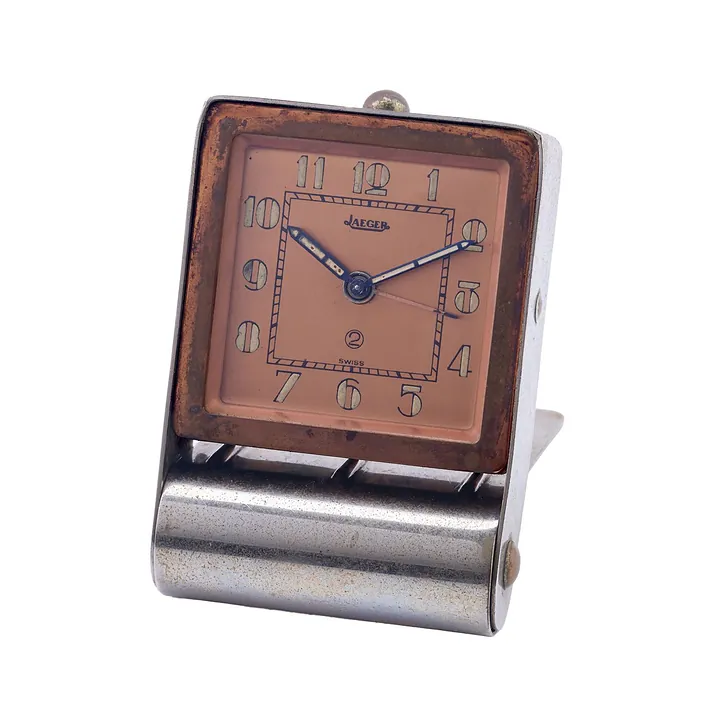
Jaeger Ados, c. 1930-1940s
Antiquorum auction archive, Geneva
Clocks · c. 1939
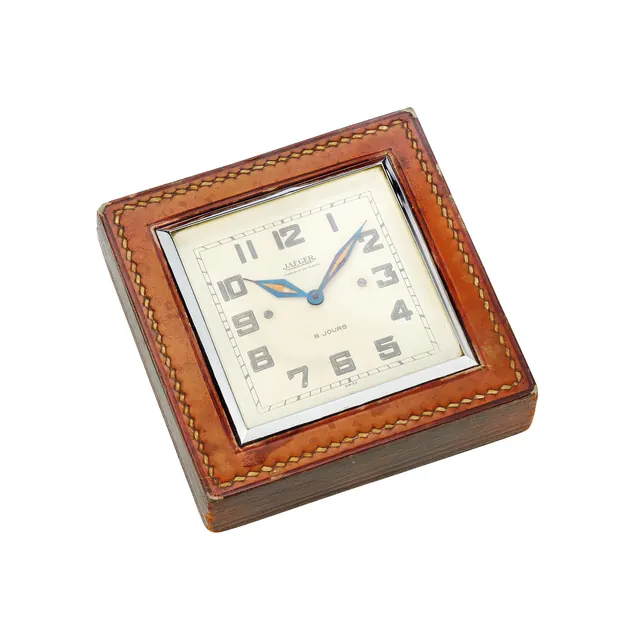
Jaeger table clock, Leather, circa 1939
Antiquorum auction archive, Geneva
Clocks · c. 1934
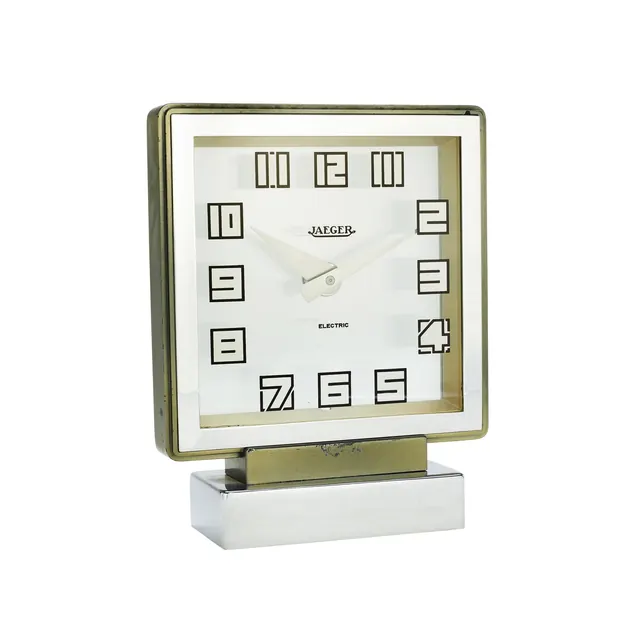
Jaeger mantel clock, ref. 200, Pendulette Mystérieuse Chrome-Plated and Metal, circa 1934
Antiquorum auction archive, Geneva
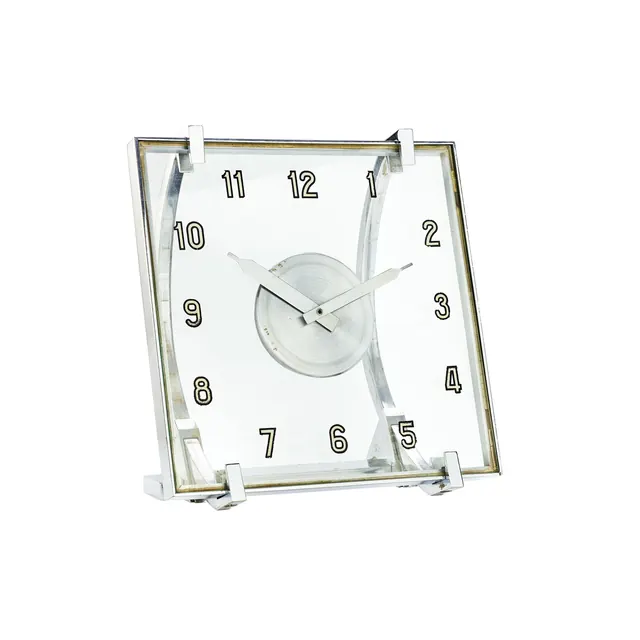
Clocks · c. 1950s
Jaeger table clock, Chrome Plated and Glass, circa 1950's
Antiquorum auction archive, Geneva
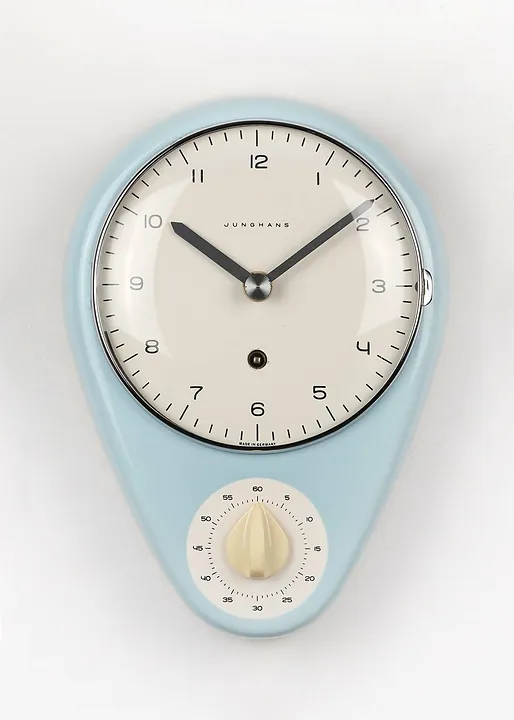
Clocks · c. 1960
Clock, Germany, c. 1960 (no. 58196)
German Clock Museum
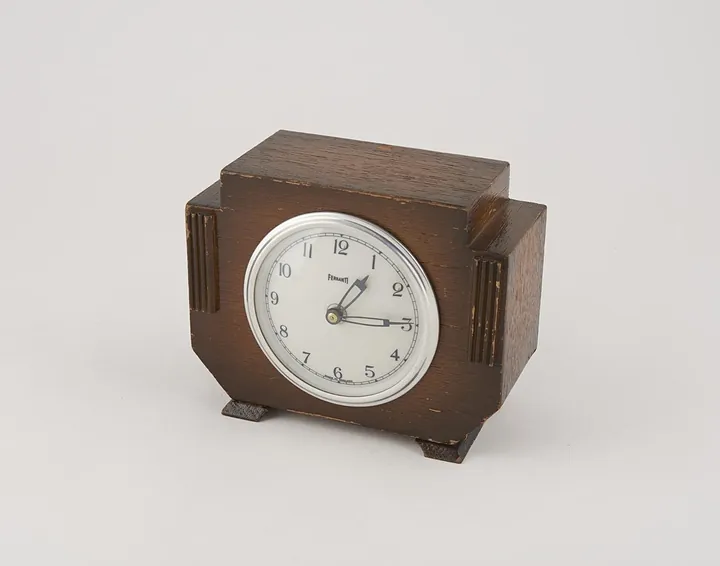
Clocks · 1930–1960
Ferranti electric mantel clock. (no. Y1996.10.820)
Science Museum Group, London
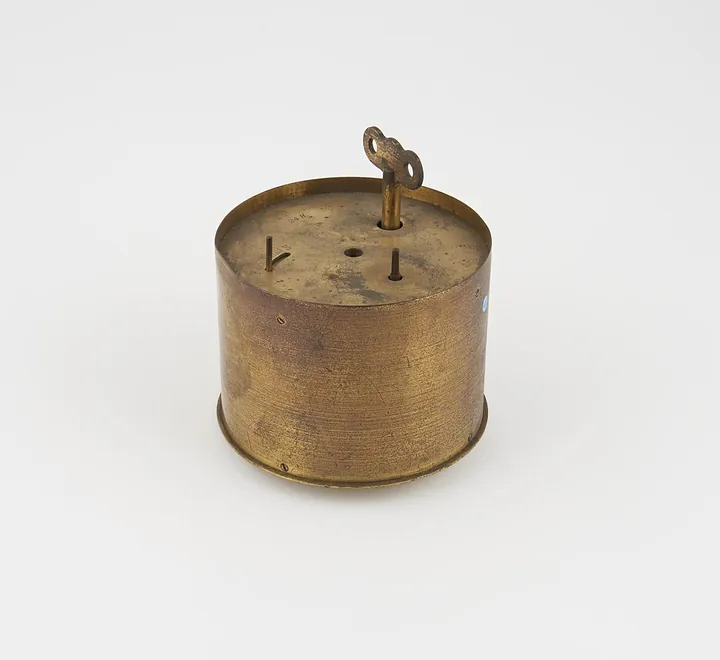
Clocks · 1931–1970
Clock and drum for recorder, 24 hours, English, 1931–1970.
Science Museum Group, London
Clocks · 1937; 1980
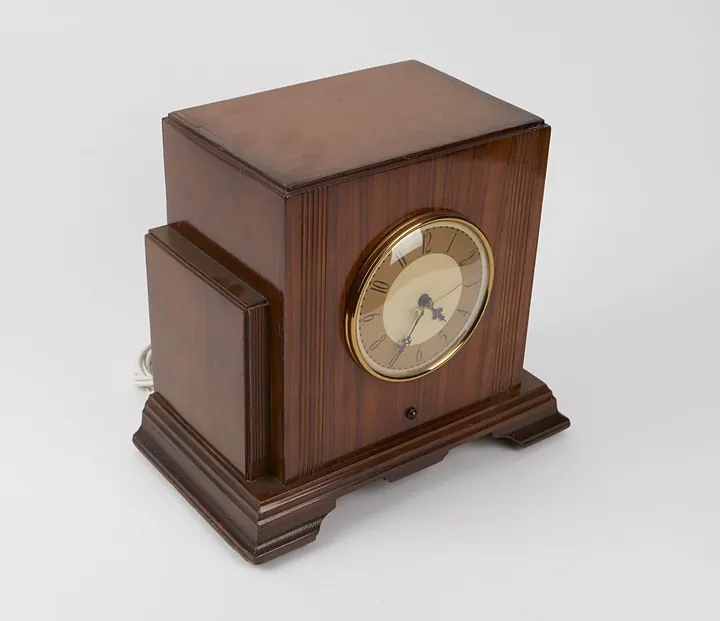
Clock by Bestone and Hammond, United States, 1937; 1980
Science Museum Group, London